Korean Personal Color Analysis vs 12 Seasons: What Carries Over
Korean personal color analysis uses four tones with sub-types. See how it relates to the 12 seasons, what maps across, and where only a trained eye can tell.
Don’t translate a Korean color result into a sub-season by matching names.
It looks easy. Both systems talk about Spring, Summer, Autumn and Winter. So “Summer” in one must be “Summer” in the other.
Not quite. The family carries over. The finer answer doesn’t.
Do the two systems start from the same place?
At the top, yes.
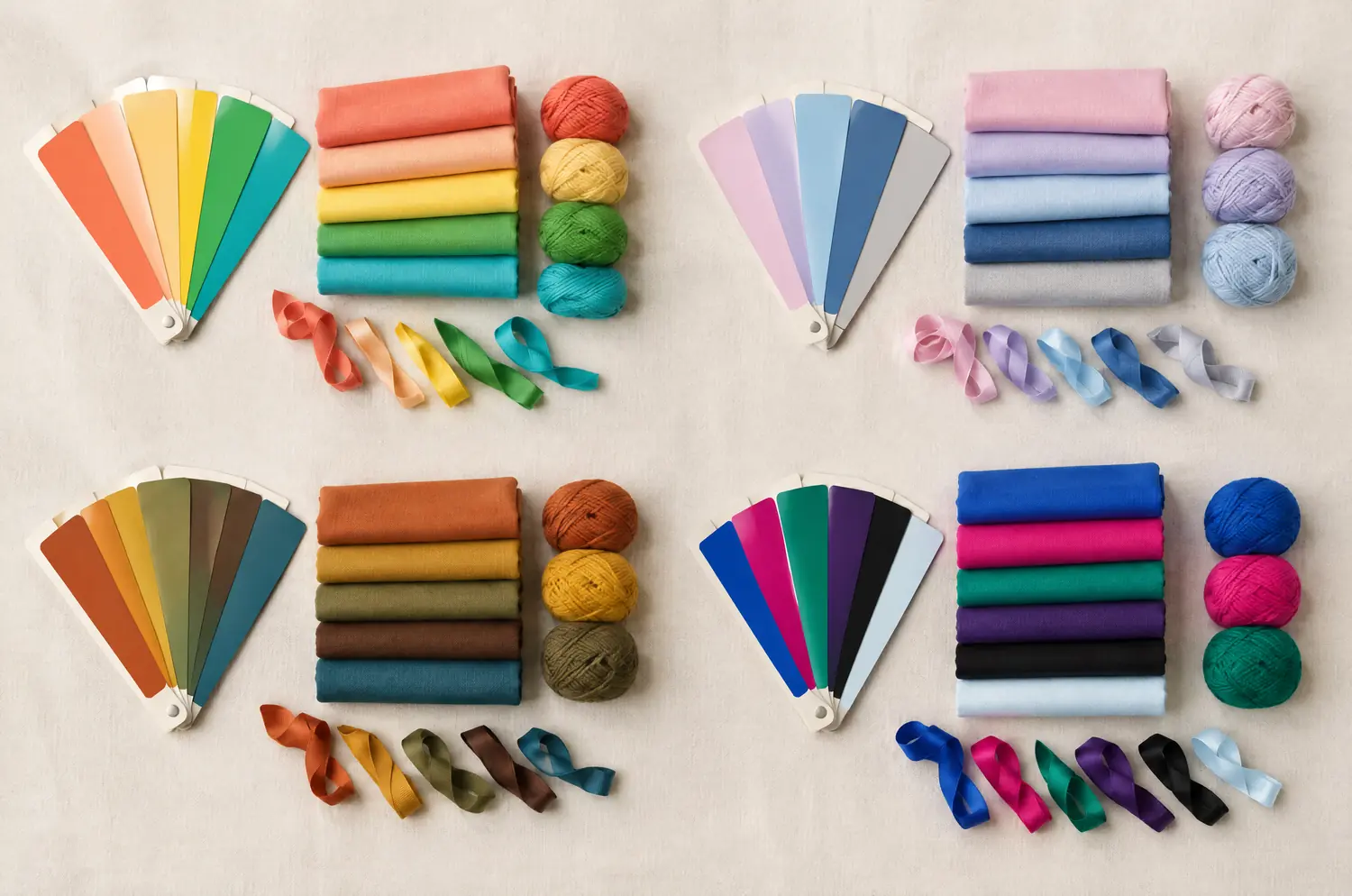
You may have searched “personal color analysis.” Korean personal color analysis is commonly described with four tones named after the seasons.
Spring and Autumn are the warm ones. Summer and Winter are the cool ones. Each tone has sub-types.
That is the same family tree as seasonal color analysis. Four seasons, one logic: colors that sit well near your face and colors that don’t.
What changes when each family splits into three?
The split adds precision. Each season gets three sub-seasons, and each sub-season is read on three axes: temperature, depth and clarity. Depth is also called lightness, and clarity is also called intensity.
That matters because a warm or cool label is only one axis. Take the three Summers:
Light Summer is slightly cool, very light and soft.
Cool Summer is very cool, medium in depth and soft to medium in clarity.
Soft Summer is neutral to cool, medium in depth and very soft.
Same family. Three different faces. Someone told “you’re a Summer” could be any of them, and the clothes that suit each are not the same.
Start with the family. Then keep three candidates open.
If your result says
Korean label
Sub-seasons it may hold
What stays open
Spring
Warm
Light Spring, Warm Spring, Bright Spring
Whether you need light, warm or bright colors
Summer
Cool
Light Summer, Cool Summer, Soft Summer
Whether you need light, cool or soft colors
Autumn
Warm
Soft Autumn, Warm Autumn, Deep Autumn
Whether you need soft, rich or dark colors
Winter
Cool
Deep Winter, True Winter, Bright Winter
Whether you need deep, cool or bright colors
Read the table as a funnel, not a conversion chart.
On the 12-season side, a few sub-seasons sit near the middle of the warm-cool line, and a plain two-way label can’t show that. Soft Summer and Deep Winter lean cool. Bright Spring and Soft Autumn lean warm.
If your Korean result came with a sub-type, this article can’t tell you what that name measures. Ask the analyst which traits it describes, and don’t assume it matches a sub-season name that sounds similar. Then open the three pages of your family and compare their palettes with what you own and love.
Where can only a trained eye tell?
It happens mostly at the borders. When the label says warm but your skin looks best in something softer. When two sub-types both seem right. When your undertone, the tone under the surface of your skin, sits close to neutral. In those cases a name on a page can’t settle it.
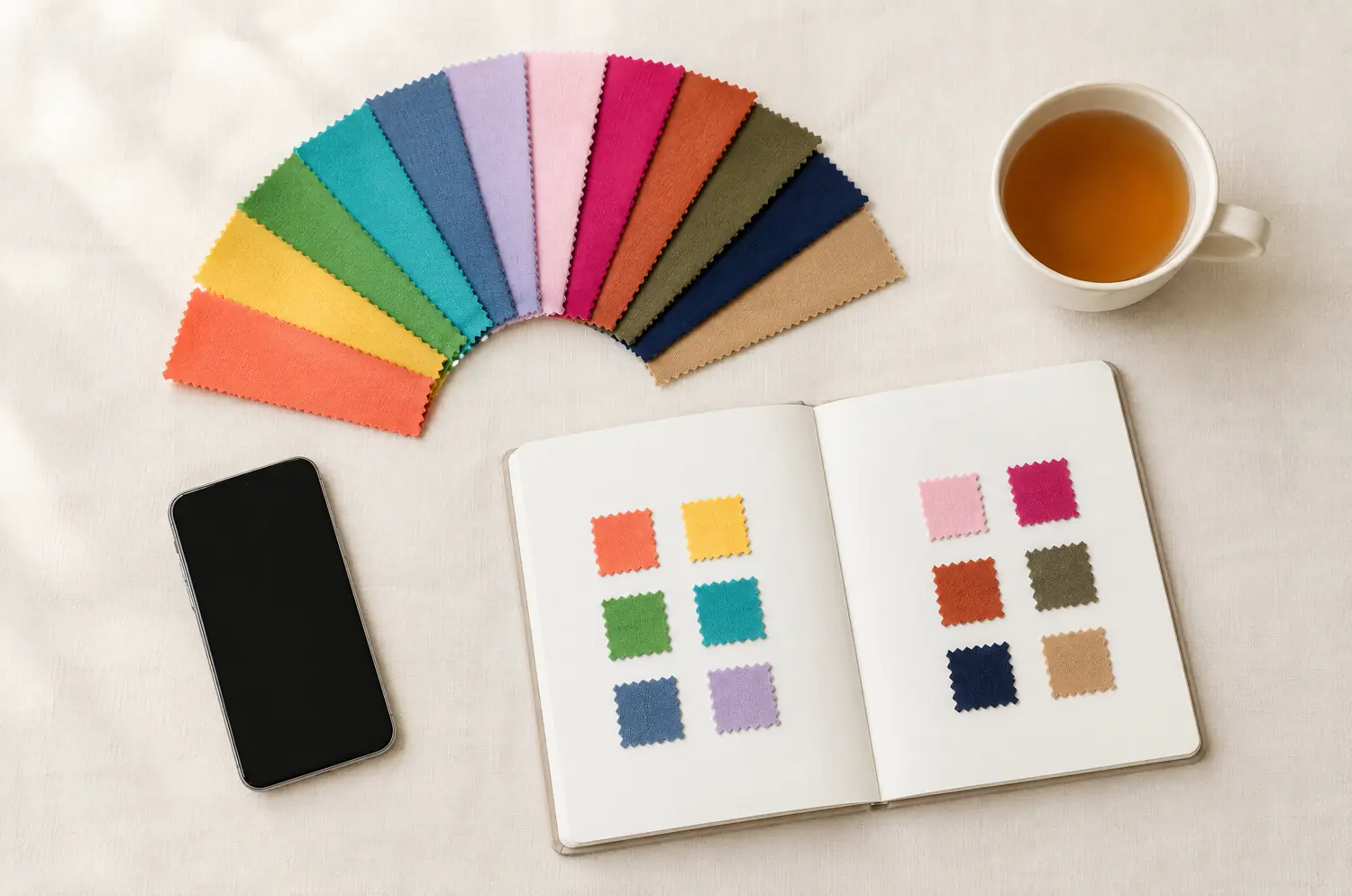
What settles it is what your skin does when a color comes near. Some colors even out your complexion and wake up your eyes. Others bring out shadows and redness, and the color arrives before you do.
A trained eye reads that difference quickly. You can learn to read it too, with patience, the way color draping at home works.
A photo, a filter or a chart can’t do that job alone. A quiz gives you a direction to check, and so does a result you got months ago from someone else.
Can you do this remotely from the US?
Partly, and the part that works depends on what the camera gets. A remote analyst sees your face through a lens, so the result is only as good as the picture.
If you try it, ask three things. Will the analyst work from live video or from photos? Which colors will be held near your face, and will you see them too? Will you get the reasoning in writing?
Then shoot in open shade or beside a window, never under a lamp. Screens shift color and phone filters smooth it, so turn them off. Afterward, check the result at home: hold two colors from the palette under your chin and see whether your skin agrees.
Is Korean color analysis different from Western seasonal color analysis?
The starting point is shared: four tones named after the seasons. From there, the 12 seasons are read on three named axes, temperature, depth and clarity. Ask how your Korean result was reached, and what it says about each axis, before you shop with it.
How much does a Korean color analysis cost?
Prices aren’t covered here. Before you pay, ask what you receive: a named result, a palette, draping time, a written summary. Then compare services by what they include, not by the price alone.
What is a good Korean color analysis app?
I won’t name apps. Any app gives a first hint at best. It works from a photo, so it can’t see how your skin reacts to colors in real light. Use it to form a question, then test colors near your face yourself.
Can ChatGPT do a color analysis?
At best it gives you a first hint. It can’t see your skin react to colors, and it is never the equal of a trained eye. This article on AI color analysis explains where it helps and where it goes wrong.
Is a color analysis in Seoul worth the trip?
Only you can weigh the trip, but don’t make it for a name alone. Before you book, ask the analyst how the result will be explained and whether you’ll understand the reasoning. A result you can’t read or reuse at home is hard to wear.
Which result will you trust when two labels disagree?
Keep your Korean result. A label tells you where to look. Your skin tells you what’s true.
Take the free color analysis quiz for a second reading. It takes about two minutes and asks for no sign-up. Compare its answer with your Korean result, family against family, then open the three season pages that remain.