Color Draping at Home: What You Need and How to Do It
Color draping online can’t read your skin. At home, solid fabrics, daylight and a mirror can. Here is the setup, the order of colors and what to look for.
Don’t ask if you like the color. Ask what it did to your face.
Did anything in your face change?
That’s draping, in its roughest form. Here is the proper version.
What do you need to drape at home?
You probably own what you need already.
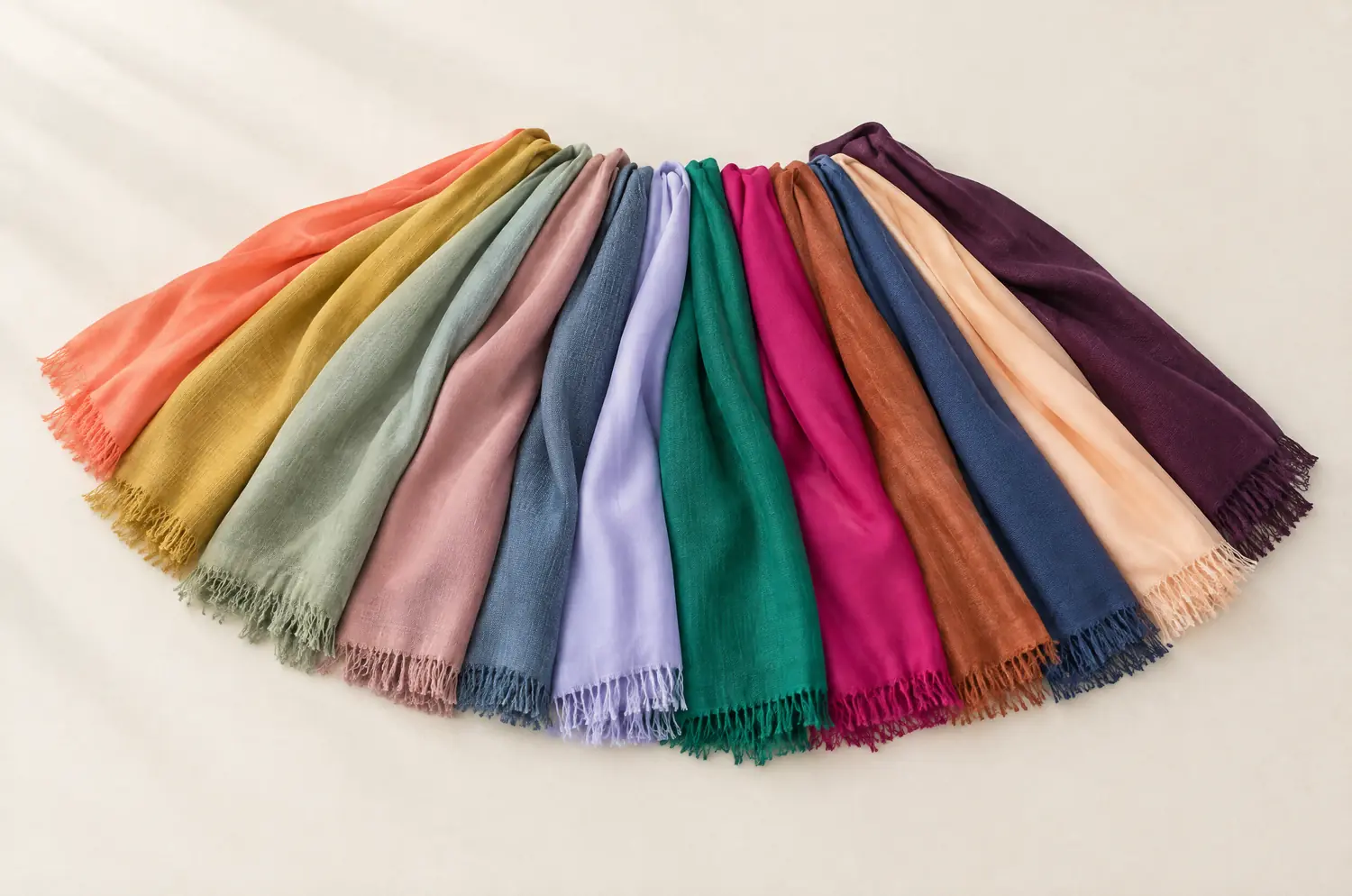
Solid-color sweaters, T-shirts, scarves or towels
A neutral cloth, light gray if you have one, to cover your hair and shoulders
A mirror you can stand in front of
A notebook or your phone for notes
A friend, if you have one nearby
The fabrics matter more than their number. Pick matte over shiny and solid over patterned. A print sends several colors to your face at once, and a shiny fabric throws light back.
Each piece should fill the space from your chin to your shoulders. A small scrap gives your skin a lot of background to compare against.
Where should you sit, and what should you wear?
By a window, in daylight. Not in direct sun, not under a warm bulb, never with a flash. Artificial light tints the fabric and your skin before you’ve judged either.
Take off your makeup, or at least your foundation and blush. Makeup changes your skin, and you want to see your skin.
Tie your hair back and cover it with the neutral cloth. Hair next to your face sways what you see, and a neutral cloth takes that out of the picture.
Sit in front of a plain wall if you can. Skip the test right after a workout or a very hot shower. You’d be red for other reasons.
In what order should you try the colors?
Two at a time, never in a pile.
Start with the big question, warm against cool. Then light against deep. Then soft against bright. Narrow down from the wide differences to the fine ones.
For each pair, hold the first fabric under your chin and count to ten while you watch your skin. Cover yourself with the neutral cloth for a few seconds, then try the second. Your eyes adjust fast, and the pause resets them.
Add one color you already know is wrong for you. It calibrates your eye.
Here are four duels built from signature colors of the sub-seasons.
Duel
What it compares
If the first wins
If the second wins
Peach against Powder Pink
Warm against cool, at a light depth
Light Spring
Light Summer
Coral against Rust
Two warm colors: bright against rich and slightly muted
Warm Spring
Warm Autumn
Light Terracotta against Dusty Rose
Two soft colors, so temperature decides
Soft Autumn
Soft Summer
Bright Coral against Fuchsia
Two vivid colors, warm against cool
Bright Spring
Bright Winter
These are directions, not answers. If the same side keeps winning, you have a direction. If you want to go deeper on temperature, the article on warm vs cool undertone walks through more tests.
What should you look for on your face?
Look for what changes, not for what’s pretty.
Some colors light you up. Your skin looks even, your dark circles soften and your eyes get some sparkle.
Others work against you. A shadow settles under your chin, your skin turns gray or yellow, redness stands out. And you see the sweater before you see the person.
Say it out loud: smooths, hollows, yellows, grays. It trains your eye faster than “I like it.” Write a plus, a minus or a question mark next to each color.
A second pair of eyes helps. Someone else sees what yours stopped noticing.
Do it all again on another day, at another hour. If the results disagree, don’t force a pick. You may sit near the border between two neighbors, and the full method in how to find your color season covers that case.
Can you do color draping online?
Not really, and here’s why.
A screen changes colors. Brightness, night mode and automatic settings make every phone show them differently. A photo can’t show your skin reacting to a color held near your face.
Apps, filters and AI tools that read a photo can point you toward a direction, nothing more. The article on what an AI or an app can do covers what they do with a selfie.
Draping needs real fabric, a real face and daylight. If you searched for draping online, use the screen at most to compare families of colors. Then pull real sweaters out of your closet, sit by the window and finish on your own face.
When is a drape kit worth it?
In my view, the tool matters less than the eye.
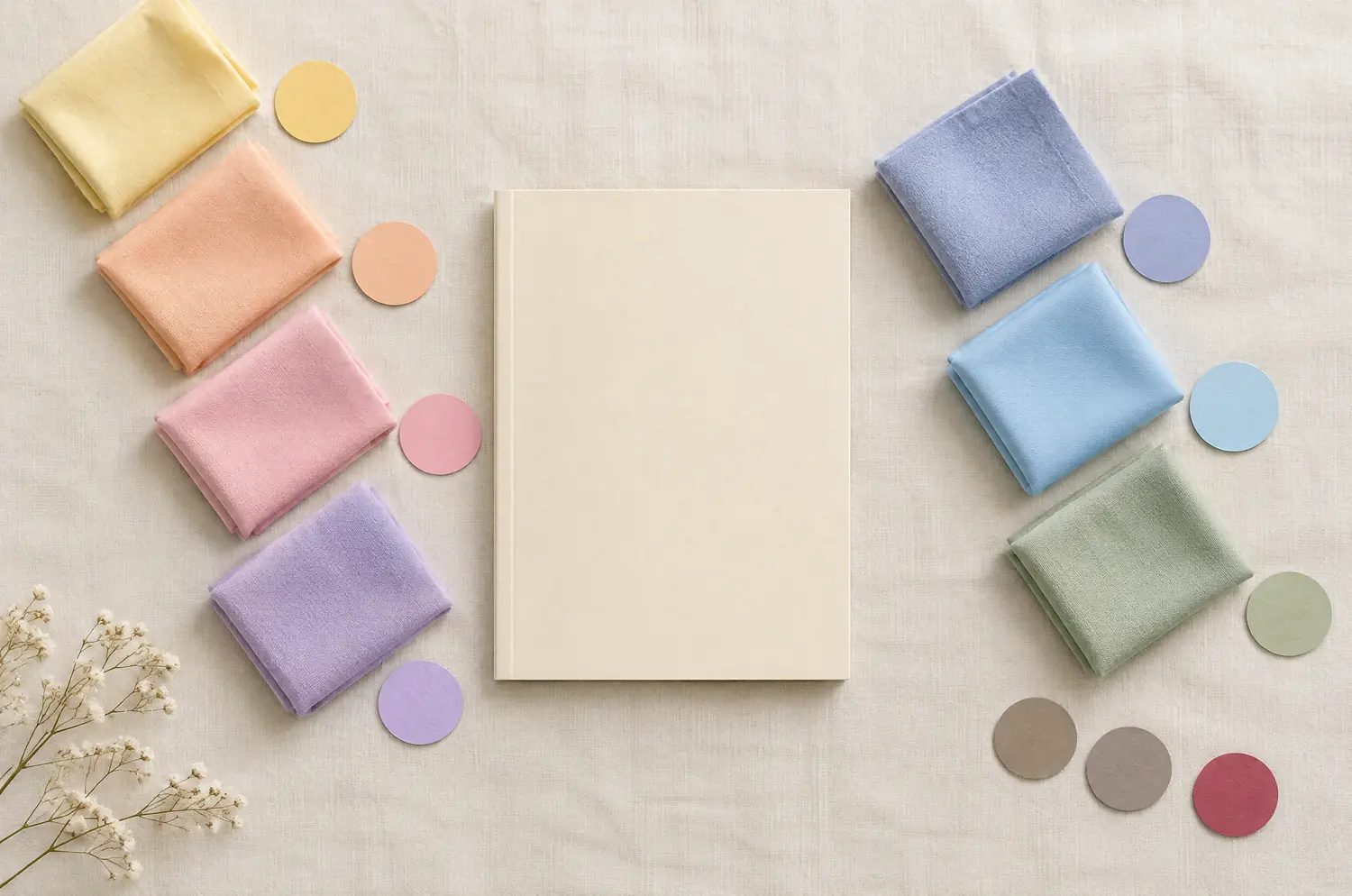
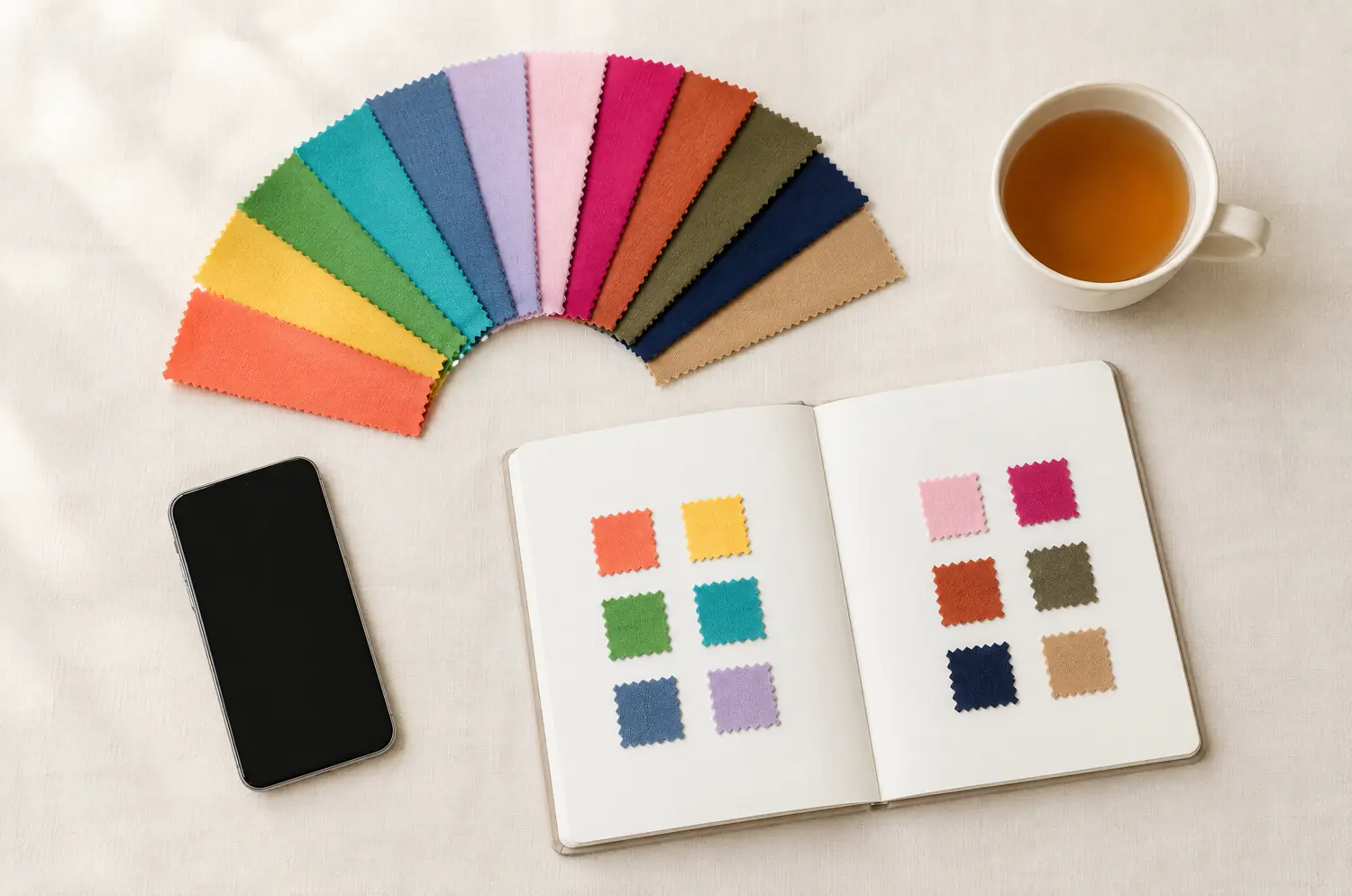
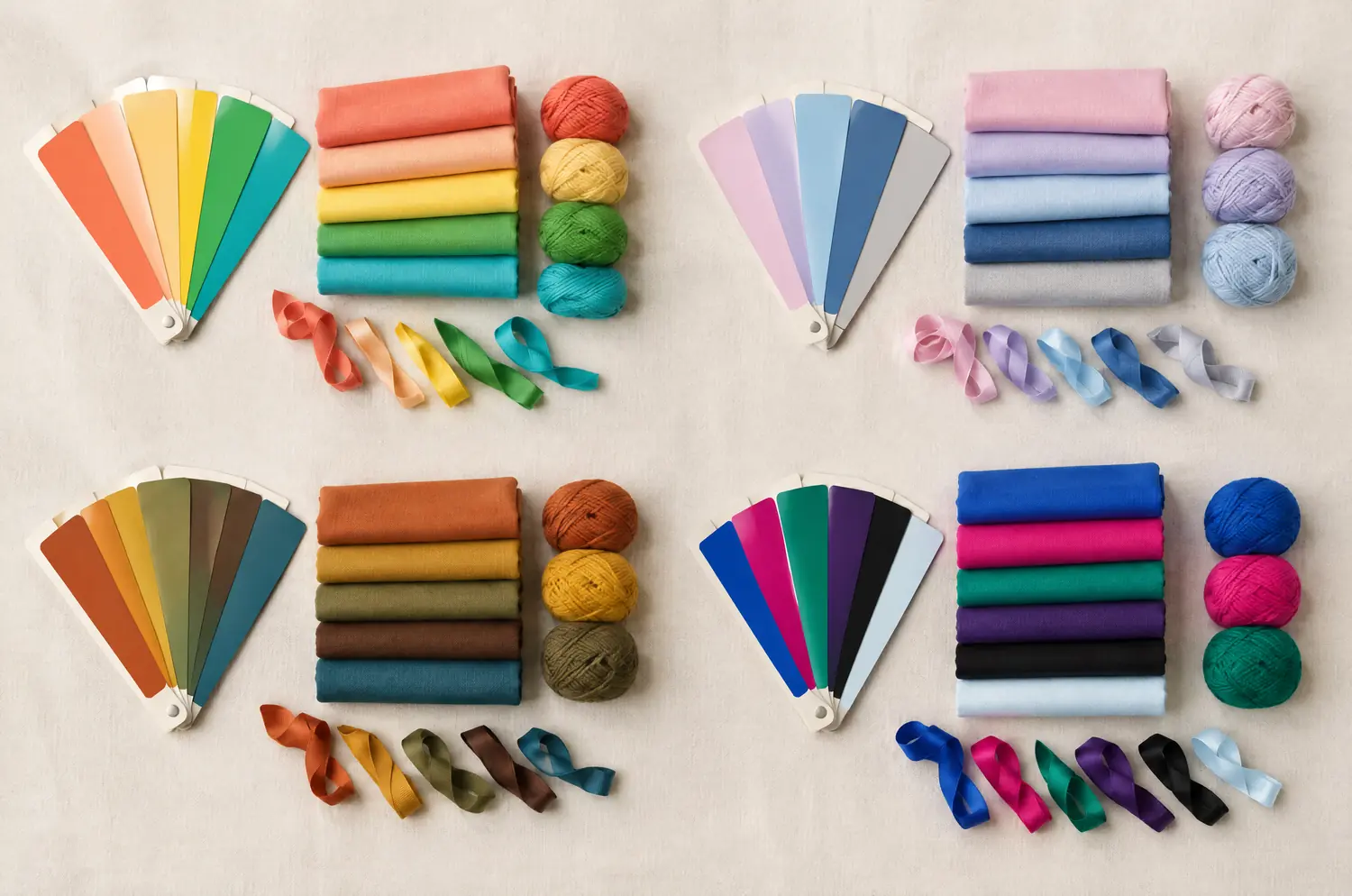
A color analysis kit, a set of drapes or fabric swatches, gives you colors chosen in advance. It saves you from hunting through your closet, and it includes shades you don’t own. That’s real help.
It doesn’t teach you to look. You still have to read your own skin.
So try the exercise with what you have first. A kit is not worth it before you’ve done that. It’s also not worth it if the colors are printed on paper, shown on a screen, shiny or patterned.
If you do get one, check that the fabrics are solid and matte. Then compare what you see with the palettes on the season pages.
Frequently asked questions
How do I know what season my coloring is?
Compare colors in pairs under your chin, in daylight with your hair covered, and see which one your skin prefers. Repeat on another day. A pattern that returns points to a likely season. Then read the matching season pages and see which palette feels like yours.
Does hair color affect my color season?
Not on its own. A hair color can’t rule a season in or out. Hair near your face tints what you see, which is why it stays covered during a drape. What counts is how your skin reacts to colors held near it.
Does my color season change with gray hair?
Gray or white hair changes the contrast around your face, so it can make a first glance misleading. Cover it, drape again and read your skin. If the pairs point the same way as before, gray hair hasn’t given you a new season.
Do I need a color analysis kit to drape at home?
No. Solid, matte sweaters, scarves and towels do the job for a first version. A kit gives you well-chosen colors, but it can’t give you the eye. Start with what you own, then decide whether a set would add anything.
Does my phone screen work for testing colors?
It can help you compare families of colors, but it can’t be your test. Screens vary from phone to phone and shift with brightness. Finish every comparison on your own face, with real fabric, in daylight.
The next time you hold a color under your chin
You’ll stop looking at the color. You’ll catch the light in your eyes, or the shadow settling under your jaw.
Looking at your face first is a habit worth keeping. It travels with you into any fitting room.
If you’d like a starting point before you drape, try the free color analysis quiz. Ten questions, no sign-up. It names a likely season, and your mirror can then confirm or question it.