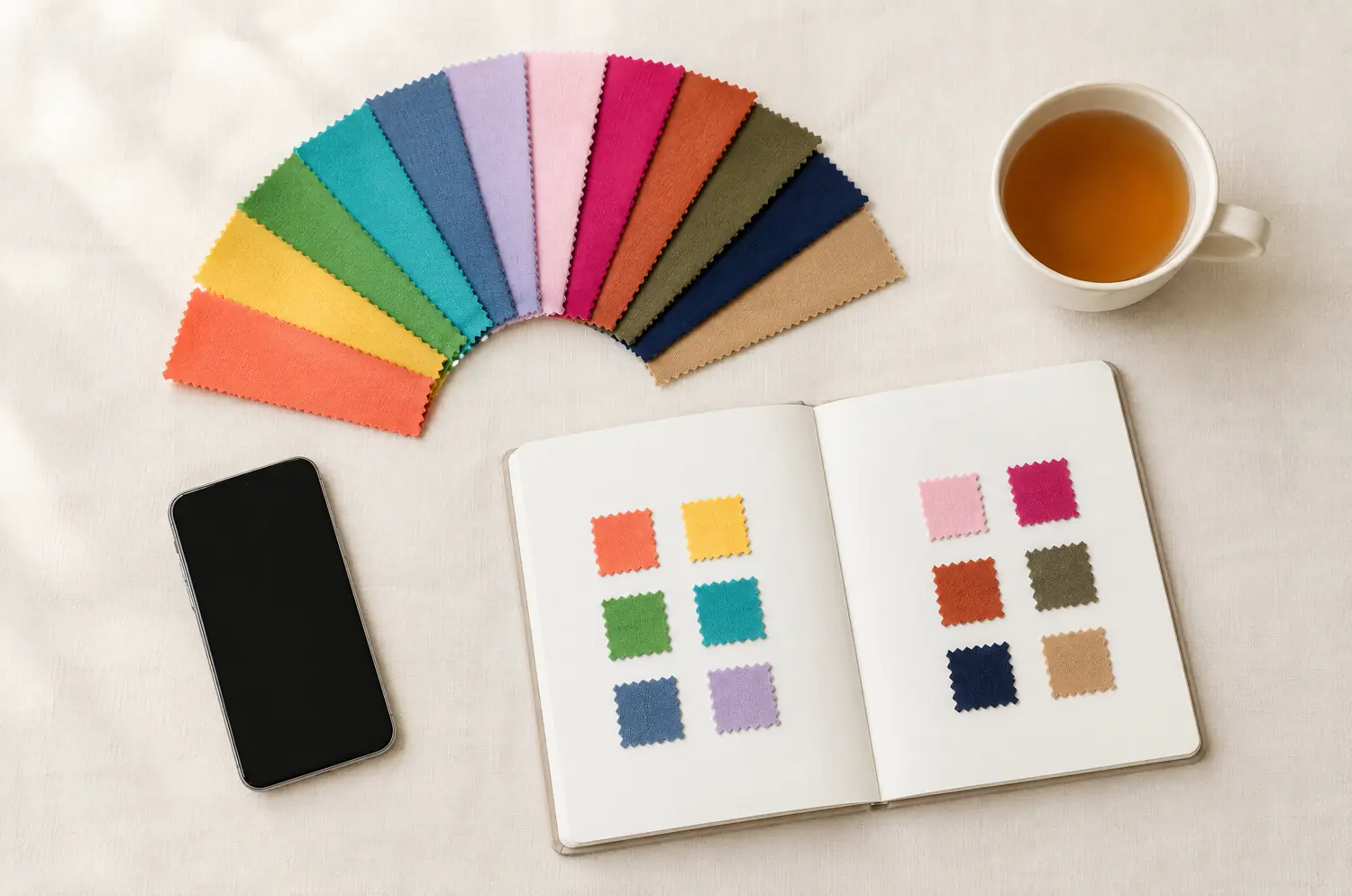
16 season color analysis splits each season in four. I work with 12 instead. Here is what the extra shades add, what they blur, and how to read any result.
People think more seasons means a more accurate result.
Look at a face and you see something else: a handful of traits that matter, and a lot of shades too close together to tell apart.
Sixteen sounds precise.
Twelve is what you can use.
And you can check it on your own face.
Maybe you’re holding a 16-season result right now, or wondering whether you should. Here is how the two systems compare, and how to read one in the terms of the other.
What does a 16-season system add?
Both systems start from the same four seasons: Spring, Summer, Autumn and Winter.
The 12-season system splits each one in three. A 16-season system splits each one in four. That’s one extra slot per season, and the cuts between slots get finer.
The appeal is easy to understand. If you’ve always felt caught between two sub-seasons, a fourth label looks like a place to land. More names feel like more precision.
Sometimes a fourth label does fit. But a distinction you can’t see on your own face stays a word on a page. It never becomes a color you can wear.
How do the twelve sub-seasons stay readable?
Everything rests on three axes. Temperature: warm or cool. Lightness: how light or dark a color is. Intensity: how bright or muted it is.
Contrast, the gap between your hair, eyes and skin, is a fourth clue. It can be low, moderate or high, and it never decides alone.
In the twelve, nearly every sub-season is named after the trait that leads: light, warm, bright, soft or deep. Cool leads Cool Summer and True Winter (also called Cool Winter). Each trait leads exactly two sub-seasons. They are neighbors, and they share that trait while differing on another.
Read across a row and you see the neighbors. Read down and you see why twelve holds together: six traits, two neighbors each.
Where do the extra shades start to blur?
Every extra cut brings two seasons closer together. The gap between them shrinks.
Now think about what moves on your face. A window gives you one light, a lamp gives you another.
A scarf, a lipstick or freshly dyed hair changes what your skin picks up. Differences that small get lost in all of that.
So with sixteen, you get more neighbors to hesitate between. You also get more names to keep straight, and more room to talk yourself into the wrong one.
A finer cut isn’t wrong. It just leaves less margin for error when you check it alone in a mirror. That’s where a trained eye earns its place.
Nothing here makes a 16-season result useless. A result can point in the right direction and still use more labels than you need.
How do you read a 16-season result?
Read by trait instead of by name.
If your result names one of these traits, start there. If it doesn’t, ignore the label and test colors.
Look for one of these words in your result: light, warm, bright, soft, deep or cool.
Find that row in the table above. You now have two neighbors.
Check the season. Autumn is warm, dark and muted. Winter is cool, bright and dark. Spring is warm, light and bright. Summer is cool, muted and light.
Hold a color from each neighbor’s palette near your face, in daylight, hair tied back. Keep the one that smooths your skin.
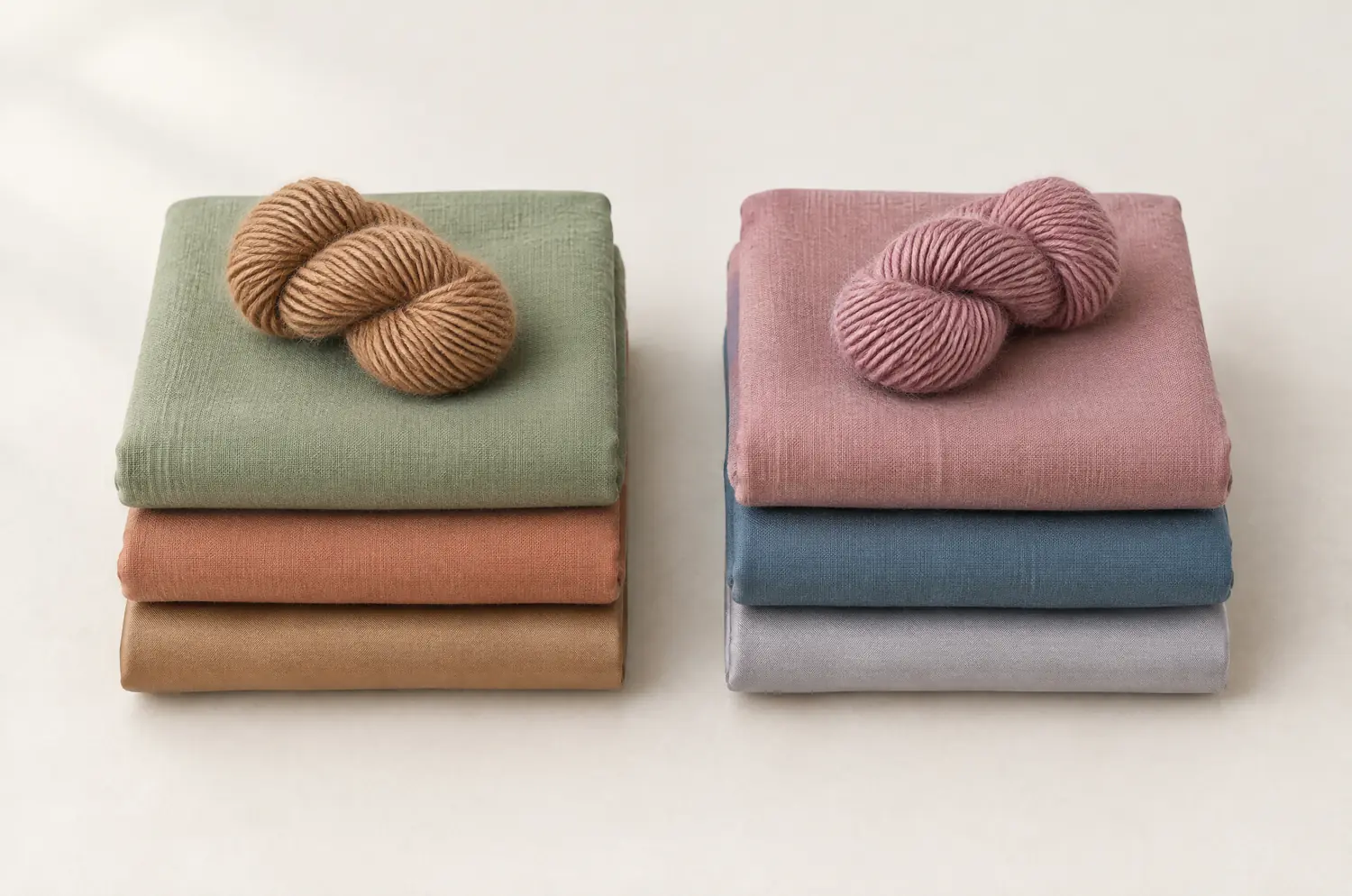
Say your result carries the word soft and the season Autumn. That points to Soft Autumn, with Soft Summer next door. Sage Green and Light Terracotta sit in the first palette. Dusty Rose and Slate Blue sit in the second.
If a name carries a word you don’t recognize, set it aside. Judge the colors, not the label.
One trait never decides. Hair, eyes or skin can each point somewhere, and the reaction of your skin to color overrules all three.
Which system should you use?
Use the one that helps you decide what to wear and buy.
In my view, twelve is the one to start with. You get a clear path from season to palette, with few enough neighbors to compare in one afternoon. You can also read the full Autumn page or any other season without learning a second vocabulary.
If you already have a 16-season result and your colors look good on you, keep wearing them. You don’t owe anyone a conversion.
If your result feels shaky, with colors that sometimes work and sometimes don’t, go back to the traits. Too many close neighbors can make any palette wobble. Test the colors again, one pair at a time.
The reasoning behind all of this is on my method page.
Questions people ask
What season is my coloring?
Start with three questions about colors, not about your hair. Do warm or cool ones suit you? Light or dark? Bright or muted?
Then try two colors against each other and see which one calms your skin. The five checks you can do at home walk you through it step by step.
How can I tell if I’m an Autumn?
Autumn means warm, dark or muted colors, with moderate to high contrast. Three sub-seasons live there: Soft Autumn, Warm Autumn and Deep Autumn.
Hold Rust next to Raspberry, then a few other warm and cool pairs, under your chin in daylight. If the warm side keeps winning, you have a direction toward Autumn or Spring. Then compare depth and softness.
Which seasons have medium contrast colors?
Moderate contrast belongs to Warm Spring, Cool Summer and Warm Autumn. Soft Autumn runs low to moderate. At the season level, Spring and Summer run low to moderate, while Autumn and Winter run moderate to high. Contrast narrows the field. Holding colors near your face is what chooses.
Can hair color change your season?
Dyeing your hair changes the picture around your face, not your skin. Your season comes from how your skin reacts to colors held near it, with hair covered, so a new shade shouldn’t move you. It can change which colors look best beside your face, and how much contrast you carry.
What if a 16-season result and a 12-season result disagree?
Trust your skin over either label. Neighbors sit close together, so two results can both be near the truth. Keep the colors that even out your skin and brighten your eyes, and let those pick the winner.
Circle your leading trait before you test again
Take any result you have, from any system. Circle the one word in it that names a trait.
Look that word up in the table and write the two neighbor names on a sheet of paper. That short list is what you carry into your next test.
Then take the free color analysis quiz. It takes two minutes with no sign-up, and it gives you a likely season to set beside your list.