
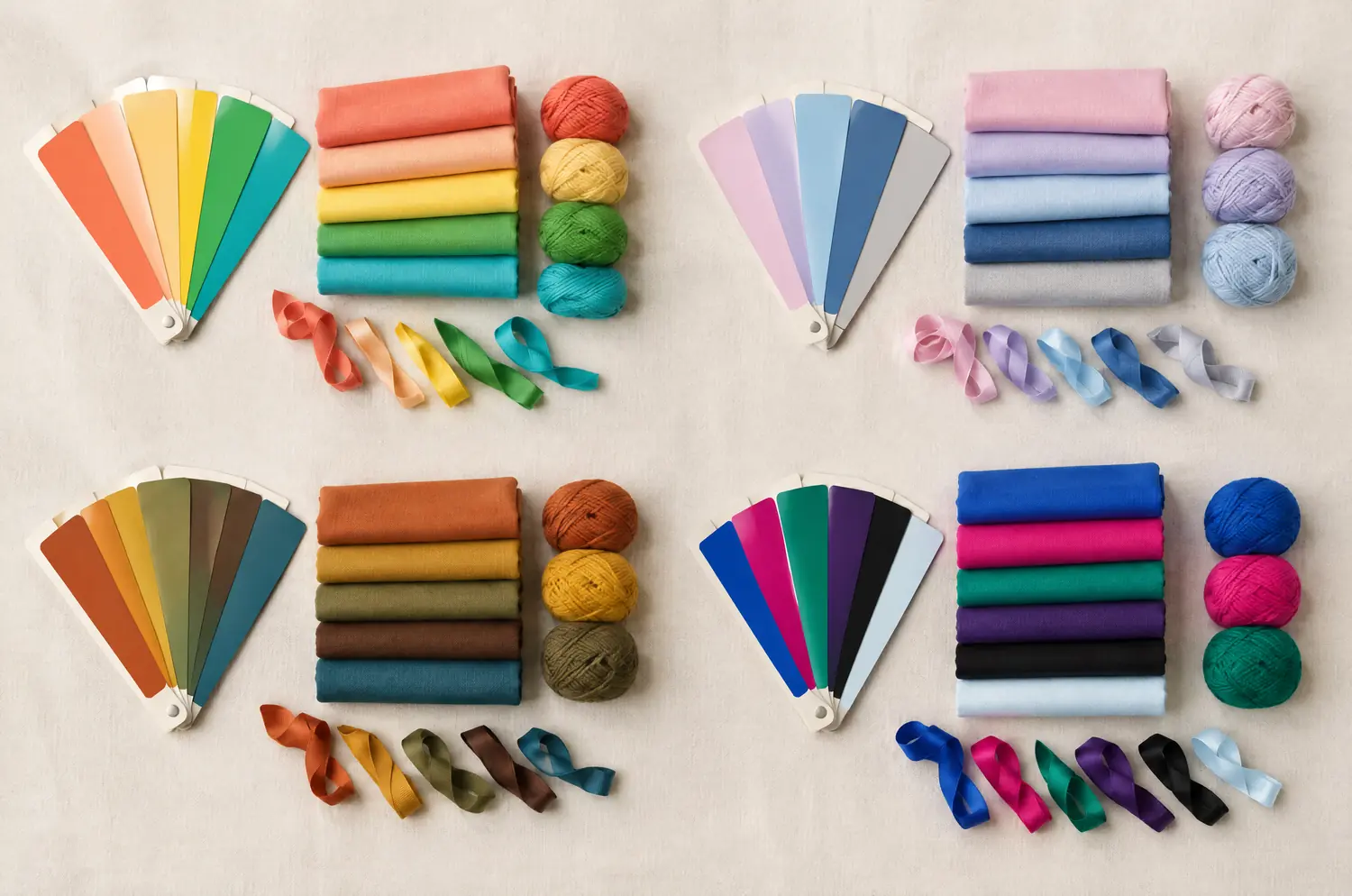
Seasonal color analysis in 60 seconds
You’ve probably heard one of these.
Each one holds a small grain of truth. None of them survives a real analysis.
Color analysis isn’t a trend. It’s a way of looking at what colors do to your face.
Black doesn’t go with everyone. It brings out some people and drains others.
And your mirror isn’t a neutral judge. You look at yourself with your own tastes, habits and doubts.
So here’s the one question the method answers: which colors flatter you? Not the ones you like. Not the ones that are in fashion right now.
The colors that, held near your face, light up your complexion, give your eyes some sparkle and give you a healthy glow. And the ones that do the opposite: your skin turns gray or yellow, dark circles stand out, your features harden. People see the clothes before they see you.
The method fits in one line. Colors are held near your face, one at a time, and someone watches what happens. That’s called draping. At the end you have three things: a season, a sub-season and a palette.
It’s not a list of forbidden colors
Nothing is off-limits. Some colors just ask for more care.
You’re not a season
You’re a person. The season is a tool, not a label.
Where seasonal color analysis comes from
Nobody invented it alone. It was built piece by piece, between science and art.
Isaac Newton17th century
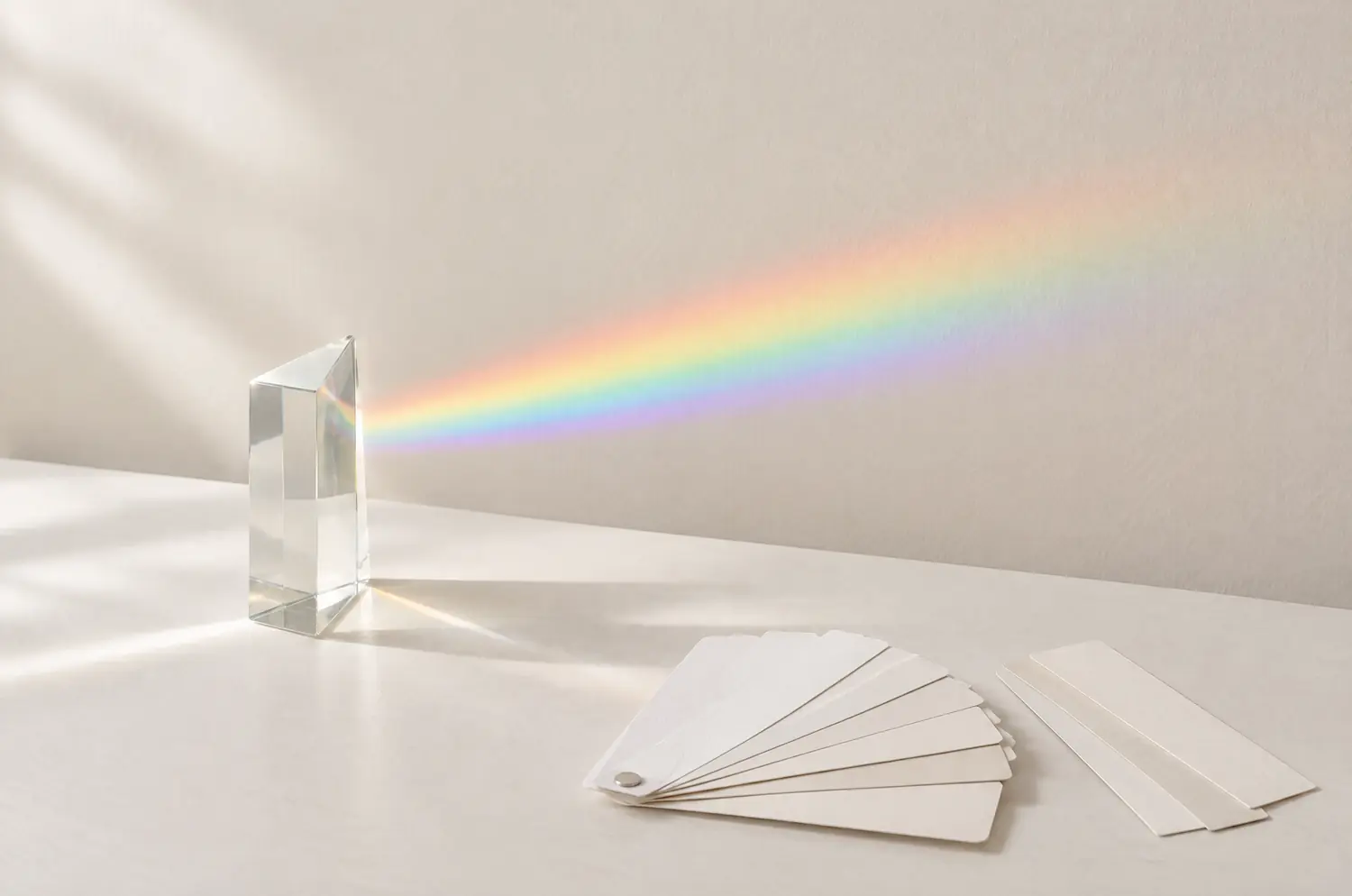
Splits white light into its colors. We start to understand that color is a matter of light.
Albert MunsellEarly 1900s
Describes every color with three criteria: hue, value (lightness) and chroma (purity).
Johannes IttenEarly 1900s
A professor at the Bauhaus. He links colors to personalities.
Suzanne CaygillAmerican dressmaker
Reproduces her clients’ exact skin color in paint to build each of them a custom palette. She writes Color, the Essence of You.
Carole Jackson1980
Publishes the book Color Me Beautiful and popularizes the four seasons for the general public.
Professionals have refined the method since then. That’s where the sub-seasons come from.
The three things that decide your season: temperature, depth and clarity
All of seasonal color analysis rests on three axes. Every color has a place on each one. Here they are, with one sub-season placed on each: Soft Autumn.
Temperature
Warm or cool?
Warm colors lean toward yellow, gold and orange. Cool colors lean toward blue, pink and violet. Your skin has a temperature too: your undertone, the tone under the surface of your skin.
Tomato RedRaspberry RedSoft Autumn: neutral to warm
Depth (lightness)
Light or deep?
Some people light up in light colors, others in dark ones. A color that’s too dark crushes a delicate face. A color that’s too light washes out a face with strong contrast.
Sky BlueSoft NavySoft Autumn: medium
Clarity (intensity)
Bright or soft?
A bright color is pure and vivid. A soft color is toned down, as if mixed with a little gray. It’s the axis people talk about least, and often the one that explains why two colors of the same temperature don’t work the same way on you.
FuchsiaDusty RoseSoft Autumn: very soft, desaturated
Leads for Soft Autumn
In the quiz and on the season pages, depth is called lightness and clarity is called intensity. Same axes, different words.
A fourth clue helps, but it never decides alone. Contrast is the gap you see between your skin, your eyes and your hair: low, moderate or high.
One of the three axes always leads for you. That’s the one that gives you your sub-season. Take Soft Autumn: temperature neutral to warm, depth medium, clarity very soft, desaturated. Clarity leads, so softness comes first and warmth second.
Why does it work? Every color reflects some wavelengths of light and absorbs others. Held near your face, a color changes how your skin, your eyes and your hair look. It can light you up, or flatten you.
Free quiz · 10 questions · 2 minutes
Ready to find your likely season?
Answer from what you actually see in daylight. You get a likely season and a sub-season hint to check by eye. No sign-up.
The 4 seasons and the 12 sub-seasons
Four seasons, because the three axes combine. Spring and Autumn are warm. Summer and Winter are cool. Spring and Summer are light. Autumn and Winter are deep.
Four is too broad, though. Two Springs can need very different colors. So each season splits into three sub-seasons, according to the axis that leads for you.
| Sub-season | Two dominant traits | A few of its colors | Link |
|---|---|---|---|
| SpringWarmLightBrightWarm, light and bright: the season that needs freshness and cheer. | |||
| Light Spring | LightWarm | Palette | |
| Warm Springalso called True Spring | WarmBright | Palette | |
| Bright Springalso called Clear Spring | BrightWarm | Palette | |
| SummerCoolLightSoftCool, soft and elegant: the season of powdery colors and softly blended harmonies. | |||
| Light Summer | LightCool | Palette | |
| Cool Summeralso called True Summer | CoolSoft | Palette | |
| Soft Summer | SoftCool | Palette | |
| AutumnWarmDeepSoftWarm, rich and enveloping: the season of spices, forests and earth. | |||
| Soft Autumn | SoftWarm | Palette | |
| Warm Autumnalso called True Autumn | WarmRich | Palette | |
| Deep Autumnalso called Dark Autumn | DeepWarm | Palette | |
| WinterCoolDeepBrightCool, crisp and intense: the season of bold contrast and pure colors. | |||
| Deep Winteralso called Dark Winter | DeepCool | Palette | |
| True Winteralso called Cool Winter | CoolCrisp | Palette | |
| Bright Winteralso called Clear Winter | BrightCool | Palette | |
Each name opens its page: full palette, colors to avoid, makeup, hair, jewelry and outfits. Prefer to start from the big picture? Go to the four seasons.
How an analysis is done: light, bare face, draping
It’s simpler than it sounds. Four things happen, always in the same order.
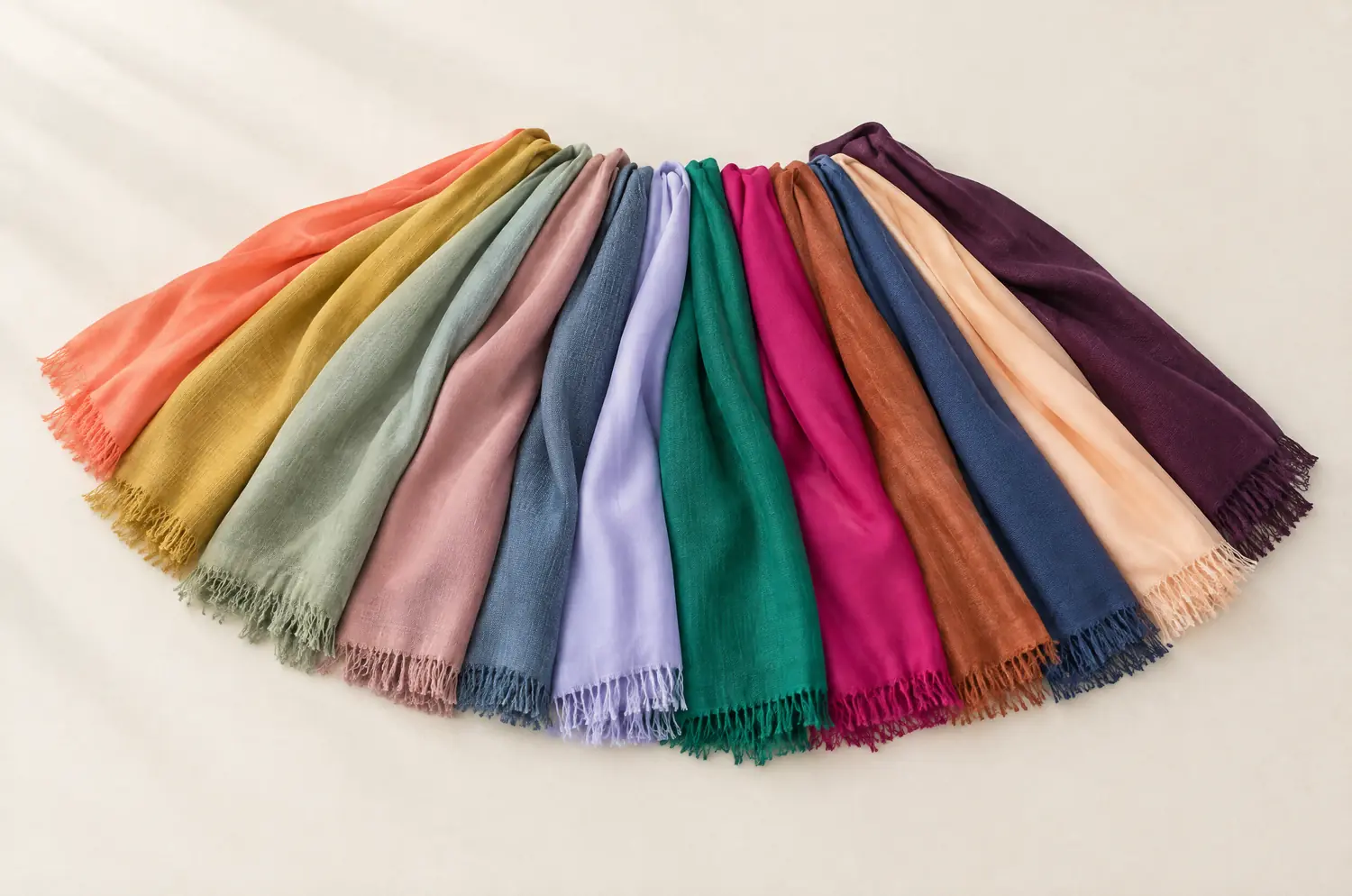
Daylight
Sit by a window, in natural light.
A bare face
No makeup. Hair covered or tied back, so your skin and your eyes are what you’re looking at.
Draping
Colors are held near your face, one at a time. Someone watches how your skin, your eyes and your hair react.
Reading the reaction
Some colors light up your complexion and give your eyes some sparkle. Others do the opposite: dark circles stand out, your skin turns gray or yellow, and you see the garment before you see the person. A trained eye picks your palette from what it sees.
At the end you have a season, a sub-season and a palette made for you. More about how I work on the method page.
Why one trait never decides your season
Every one of these shortcuts fails for the same reason: you can’t place a person from a single trait.
You’ve heardRedheads are Springs or Autumns.
What’s trueRed hair is a clue, not a rule. Two redheads can react very differently to the same colors.
You’ve heardA blonde can’t be a Winter.
What’s trueRare, not impossible. Hair color is never enough to rule out a season.
You’ve heardDeep skin means Winter.
What’s trueNo, and it’s a myth worth fighting. Every skin tone shows up in all four seasons.
You’ve heardDark hair means Winter.
What’s trueShortcuts like this don’t hold up, and they can turn discriminatory.
You’ve heardI already know what suits me.
What’s trueYour taste isn’t your complexion. The mirror isn’t a neutral judge.
You’ve heardColor analysis is for women.
What’s trueNo. A man’s face reacts to color like anyone else’s.
12 seasons or 16: why I work with 12
Methods don’t agree on how many seasons to use. Here’s where I stand.
4
Four seasons
Too broad. Two people in the same season can need very different colors.
My method
12
Twelve sub-seasons
Fine enough to be accurate. Simple enough to use.
16
Sixteen
Some methods use them. I don’t. My position is clear: they add more confusion than precision.
The most common mix-up is between Soft Summer and Soft Autumn. Both need softened colors, and temperature settles it. That’s exactly where a trained eye changes everything.
Apps, AI and quizzes: a first hint, not an analysis
Apps, filters and AI photo tools are fun. They’re also hit-or-miss: depending on the photo, the light and the screen, the result changes.
A quiz, an app or an AI can
- Give you a likely season and a sub-season hint to start from.
- Make you notice what you hadn’t: your veins, your jewelry, what black does for you.
- Get you looking at colors on your face. That’s a good start.
It can’t
- See your skin react to colors held near your face.
- Account for the light, the camera and the screen. Change the photo, and the result changes.
- Settle a close call like Soft Summer or Soft Autumn.
- Give a verdict.
Our free quiz works that way on purpose: ten questions, two minutes, no sign-up. It gives you a likely season and a sub-season hint, never a verdict.
What your season is for
Not to look pretty. To decide better.
Your wardrobe
Fewer misses, more pieces you actually wear.
Your makeup
A lipstick, a foundation, a blush of the right temperature.
Your hair
A color that lights you up instead of hardening you.
Your jewelry
Gold, silver or copper: which suits you, which tires you.
Your work image
What to wear for an interview, a talk or a profile photo.
Your confidence
When you know why a color works, you stop doubting every purchase.
Color analysis doesn’t replace your style. It serves it.
How to find your season
Three steps, from the quickest to the most careful.
Take the free quiz
It gives you a likely season and a sub-season hint in two minutes. Start the quiz.
Check it by eye
Sit by a window, in daylight, with a bare face and your hair covered or tied back. Then try the two tests below.
Read your sub-season page
Each page names the neighboring season, the one people mix it up with most, and how to tell them apart.
Spring or Autumn?
#FF6F52#A8451FBoth are warm. Hold something coral and something rust up to your face, one after the other. If the coral wakes you up and the rust weighs you down, lean Spring. The reverse points to Autumn.
Summer or Winter?
#F4C2D0#D4127CBoth are cool. Try something powder pink, then something fuchsia. If the powder pink rests your complexion and the fuchsia overwhelms you, lean Summer. The reverse points to Winter.
Use a scarf or a top in those colors. A screen changes how colors look.
When you want everything in one place, the PDF guides, one per sub-season, are on a waitlist. See the guides.