
Colors to keep away from your face
Golden beiges, orange, mustard, warm brown and khaki near your face. They turn your skin yellow.
Nothing is off-limits. If you love one of these, wear it away from your face: pants, a skirt, shoes or a bag.
Cool season · 3 sub-seasons
Cool, crisp and intense: the season of bold contrast and pure colors.
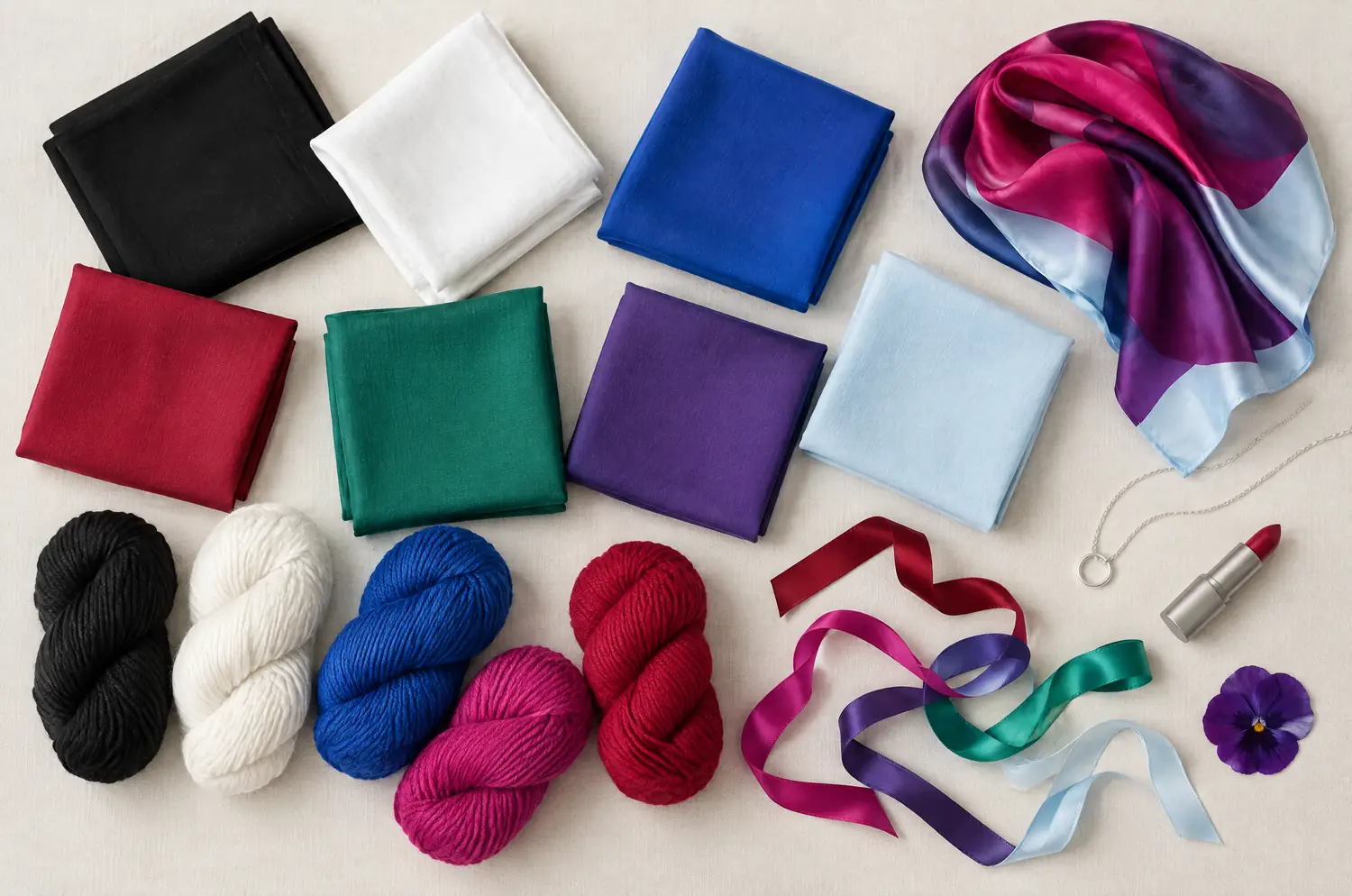
Winter is the only season that black truly flatters.
If you’re a Winter, you can wear what the other seasons fear: black and pure white together, fuchsia, royal blue, a clear red.
On the other hand, beiges, warm browns and washed-out colors make you look tired. You need crispness.
The Winter season is for people who look best in colors that are cool, bright and high-contrast. Pure colors, with no haze over them.
The palette
Cool, bright, clear and dark colors. Moderate to high contrast.
#0A0A0A#FFFFFF#1F45C4#D4127C#C8102E#00875A#5B2A9D#CFE6F5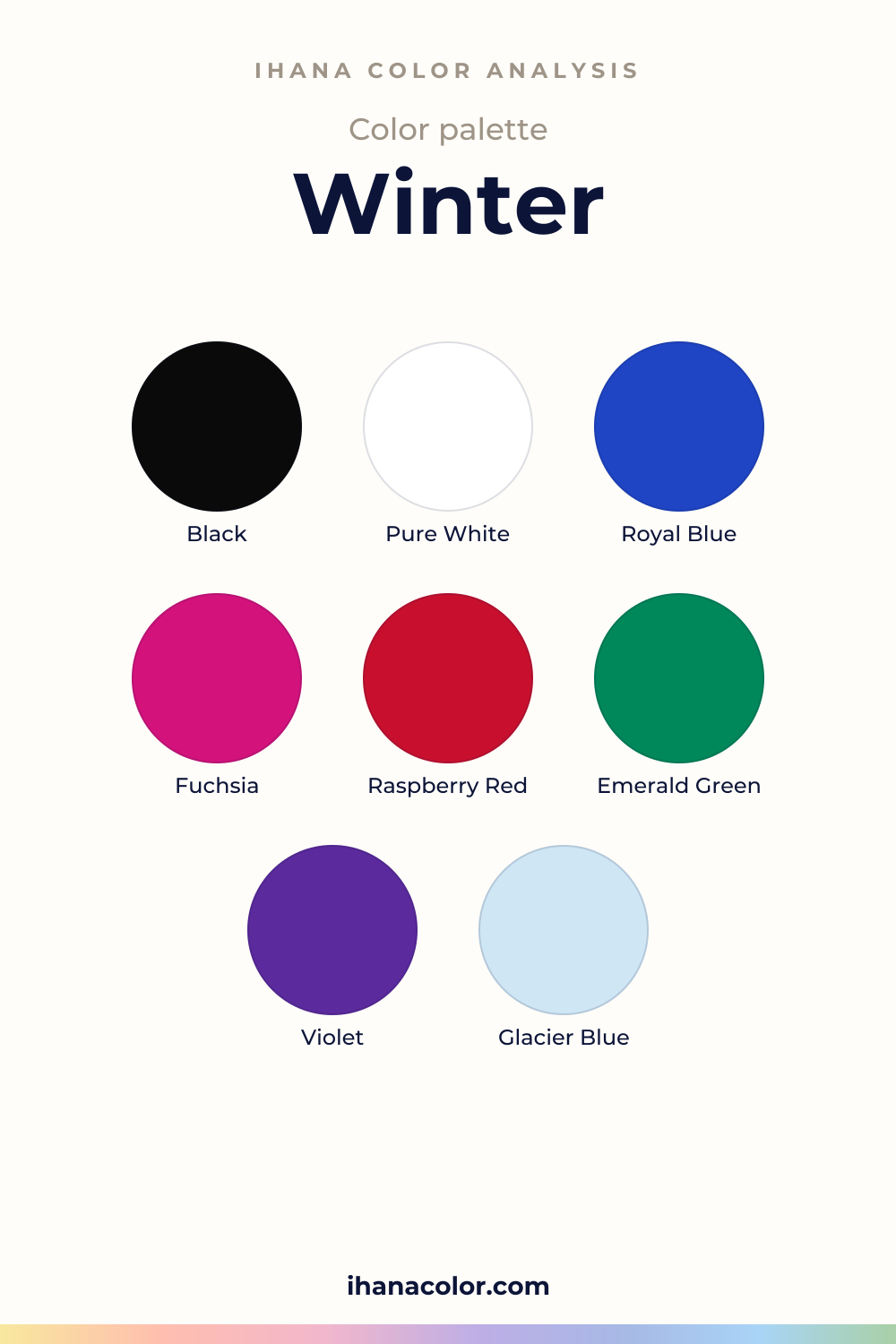
Golden beiges, orange, mustard, warm brown and khaki near your face. They turn your skin yellow.
Nothing is off-limits. If you love one of these, wear it away from your face: pants, a skirt, shoes or a bag.
Silver, platinum, white gold. Vivid stones: sapphire, emerald, ruby, diamond, onyx.
The 3 sub-seasons
They all share the base of the season. What changes is what leads in your coloring, and that is where precision comes from.
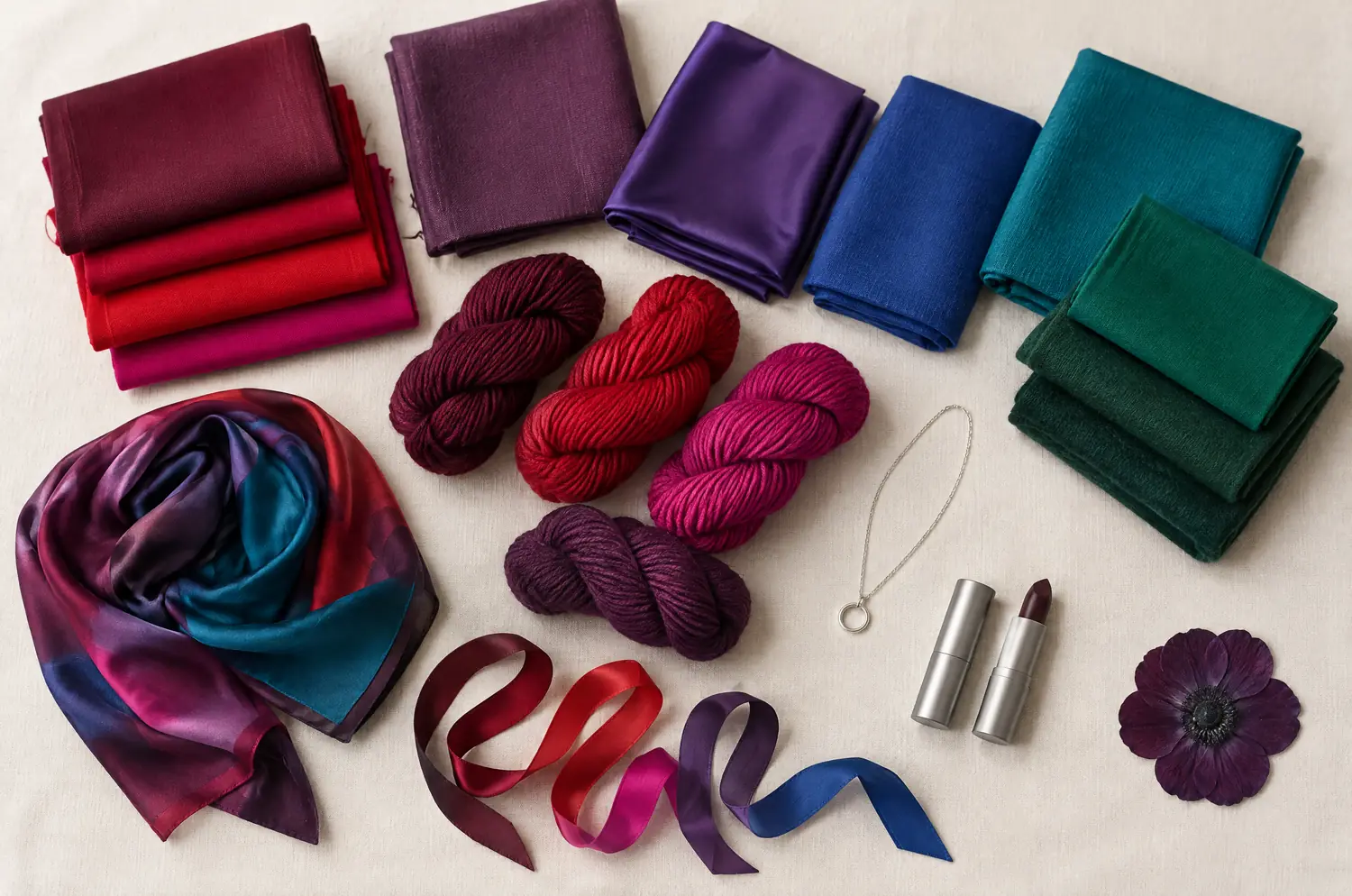
The darkest Winter: deep, crisp, very intense colors.
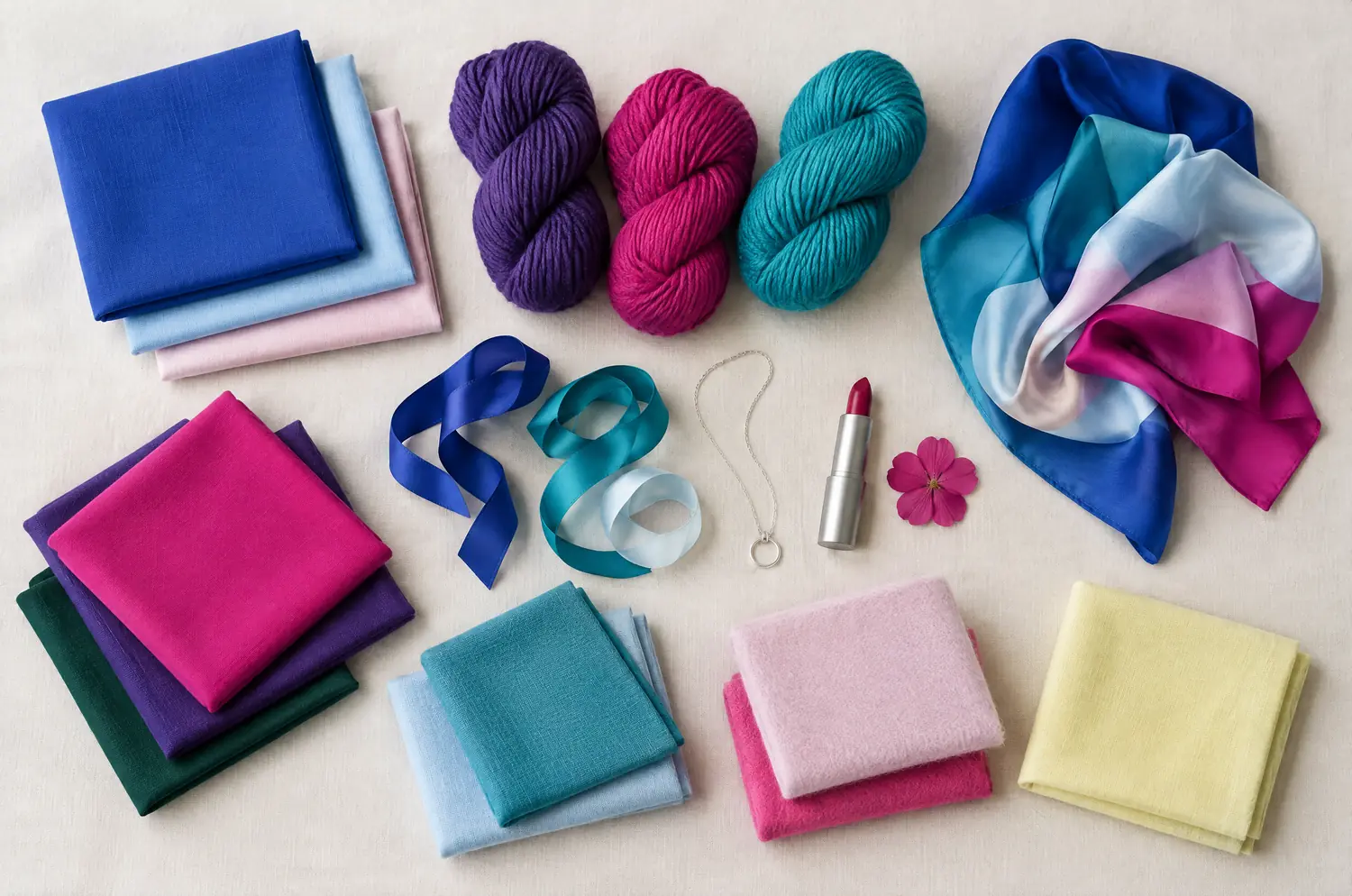
The heart of Winter: icy, pure colors with no warmth at all.
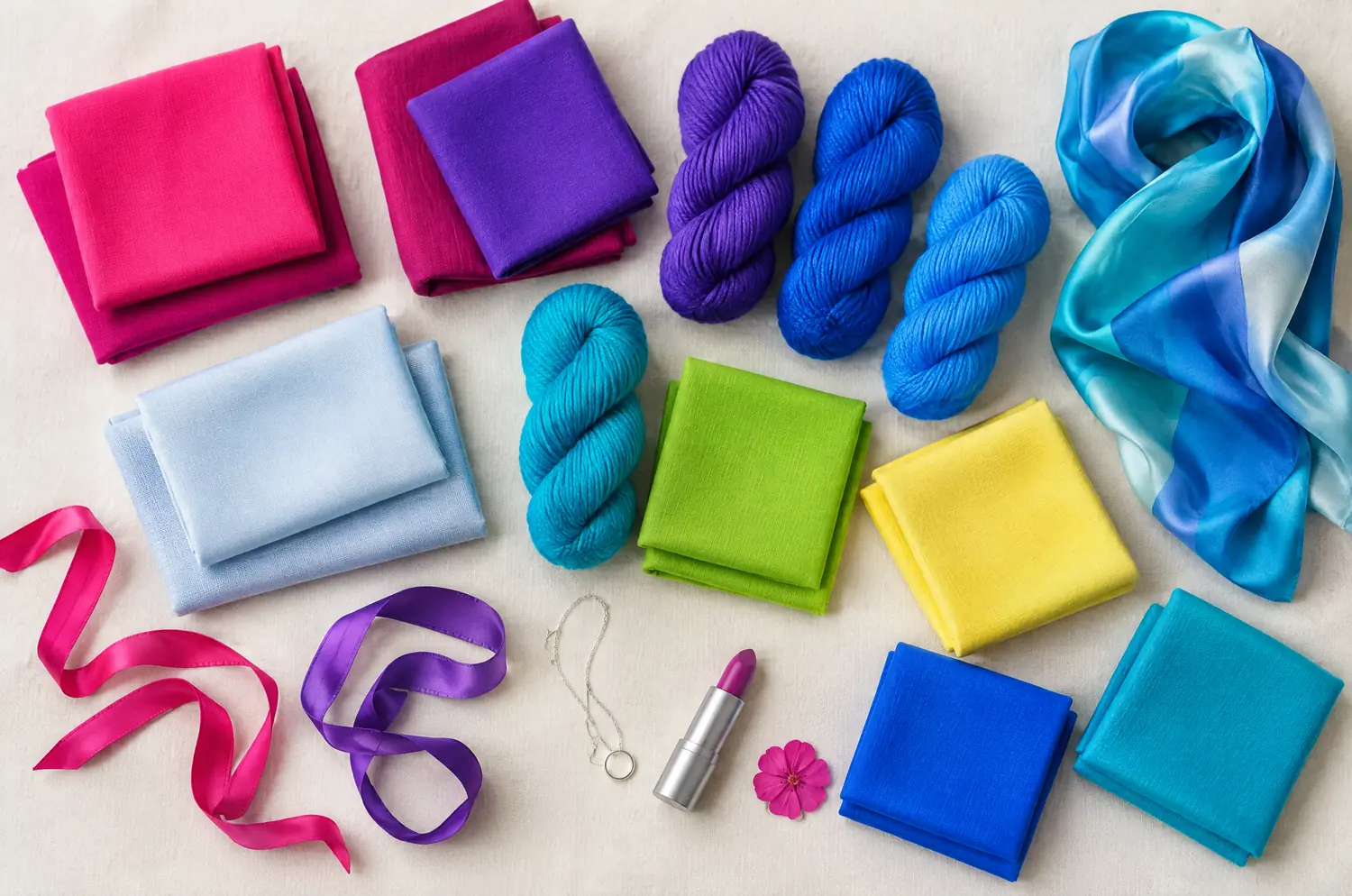
The most dazzling Winter: electric colors and maximum contrast.
| Sub-season | Temperature | Lightness | Intensity | Contrast | Signature color |
|---|---|---|---|---|---|
| Deep Winter | Neutral to cool | Dark | Saturated | High | Cool Burgundy |
| True Winter | Very cool | Medium to dark | Saturated | High | Fuchsia |
| Bright Winter | Neutral to cool | Medium | Very bright | Very high | Fuchsia |
Makeup and hair
The broad lines change from one sub-season to the next. Here are the basics for each.
Head to head
Winter and Summer are both cool seasons. The two-color test below tells them apart.
Each Winter sub-season leads with a different trait.
The quiz can’t see your skin react to colors, so read its answer as a hint, not a verdict. Take the free quiz
The two-color test. In daylight, with no makeup, hold a piece of fabric in each of these two colors up to your face. If the fuchsia gives you radiance and the powder pink looks washed out, you lean Winter.
Can’t see the difference? That’s common: we all see through our own taste. Read the Summer page too, or let the quiz give you a first hint.
The quiz shows you your likely season and a sub-season hint, with no sign-up. A first hint, not a verdict.
Full palette, capsule wardrobe, makeup, hair and a shopping list for each sub-season. Not on sale yet: join the waitlist.
Twelve sub-seasons instead of sixteen, the three things we look at, and why a quiz is only a first hint.
Questions
Yes. Blonde Winters are rare, but they exist. Hair color is never enough to rule out a season: how the skin reacts to colors decides.
No, and it’s a myth worth fighting. Deep skin tones show up in all four seasons. Placing someone in a season based on their skin tone is a flawed method.
Deep Winter needs dark colors first. True Winter needs clearly cool colors first. Bright Winter needs very bright colors first, and maximum contrast.
Black, Pure White, Royal Blue, Fuchsia, Raspberry Red, Emerald Green, Violet and Glacier Blue. Each of the three sub-seasons has its own version of this palette.
Golden beiges, orange, mustard, warm brown and khaki near your face. They turn your skin yellow. Nothing is off-limits: if you love one of them, wear it away from your face.
Silver, platinum, white gold. Vivid stones: sapphire, emerald, ruby, diamond, onyx.
Deep Winter: Burgundy, cherry, plum, deep red. A dark lip comes naturally to you. True Winter: Raspberry, fuchsia, blue-toned red. Cool reds are your reds. Bright Winter: Fuchsia, bright pink, clear red. A bold, radiant lip is your best asset.
Start with the free quiz. It shows you your likely season and a sub-season hint in two minutes: a first hint, not a verdict.