
Free: the color analysis quiz. Find your season in 2 minutes →Free quiz: your season in 2 minutes →

Guide to the color seasons

The 12 Color Seasons

Spring, Summer, Autumn and Winter, with three sub-seasons in each. Pick a season, or compare them by quality, to see its palette.

The 12 seasons on one page

Choose a season to see its three sub-seasons, or switch to “By leading quality” to compare the sub-seasons that share a trait.

Warm season

Spring

Warm, light and bright: the season that needs freshness and cheer.

Warm, light, bright and clear colors. Low to moderate contrast.

All about the Spring season

How to recognize it

  • A warm or neutral-warm undertone: gold looks better on you than silver.
  • An overall impression of lightness and glow, no matter how tan you are.
  • Low to moderate natural contrast between your skin, eyes and hair.

Keep away from your face

Solid black, charcoal gray, burgundy and any very muted or very cool color near your face. They dim your natural light.

Jewelry

Yellow gold, light rose gold, shiny gold tones. Light, luminous stones: turquoise, coral, peridot.

The 3 Spring sub-seasons

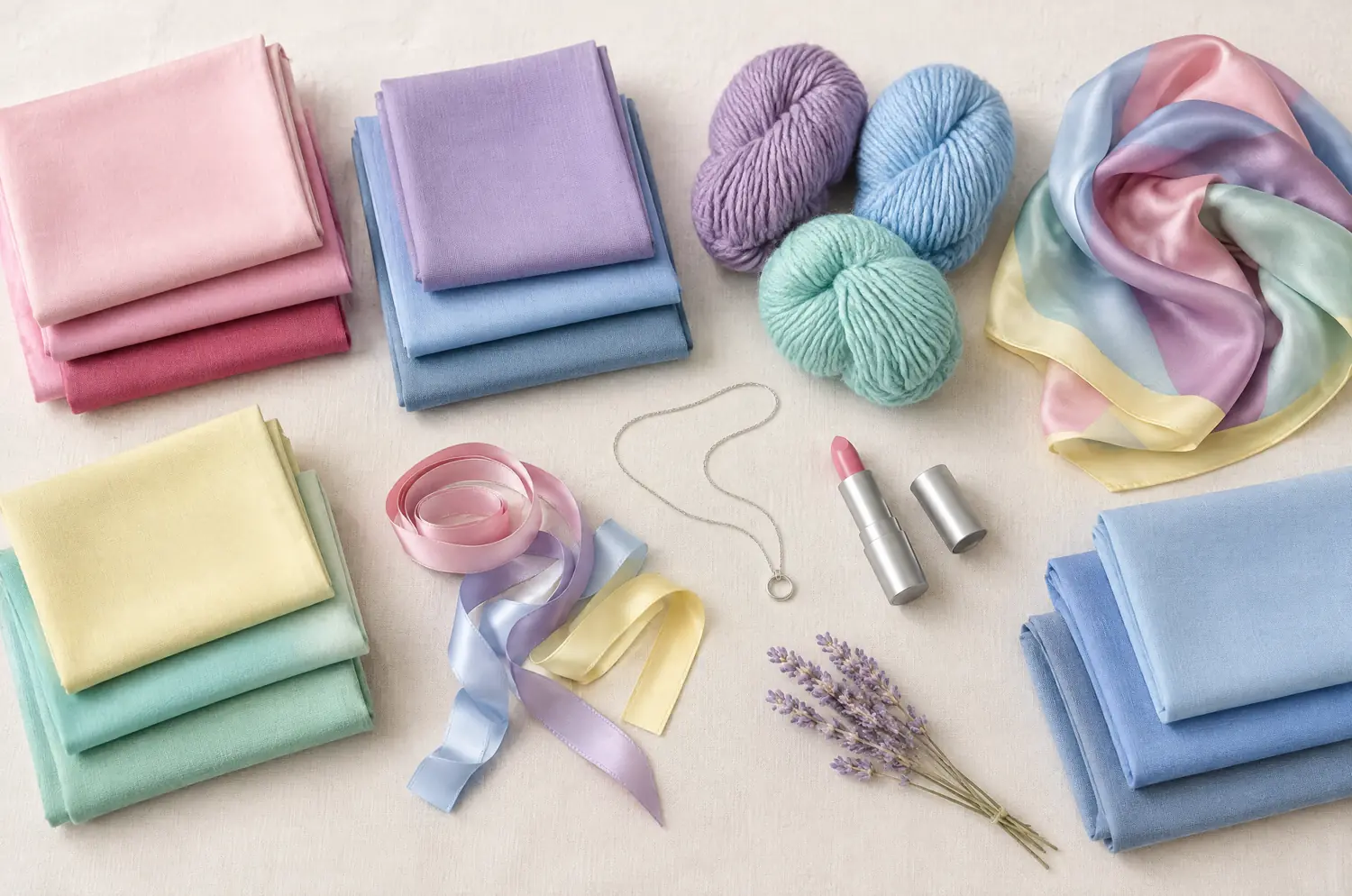
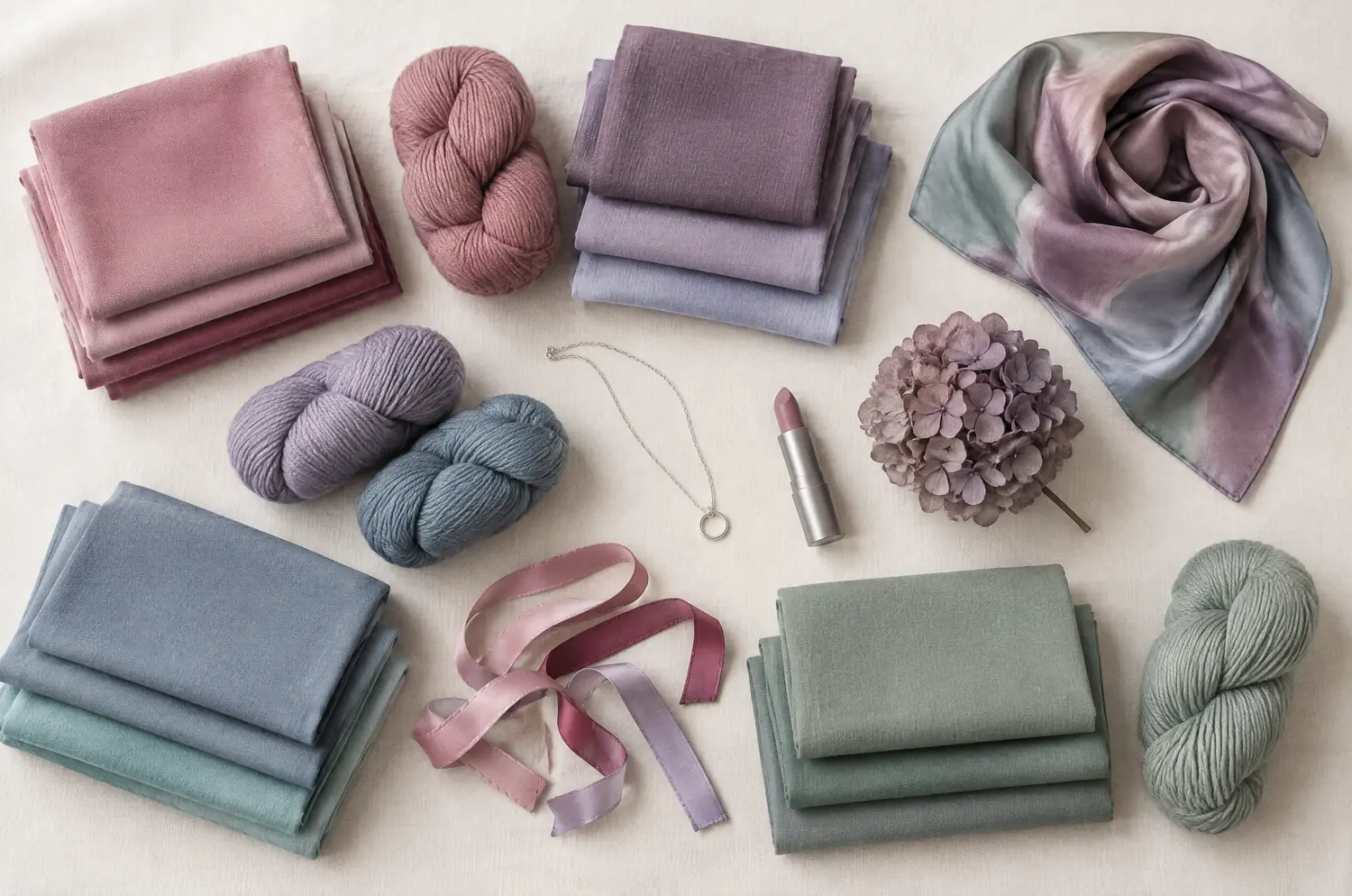
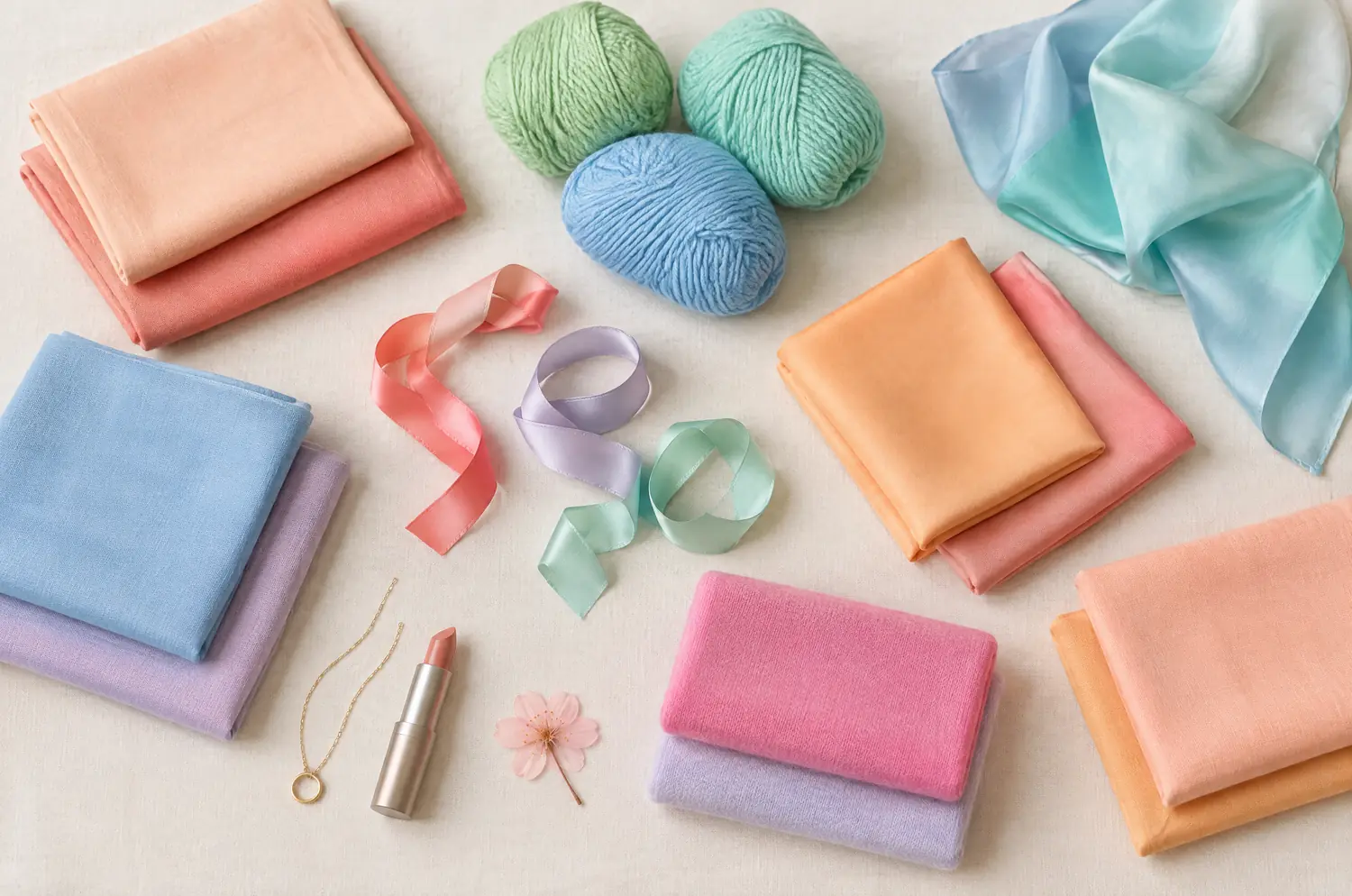
Fabrics, ribbons and a gold necklace in the light, fresh shades of the Light Spring palette
Temperature
Slightly warm
Lightness
Very light
Intensity
Medium, fresh
Contrast
Low

Light Spring

Light Spring

The lightest of the warm seasons: all light and freshness, never heavy.

Palette: 12 colors

  • Peach
  • Light Coral
  • Apricot
  • Butter Yellow
  • Fresh Apple Green
  • Mint
  • Aqua
  • Sky Blue
  • Light Periwinkle
  • Salmon Pink
  • Warm Candy Pink
  • Light Lilac

Signature colorPeach

Neighboring season

Light Summer. Both seasons are light. Light Summer is cooler and more powdery, Light Spring warmer and fresher.

Spring, Summer, Autumn, Winter: the 4 families

Seasonal color analysis looks at three things in your natural coloring.

  • Temperature: is the tone under the surface of your skin (your undertone) warm and golden, or cool and rosy or bluish?
  • Lightness: are your skin, eyes and hair together rather light, or rather deep?
  • Intensity: are your colors bright and crisp, or soft and blended?

Spring and Autumn are the warm seasons. Summer and Winter are the cool ones. Each season then splits into three sub-seasons, depending on what leads in your coloring: lightness, temperature, softness, depth or brightness.

A season is not a box. It’s a starting point for understanding why some colors light you up and others drain you. New to all this? Start with seasonal color analysis explained.

Which sub-seasons get confused

Six pairs of neighboring sub-seasons share their first trait and look alike at first. Here is what sets each pair apart.

Light Spring or Light Summer

Both seasons are light. Light Summer is cooler and more powdery, Light Spring warmer and fresher.

Warm Spring or Warm Autumn

Both seasons are very warm. Warm Autumn is deeper and more muted, Warm Spring lighter and brighter.

Bright Spring or Bright Winter

Both seasons need very bright colors. Bright Winter is cooler, Bright Spring warmer.

Cool Summer or True Winter

Both seasons are very cool. True Winter is higher in contrast and more saturated, Cool Summer softer.

Soft Summer or Soft Autumn

Both seasons need desaturated colors. Soft Autumn is warmer, Soft Summer cooler.

Deep Autumn or Deep Winter

Both seasons need dark colors. Deep Winter is cooler and crisper, Deep Autumn warmer and richer.

Find your season: quiz or draping

Two ways to get a first hint on your own. Neither one replaces a trained eye.

Free · 2 minutes

Take the color analysis quiz

Ten questions, no sign-up. It shows you your likely season and a sub-season hint: a first hint, not a verdict.

Take the free quiz

12 seasons vs 16

I work with 12 seasons. Some systems use 16, and I don’t: in practice, sixteen add more confusion than precision.

Twelve seasons are enough to be precise, and few enough to stay clear.

Color season questions

How many color seasons are there?

The original method has 4 seasons: Spring, Summer, Autumn and Winter. The 12-season method splits each one into 3 (for example Soft Autumn, Warm Autumn and Deep Autumn). Some systems use 16 sub-seasons. I don’t: in practice, sixteen add more confusion than precision.

How do I find my season?

Look at three things: the temperature of your natural coloring (warm or cool), its lightness (light or deep) and its intensity (bright or soft). You can start on your own with the free quiz. For your sub-season, nothing replaces a trained eye: neighboring sub-seasons look alike, so read the quiz result as a first hint.

Which seasons have medium contrast colors?

Contrast is how strongly your skin, eyes and hair stand out from one another. Moderate contrast: Warm Spring, Cool Summer and Warm Autumn. Low to moderate: Soft Autumn. Every sub-season has its own contrast level, and the table on each season page puts them side by side.

What color season is olive skin?

None in particular. Olive is a skin tone, not a season, and every skin tone shows up in all four seasons. What decides your season is how your skin reacts when colors are held up to your face: some olive skin looks best in warm colors, some in cool ones.

Are my hair color and skin tone enough to know my season?

No. Saying that a redhead is automatically an Autumn, that a blonde can’t be a Winter or that deep skin is automatically Winter are shortcuts. A serious analysis never places anyone in a season based on a single trait.

Can I change season during my life?

Your undertone doesn’t change. A tan, a new hair color or gray hair can shift your contrast and slightly move which colors look best, but you stay in your season.

Not sure which season is yours?

Start with the free quiz, then compare your result with its neighboring season.

Free quizPDF guides