
Compare · two sub-seasons
Soft Summer vs Deep Winter: The Three Differences You Can See
“Both are cool, so they must look alike.” Put them on a face and they don’t. One blurs gently. The other draws a line.
Side by side
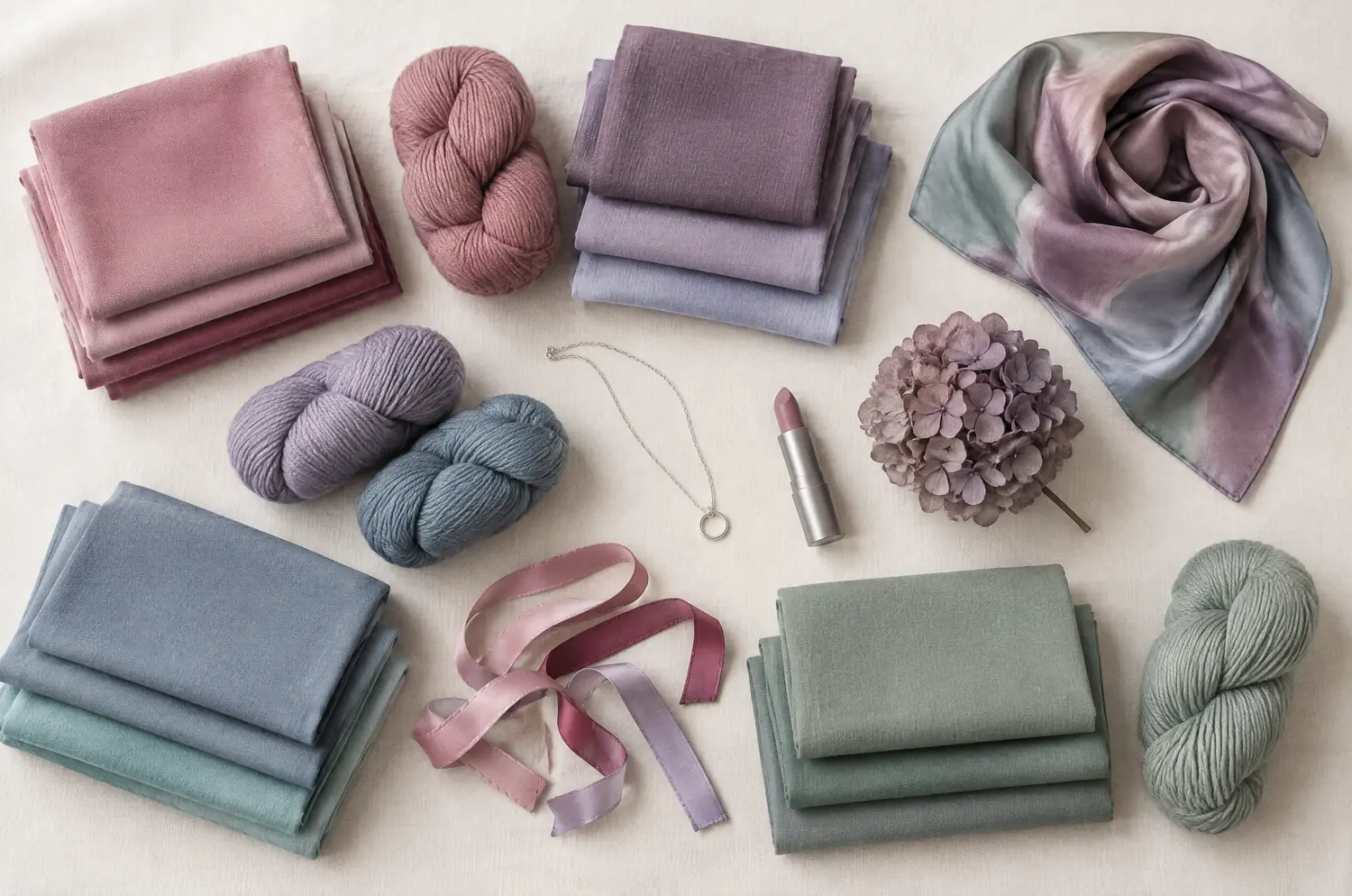
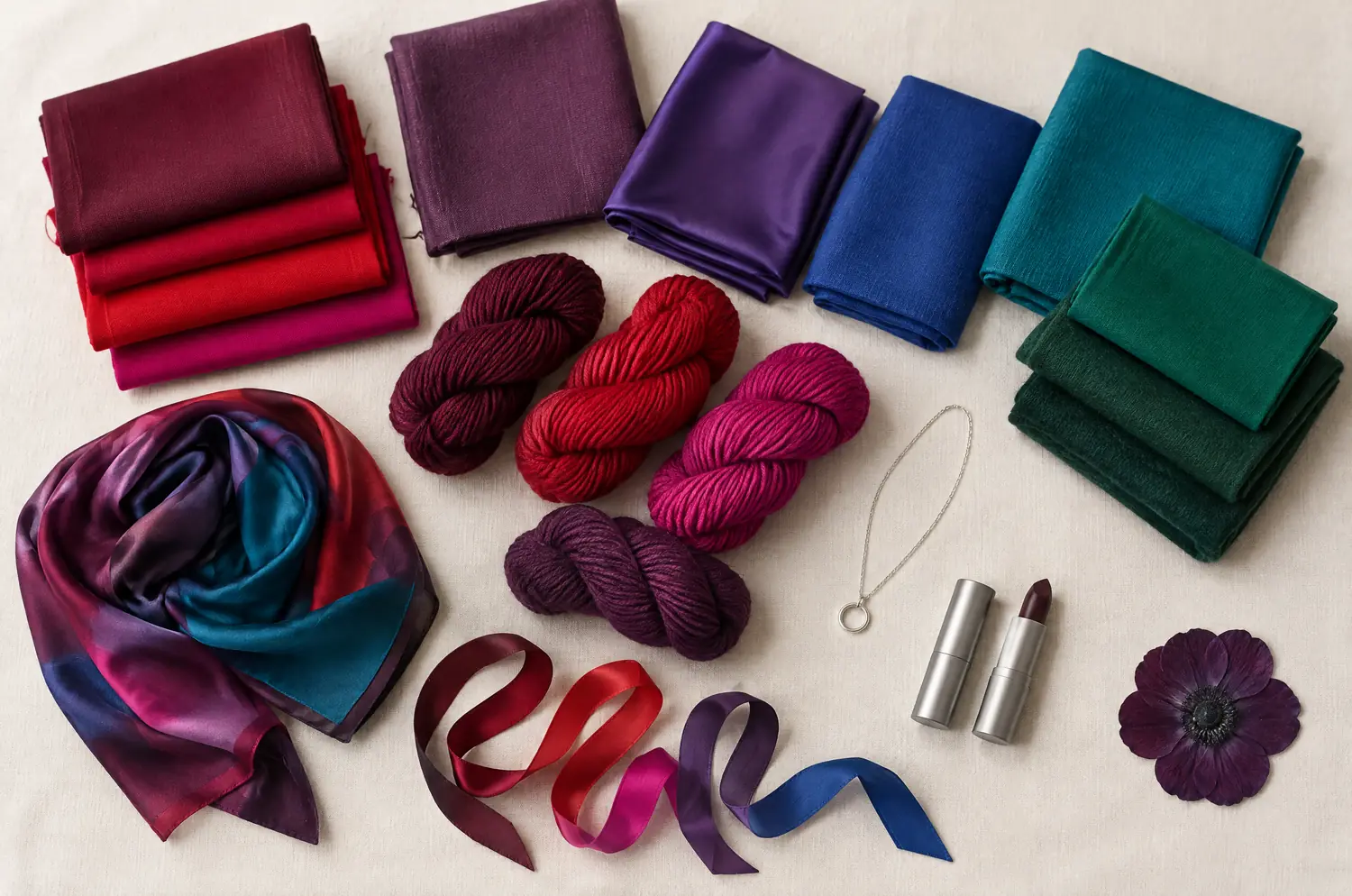
Soft Summer and Deep Winter palettes
Same scale, same page: look at the swatches before you read the differences.
- Dusty Rose
#C48A94 - Tea Rose
#D9A8AE - Muted Raspberry
#A85068 - Soft Burgundy
#8A4756 - Soft Plum
#7B5871 - Grayed Mauve
#A690A8 - Gray Lavender
#A9A6C9 - Gray Blue
#8198AE - Slate Blue
#5F7890 - Grayed Turquoise
#6FA3A3 - Verdigris
#6F9088 - Cool Sage
#93A99A
Neutrals
- Off-White
- Dove Gray
- Taupe
- Grayed Navy
Colors to avoid
- Black
- Bright Orange
- Bright Yellow
- Electric Fuchsia
- Cool Burgundy
#5C0F2E - Cherry Red
#B0102E - Pure Red
#D0102A - Raspberry Pink
#C81E5A - Fuchsia
#C2187A - Plum
#5E1F4F - Deep Violet
#4B1F6F - Royal Blue
#1F3FA8 - Midnight Blue
#14213D - Deep Turquoise
#007C89 - Emerald
#00704A - Cool Spruce Green
#0B4F3F
Neutrals
- Black
- Charcoal
- Navy
- Pure White
Colors to avoid
- Golden Beige
- Rust
- Mustard
- Peach
The four axes
3 axes differ, the rest is shared
Temperature, lightness, intensity and contrast: the gauge shows where each one sits, the table says it in words.
The two sub-seasons
- Temperature
- 12SameNeutral to cool
- Lightness
- 12Differs1 Medium2 Dark
- Intensity
- 12Differs1 Very soft, grayed2 Saturated
- Contrast
- 12Differs1 Low2 High
Line by line
| What is compared | Soft Summer | Deep Winter |
|---|---|---|
| Temperature | Neutral to cool | Neutral to cool |
| LightnessDiffers | Medium | Dark |
| IntensityDiffers | Very soft, grayed | Saturated |
| ContrastDiffers | Low | High |
| Signature color | Dusty Rose | Cool Burgundy |
| Neutrals | Off-White, Dove Gray, Taupe, Grayed Navy | Black, Charcoal, Navy, Pure White |
| Metals | Brushed silver, rose gold, white gold. Matte or satin finishes. | Silver, platinum, white gold. Onyx, garnet, sapphire. |
| Lips | Rosewood, dusty rose, muted raspberry. Satin finishes. | Burgundy, cherry, plum, deep red. A dark lip comes naturally to you. |
| Hair color | Ash brown, ash dark blonde, soft brown. Very blended highlights rather than strong contrasts. | Cool dark brown, black, very dark brown. Avoid golden or coppery tones. |
What does Soft Summer ask of a color?
Softness leads. Everything else follows from it.
Soft Summer is neutral to cool, medium in depth and very muted. Colors keep some gray in them, the way wet pebbles and heather do. Dusty Rose, Grayed Mauve and Verdigris show the idea.
Contrast on a Soft Summer face is low. Hair, eyes and skin sit close together, so nothing on the face competes with the color you wear.
That is why bright colors arrive before you do. A sharp orange or a neon pink speaks first, and your face comes second.
Monochrome and tone-on-tone outfits, where one shade slides into the next, sit better on you than sharp contrast.
What does Deep Winter do with darkness and clarity?
Depth leads. The color has weight, and it stays clear.
Deep Winter is also neutral to cool, but dark and saturated. Think of a winter night: midnight blue sky, evergreens, garnet, snow. Cool Burgundy, Emerald and Midnight Blue carry that mood.
The contrast is high. Dark hair, often dark eyes and a defined gaze give the face its own strong outline. A color has to match that definition, or the face looks pale next to it.
Black really suits this sub-season, even near the face. Powdery pastels and earthy golds (rust, mustard) work against you.
Lightness, intensity, contrast: where do Soft Summer and Deep Winter split?
Lightness, intensity and contrast differ. Temperature is the one they share, and it is the one people lean on too much.
Both sit neutral to cool. So a cool pink is no clue by itself, and neither is silver. Don’t look for a difference there.
Here are the three that count, in the order the eye catches them.
Lightness comes first. Deep Winter is dark, Soft Summer medium. In a very dark color, a Soft Summer face can fade behind the fabric. In a medium, hazy one, a Deep Winter face can look pale.
Contrast comes next. A Deep Winter face holds black next to white and answers back. Put that pairing on a Soft Summer face and the outfit takes over. Soft Summer prefers a pairing that slides, like Slate Blue with Off-White and Taupe.
Intensity is the quietest of the three and the hardest to name. Soft Summer needs grayed color. Deep Winter needs color with no haze at all.
If you lean Deep Winter, watch for flatness in a grayed shade. If you lean Soft Summer, watch for loudness in a saturated one.
The two-color test. In daylight, with no makeup, hold a piece of fabric in each of these two colors up to your face. Rest your eyes between the two and redo it another day. If the same color keeps winning, you have a direction: a first hint, not a verdict.
What do Dusty Rose and Cool Burgundy show on your face?
Set up your space once, as described in color draping at home. Then spend the time on this pair.
Hold Dusty Rose under your chin, then Cool Burgundy. One at a time, and look away between them.
With Dusty Rose, watch your features. If they settle and the skin looks even, softness is leading. If they blur behind the rose, depth is leading.
With Cool Burgundy, watch the color itself. Does it look like it belongs to you, or do you see the fabric first? If your eyes stand out and the skin looks clean, that points to Deep Winter. If the burgundy takes over, that points to Soft Summer.
Temperature is shared here, so don’t expect a yellow or gray cast to decide it. Lightness, intensity and contrast are where the answer shows.
Repeat the duel on another day. If the same color wins both times, you have your answer for now. If it flips with the light, call it a lean and keep looking.
What if you sit between Soft Summer and Deep Winter?
Look at which trait leads. Is your face softer or deeper?
Soft Summer’s closest neighbor is Soft Autumn, and Deep Winter’s is Deep Autumn. So a mix of these two isn’t the expected reading.
A lean is still a lean. If softness leads, you are closer to Soft Summer. If depth leads, you are closer to Deep Winter.
Plum is the family where the two palettes meet. A Soft Summer can try the Deep Winter Plum in a scarf or a sweater. A Deep Winter can try Soft Plum or Soft Burgundy from the Soft Summer palette.
Hold a borrowed shade beside one of your usual ones and see which face you prefer.
A selfie filter or a short quiz won’t settle this pair. Contrast and the way skin reacts to fabric show up on a real face, in real light.
Start with the free color analysis quiz for a likely season, then compare the two season pages with what you see.
Which lip, which hair shade and which metal lean each way?
Partly. Metals are the place where they overlap.
Silver and white gold appear on both lists, so metal won’t split the two. Rose gold is Soft Summer’s alone, and platinum belongs to Deep Winter.
Lips and hair split them better. Soft Summer stays in the rosewood and muted raspberry range, with ash brown hair and blended highlights. Deep Winter goes darker: burgundy, cherry or plum on the lips, cool dark brown or black on the hair.
For makeup, see Soft Summer makeup and Deep Winter makeup.
Keep exploring
More on these two sub-seasons
Palette Soft Summer color palette
The most blended season: grayed, hushed colors with a quiet elegance.
Makeup Soft Summer makeup
Soft Summer makeup comes down to haze, not color: rosewood lips, taupe eyes, tea rose cheeks. See what to wear, what to skip and why it works on your face.
Hair color Soft Summer hair color
Soft Summer hair color starts with ash brown, ash dark blonde and soft brown. Here is how to pick between them, what to skip and what to tell your colorist.
Outfits Soft Summer outfits and capsule wardrobe
Soft Summer outfits made simple: eight capsule pieces, the order to build them, outfit formulas and the neutrals that replace black. Begin near your face.
Compare Bright Spring vs Soft Summer
Bright Spring vs Soft Summer: three differences set them apart, temperature, intensity and contrast. See what each looks like on a face and how to decide.
Compare Cool Summer vs Soft Summer
Cool Summer vs Soft Summer comes down to three differences: coolness, softness and contrast. Here is how they look on a face and how to settle it at home.
Questions
Soft Summer or Deep Winter: your questions
How do I tell Soft Summer from Deep Winter?
Look at depth and contrast first. Soft Summer is medium and low contrast. Deep Winter is dark and high contrast. Then drape Dusty Rose and Cool Burgundy and watch whether your features settle or sharpen. Temperature won’t help, because both are neutral to cool.
Can hair color decide between them?
Not alone. A dark head of hair doesn’t make you a Deep Winter, and soft brown doesn’t make you a Soft Summer. Cover it and watch your skin and eyes react to colors held near the face, then decide.
Is black fine for both?
Not quite. Black sits on the Soft Summer avoid list, and Grayed Navy or Dove Gray take its place. Deep Winter keeps black among its neutrals, next to Charcoal and Navy.
Which colors do they share?
Rose, plum and turquoise appear in both, because neither palette is warm. Soft Summer has Dusty Rose, Soft Plum and Grayed Turquoise. Deep Winter has Raspberry Pink, Plum and Deep Turquoise. Same families, grayer in one and darker in the other.
What if my quiz says one and my drape test the other?
Neither result is final. The drape tells you more, because it uses your own skin and a real fabric. Repeat the drape in daylight, and read the Soft Summer page next to the Deep Winter one.
Soft Summer or Deep Winter? Check it.
The free quiz shows you your likely season in two minutes. Then run the two-color test on your own bare face, in daylight: a first hint, not a verdict.