
Compare · two Summers
Cool Summer vs Soft Summer: How to Tell Which One You Are
Forget how light or dark you are. These two share their depth. That is not where the answer is. What separates them is how cool the color is and how much gray sits in it.
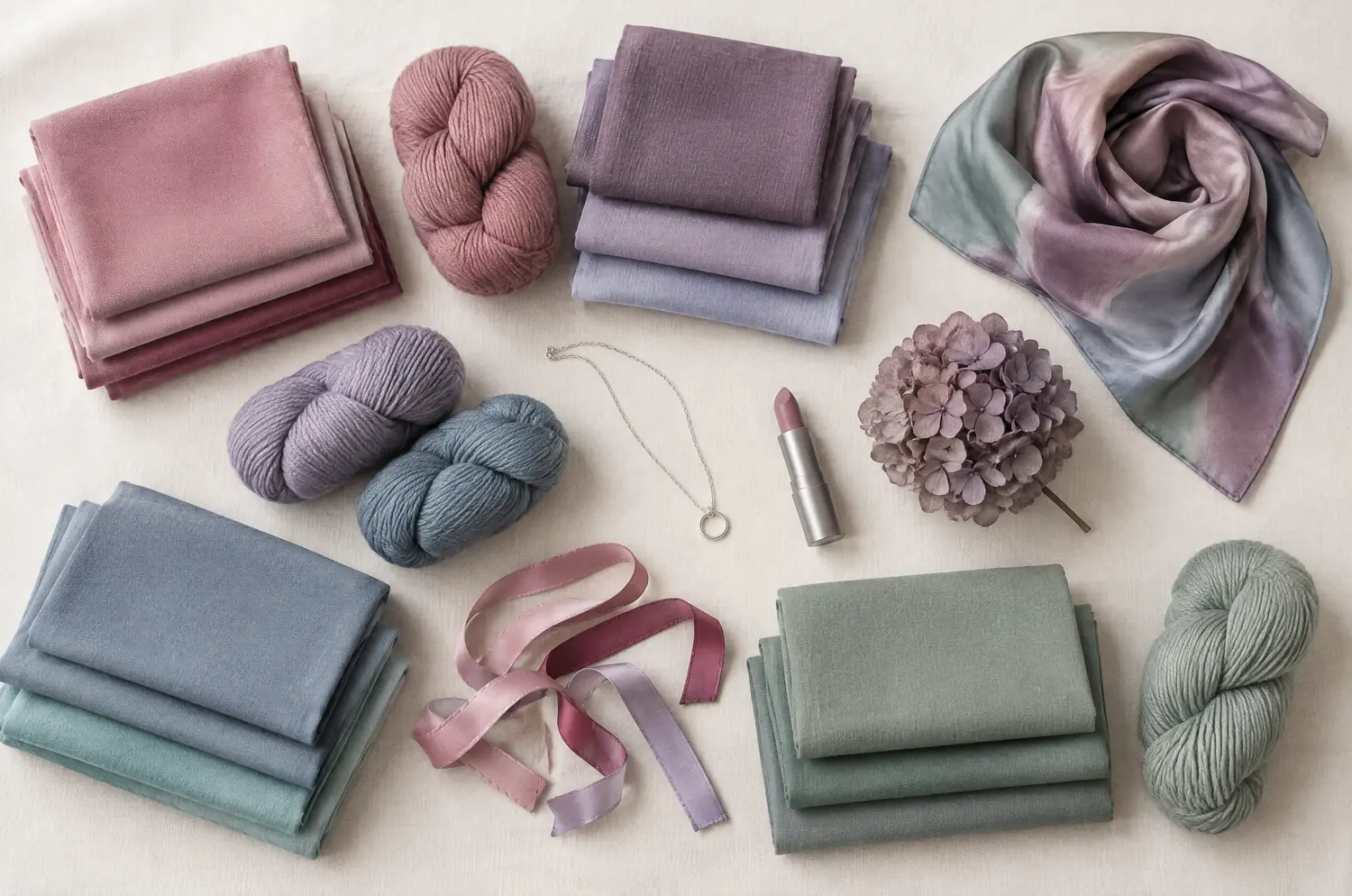
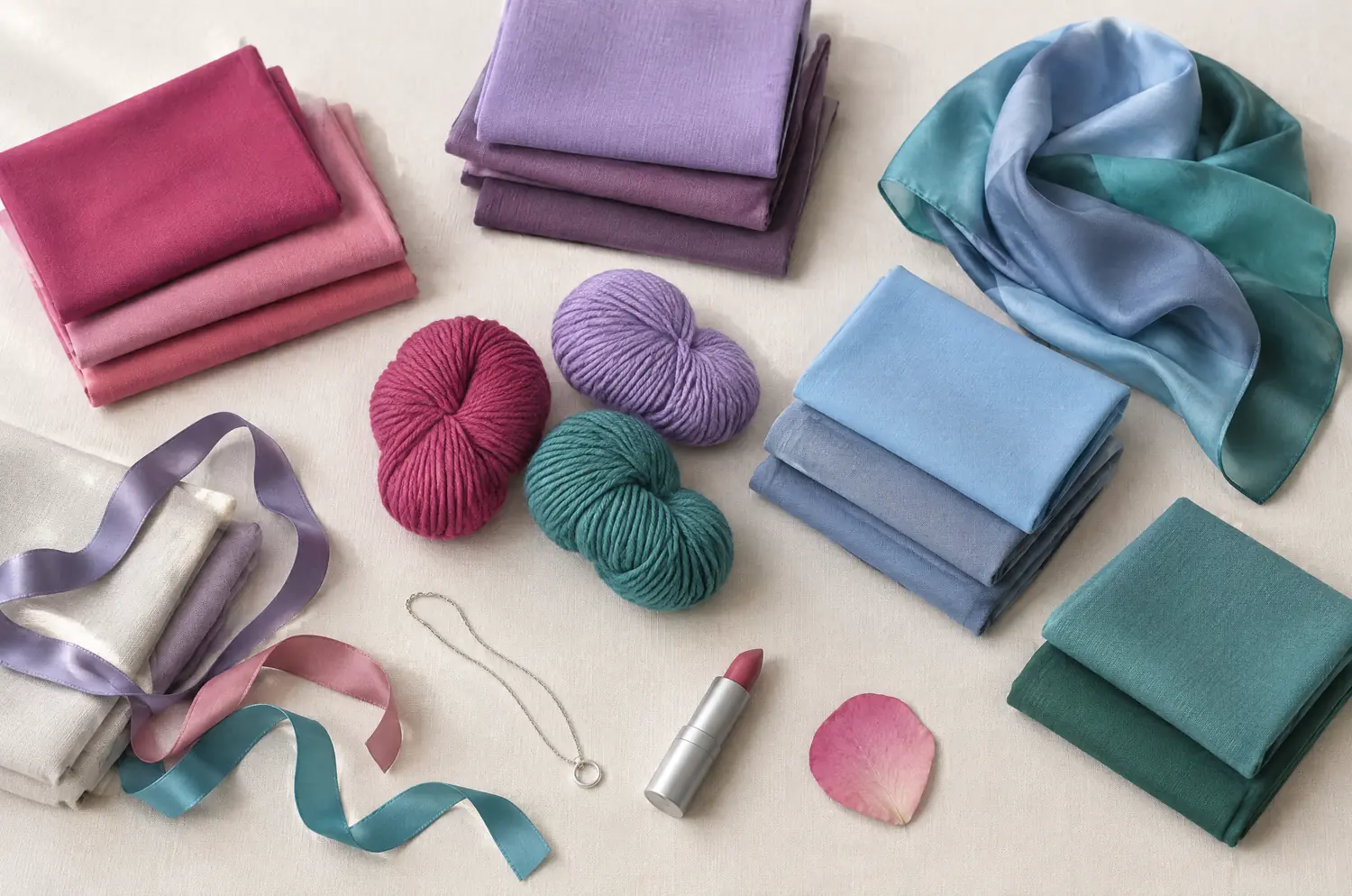
Side by side
Cool Summer and Soft Summer palettes
Same scale, same page: look at the swatches before you read the differences.
- Raspberry
#C73866 - Pink
#E57BA2 - Cool Watermelon
#E0607E - Soft Cherry
#B5364F - Mauve
#A777B8 - Light Plum
#8E5A8E - Cool Lavender
#9E8FD1 - Cool Sky Blue
#8FBDE3 - Denim Blue
#4F6FA8 - Gray Blue
#7C93B5 - Cool Turquoise
#4FA8A8 - Soft Spruce Green
#3F7F73
Neutrals
- Soft White
- Medium Gray
- Cool Taupe
- Navy
Colors to avoid
- Orange
- Golden Yellow
- Terracotta
- Black
- Dusty Rose
#C48A94 - Tea Rose
#D9A8AE - Muted Raspberry
#A85068 - Soft Burgundy
#8A4756 - Soft Plum
#7B5871 - Grayed Mauve
#A690A8 - Gray Lavender
#A9A6C9 - Gray Blue
#8198AE - Slate Blue
#5F7890 - Grayed Turquoise
#6FA3A3 - Verdigris
#6F9088 - Cool Sage
#93A99A
Neutrals
- Off-White
- Dove Gray
- Taupe
- Grayed Navy
Colors to avoid
- Black
- Bright Orange
- Bright Yellow
- Electric Fuchsia
The four axes
3 axes differ, the rest is shared
Temperature, lightness, intensity and contrast: the gauge shows where each one sits, the table says it in words.
The two sub-seasons
- Temperature
- 12Differs1 Very cool2 Neutral to cool
- Lightness
- 12SameMedium
- Intensity
- 12Differs1 Soft to medium2 Very soft, grayed
- Contrast
- 12Differs1 Moderate2 Low
Line by line
| What is compared | Cool Summer | Soft Summer |
|---|---|---|
| TemperatureDiffers | Very cool | Neutral to cool |
| Lightness | Medium | Medium |
| IntensityDiffers | Soft to medium | Very soft, grayed |
| ContrastDiffers | Moderate | Low |
| Signature color | Raspberry | Dusty Rose |
| Neutrals | Soft White, Medium Gray, Cool Taupe, Navy | Off-White, Dove Gray, Taupe, Grayed Navy |
| Metals | Silver, white gold, platinum. Gray pearls, amethyst, aquamarine. | Brushed silver, rose gold, white gold. Matte or satin finishes. |
| Lips | Raspberry, blue-toned pink, soft cherry. Your red is a cool red. | Rosewood, dusty rose, muted raspberry. Satin finishes. |
| Hair color | Ash tones: ash blonde, ash brown, cool brown. Gray or white hair looks naturally good on you. | Ash brown, ash dark blonde, soft brown. Very blended highlights rather than strong contrasts. |
What makes Cool Summer cool before anything else?
Cool Summer (also called True Summer) leads with coolness. Your colors lean blue before they lean anything else.
Raspberry is the signature. It gives you a healthy glow. Pink, Cool Lavender and Denim Blue sit beside it, with Soft Spruce Green for a breath of green.
Depth is medium and the contrast is moderate. The colors are fresh and visible, never loud. Think of an English garden under an overcast sky.
Silver suits you far better than gold. Anything orange-leaning muddies your complexion. Black is too harsh, but navy does what black can’t.
Why does Soft Summer put the gray before the color?
Soft Summer leads with softness. The temperature is neutral to cool, so the base stays cool, but the gray comes first.
Dusty Rose is the signature. Around it you find Muted Raspberry, Gray Lavender, Slate Blue and Verdigris. Every one of them has a veil over it.
Contrast is low. Close shades of one family work for you, while a sharp black-and-white pairing cuts your face off from the clothes. A loud color arrives before your face does.
Gray suits you well. Think of wet slate and sage leaves after rain.
Where do Cool Summer and Soft Summer really differ?
Three axes differ: temperature, intensity and contrast. Here they are in the order the eye catches them.
Temperature comes first. Cool Summer is very cool, so a warm tone goes wrong fast: the skin turns yellow and the eyes lose their shine. Soft Summer is neutral to cool, close enough to the middle that metals and warm-ish hints can feel like a toss-up.
Intensity comes next. Cool Summer is soft to medium, and Raspberry is its signature. Soft Summer is very soft and grayed. See whether Raspberry reads louder than your face, and whether Muted Raspberry sits more calmly.
Contrast closes the list. Cool Summer has a moderate gap, so Navy next to Soft White can show a clean edge. Soft Summer has a low gap. Watch whether that pairing feels cut out, and whether Dove Gray beside Dusty Rose blends more easily.
What they share: medium depth, a Summer base that stays on the cool side, and black, which is on both avoid lists and hard next to the face. Don’t hunt for a difference in lightness. There isn’t one.
The two-color test. In daylight, with no makeup, hold a piece of fabric in each of these two colors up to your face. Rest your eyes between the two and redo it another day. If the same color keeps winning, you have a direction: a first hint, not a verdict.
How do Raspberry and Dusty Rose settle it at home?
The setup is simple and the color draping at home article walks you through it, so I’ll spend this section on your pair.
Hold Raspberry under your chin, then Dusty Rose, one at a time. Ask three questions.
Does your skin look yellow or gray? Yellow points to a color that is too warm for you. Gray points to one that is too heavy with haze.
Does the color look loud or faded on you? If Raspberry overpowers your face, lean toward Soft Summer. If Dusty Rose looks faded on you, lean toward Cool Summer. Both are things to watch for, not rules.
Do your features stand out or blur? Defined eyes and lips favor Cool Summer. A face that melts gently into the color favors Soft Summer.
Then repeat with Navy and Grayed Navy. If the same side keeps winning, you have a direction. It’s a first hint you can check on the season pages, nothing more.
What if you sit between Cool Summer and Soft Summer?
Start with the leading trait. Ask yourself which one wins on your face: the coolness or the softness?
These two aren’t neighbors in the method. Cool Summer borders True Winter, Soft Summer borders Soft Autumn. So an in-between result stays inside Summer, and you’re choosing how much haze you want over a cool base.
Some shades are safe for both. Gray Blue sits in both palettes, in two close but not identical versions. If you land in the middle, build outfits on it and use Raspberry or Dusty Rose only as an accent near your face.
You can also test a borrowed shade. Try Cool Summer’s Mauve if you’re leaning Soft, or Soft Summer’s Gray Lavender if you’re leaning Cool. Watch your skin, not the fabric.
A quiz or an app can’t settle this pair. It can’t see your skin react. The free color analysis quiz gives you a likely season and a sub-season hint, which is a good place to begin.
What changes in your lipstick, hair and jewelry?
Lips show the split clearly. Cool Summer wears Raspberry, blue-toned pink and Soft Cherry, and your red is a cool red. Soft Summer wears Rosewood, Dusty Rose and Muted Raspberry in satin finishes. See the Cool Summer makeup and Soft Summer makeup pages for the rest.
Hair is closer. Both love ash tones. Cool Summer can go ash blonde, ash brown or cool brown, and gray or white hair looks naturally good on you. Soft Summer prefers very blended highlights to strong contrast.
For metals, Cool Summer leans to silver, white gold and platinum. Soft Summer leans to brushed silver, rose gold and white gold. White gold is the shared ground.
Keep exploring
More on these two sub-seasons
Palette Cool Summer color palette
Cool made gentle: blues, pinks and raspberries without any harshness.
Outfits Cool Summer outfits and capsule wardrobe
Cool Summer outfits built on eight pieces: navy, gray, raspberry and soft white, how to wear them, and what to do with orange and black. Start with navy.
Compare Cool Summer vs True Winter
Cool Summer vs True Winter: both are very cool, so temperature won’t settle it. Here are the three differences that do, and a quick test to help you decide.
Palette Soft Summer color palette
The most blended season: grayed, hushed colors with a quiet elegance.
Makeup Soft Summer makeup
Soft Summer makeup comes down to haze, not color: rosewood lips, taupe eyes, tea rose cheeks. See what to wear, what to skip and why it works on your face.
Hair color Soft Summer hair color
Soft Summer hair color starts with ash brown, ash dark blonde and soft brown. Here is how to pick between them, what to skip and what to tell your colorist.
Questions
Cool Summer or Soft Summer: your questions
How do I tell Cool Summer from Soft Summer?
Look at what leads. Cool Summer is about coolness, so blue-pinks and clear raspberries bring out your eyes. Soft Summer is about softness, so grayed shades like Dusty Rose feel natural and bright ones overpower you. Hold Raspberry and Dusty Rose near your face and see which one sits quietly.
Can I be between Cool Summer and Soft Summer?
Yes. These two sit in the same season, so an in-between result is possible. Your base is cool either way. Build around the shared Gray Blue, then test which accent shade, a clear one or a grayed one, flatters you on a different day. Don’t force a choice before you see a pattern.
Does hair color or gray hair decide between them?
No. I never place anyone from a single trait, and hair is only one clue. Gray or white hair looks naturally good on Cool Summer, but dyed or natural hair doesn’t change your season. The reading is made on your skin and eyes, with your hair covered.
What if the quiz says one and the drape test says the other?
Repeat the test on another day. A quiz only knows your answers, not how your skin reacts to colors. The drape test is the stronger hint, still not a verdict. Then read Cool Summer and Soft Summer and compare them with your mirror.
Which colors can Cool Summer and Soft Summer share?
Gray Blue appears in both palettes, in two close but not identical versions. The navies stay separate: Navy for Cool Summer, Grayed Navy for Soft Summer.
Black is on both avoid lists and tends to be too harsh near the face, so keep it away from your neckline when you can. Beyond that, keep the intensity in mind: cooler and clearer for Cool Summer, grayed for Soft Summer.
Cool Summer or Soft Summer? Check it.
The free quiz shows you your likely season in two minutes. Then run the two-color test on your own bare face, in daylight: a first hint, not a verdict.