
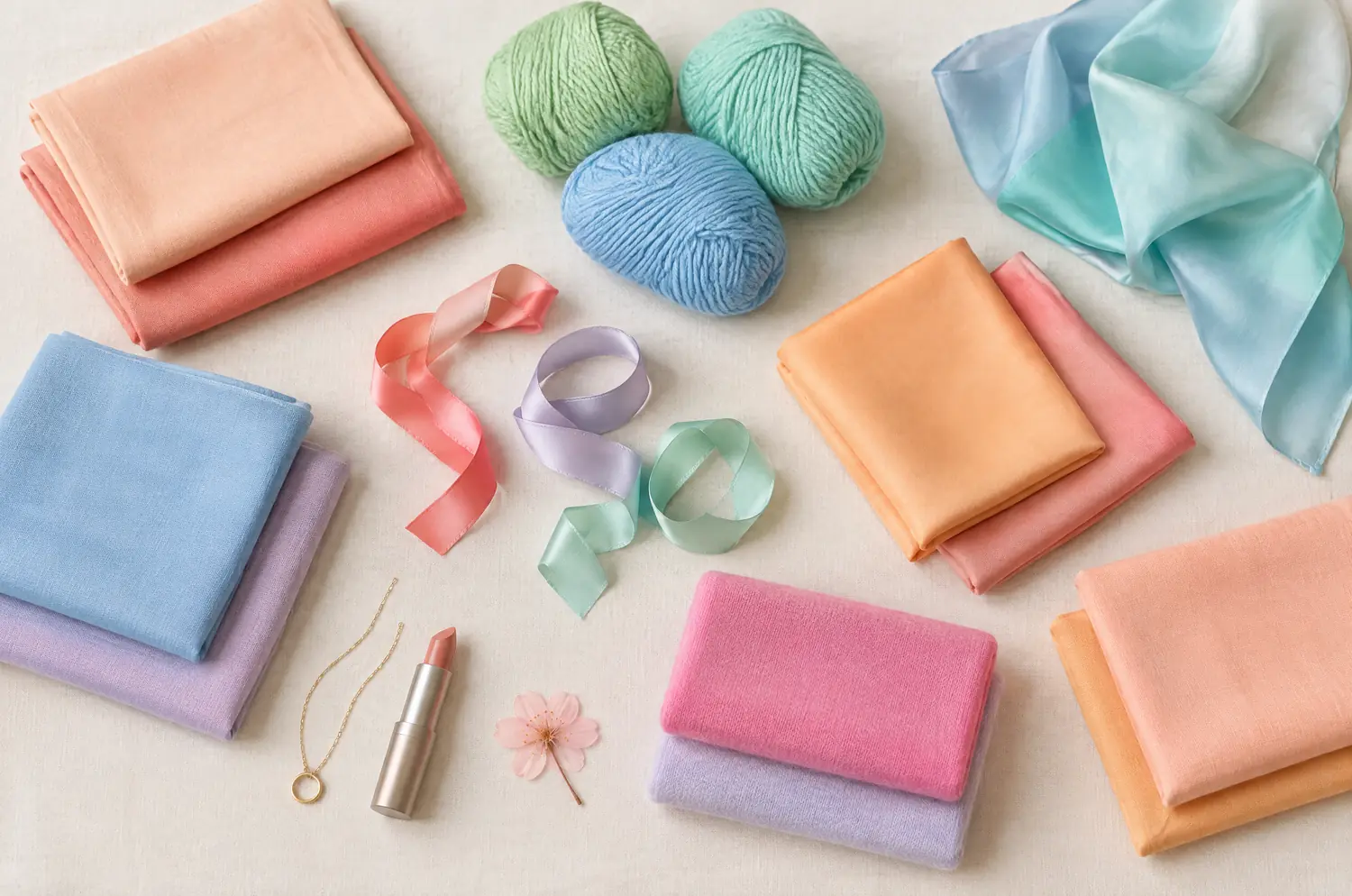
Compare · two Springs
Light Spring vs Warm Spring: Four Differences, One Quick Test
Hold a Peach and a Coral under your chin, one after the other. Notice which one your skin answers to. It tells you more about this pair than any list can.
Side by side
Light Spring and Warm Spring palettes
Same scale, same page: look at the swatches before you read the differences.
- Peach
#FFCBA4 - Light Coral
#FF8F7A - Apricot
#FBB87A - Butter Yellow
#F9E38C - Fresh Apple Green
#B8D98A - Mint
#A8E0C0 - Aqua
#7FD6CF - Sky Blue
#8EC5E8 - Light Periwinkle
#A5B4E8 - Salmon Pink
#FFA59B - Warm Candy Pink
#F78FA7 - Light Lilac
#C8B1E4
Neutrals
- Ivory
- Golden Beige
- Light Camel
- Warm Light Gray
Colors to avoid
- Black
- Burgundy
- Charcoal
- Dark Brown
- Coral
#FF6F52 - Bright Orange
#FF8C1A - Sunshine Yellow
#FFD23F - Meadow Green
#5DB84C - Pear Green
#B5D334 - Warm Turquoise
#1FB7A6 - Lagoon Blue
#2E9CCA - Poppy Red
#E8382F - Salmon
#FF8E72 - Bright Peach
#FFAB6B - Warm Periwinkle
#6D7FD9 - Warm Violet
#8A5FBF
Neutrals
- Cream
- Camel
- Golden Brown
- Light Khaki
Colors to avoid
- Black
- Cool Fuchsia
- Blue Gray
- Optic White
The four axes
All four axes differ, none is shared
Temperature, lightness, intensity and contrast: the gauge shows where each one sits, the table says it in words.
The two sub-seasons
- Temperature
- 12Differs1 Slightly warm2 Very warm
- Lightness
- 12Differs1 Very light2 Medium to light
- Intensity
- 12Differs1 Medium, fresh2 Bright
- Contrast
- 12Differs1 Low2 Moderate
Line by line
| What is compared | Light Spring | Warm Spring |
|---|---|---|
| TemperatureDiffers | Slightly warm | Very warm |
| LightnessDiffers | Very light | Medium to light |
| IntensityDiffers | Medium, fresh | Bright |
| ContrastDiffers | Low | Moderate |
| Signature color | Peach | Coral |
| Neutrals | Ivory, Golden Beige, Light Camel, Warm Light Gray | Cream, Camel, Golden Brown, Light Khaki |
| Metals | Light yellow gold, rose gold, fine gold tones. Delicate pieces rather than chunky ones. | Yellow gold, golden brass, cream pearls. Turquoise and coral. |
| Lips | Peach, light coral, salmon pink. Light, glossy formulas rather than matte, dark ones. | Coral, poppy red, rich peach. Orange-leaning reds are your reds. |
| Hair color | Golden blondes, honey, light strawberry blonde and bright highlights. Avoid very dark or ash-toned hair colors. | Golden blonde, honey, light copper, golden brown. Always keep warm tones. |
Why does Light Spring read as light before it reads as warm?
Light Spring leads with lightness. It sits at the very light end of Spring, with a base that is only slightly warm, a medium and fresh intensity, and low contrast between hair, eyes and skin.
Peach, Butter Yellow and Mint show it. These colors have air in them. They rest against your face without pressing on it.
That’s also why dark colors misbehave here. Black, Charcoal, Dark Brown and Burgundy open a gap your face can’t carry, and black brings out your dark circles. Metals follow the same logic: light yellow gold or rose gold, in fine pieces rather than chunky ones.
Warm Spring puts the heat first, then the brightness
Warm Spring leads with warmth. The base is very warm, the depth runs from medium to light, the intensity is bright and the contrast is moderate.
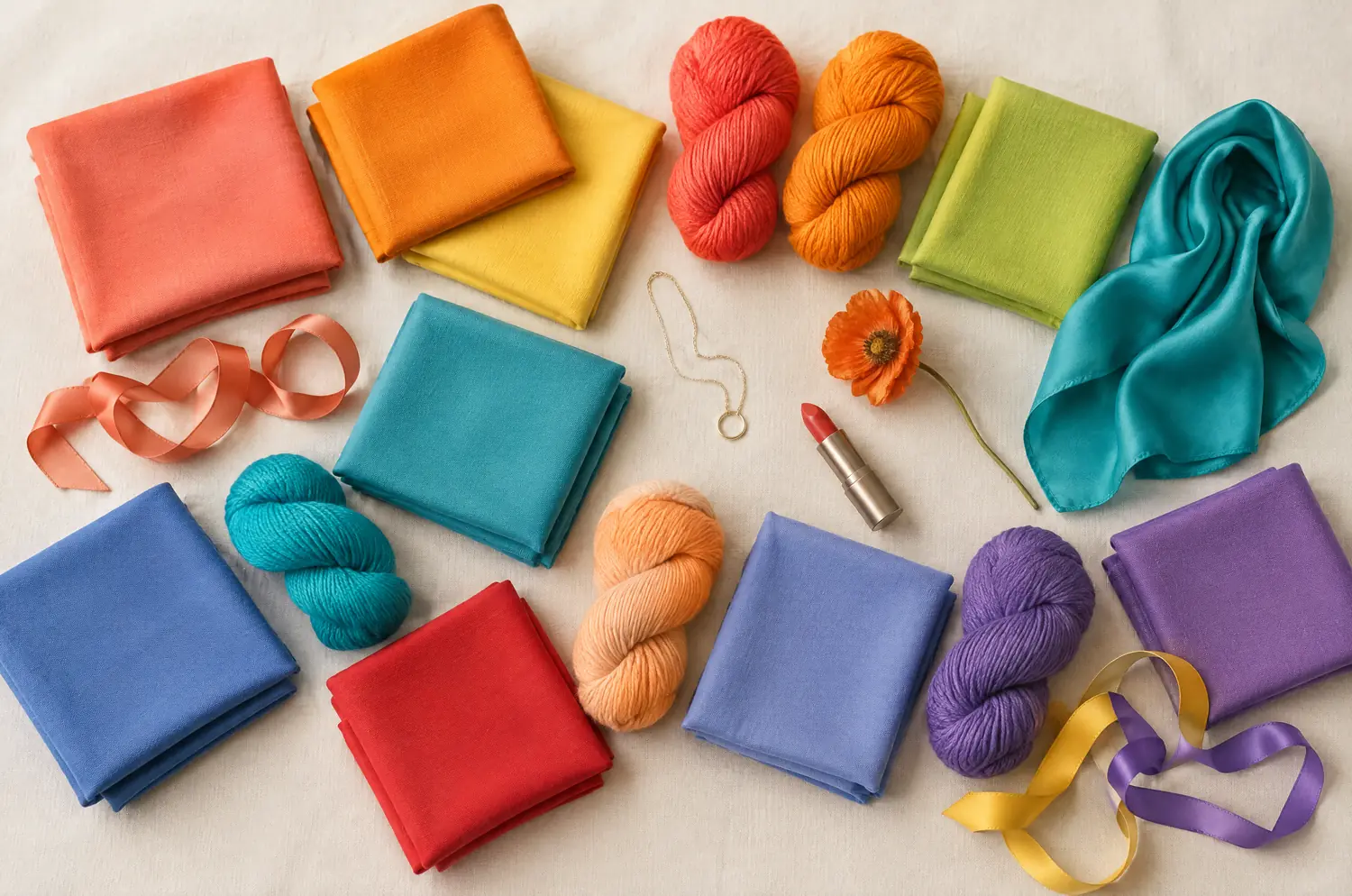
Coral, Sunshine Yellow, Warm Turquoise and Poppy Red give you the feel. They are golden and cheerful. Natural golden, coppery or honey tones in your coloring point this way.
The pitfalls are cool ones. Cool Fuchsia, Blue Gray, Optic White and Black are too cool for you. They pull yellow out of your skin. A Coral or a soft orange, on the other hand, gives you a healthy glow right away.
Four axes, no overlap: where do these two Springs part?
Four axes differ, and none is shared. Start with the two leading traits, lightness and warmth, then take the other two.
Lightness. Light Spring is very light, and its colors have to stay pale. Warm Spring runs medium to light, a little more depth to work with.
Temperature. Warm Spring is very warm, and cool pinks and bluish grays leave it looking dull. Light Spring is only slightly warm, so its golden base is gentler.
Intensity. Light Spring is medium and fresh. Warm Spring is bright, with clearer, more golden colors.
Contrast. Low for Light Spring, moderate for Warm Spring. It measures how far your hair, eyes and skin sit from each other, and the gap is a little wider on a Warm Spring.
What they share is the family. Both are Springs with a golden base, and both do badly with black near the face. Don’t look for a difference there.
The two-color test. In daylight, with no makeup, hold a piece of fabric in each of these two colors up to your face. Rest your eyes between the two and redo it another day. If the same color keeps winning, you have a direction: a first hint, not a verdict.
What do Peach and Coral show on your skin?
The setup is in color draping at home, so keep this pair in your hands and skip the rest.
Hold Peach first. Does the color feel like part of you, or does your face fade behind it? Then Coral. Do you see your face first, or the color?
Look at your skin, then at your eyes and brows. If a color turns your skin yellow, it leans cooler than your skin wants. If your features blur, the contrast may be too low for what you’re wearing.
Do it again another day, with a rest in between. When Peach keeps winning, lean Light Spring. When Coral does, lean Warm Spring.
What if Peach and Coral both look good on you?
That happens, and it isn’t a failure of the test. These two aren’t neighbors in the method. Light Spring sits next to Light Summer, and Warm Spring next to Warm Autumn. But they share a Spring base, so an in-between face is believable.
Look for your leading trait. If your coloring is delicate and light and a dark or loud color feels like too much, begin with Light Spring. If warmth is the first thing anyone notices and cool colors flatten you, begin with Warm Spring.
Then compare by family. The two palettes don’t share a single shade name, but the families overlap: Light Coral and Coral, Peach and Bright Peach, Salmon Pink and Salmon. Hold each pair against your face and see which version feels like yours.
The free color analysis quiz gives you a likely season and a sub-season hint, but it works from your answers, not from your skin under a color. Settle it with fabric. If your results lean toward brighter colors, Light Spring vs Bright Spring is the comparison to read next.
Where do lipstick, hair and gold part ways for these two Springs?
Lips show it fast. Light Spring leans on peach, light coral and salmon pink, in a sheer, glossy finish. Warm Spring wears coral, poppy red and rich peach, and its reds lean orange.
Hair follows the same split. Light Spring suits golden blondes, honey and light strawberry blonde. Warm Spring suits golden blonde, honey, light copper and golden brown, with warm tones kept in.
Both metals lines point to yellow gold. Light Spring adds rose gold in fine pieces. Warm Spring adds golden brass and cream pearls. Try each one near your face.
Keep exploring
More on these two sub-seasons
Palette Light Spring color palette
The lightest of the warm seasons: all light and freshness, never heavy.
Compare Light Spring vs Bright Spring
Light Spring vs Bright Spring: all four axes differ. I show what each difference looks like on a face and how to settle it with a simple drape test at home.
Compare Light Spring vs Light Summer
Light Spring vs Light Summer: both are very light, so the answer hides in two details. I show what warm and powdery look like on a face, and how to test it.
Compare Light Spring vs Soft Autumn
Light Spring vs Soft Autumn: all four axes differ, and I show what each looks like on a face, plus a quick drape test to settle it if you sit between them.
Compare Light Spring vs Soft Summer
Light Spring vs Soft Summer: three axes set them apart, and one is shared. See what each looks like on a face, then settle it with a simple drape test.
Palette Warm Spring color palette
Sunshine in your skin: golden, cheerful, clear colors.
Questions
Light Spring or Warm Spring: your questions
What is the quickest way to separate Light Spring and Warm Spring?
Ask what leads. Light Spring is about lightness: pale, fresh colors and low contrast. Warm Spring is about warmth: golden, brighter colors and a bit more contrast. Compare Peach and Coral against your skin on separate days, and notice which one lets you shine without taking over.
Can I be between Light Spring and Warm Spring?
Yes. Start from your leading trait, lightness or warmth, then drape Peach and Coral on two separate days. If the same one wins both times, you have your direction. If not, read both season pages and keep testing with fabric.
Is Warm Spring the same as True Spring?
Yes. Warm Spring and True Spring are one sub-season under two names. It’s the heart of the Spring season: very warm, bright and golden. If you searched for Light Spring against True Spring, you’re in the right place, and the same Peach and Coral test applies.
Does hair color decide between them?
No. Golden blonde and honey sit in both hair lines, so your hair can’t separate them, dyed or natural. Cover it, then watch how your skin and your eyes react to Peach and Coral. That’s where the difference shows.
What if my quiz says Light Spring but Coral looks better on me?
A quiz works from your answers and can’t see your skin react to a color. If Coral keeps looking better across several tries, read the Warm Spring page and see whether its palette sounds like you.
Light Spring or Warm Spring? Check it.
The free quiz shows you your likely season in two minutes. Then run the two-color test on your own bare face, in daylight: a first hint, not a verdict.