
Compare · two Springs
Light Spring vs Bright Spring: Four Differences You Can See
“Both are Springs, so it’s basically the same palette.” Not quite. Light Spring and Bright Spring don’t share a single axis. They differ on all four.
Side by side
Light Spring and Bright Spring palettes
Same scale, same page: look at the swatches before you read the differences.
- Peach
#FFCBA4 - Light Coral
#FF8F7A - Apricot
#FBB87A - Butter Yellow
#F9E38C - Fresh Apple Green
#B8D98A - Mint
#A8E0C0 - Aqua
#7FD6CF - Sky Blue
#8EC5E8 - Light Periwinkle
#A5B4E8 - Salmon Pink
#FFA59B - Warm Candy Pink
#F78FA7 - Light Lilac
#C8B1E4
Neutrals
- Ivory
- Golden Beige
- Light Camel
- Warm Light Gray
Colors to avoid
- Black
- Burgundy
- Charcoal
- Dark Brown
- Bright Coral
#FF5A4D - Watermelon Pink
#FF5E7E - Tomato Red
#F02D1F - Tangerine
#FF7A00 - Warm Lemon Yellow
#FFE033 - Lime Green
#9BD81E - Light Emerald
#00B26B - Bright Aqua
#2ED3C6 - Turquoise
#00B5C8 - Azure Blue
#1E90FF - Bright Royal Blue
#1F5FD1 - Bright Violet
#7A3FD1
Neutrals
- Warm Off-White
- Light Gray
- Bright Navy
- Camel
Colors to avoid
- Grayed Beige
- Dusty Rose
- Dull Khaki
- Taupe
The four axes
All four axes differ, none is shared
Temperature, lightness, intensity and contrast: the gauge shows where each one sits, the table says it in words.
The two sub-seasons
- Temperature
- 12Differs1 Slightly warm2 Neutral to warm
- Lightness
- 12Differs1 Very light2 Medium
- Intensity
- 12Differs1 Medium, fresh2 Very bright
- Contrast
- 12Differs1 Low2 High
Line by line
| What is compared | Light Spring | Bright Spring |
|---|---|---|
| TemperatureDiffers | Slightly warm | Neutral to warm |
| LightnessDiffers | Very light | Medium |
| IntensityDiffers | Medium, fresh | Very bright |
| ContrastDiffers | Low | High |
| Signature color | Peach | Bright Coral |
| Neutrals | Ivory, Golden Beige, Light Camel, Warm Light Gray | Warm Off-White, Light Gray, Bright Navy, Camel |
| Metals | Light yellow gold, rose gold, fine gold tones. Delicate pieces rather than chunky ones. | Bright yellow gold, graphic pieces, vivid stones. |
| Lips | Peach, light coral, salmon pink. Light, glossy formulas rather than matte, dark ones. | Tomato red, bright coral, watermelon pink. You can pull off a bold lip. |
| Hair color | Golden blondes, honey, light strawberry blonde and bright highlights. Avoid very dark or ash-toned hair colors. | Crisp, shiny colors: clear golden blonde, bright warm brown, brown with golden tones. Avoid ashy effects. |
How does Light Spring keep every color so fresh and gentle?
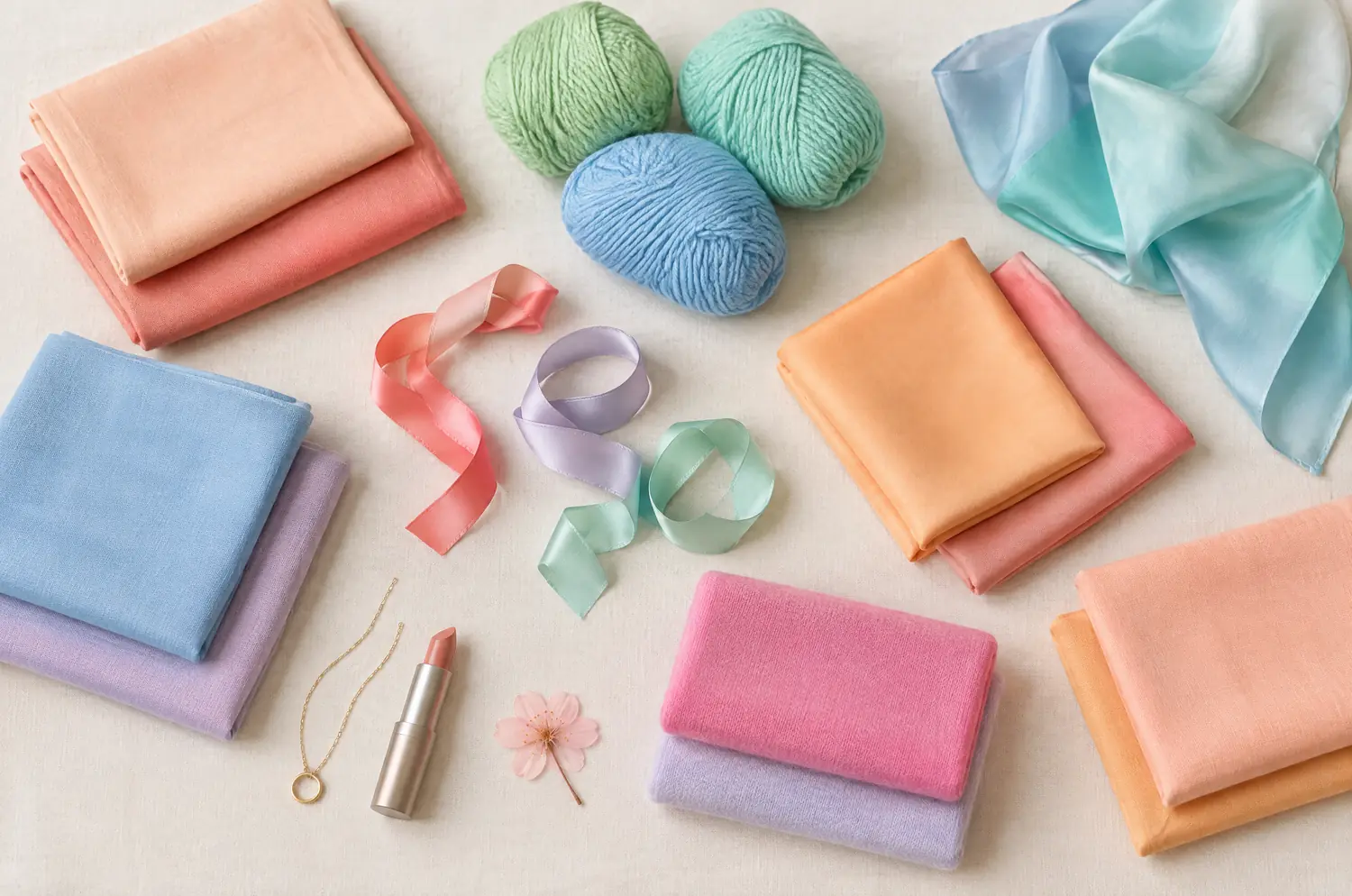
Light Spring leads with lightness. Your coloring is light, your hair, eyes and skin sit close together, and the contrast is low. The temperature is slightly warm: a golden base, never a heavy one.
The palette feels like early light on a garden. Peach, Light Coral, Butter Yellow and Mint live here, with Ivory and Golden Beige as the quiet ground. The intensity is medium and fresh. Colors are clean, but they rest on the face instead of pressing on it.
That is also why dark colors turn on you. Black, Burgundy and Dark Brown build a contrast your face can’t carry, and your dark circles move to the front.
For the full palette, see the Light Spring season page.
What makes Bright Spring so vivid and so sharp?
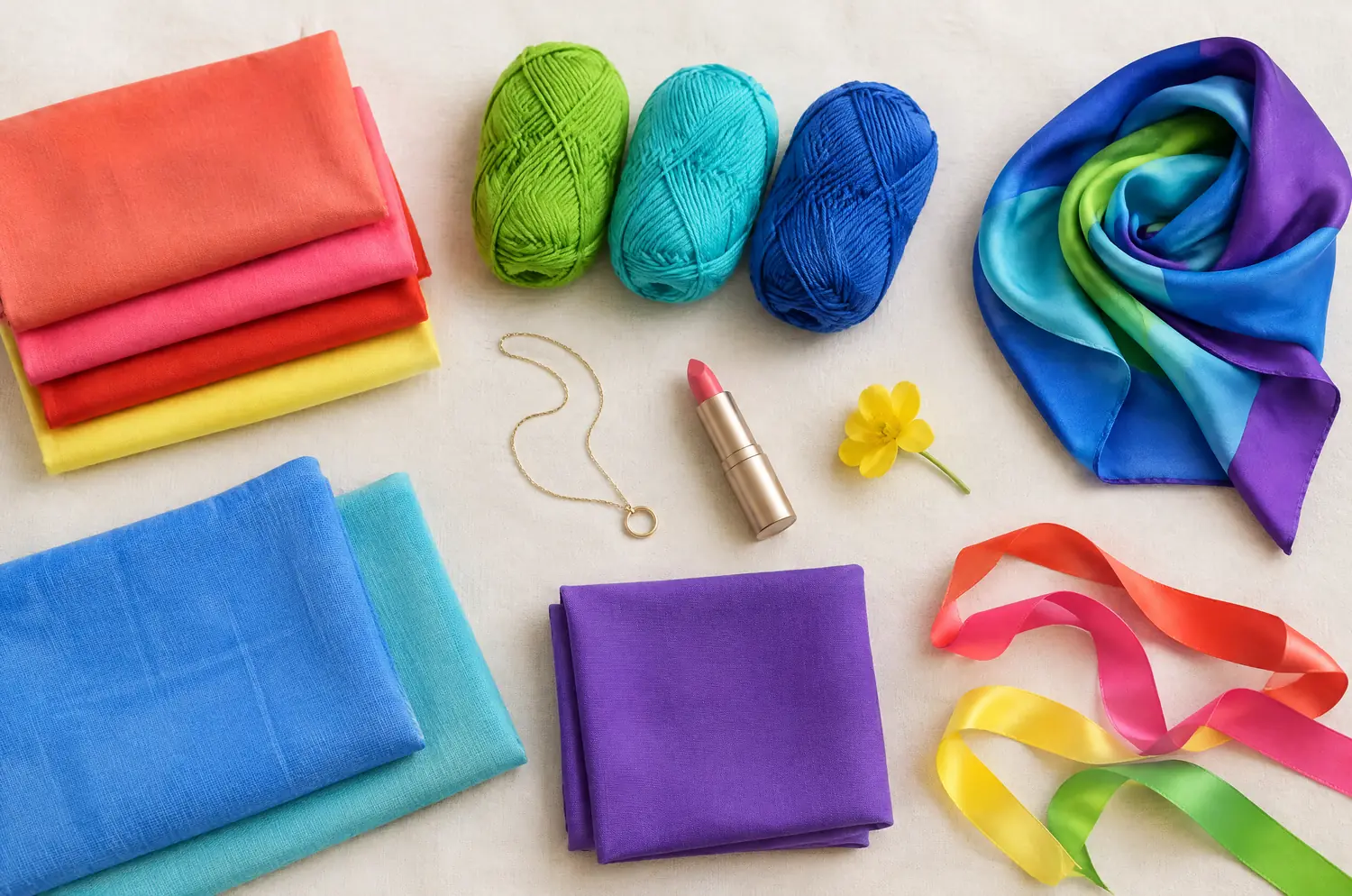
Bright Spring leads with intensity. The colors are pure, saturated, almost tropical: Bright Coral, Turquoise, Watermelon Pink, Light Emerald. Temperature runs neutral to warm, depth sits in the middle, and contrast is high.
That contrast is the point. Your eyes are very defined, often the first thing people notice. You can also handle light against dark inside one outfit, Bright Navy next to Bright Coral for example, which the other Springs can’t.
Your pitfall is the reverse of Light Spring’s. Grayed Beige, Dusty Rose, Dull Khaki and Taupe are too muted. They blur the sharpness of your face, and you disappear into them.
Think of a lagoon, hibiscus flowers, a parrot. The Bright Spring season page shows the whole range.
Light Spring vs Bright Spring: four differences, and what each does to a face
Here they are, in the order the eye catches them.
Intensity comes first. Bright Spring is very bright, Light Spring medium and fresh. On a Bright Spring, a soft pastel looks faded. On a Light Spring, a saturated shade looks loud and sits on top of the face.
Lightness is next: very light for one, medium for the other. A deep, rich shade under a Light Spring chin arrives before the face does. A pale shade under a Bright Spring chin leaves the face without its edge.
Contrast follows, low against high. Light Spring wants colors that melt into the face. Bright Spring wants colors that make the eyes stand out.
Temperature comes last, slightly warm against neutral to warm. It is the quietest gap, and the hardest to see on its own.
What they share is the family. Both are Springs, both lean warm and both wear yellow gold. If you are looking for a fifth difference, there isn’t one.
The two-color test. In daylight, with no makeup, hold a piece of fabric in each of these two colors up to your face. Rest your eyes between the two and redo it another day. If the same color keeps winning, you have a direction: a first hint, not a verdict.
Peach or Bright Coral: which one lets your face speak?
Set up the test as in color draping at home: daylight, bare face, hair covered, one fabric at a time. Then spend your attention on this pair.
Hold Peach first, then Bright Coral. Look at the same four things each time.
- Skin: does it warm up, or go yellow or gray?
- Face: does it stay present, or does the color take over?
- Color: does it look loud, or faded?
- Features: do your eyes stand out, or blur?
If Peach wins, your face looks rested and your eyes soften, while Bright Coral feels like a spotlight. That points to Light Spring. If Bright Coral wins, your eyes sharpen and your skin looks clear, while Peach goes pale and flat. That points to Bright Spring.
Repeat with two or three other pairs, such as Mint against Turquoise. When one side keeps coming out ahead across several pairs, you have a direction. It is a lead to follow, not a ruling.
Torn between Light Spring and Bright Spring? Start with what leads
Ask the leading trait first. Is it lightness or intensity that makes your face work? The one that wins decides which palette is yours. The other palette is a visitor.
In the method, these two are not neighbors. Light Spring borders Light Summer, and Bright Spring borders Bright Winter. If both still feel wrong, the third Spring may fit better: see Warm Spring against Bright Spring.
Some families exist in both palettes under different names. Coral, aqua and blue are the places to start. Try Light Coral if you are Bright Spring, or Bright Aqua if you are Light Spring, and watch your skin. Keep the rest of the outfit in your own palette so the harmony holds.
A quiz can’t settle this pair. It reads your answers, and it never watches your skin respond to a color. The free color analysis quiz gives you a likely season and a sub-season hint to take into the mirror.
The PDF guides for Light Spring and Bright Spring aren’t out yet, and you can join their waitlists.
Keep exploring
More on these two sub-seasons
Palette Light Spring color palette
The lightest of the warm seasons: all light and freshness, never heavy.
Compare Light Spring vs Light Summer
Light Spring vs Light Summer: both are very light, so the answer hides in two details. I show what warm and powdery look like on a face, and how to test it.
Compare Light Spring vs Soft Autumn
Light Spring vs Soft Autumn: all four axes differ, and I show what each looks like on a face, plus a quick drape test to settle it if you sit between them.
Compare Light Spring vs Soft Summer
Light Spring vs Soft Summer: three axes set them apart, and one is shared. See what each looks like on a face, then settle it with a simple drape test.
Compare Light Spring vs Warm Spring
Light Spring vs Warm Spring: all four axes differ. Here is what each difference looks like on your face and how a quick drape test settles it at home.
Palette Bright Spring color palette
The most dazzling season: pure, saturated, almost electric colors.
Questions
Light Spring or Bright Spring: your questions
How do I tell Light Spring from Bright Spring?
Ask what leads on your face. If soft, fresh, low-contrast color flatters you and vivid shades feel loud, think Light Spring. If crisp, saturated color brings your eyes forward and gentle shades fade, think Bright Spring. Peach against Bright Coral is a good first comparison.
Can I be in between Light Spring and Bright Spring?
Yes, a face can sit between them. Decide whether lightness or intensity leads, and keep the palette that matches it. Borrow only a neighboring shade from the other, in coral, aqua or blue. Warm Spring is also worth a look, since these two aren’t neighbors in the method.
Which metals suit Light Spring and Bright Spring?
Both do best in yellow gold. Light Spring prefers light yellow gold in delicate, fine pieces, and rose gold works very well too. Bright Spring suits bright yellow gold, graphic shapes and vivid stones. For Light Spring, gold flatters more than silver does.
Does my hair color or gray hair decide between them?
No. Both palettes include golden blonde hair, and dyed, gray or white hair doesn’t change a season. Judge by your skin and eyes, with your hair covered. Hair is only part of the picture, so let your skin’s reaction to the colors decide.
What if the quiz says one and the drape test says the other?
Trust what you saw on your own face. A quiz works from your answers, while the test shows how your skin really responds. Redo the Peach and Bright Coral duel another day, then compare the full palettes on the two season pages.
Light Spring or Bright Spring? Check it.
The free quiz shows you your likely season in two minutes. Then run the two-color test on your own bare face, in daylight: a first hint, not a verdict.