
Compare · two sub-seasons
Light Spring vs Soft Summer: Three Differences That Matter
“Both are pale and gentle, so it’s the same palette.” It isn’t. Pale is not soft. Light is not hazy. Your face knows the difference.
Side by side
Light Spring and Soft Summer palettes
Same scale, same page: look at the swatches before you read the differences.
- Peach
#FFCBA4 - Light Coral
#FF8F7A - Apricot
#FBB87A - Butter Yellow
#F9E38C - Fresh Apple Green
#B8D98A - Mint
#A8E0C0 - Aqua
#7FD6CF - Sky Blue
#8EC5E8 - Light Periwinkle
#A5B4E8 - Salmon Pink
#FFA59B - Warm Candy Pink
#F78FA7 - Light Lilac
#C8B1E4
Neutrals
- Ivory
- Golden Beige
- Light Camel
- Warm Light Gray
Colors to avoid
- Black
- Burgundy
- Charcoal
- Dark Brown
- Dusty Rose
#C48A94 - Tea Rose
#D9A8AE - Muted Raspberry
#A85068 - Soft Burgundy
#8A4756 - Soft Plum
#7B5871 - Grayed Mauve
#A690A8 - Gray Lavender
#A9A6C9 - Gray Blue
#8198AE - Slate Blue
#5F7890 - Grayed Turquoise
#6FA3A3 - Verdigris
#6F9088 - Cool Sage
#93A99A
Neutrals
- Off-White
- Dove Gray
- Taupe
- Grayed Navy
Colors to avoid
- Black
- Bright Orange
- Bright Yellow
- Electric Fuchsia
The four axes
3 axes differ, the rest is shared
Temperature, lightness, intensity and contrast: the gauge shows where each one sits, the table says it in words.
The two sub-seasons
- Temperature
- 12Differs1 Slightly warm2 Neutral to cool
- Lightness
- 12Differs1 Very light2 Medium
- Intensity
- 12Differs1 Medium, fresh2 Very soft, grayed
- Contrast
- 12SameLow
Line by line
| What is compared | Light Spring | Soft Summer |
|---|---|---|
| TemperatureDiffers | Slightly warm | Neutral to cool |
| LightnessDiffers | Very light | Medium |
| IntensityDiffers | Medium, fresh | Very soft, grayed |
| Contrast | Low | Low |
| Signature color | Peach | Dusty Rose |
| Neutrals | Ivory, Golden Beige, Light Camel, Warm Light Gray | Off-White, Dove Gray, Taupe, Grayed Navy |
| Metals | Light yellow gold, rose gold, fine gold tones. Delicate pieces rather than chunky ones. | Brushed silver, rose gold, white gold. Matte or satin finishes. |
| Lips | Peach, light coral, salmon pink. Light, glossy formulas rather than matte, dark ones. | Rosewood, dusty rose, muted raspberry. Satin finishes. |
| Hair color | Golden blondes, honey, light strawberry blonde and bright highlights. Avoid very dark or ash-toned hair colors. | Ash brown, ash dark blonde, soft brown. Very blended highlights rather than strong contrasts. |
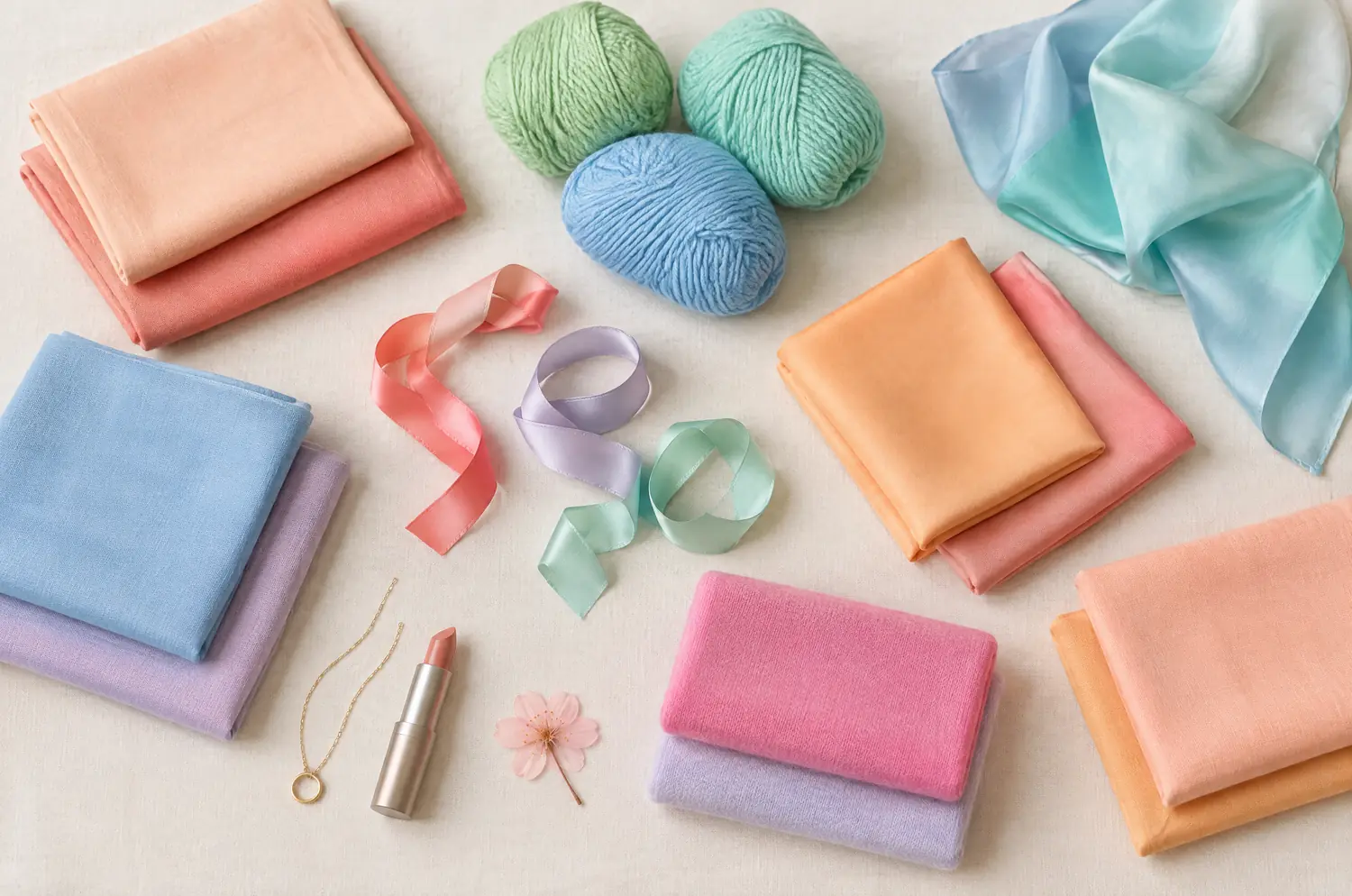
Light Spring is pastel with a little sunlight in it
Light Spring leads with lightness. Everything about it is pale, clean and gently warm.
Peach and Mint are good examples. Warm pastels like these give you a healthy glow even with no makeup on. They’re fresh, never heavy, and they don’t need to be loud to work.
Contrast is low here: little gap between hair, eyes and skin. That’s why black, charcoal, dark brown and burgundy go wrong. The fabric speaks louder than the face.
The warmth here is slight. It’s a golden base under a light touch, not a strong heat.
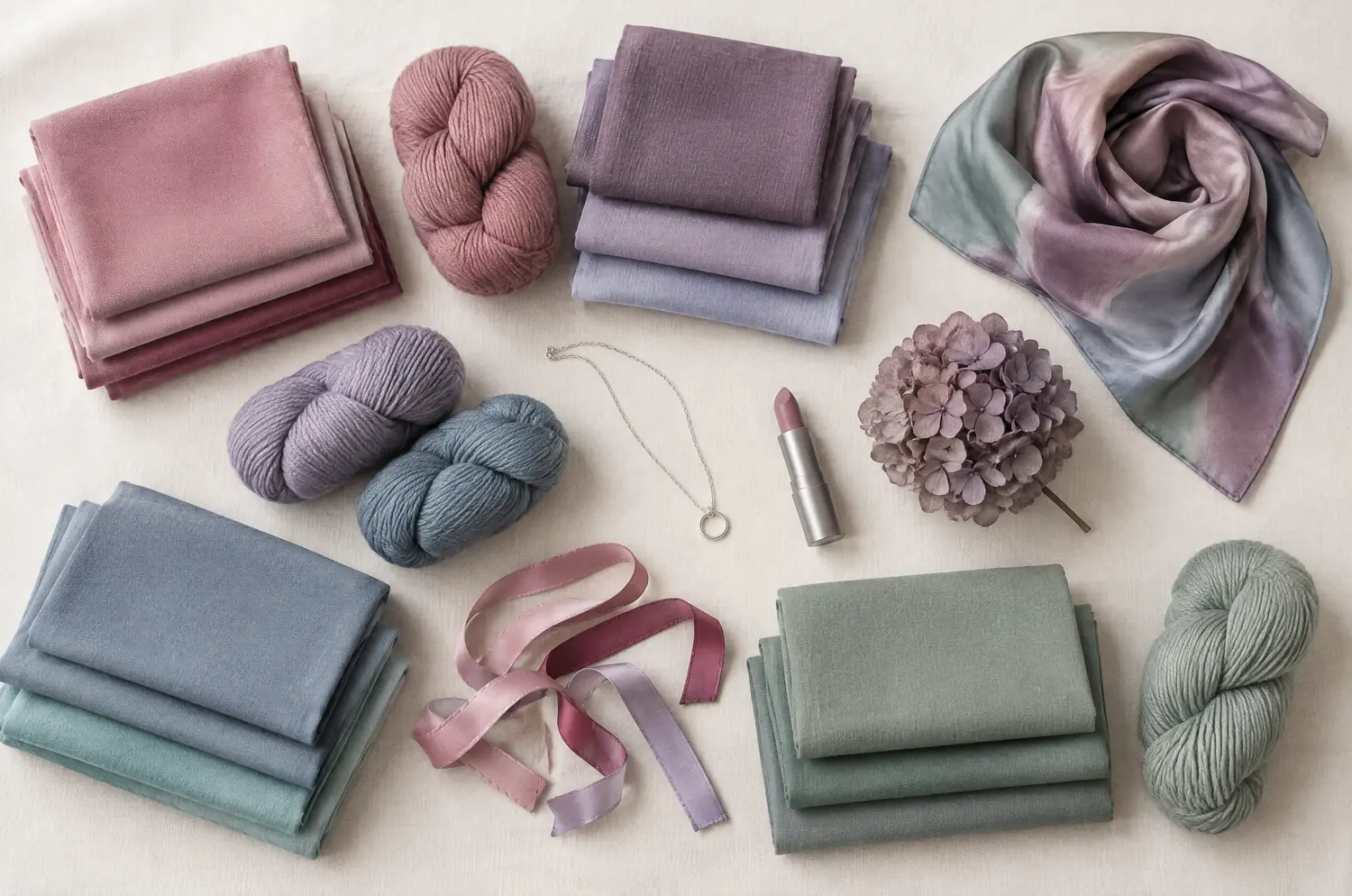
Soft Summer is color with the gray left in
Soft Summer leads with softness. Its colors carry a haze, as if you were looking at them through thin gauze.
Dusty Rose, Gray Blue, Cool Sage and Soft Plum are the kind of shades that live here. Each one has gray mixed in, and each one sits at medium depth rather than pale.
The temperature is neutral to cool, close enough to the middle that the metal question can stay open. Gray suits you very well, even though it can read as sad on other faces. Tone-on-tone outfits work better than strong contrast.
The warning sign is the opposite of Light Spring’s. Bright colors walk into the room before you do. A bright orange, a bright yellow or an electric fuchsia overpowers a face that is built on softness.
The two-color test. In daylight, with no makeup, hold a piece of fabric in each of these two colors up to your face. Rest your eyes between the two and redo it another day. If the same color keeps winning, you have a direction: a first hint, not a verdict.
Peach or Dusty Rose: which one stays quiet on your face?
The full setup is in the article on color draping at home. Here, spend your attention on this pair.
Hold Peach first. Watch whether your skin warms up and your eyes brighten, or whether the color just sits on top of you. If your skin goes slightly yellow, that’s a signal about temperature.
Then hold Dusty Rose. Does your face settle and look even? Or does your skin turn gray and tired, with the rose looking heavy against you? If the color takes over and your face seems to disappear, that’s a signal about lightness.
Ask one more question of each: is it loud, or is it faded? Watch for a color that seems to shout, or one that seems to fade: that speaks to intensity. Skip contrast. It’s the same for both, so it won’t help.
Now repeat with the colors swapped in order, and again on another day. When one color keeps coming out ahead, lean that way. When they trade places, that tells you something too, and the next section is for you.
When Peach and Dusty Rose both seem to work on you
Then you’re between them, and that’s a real result.
Start with what leads. Ask yourself which comes first on your face: lightness, or softness. If very pale colors are what make you glow, lean toward Light Spring. If gray-tinged colors are what calm your face, lean toward Soft Summer.
The pastel confusion lives in the pinks and the blues. Light Spring has Petal Pink and Sky Blue. Soft Summer has Tea Rose and Gray Blue. Test them one at a time and let your skin choose, not the names.
Metals depend on what you see when you hold them near your face. Rose gold appears in both palettes. As a direction only, Light Spring points to light yellow gold, and Soft Summer to brushed silver or white gold.
Your hair color won’t settle it, natural or dyed. Look at skin and eyes with the hair covered.
A quiz or an app only nudges you on this pair, because neither sees your skin answer a color. Use the free color analysis quiz to narrow the field in ten questions, then do the test above. If Light Spring wins, the guide for Light Spring is on a waitlist, not out yet.
Keep exploring
More on these two sub-seasons
Palette Light Spring color palette
The lightest of the warm seasons: all light and freshness, never heavy.
Compare Light Spring vs Bright Spring
Light Spring vs Bright Spring: all four axes differ. I show what each difference looks like on a face and how to settle it with a simple drape test at home.
Compare Light Spring vs Light Summer
Light Spring vs Light Summer: both are very light, so the answer hides in two details. I show what warm and powdery look like on a face, and how to test it.
Compare Light Spring vs Soft Autumn
Light Spring vs Soft Autumn: all four axes differ, and I show what each looks like on a face, plus a quick drape test to settle it if you sit between them.
Compare Light Spring vs Warm Spring
Light Spring vs Warm Spring: all four axes differ. Here is what each difference looks like on your face and how a quick drape test settles it at home.
Palette Soft Summer color palette
The most blended season: grayed, hushed colors with a quiet elegance.
Questions
Light Spring or Soft Summer: your questions
What’s the quickest clue between Light Spring and Soft Summer?
Start with the gray. If a color has to be pale and clean to look right, think Light Spring. If it needs a dusty, smoky edge and a little more weight, think Soft Summer. Warmth is the quietest cue, so check it last.
What colors should a Light Spring avoid?
Black, charcoal, dark brown and burgundy, near your face. Their weight pulls the eye away from a low-contrast face. Ivory, Light Camel and Warm Light Gray are the neutrals to reach for instead.
What should a Soft Summer skip?
Black, bright orange, bright yellow and electric fuchsia. Their volume talks over a hazy, low-contrast face. Dove Gray, Taupe and Grayed Navy are the neutrals to reach for instead, and they keep the whole look quiet.
Which result wins if my quiz and my fabrics disagree?
Go with your skin. A quiz can’t watch your face react to a fabric, so treat it as a starting point. Try Peach and Dusty Rose again on another day, by a window. A split result often means you sit between the two.
Which metals suit each one?
Light Spring leans toward light yellow gold and rose gold, in delicate pieces. Soft Summer leans toward brushed silver, white gold and rose gold, in matte or satin finishes. Rose gold is the shared ground. Hold each one near your face before you buy, because a direction isn’t a rule.
Light Spring or Soft Summer? Check it.
The free quiz shows you your likely season in two minutes. Then run the two-color test on your own bare face, in daylight: a first hint, not a verdict.