
Compare · two Autumns
Soft Autumn vs Deep Autumn: Three Differences You Can See
People see two Autumns and expect one palette. Look at a face instead. One wants the volume turned down. The other wants it turned up.
Side by side
Soft Autumn and Deep Autumn palettes
Same scale, same page: look at the swatches before you read the differences.
- Sage Green
#9CAF88 - Soft Olive
#8A8B5C - Khaki
#7C7A4F - Light Terracotta
#C9805E - Soft Salmon
#E0A084 - Warm Dusty Rose
#C98F85 - Caramel
#B98654 - Soft Mustard
#C9A552 - Rosy Beige
#D8B9A2 - Soft Petrol Blue
#4F7C82 - Grayed Teal
#5E8A8E - Soft Eggplant
#6E4A5A
Neutrals
- Cream
- Sand Beige
- Warm Taupe
- Chestnut
Colors to avoid
- Black
- Optic White
- Fuchsia
- Electric Blue
- Warm Burgundy
#6E1A24 - Brick Red
#9E2B1F - Tomato
#C0392B - Spiced Orange
#C65A1E - Rust
#A44A1F - Dark Mustard
#B8860B - Dark Olive
#4B5320 - Spruce Green
#1E4D3A - Deep Turquoise
#0E6E6A - Dark Petrol Blue
#0F4C5C - Eggplant
#4A2040 - Dark Terracotta
#A14A2E
Neutrals
- Cream
- Dark Khaki
- Chocolate
- Espresso
Colors to avoid
- Baby Pink
- Sky Blue
- Pearl Gray
- Cool Fuchsia
The four axes
3 axes differ, the rest is shared
Temperature, lightness, intensity and contrast: the gauge shows where each one sits, the table says it in words.
The two sub-seasons
- Temperature
- 12SameNeutral to warm
- Lightness
- 12Differs1 Medium2 Dark
- Intensity
- 12Differs1 Very soft, desaturated2 Rich and intense
- Contrast
- 12Differs1 Low to moderate2 High
Line by line
| What is compared | Soft Autumn | Deep Autumn |
|---|---|---|
| Temperature | Neutral to warm | Neutral to warm |
| LightnessDiffers | Medium | Dark |
| IntensityDiffers | Very soft, desaturated | Rich and intense |
| ContrastDiffers | Low to moderate | High |
| Signature color | Light Terracotta | Warm Burgundy |
| Neutrals | Cream, Sand Beige, Warm Taupe, Chestnut | Cream, Dark Khaki, Chocolate, Espresso |
| Metals | Matte gold, rose gold, soft copper, brushed brass. | Yellow gold, bronze, dark copper. Garnet, dark amber. |
| Lips | Rosy peach, apricot, soft caramel, warm rosewood. | Brick, warm burgundy, warm plum, dark tomato red. |
| Hair color | Golden light brown, honey dark blonde, melted caramel. Warm tones, but never fiery. | Chocolate brown, dark brown with mahogany or coppery tones, deep auburn. |
Soft Autumn is the one where nothing shouts
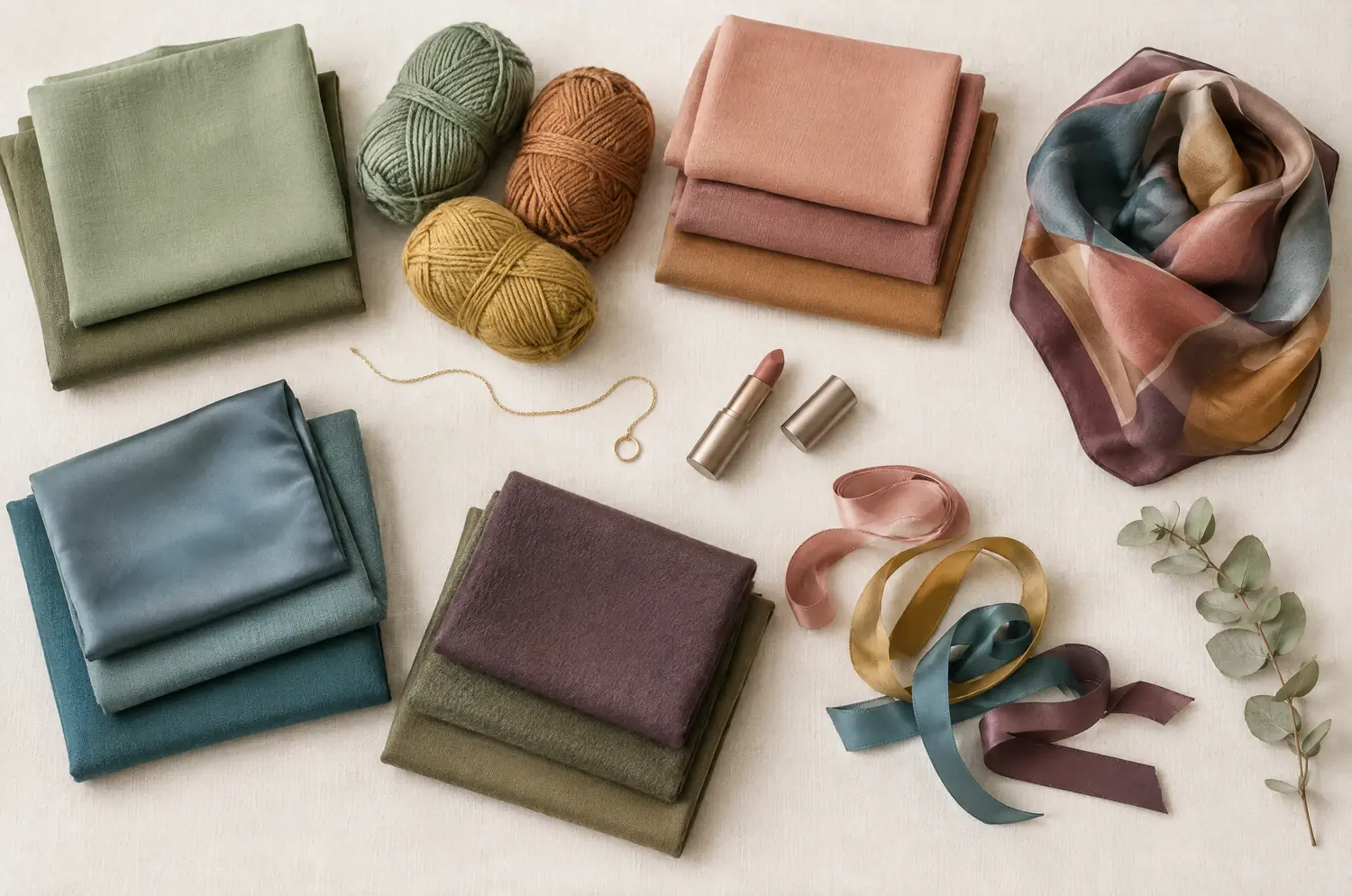
Soft Autumn leads with softness. Temperature sits neutral to warm, depth sits in the middle, and the colors are muted and desaturated, with a golden base under the haze.
Light Terracotta, Sage Green, Caramel: none of them pushes. They sit beside your face and let it stay the loudest thing in the picture.
Contrast is low to moderate. Hair, eyes and skin sit close together, with no hard edge between them.
That’s why a bright color can feel like a costume on a Soft Autumn. It’s too sharp for a face that blends.
Deep Autumn is the one where the color has weight
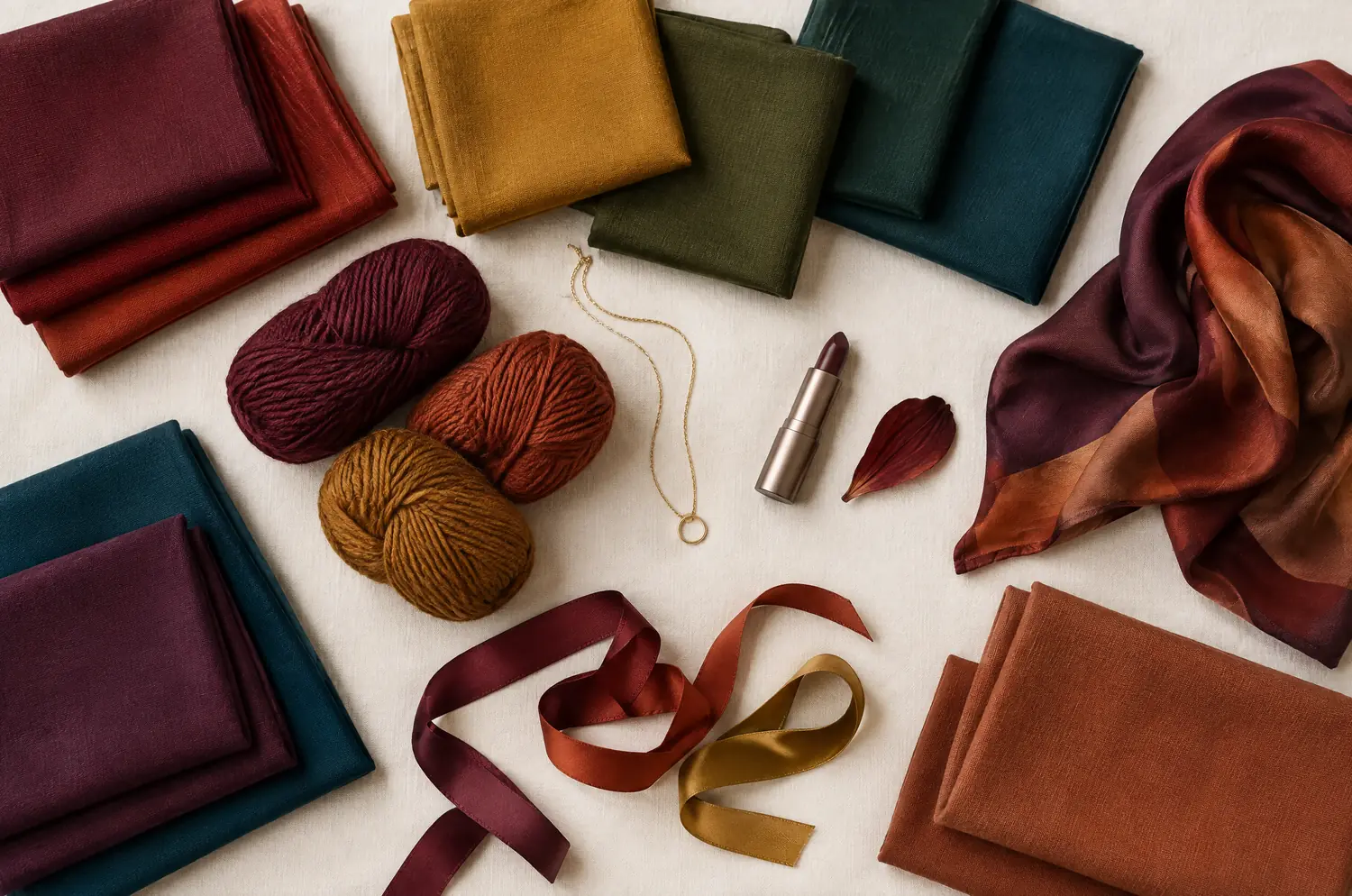
Deep Autumn leads with depth. The temperature is the same, neutral to warm, but the colors are dark, rich and intense, and the contrast is high.
Warm Burgundy, Spruce Green and Dark Mustard carry real weight. Near a Deep Autumn face, dark colors give radiance instead of darkening. Pastels do the opposite and turn bland.
Dark eyes and dark hair can go with this sub-season. Cover the hair and read the skin before you conclude anything.
Black works better here than on the other Autumns, even if Chocolate flatters more.
Which three differences set Soft Autumn and Deep Autumn apart?
Three of the four axes differ. Temperature is the one they share. Both are neutral to warm and both keep a golden base, so a warm-versus-cool question won’t get you anywhere on this pair.
Start with lightness, which is how light or dark a color is. Soft Autumn sits at medium, Deep Autumn at dark. Watch whether a color sits back beside your face or takes over the room.
Then intensity, how muted or how rich a color is. Soft Autumn is very soft and desaturated. Deep Autumn is rich and intense. A punchy color on a Soft Autumn, or a faint one on a Deep Autumn, is the mismatch to look for.
And contrast, low to moderate for one and high for the other. Look at your own face. Do hair, eyes and skin melt together, or does each one stand apart?
The two-color test. In daylight, with no makeup, hold a piece of fabric in each of these two colors up to your face. Rest your eyes between the two and redo it another day. If the same color keeps winning, you have a direction: a first hint, not a verdict.
What do Light Terracotta and Warm Burgundy show on your face?
The setup is in my guide to color draping at home: daylight, a bare face, a plain fabric under the chin. Now spend it on this pair.
Use two colors, one at a time. Light Terracotta is the Soft Autumn signature. Warm Burgundy is the Deep Autumn one.
Check lightness first. Does the burgundy bring your face forward, or do you see the burgundy first? Then intensity: does it look rich on you, or loud? Does the terracotta look soft and right, or faded?
Last, contrast. With the burgundy, do your eyes and brows sharpen? With the terracotta, do they blur, or settle into the rest of your face?
If the burgundy keeps answering your face, you lean Deep. If the terracotta does, you lean Soft. Repeat the duel later, with fresh eyes. When the same side keeps winning, you have a direction. A trained eye reads more than a home test can.
What if you land between Soft Autumn and Deep Autumn?
These two are not neighbors. Soft Autumn borders Soft Summer, and Deep Autumn borders Deep Winter. So an in-between result here is not a border case. It is softness and depth competing inside one season.
Decide by the leading trait. Ask which pulls harder on your face, the haze of the muted colors or the weight of the dark ones.
The two palettes share families, which helps. Both have terracotta, mustard, olive, eggplant and petrol blue, in a softer version and a darker one. Hold Light Terracotta against Dark Terracotta, then Soft Mustard against Dark Mustard. See which version your face answers to.
A quiz won’t settle it. It never sees a fabric land on your face. Use the free ten-question quiz for a likely season, then compare it with what the fabrics show you.
What do your lips, hair and gold say about Soft Autumn or Deep Autumn?
Your mouth shows the split fast. Soft Autumn makeup stays warm and low-key: rosy peach, apricot, soft caramel. Deep Autumn can take a darker, more defined lip: brick, warm burgundy, dark tomato red. If a lipstick looks like makeup instead of like you, the weight is wrong.
Hair follows the same split. Soft Autumn hair is warm but never fiery, like golden light brown or honey dark blonde. For Deep Autumn hair color, look to chocolate brown, mahogany tones or deep auburn.
Metals follow the same line. Soft Autumn does well with matte gold, rose gold and brushed brass. Deep Autumn wears yellow gold and bronze. Both have a copper, soft for one and dark for the other.
Keep exploring
More on these two sub-seasons
Palette Soft Autumn color palette
Autumn in half-tones: warm, hushed, very soft colors.
Makeup Soft Autumn makeup
Soft Autumn makeup comes down to warm, blended shades: rosy peach lips, bronze eyes, soft apricot cheeks. Here is what to try first, what to skip and why.
Hair color Soft Autumn hair color
Soft Autumn hair color comes down to golden light brown, honey dark blonde and melted caramel. How to choose, what to skip and what to tell your colorist.
Compare Soft Autumn vs Soft Summer
Soft Autumn vs Soft Summer: two sub-seasons that share softness and split on temperature and contrast. Here is how to tell them apart on your own face.
Compare Soft Autumn vs Warm Autumn
Soft Autumn vs Warm Autumn: softness leads in one, warmth in the other. Here are the three differences you can see on a face and a quick test to settle it.
Palette Deep Autumn color palette
The most intense Autumn: dark, rich colors with strong contrast.
Questions
Soft Autumn or Deep Autumn: your questions
How can I tell Soft Autumn and Deep Autumn apart?
Look at weight first. Soft Autumn colors are muted and medium in depth. Deep Autumn colors are dark and rich, made for a face with high contrast. Then look at your own contrast: if hair, eyes and skin melt together, lean Soft. If each one stands apart, lean Deep.
Does dark hair mean Deep Autumn?
No. Dark hair alone settles nothing, and neither does any other single trait.
Dyed or gray hair doesn’t change a season either. Cover it, then watch what the colors do to your face.
What if my quiz says Soft Autumn and the drape test says Deep Autumn?
Give more weight to what you saw, and repeat the drape later. A quiz asks questions about you. It can’t watch your face react to a fabric. Treat its answer as a place to start, and if the burgundy keeps winning, read the Deep Autumn page next.
What replaces black for a Soft Autumn or a Deep Autumn?
For a Soft Autumn, Chestnut or Warm Taupe takes the place of black. For a Deep Autumn, Chocolate or Espresso does, and black is still worth a test. Hold each near your chin and watch whether your face stays the main thing.
Can a Soft Autumn borrow from the Deep Autumn palette?
Yes, in small doses. Try a deep shade low on the body first, in pants, a belt or a bag. Near the face, hold it under your chin and watch: if your face holds its own, keep it. If your face fades behind it, leave it down low.
Soft Autumn or Deep Autumn? Check it.
The free quiz shows you your likely season in two minutes. Then run the two-color test on your own bare face, in daylight: a first hint, not a verdict.