
Compare · neighboring sub-seasons
Soft Autumn vs Soft Summer: The Two Differences That Matter
Soft Autumn or Soft Summer? It looks like a coin toss. It isn’t. They share a lot, which is why the few differences are easy to find once you know where to look.
Side by side
Soft Autumn and Soft Summer palettes
Same scale, same page: look at the swatches before you read the differences.
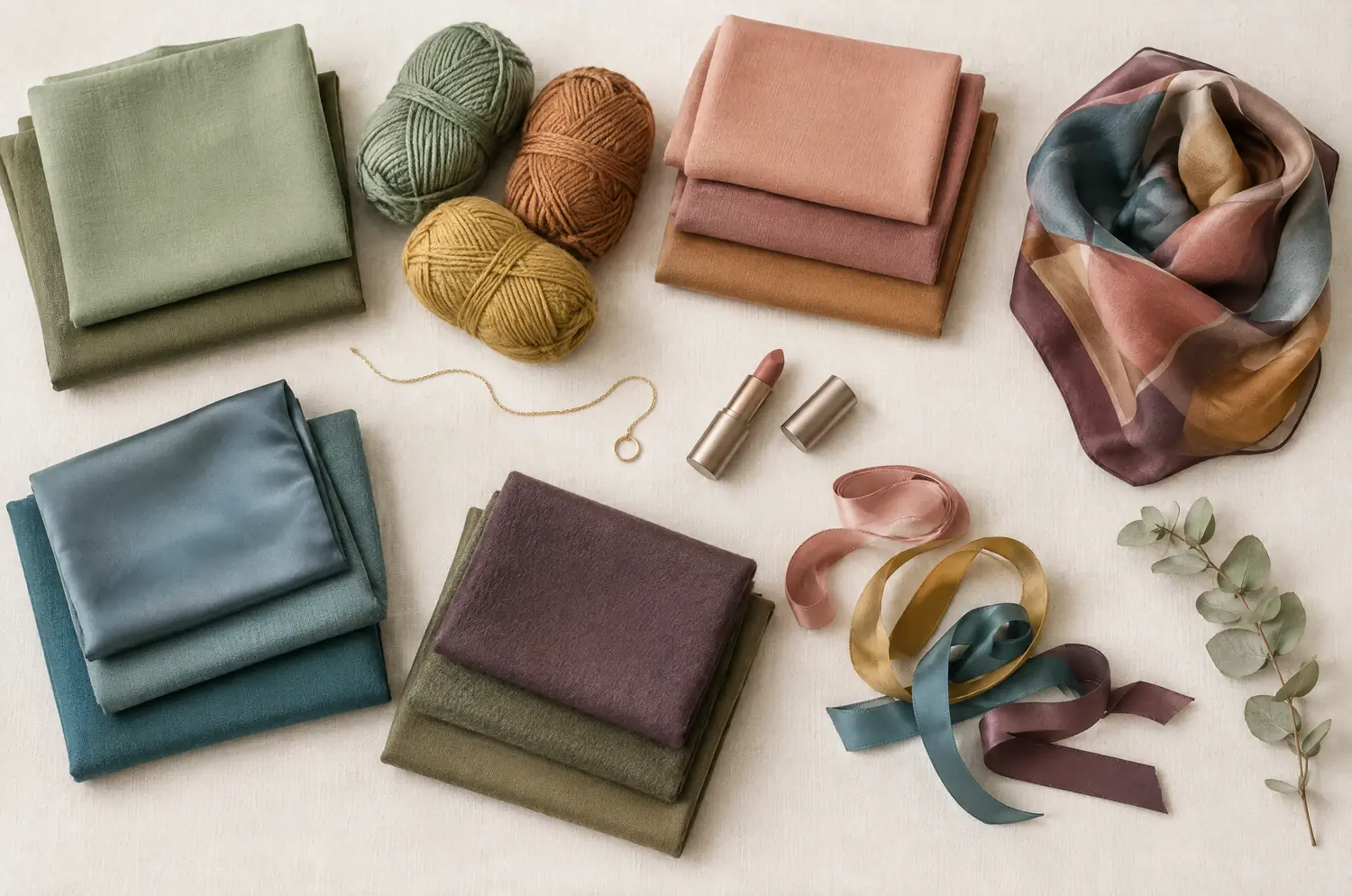
- Sage Green
#9CAF88 - Soft Olive
#8A8B5C - Khaki
#7C7A4F - Light Terracotta
#C9805E - Soft Salmon
#E0A084 - Warm Dusty Rose
#C98F85 - Caramel
#B98654 - Soft Mustard
#C9A552 - Rosy Beige
#D8B9A2 - Soft Petrol Blue
#4F7C82 - Grayed Teal
#5E8A8E - Soft Eggplant
#6E4A5A
Neutrals
- Cream
- Sand Beige
- Warm Taupe
- Chestnut
Colors to avoid
- Black
- Optic White
- Fuchsia
- Electric Blue
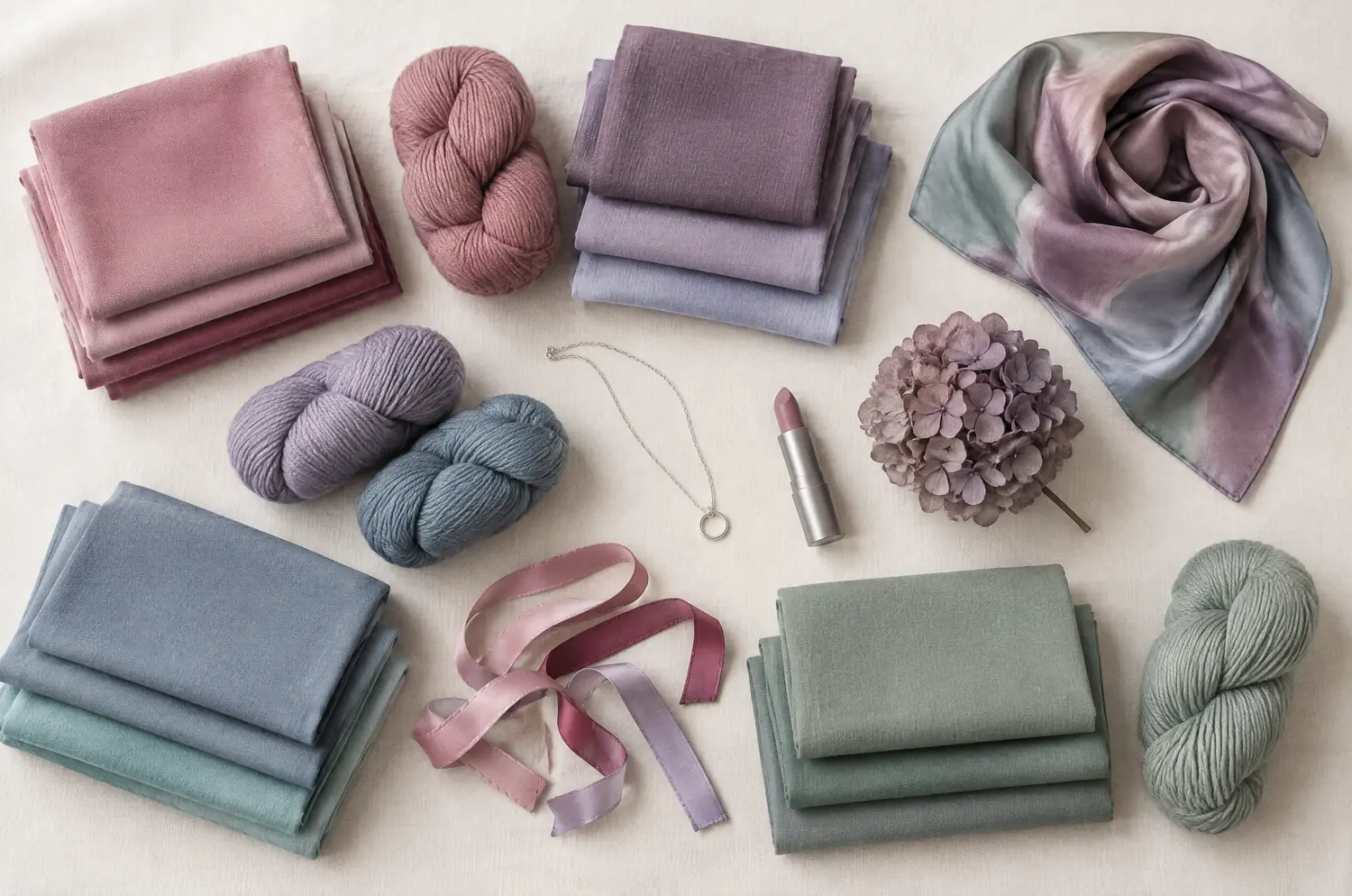
- Dusty Rose
#C48A94 - Tea Rose
#D9A8AE - Muted Raspberry
#A85068 - Soft Burgundy
#8A4756 - Soft Plum
#7B5871 - Grayed Mauve
#A690A8 - Gray Lavender
#A9A6C9 - Gray Blue
#8198AE - Slate Blue
#5F7890 - Grayed Turquoise
#6FA3A3 - Verdigris
#6F9088 - Cool Sage
#93A99A
Neutrals
- Off-White
- Dove Gray
- Taupe
- Grayed Navy
Colors to avoid
- Black
- Bright Orange
- Bright Yellow
- Electric Fuchsia
The four axes
2 axes differ, the rest is shared
Temperature, lightness, intensity and contrast: the gauge shows where each one sits, the table says it in words.
The two sub-seasons
- Temperature
- 12Differs1 Neutral to warm2 Neutral to cool
- Lightness
- 12SameMedium
- Intensity
- 12SameVery soft, desaturated
- Contrast
- 12Differs1 Low to moderate2 Low
Line by line
| What is compared | Soft Autumn | Soft Summer |
|---|---|---|
| TemperatureDiffers | Neutral to warm | Neutral to cool |
| Lightness | Medium | Medium |
| Intensity | Very soft, desaturated | Very soft, grayed |
| ContrastDiffers | Low to moderate | Low |
| Signature color | Light Terracotta | Dusty Rose |
| Neutrals | Cream, Sand Beige, Warm Taupe, Chestnut | Off-White, Dove Gray, Taupe, Grayed Navy |
| Metals | Matte gold, rose gold, soft copper, brushed brass. | Brushed silver, rose gold, white gold. Matte or satin finishes. |
| Lips | Rosy peach, apricot, soft caramel, warm rosewood. | Rosewood, dusty rose, muted raspberry. Satin finishes. |
| Hair color | Golden light brown, honey dark blonde, melted caramel. Warm tones, but never fiery. | Ash brown, ash dark blonde, soft brown. Very blended highlights rather than strong contrasts. |
What leads in Soft Autumn, and why does it look so golden?
Softness leads. Nothing in your coloring is loud, and the colors that suit you aren’t either.
Soft Autumn is neutral to warm, medium in depth (also called lightness) and very soft. The colors are desaturated, but the base stays golden. Picture Sage Green, Light Terracotta and Caramel: warm, but filtered, like the countryside at the end of summer.
Your undertone, the tone under the surface of your skin, leans warm without ever turning fiery. Contrast is low to moderate, so hair, eyes and skin sit close together with a little room to stand apart.
That’s why “natural” colors work for you. Sage, sand and caramel flatter. A bright color makes you look as if you’re wearing a costume, black looks harsh and optic white dims you.
What leads in Soft Summer, and why does it look so hazy?
Softness leads here too. The difference is the base underneath it.
Soft Summer is neutral to cool, medium in depth and very soft, with a grayed finish. Colors look as if you’re seeing them through a haze. Dusty Rose, Gray Blue and Cool Sage show it well. Think of a beach at the end of the day: pebbles, driftwood, heather.
Contrast is low. Hair, eyes and skin melt into one another, so tone-on-tone looks and monochrome outfits suit you better than sharp contrast. Gray, which many people find sad, suits you very well.
Bright colors walk into the room before you do. Your undertone is close to neutral, so the cool is gentle, never icy.
Soft Autumn vs Soft Summer: what are the two differences that matter?
Two axes differ. Two are the same, and I’d start there.
Both sit at medium depth. Both are very soft, with colors that need to be desaturated. Both lose to black. If you’re looking for a difference in how light or how muted you are, stop. It isn’t there.
Temperature comes first, because the eye catches it first. Soft Autumn is neutral to warm and Soft Summer is neutral to cool. Both are near the middle, so the gap is small. On a Soft Autumn face, a golden base lifts the skin with Light Terracotta and Caramel, while cool dusty pinks can turn it gray. On a Soft Summer face, Dusty Rose and Gray Blue settle in, while golden colors can pull the skin yellow.
Contrast comes second. Soft Autumn is low to moderate, Soft Summer is low. Soft Autumn can take a little more distance between a dark and a light: Soft Petrol Blue next to Chestnut, say. Soft Summer looks better when the pieces stay close in value, like Dove Gray with Dusty Rose.
How do you test Soft Autumn against Soft Summer at home?
Use the two signature colors: Light Terracotta for Soft Autumn, Dusty Rose for Soft Summer.
Sit by a window in daylight. Take off your makeup and cover your hair with a neutral cloth, so your skin and eyes are what you look at. Hold one color under your chin, then the other, one at a time. Color draping at home explains the setup if you’re starting from scratch.
Watch four things:
- Does your skin look even and alive, or gray and yellow?
- Do dark circles stand out?
- Do your eyes gain some sparkle?
- Do you see the color before you see your face?
Rest your eyes between tries by looking away for a moment. If the same side keeps winning, you have a direction. Then redo it another day, because light and tiredness both move the result.
It’s a first hint, not a verdict.
The two-color test. In daylight, with no makeup, hold a piece of fabric in each of these two colors up to your face. Rest your eyes between the two and redo it another day. If the same color keeps winning, you have a direction: a first hint, not a verdict.
What if you sit between Soft Autumn and Soft Summer?
Then you’re standing where the method says you might be. Each is the other’s neighboring season. They share softness, and temperature is what separates them.
Start with the leading trait. If softness is clearly what your coloring is about, you’re in this corner of the wheel. Then let the drape test choose the side.
Because the border is shared, some colors almost meet. Sage Green and Cool Sage are close cousins. So are Warm Dusty Rose and Dusty Rose. A palette can borrow from its neighbor in places like these without breaking the harmony. That’s a borrowed accent, not a second palette.
A quiz or an app can’t settle this. It can’t see your skin react to color, and this pair is a question of reaction. I treat a quiz as a first hint, not a verdict. The free color analysis quiz gives you a likely season in about two minutes, no sign-up. Then read the full pages for Soft Autumn and Soft Summer and compare them with your mirror.
Do makeup, hair and metals separate the two too?
They follow the temperature, so they confirm what the drape test shows.
Lips are the quickest check. Soft Autumn leans to rosy peach, apricot and warm rosewood. Soft Summer leans to dusty rose, rosewood and muted raspberry. The Soft Autumn makeup page and the Soft Summer makeup page cover eyes and blush as well.
Metals are a clue, not a law. Soft Autumn goes with matte gold, soft copper and brushed brass. Soft Summer goes with brushed silver and white gold. Rose gold sits well in both, which is why you may go back and forth between gold and silver in either one.
Hair is the trap. Golden light brown and honey blonde lean Autumn, ash brown and ash blonde lean Summer, but hair alone places nobody. Test with it covered.
Keep exploring
More on these two sub-seasons
Palette Soft Autumn color palette
Autumn in half-tones: warm, hushed, very soft colors.
Makeup Soft Autumn makeup
Soft Autumn makeup comes down to warm, blended shades: rosy peach lips, bronze eyes, soft apricot cheeks. Here is what to try first, what to skip and why.
Hair color Soft Autumn hair color
Soft Autumn hair color comes down to golden light brown, honey dark blonde and melted caramel. How to choose, what to skip and what to tell your colorist.
Compare Soft Autumn vs Deep Autumn
Soft Autumn vs Deep Autumn: three differences, what each looks like on your face, and a quick drape test to settle it if you sit somewhere between the two.
Compare Soft Autumn vs Warm Autumn
Soft Autumn vs Warm Autumn: softness leads in one, warmth in the other. Here are the three differences you can see on a face and a quick test to settle it.
Palette Soft Summer color palette
The most blended season: grayed, hushed colors with a quiet elegance.
Questions
Soft Autumn or Soft Summer: your questions
How do I tell Soft Autumn from Soft Summer?
Look at the base under the softness. Soft Autumn keeps a golden base and a little more distance between hair, eyes and skin. Soft Summer keeps a cool, hazy base and very low contrast. Hold Light Terracotta and Dusty Rose to your bare face in daylight, hair covered, and see which one wakes your skin up.
Can I be both Soft Autumn and Soft Summer?
Not at once, but you can sit close to the border. The two are each other’s neighboring season, so your palette may borrow from the other side. Choose the one that flatters your face more often in the drape test. Treat the neighbor’s colors as occasional accents rather than a second identity.
Are Soft Summers cool or warm?
Neutral to cool. Soft Summer sits close to neutral, so you may go back and forth between gold and silver. The cool is gentle and grayed, never icy. Brushed silver, rose gold and white gold are the direction to try first, but test each metal against your own skin.
What should Soft Autumn and Soft Summer avoid?
Both do poorly in black. Soft Autumn also avoids optic white, Fuchsia and Electric Blue, which are too sharp or too cool. Soft Summer also avoids Bright Orange, Bright Yellow and Electric Fuchsia, which are too saturated and overpower the softness of your face.
Does hair color or gray hair decide between them?
No. Hair is one clue, never the ruling. Dyed hair doesn’t change your season either: the reading comes from your skin and your eyes, with the hair covered. Gray or white hair doesn’t pick a side. Watch how your skin reacts to the colors.
What if the quiz says one and the drape test says the other?
Redo the drape test on another day, in daylight, with your hair covered. A quiz is a first hint, and what a quiz can and can’t do is simple: it can’t see your skin react to colors. If the same side keeps winning at the mirror, trust that direction.
Soft Autumn or Soft Summer? Check it.
The free quiz shows you your likely season in two minutes. Then run the two-color test on your own bare face, in daylight: a first hint, not a verdict.