
Compare · two Autumns
Soft Autumn vs Warm Autumn: The Real Differences
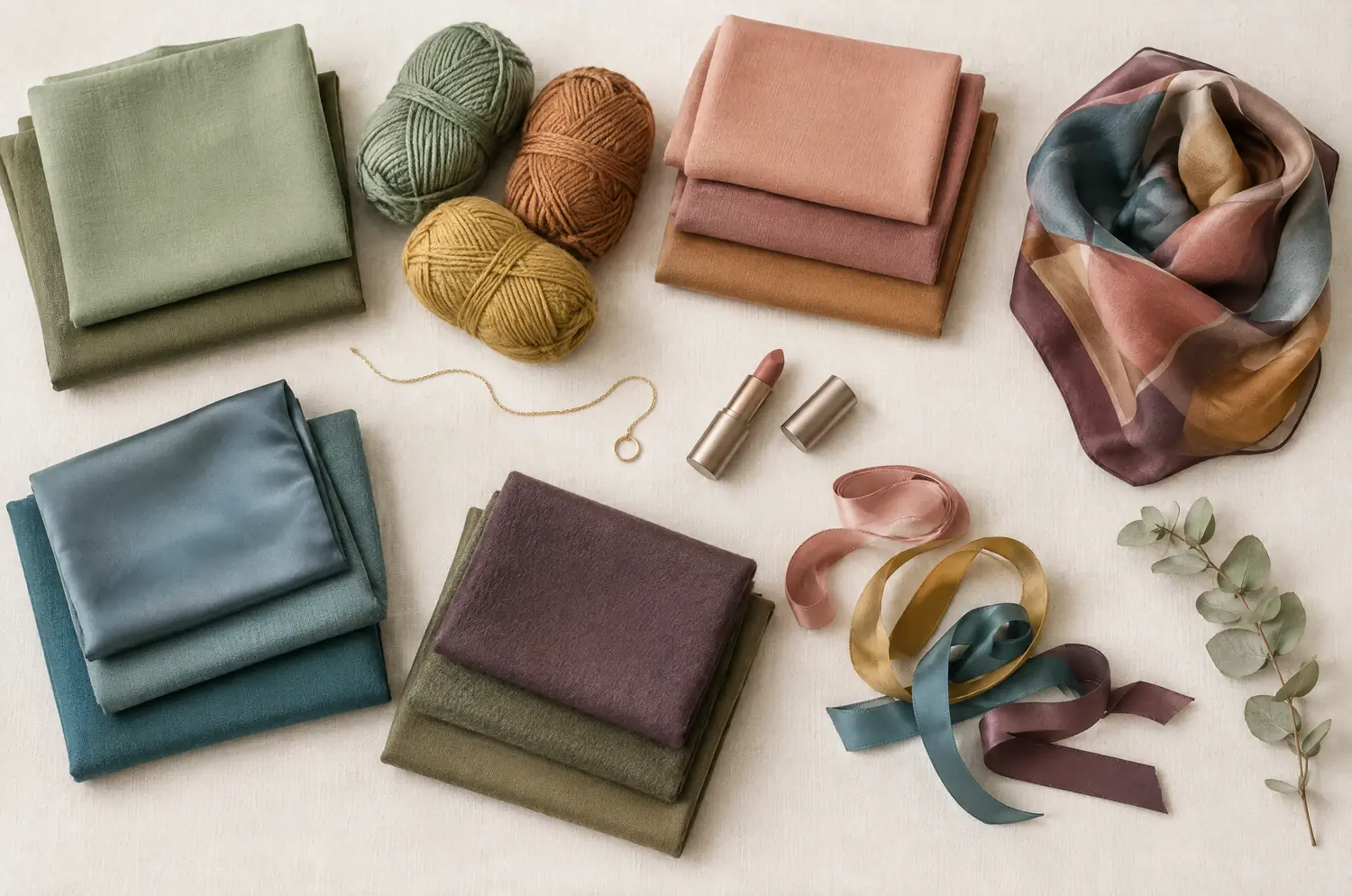
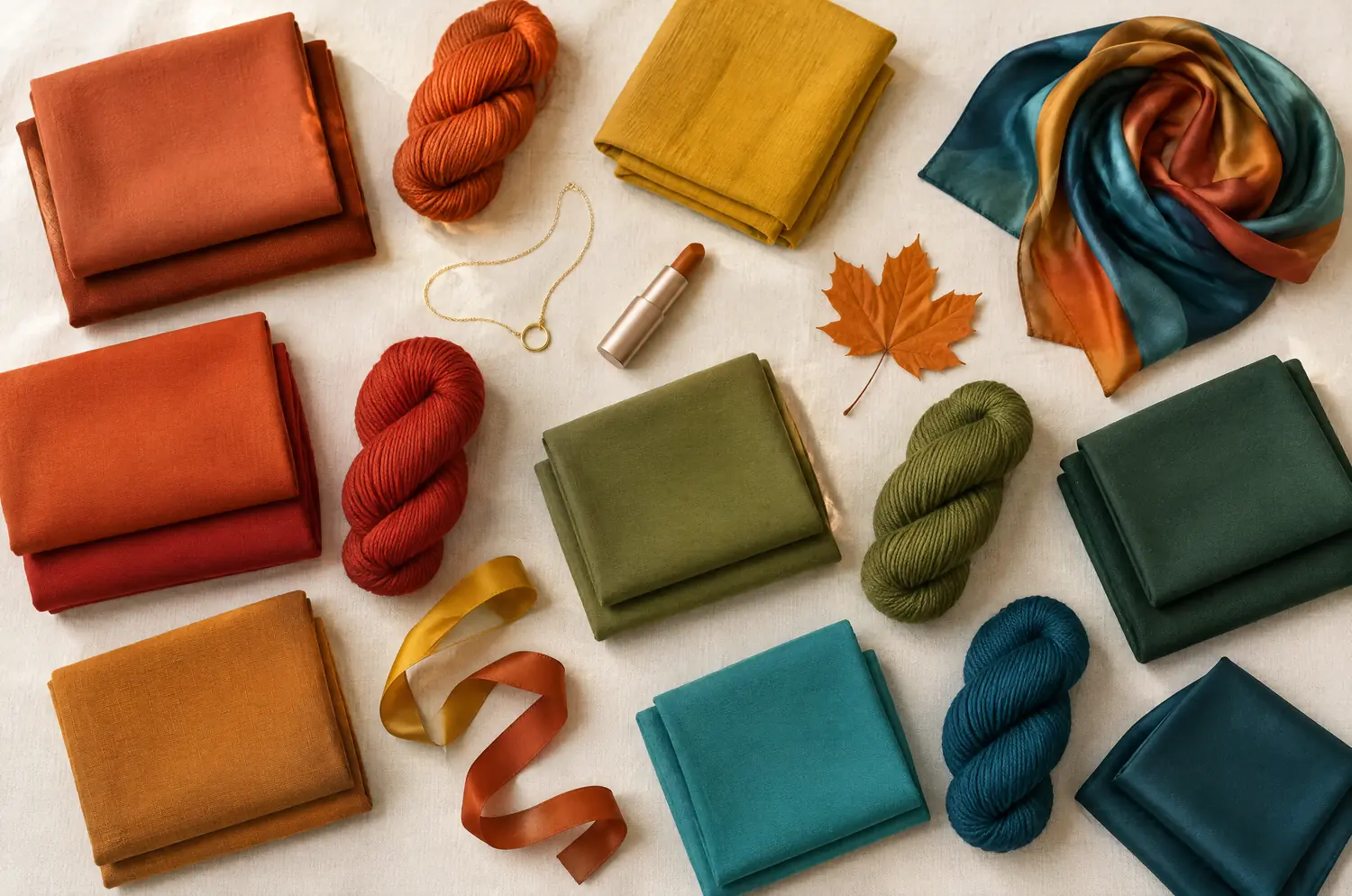
On paper, both are warm Autumns. On a face, one looks blended and golden, the other looks lit like October.
Side by side
Soft Autumn and Warm Autumn palettes
Same scale, same page: look at the swatches before you read the differences.
- Sage Green
#9CAF88 - Soft Olive
#8A8B5C - Khaki
#7C7A4F - Light Terracotta
#C9805E - Soft Salmon
#E0A084 - Warm Dusty Rose
#C98F85 - Caramel
#B98654 - Soft Mustard
#C9A552 - Rosy Beige
#D8B9A2 - Soft Petrol Blue
#4F7C82 - Grayed Teal
#5E8A8E - Soft Eggplant
#6E4A5A
Neutrals
- Cream
- Sand Beige
- Warm Taupe
- Chestnut
Colors to avoid
- Black
- Optic White
- Fuchsia
- Electric Blue
- Terracotta
#C1502E - Rust
#A8451F - Burnt Orange
#D2691E - Burnt Coral
#E0623F - Tomato Red
#C8321F - Mustard
#D4A017 - Ochre
#C9862B - Olive Green
#6B7A2A - Moss Green
#4F6B3A - Warm Forest Green
#2F5D3A - Warm Turquoise
#2A8C82 - Petrol Blue
#1F5F6B
Neutrals
- Cream
- Camel
- Khaki
- Chocolate
Colors to avoid
- Black
- Fuchsia
- Cool Gray
- Glacier Blue
The four axes
3 axes differ, the rest is shared
Temperature, lightness, intensity and contrast: the gauge shows where each one sits, the table says it in words.
The two sub-seasons
- Temperature
- 12Differs1 Neutral to warm2 Very warm
- Lightness
- 12SameMedium
- Intensity
- 12Differs1 Very soft, desaturated2 Rich, slightly muted
- Contrast
- 12Differs1 Low to moderate2 Moderate
Line by line
| What is compared | Soft Autumn | Warm Autumn |
|---|---|---|
| TemperatureDiffers | Neutral to warm | Very warm |
| Lightness | Medium | Medium |
| IntensityDiffers | Very soft, desaturated | Rich, slightly muted |
| ContrastDiffers | Low to moderate | Moderate |
| Signature color | Light Terracotta | Rust |
| Neutrals | Cream, Sand Beige, Warm Taupe, Chestnut | Cream, Camel, Khaki, Chocolate |
| Metals | Matte gold, rose gold, soft copper, brushed brass. | Yellow gold, copper, bronze, brass. Amber, tiger’s eye, turquoise. |
| Lips | Rosy peach, apricot, soft caramel, warm rosewood. | Terracotta, brick, tomato red, burnt coral. |
| Hair color | Golden light brown, honey dark blonde, melted caramel. Warm tones, but never fiery. | Red, coppery, auburn, golden brown, dark honey. Warm tones were made for you. |
Soft Autumn is warmth with the volume turned down
Softness leads. Everything else follows from it.
Its temperature is neutral to warm and its lightness (also called depth) sits in the middle. Intensity (also called clarity) is where it lives: very soft and desaturated, with a contrast that stays low to moderate.
On a face, that means nothing shouts. Sage Green, Light Terracotta and Warm Dusty Rose settle next to the skin as if they belonged there.
Loud colors start talking over you. Black feels severe, and optic white dims the blend.
The Soft Autumn palette is warm but filtered, like wheat and sage at the end of summer.
Warm Autumn leads with heat, and it carries rich color well
Here warmth leads. The temperature is very warm, the depth is medium, the intensity is rich and only slightly muted, and the contrast is moderate.
Warm Autumn, also called True Autumn, is the heart of the season. Rust and Mustard are hard for almost everyone. On you, they glow. Olive Green and Moss Green belong to your palette too.
Cool pinks and bluish grays do the opposite. They dim you and bring out redness.
Coppery, red or golden tones in your natural hair are a clue, not a rule. The Warm Autumn palette reads like a forest in October: red leaves, bark, moss.
Soft Autumn vs Warm Autumn: where do the three differences show up?
First, what they share. Both sit at medium lightness, so depth won’t settle this. Both also stay away from black and fuchsia.
Temperature comes first. Warm Autumn is very warm, and yellow gold, copper and bronze flatter it. Soft Autumn is neutral to warm, so its gold has to be quiet: matte, or rose.
Intensity comes second, and it’s the one you feel in your clothes. The mustard family shows it: Warm Autumn wears Mustard, Soft Autumn wears Soft Mustard.
Warm Autumn sits at rich, slightly muted. Soft Autumn sits at very soft and desaturated. Try both near your face and see which one you stop noticing.
Contrast comes last. Soft Autumn is low to moderate, the gentler gap between hair, eyes and skin. Warm Autumn is moderate, a step more definition.
Contrast never decides alone. Use it to confirm what temperature and intensity already told you.
The two-color test. In daylight, with no makeup, hold a piece of fabric in each of these two colors up to your face. Rest your eyes between the two and redo it another day. If the same color keeps winning, you have a direction: a first hint, not a verdict.
How do Light Terracotta and Rust settle it?
The setup is in color draping at home. Here, only the pair matters: Light Terracotta against Rust.
Hold one, then the other, and ask yourself three questions.
Does your skin turn yellow or gray? A color that fights your temperature does one or the other.
Is the color loud or faded? Rust is the richer color and Light Terracotta the softer one. Watch which of the two looks like it belongs on you and which one you notice before you notice your face.
Do your features stand out or blur? Contrast is the gap between hair, eyes and skin. Watch which color keeps your face readable and which one melts it together.
Come back a day later with a second pair. When one side keeps winning, you have a direction. When it flips, you’re between the two, and that’s the next section.
Where do you land if Soft Autumn and Warm Autumn both fit?
A mixed result is normal here, and it has a reason. These two aren’t neighbors in the method. Soft Autumn borders Soft Summer, and Warm Autumn borders Warm Spring. Between them there’s no bridge, only a shared family: earthy, golden, never icy.
So read your leading trait first. If a loud color is what bothers you, softness leads. If a dull color is what bothers you, warmth leads.
Both palettes include a cream and a khaki, each in its own version. Try yours near your face while you decide. The two palettes share a golden family, so a cream or a khaki from either one is a fair thing to try near your face. Treat it as a test, not a rule, and watch what your skin does before you keep it.
A quiz can’t settle this, because it can’t watch your skin react to colors. The free color analysis quiz still gives you a starting point. If softness wins but your skin sometimes looks cool or gray, the Soft Autumn vs Soft Summer comparison will help. If warmth wins and you run very warm, read Warm Spring against Warm Autumn.
What changes in your lipstick, your hair and your jewelry?
Lips show it too. Soft Autumn lives in rosy peach, apricot and warm rosewood. Warm Autumn goes to terracotta, brick and burnt coral. Try them on and watch your skin.
Hair color tells the same story. Soft Autumn suits golden light brown, honey dark blonde and melted caramel, warm but never fiery. Warm Autumn takes red, coppery and auburn tones.
For jewelry, Warm Autumn leans to yellow gold, copper and bronze. Soft Autumn leans to matte gold, rose gold, soft copper and brushed brass. Treat that as a direction, then test it against your face.
More detail sits on the Soft Autumn makeup and Soft Autumn hair color pages.
Keep exploring
More on these two sub-seasons
Palette Soft Autumn color palette
Autumn in half-tones: warm, hushed, very soft colors.
Makeup Soft Autumn makeup
Soft Autumn makeup comes down to warm, blended shades: rosy peach lips, bronze eyes, soft apricot cheeks. Here is what to try first, what to skip and why.
Hair color Soft Autumn hair color
Soft Autumn hair color comes down to golden light brown, honey dark blonde and melted caramel. How to choose, what to skip and what to tell your colorist.
Compare Soft Autumn vs Deep Autumn
Soft Autumn vs Deep Autumn: three differences, what each looks like on your face, and a quick drape test to settle it if you sit somewhere between the two.
Compare Soft Autumn vs Soft Summer
Soft Autumn vs Soft Summer: two sub-seasons that share softness and split on temperature and contrast. Here is how to tell them apart on your own face.
Palette Warm Autumn color palette
The heart of Autumn: colors of spices, leaves and fire.
Questions
Soft Autumn or Warm Autumn: your questions
Soft Autumn or Warm Autumn: which one am I?
Ask which word fits your best colors: blended or fiery. Soft Autumn looks calm in filtered, earthy shades like sage and light terracotta. Warm Autumn looks alive in rich ones like rust and moss.
If sage feels easy and mustard feels like a lot, go soft. If mustard glows, go warm.
Does hair color decide between Soft Autumn and Warm Autumn?
No. Hair is a clue at most, never the answer. Dyed hair changes nothing, and gray hair doesn’t either. Your season is read on skin and eyes, with the hair covered, so no coppery or honey shade of hair places you alone.
What if the quiz says one and my drape test says the other?
Give the drape more weight than the quiz, since a quiz can’t watch your skin react to colors. Still, redo it on another day with your hair covered, using a different piece of fabric, before you trust it. Then read both season pages.
What should each one skip?
For Soft Autumn the list is optic white, black, electric blue and fuchsia: too sharp or too cool for a blended coloring. For Warm Autumn it is cool gray, glacier blue, fuchsia and black: too cool, they bring out redness. Test any of them near your face before you decide.
Soft Autumn or Warm Autumn? Check it.
The free quiz shows you your likely season in two minutes. Then run the two-color test on your own bare face, in daylight: a first hint, not a verdict.