
Best hair shades for Deep Autumn
- Chocolate brown
- Dark brown with mahogany or coppery tones
- Deep auburn
Deep Autumn · hair color · also called Dark Autumn
Hold a chocolate sweater under your chin, then a pale pearl gray one. Notice which one gives your face weight. Your hair does that job. All day. Right beside your face.
At a glance
The shades that go with your coloring, and the palette colors that sit next to them.
Your palette, next to your hair
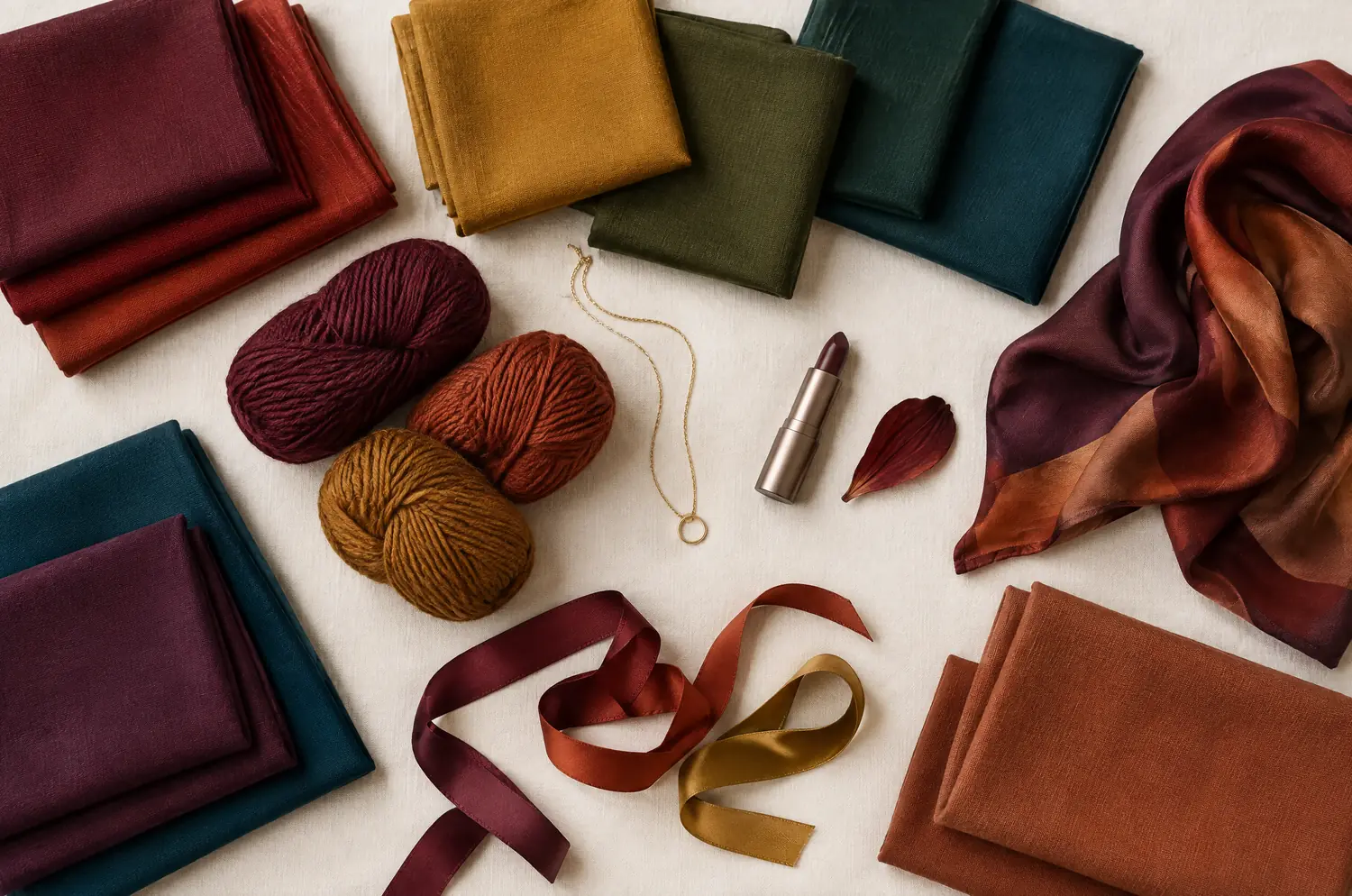
#6E1A24#9E2B1F#C0392B#C65A1E#A44A1F#B8860B#4B5320#1E4D3AThey’re one family: dark, warm and rich. The browns bring the depth. The mahogany, copper and auburn bring the warmth, like embers under bark. Your palette works the same way, with burgundy, spruce green and rust, so hair in these shades sits inside it instead of arguing with it.
Choose by how much red you want to see. Chocolate keeps it quiet. Mahogany or coppery tones add a glint when you move. Deep auburn makes the red the point.
Your hair is a clue, not a rule. Hair color alone never rules out a season, so a brunette, a blonde or a redhead can belong here, but only if the skin and eyes say so. Cover your hair, hold a warm burgundy and a cool one up to your face, and watch your skin. The Deep Autumn page shows the full palette these shades should sit beside.
No. The reading comes from your skin and eye color while your hair is tied back or wrapped. A dye can’t change that.
What a dye does change is the light around your face. Hair reflects its color onto your skin, so a warm, dark shade gives you back warmth and depth, and a pale or cool one takes them away. That is why a dye should follow your palette even though it doesn’t decide it.
If your natural hair is dark and warm, you may not need to do anything. If you do dye, stay in the chocolate or mahogany family.
Not sure you’re a Deep Autumn at all? Take the free color analysis quiz first: ten questions, no sign-up, and a likely season to check against your mirror before you commit to a dye.
Look at your own avoid list: baby pink, sky blue, pearl gray, cool fuchsia. They’re too light or too cool, and they don’t have enough weight for you. Hair follows the same logic. Pale blonde is too light. Silvery ash is too cool. Neither has the depth your palette is built around.
Lightening your hair a lot costs you something specific. You lose the contrast that gives you your intensity. The face starts to look softer and flatter, which is the opposite of what your coloring wants. If your coloring sits closer to the softer side, Soft Autumn versus Deep Autumn explains where the line falls.
Then there is the cool dark. Cool dark brown belongs to your neighbor, Deep Winter, who avoids golden or coppery tones. You’re the reverse. If you can’t tell which side you’re on, the Deep Autumn and Deep Winter comparison walks you through it.
Gray or white hair is not a problem to solve. Look at how it sits beside your burgundy, your chocolate and your rust. If it reads cool and harsh next to them, ask your colorist for a warm direction.
Highlights should follow the warm base of your shades, not fight it. Keep them close to the base, with a copper or mahogany glint. Lightening a lot loses the contrast that gives you your intensity.
Say it, or print it:
“I want a dark, warm brown with chocolate in the base. I’d like mahogany or coppery tones that catch the sun. Keep it deep and rich, with no ash and no pale highlights. If you add any, keep them warm and close to my base color.”
If you’re leaning red, swap the middle line for “I’m thinking of a deep auburn.”
Lip and eye shades that go with this hair are listed on the Deep Autumn makeup page. Bring a photo of a shade you like, and check the result outside before you decide it’s right.
What to skip
Yellow gold, bronze, dark copper. Garnet, dark amber.
A direction, not a law: hold the metal near your bare face in daylight and watch your skin.
Too light or too cool: they don’t have enough weight for you.
#F8C8DC#BFE0F5#C9CCD3#C2187ANothing is off-limits. If you love one of these, wear it away from your face.
Keep exploring
The most intense Autumn: dark, rich colors with strong contrast.
Deep Autumn vs Deep Winter share the same depth. Two things separate them: warmth and crispness. Here is how they look on a face and how to test it at home.
Soft Autumn vs Deep Autumn: three differences, what each looks like on your face, and a quick drape test to settle it if you sit somewhere between the two.
Questions
Chocolate brown, dark brown with mahogany or coppery tones, or deep auburn. All three are dark and warm, which is what your coloring needs. Pick the one with the amount of red you like, then check it against a warm burgundy held under your chin.
No. Hair is a clue, and it can be dyed or faded anyway. What decides is the draping: hold warm dark colors and cool ones up to your face and see which your skin answers to.
No. Your season is read on skin and eyes, so a new color can’t rewrite it. Still, the shade throws its tone onto your face, so a dye from the chocolate, mahogany or auburn family keeps you in step with your palette.
It depends on how the gray looks beside your palette. Judge it next to a burgundy or chocolate scarf: does it read soft or stark? Gray doesn’t change your season. If it feels harsh against your warm shades, ask your colorist about a warmer direction.
Your metals lean toward yellow gold, bronze and dark copper, which echo the warm glint of mahogany or auburn. Take that as a direction, not a law. Hold a gold and a silver chain near your face, hair covered, and see which one keeps your skin looking alive.
Check it. The free quiz shows you your likely season in two minutes, and the two-color test on the palette page helps you tell it from its neighbor: a first hint, not a verdict.