
Compare · two sub-seasons
Soft Autumn vs Deep Winter: Four Differences That Matter
People hear “dark and rich” and picture one palette. Look at the faces and you see two: one blended and quiet, one dark and crisp.
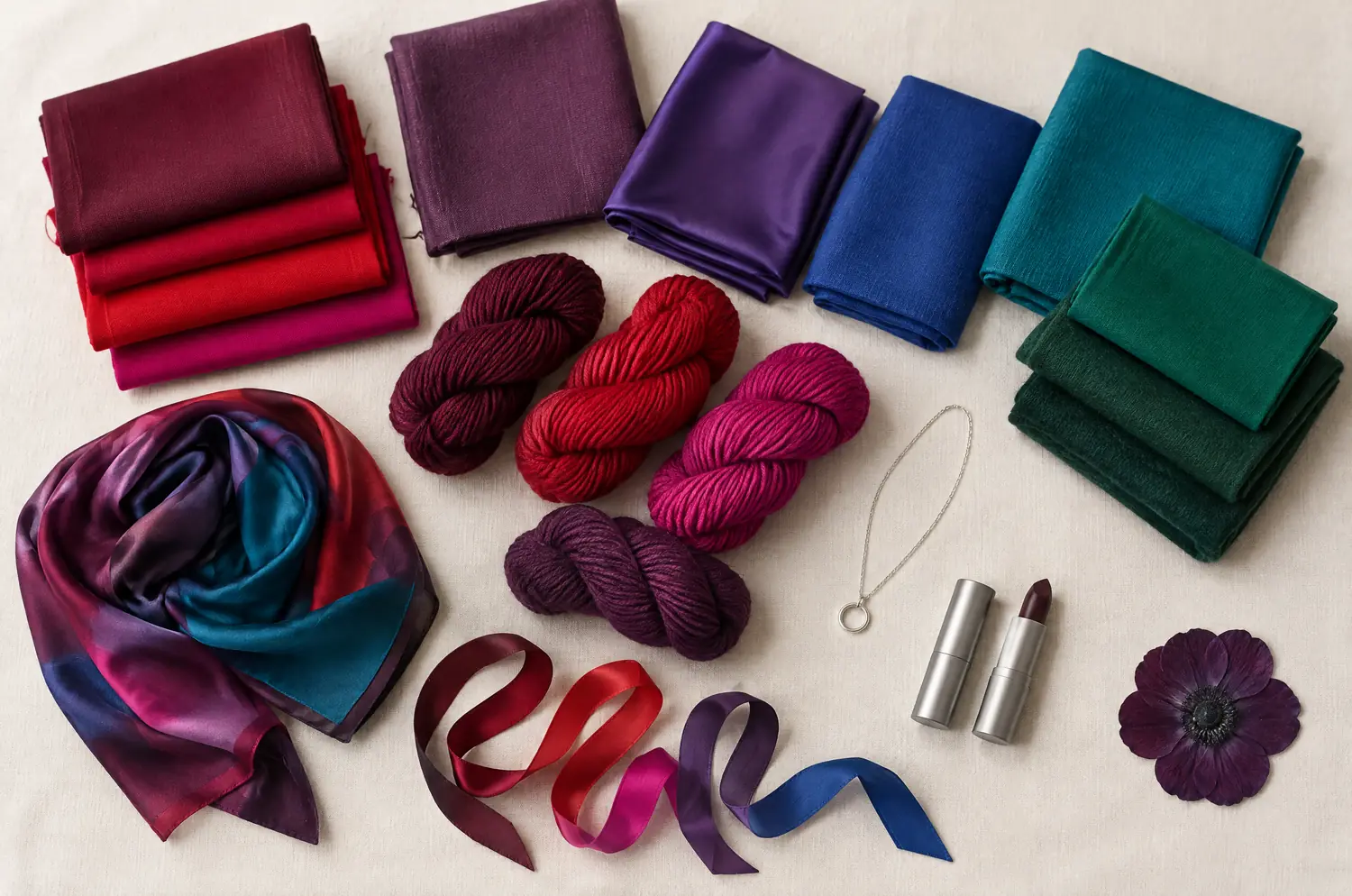
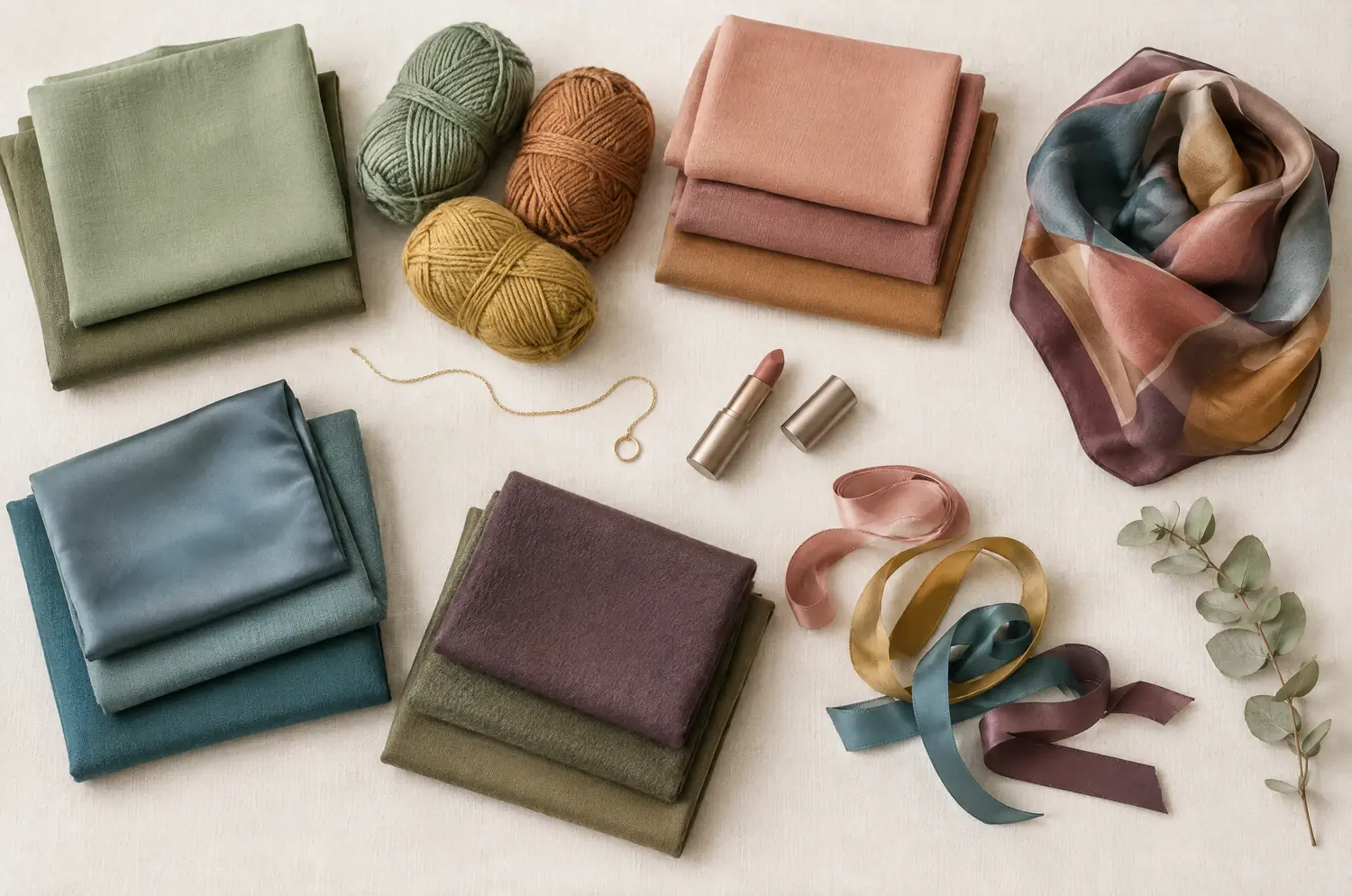
Side by side
Soft Autumn and Deep Winter palettes
Same scale, same page: look at the swatches before you read the differences.
- Sage Green
#9CAF88 - Soft Olive
#8A8B5C - Khaki
#7C7A4F - Light Terracotta
#C9805E - Soft Salmon
#E0A084 - Warm Dusty Rose
#C98F85 - Caramel
#B98654 - Soft Mustard
#C9A552 - Rosy Beige
#D8B9A2 - Soft Petrol Blue
#4F7C82 - Grayed Teal
#5E8A8E - Soft Eggplant
#6E4A5A
Neutrals
- Cream
- Sand Beige
- Warm Taupe
- Chestnut
Colors to avoid
- Black
- Optic White
- Fuchsia
- Electric Blue
- Cool Burgundy
#5C0F2E - Cherry Red
#B0102E - Pure Red
#D0102A - Raspberry Pink
#C81E5A - Fuchsia
#C2187A - Plum
#5E1F4F - Deep Violet
#4B1F6F - Royal Blue
#1F3FA8 - Midnight Blue
#14213D - Deep Turquoise
#007C89 - Emerald
#00704A - Cool Spruce Green
#0B4F3F
Neutrals
- Black
- Charcoal
- Navy
- Pure White
Colors to avoid
- Golden Beige
- Rust
- Mustard
- Peach
The four axes
All four axes differ, none is shared
Temperature, lightness, intensity and contrast: the gauge shows where each one sits, the table says it in words.
The two sub-seasons
- Temperature
- 12Differs1 Neutral to warm2 Neutral to cool
- Lightness
- 12Differs1 Medium2 Dark
- Intensity
- 12Differs1 Very soft, desaturated2 Saturated
- Contrast
- 12Differs1 Low to moderate2 High
Line by line
| What is compared | Soft Autumn | Deep Winter |
|---|---|---|
| TemperatureDiffers | Neutral to warm | Neutral to cool |
| LightnessDiffers | Medium | Dark |
| IntensityDiffers | Very soft, desaturated | Saturated |
| ContrastDiffers | Low to moderate | High |
| Signature color | Light Terracotta | Cool Burgundy |
| Neutrals | Cream, Sand Beige, Warm Taupe, Chestnut | Black, Charcoal, Navy, Pure White |
| Metals | Matte gold, rose gold, soft copper, brushed brass. | Silver, platinum, white gold. Onyx, garnet, sapphire. |
| Lips | Rosy peach, apricot, soft caramel, warm rosewood. | Burgundy, cherry, plum, deep red. A dark lip comes naturally to you. |
| Hair color | Golden light brown, honey dark blonde, melted caramel. Warm tones, but never fiery. | Cool dark brown, black, very dark brown. Avoid golden or coppery tones. |
Soft Autumn: a blended face wears a blended palette
Softness leads. The warmth is filtered, the depth is medium and the color itself is desaturated.
Temperature runs neutral to warm. Contrast is low to moderate. In plain words, nothing in your coloring jumps out, so your colors shouldn’t either.
Sage Green, Light Terracotta and Caramel are typical shades. Cream, Sand Beige, Warm Taupe and Chestnut are the neutrals.
Black looks harsh on you and optic white dims the face. Fuchsia and Electric Blue break the blend. Every shade is on the Soft Autumn page.
Deep Winter: a face that can carry midnight
Depth leads. Everything here is dark, saturated and clean-edged.
Temperature runs neutral to cool, lightness is dark and contrast is high. Eyes and hair are often dark, with an intense gaze, so the face has edges. Colors have to hold their own beside them.
Cool Burgundy, Midnight Blue, Emerald and Plum set the tone. Black, Charcoal and Pure White are real neutrals for you, and black works even near your face.
Golden Beige, Rust, Mustard and Peach pull in the wrong direction. They turn the skin yellow and soften your definition. See the Deep Winter page for the rest.
Four differences and no overlap: what does each look like on a face?
Start with the two leading traits. Lightness first: Deep Winter is dark, and Soft Autumn sits at medium depth. Light, powdery colors leave a Deep Winter looking pale.
Softness next. Soft Autumn is very soft and desaturated, so nothing looks loud. Deep Winter is saturated, so a color like Emerald or Cherry Red arrives clean and clear.
Then contrast. Deep Winter is high contrast, and pairings like Charcoal with Plum or Black with Cherry Red keep the edges sharp. Soft Autumn’s pairings, like Cream with Sage Green and Caramel, let the edges melt on purpose.
Last, temperature. Soft Autumn leans neutral to warm, with a golden base. Deep Winter leans neutral to cool, with a crisp base.
No axis is shared. If you feel pulled toward both, the pull probably comes from one visible trait, such as dark hair or a love of rich tones. That doesn’t make the palettes close.
The two-color test. In daylight, with no makeup, hold a piece of fabric in each of these two colors up to your face. Rest your eyes between the two and redo it another day. If the same color keeps winning, you have a direction: a first hint, not a verdict.
Light Terracotta against Cool Burgundy: where does your face go?
Follow the setup in color draping at home, then bring in the two duel colors.
Look for four things, one for each axis.
For temperature, watch your skin. Does it turn yellow, or does it turn gray?
For lightness, watch the balance. Does your face disappear into the burgundy, or does the color take over?
For intensity, ask whether each color looks loud on you, or faded.
For contrast, look at your eyes and brows. Do they sharpen against the color, or melt into it?
Now read what you saw. If your skin goes yellow next to one and gray next to the other, that’s temperature talking. Note which color kept it looking clear.
If your face stays the first thing you see under the burgundy, that leans Deep Winter. If it stays the first thing you see under the terracotta, that leans Soft Autumn. If neither color convinces you, a neighbor may fit better.
Do it again on another day. One round proves little. Two rounds that agree start to say something.
What if you sit between Soft Autumn and Deep Winter?
In the method, each of them has a different neighbor. Soft Autumn sits next to Soft Summer, and Deep Winter next to Deep Autumn. So a result that feels in between may point to one of those neighbors rather than to a blend of these two.
Look for your leading trait. Ask whether softness or depth runs your face. If a dark color overpowers you and a muted one feels right, read Soft Autumn vs Deep Autumn. If depth feels right and warmth doesn’t, read how Deep Autumn and Deep Winter split.
An app or a quiz can’t watch a fabric change your face. The ten-question free quiz gives you a likely season and a sub-season hint, and then the drape test does the real work.
Keep exploring
More on these two sub-seasons
Palette Soft Autumn color palette
Autumn in half-tones: warm, hushed, very soft colors.
Makeup Soft Autumn makeup
Soft Autumn makeup comes down to warm, blended shades: rosy peach lips, bronze eyes, soft apricot cheeks. Here is what to try first, what to skip and why.
Hair color Soft Autumn hair color
Soft Autumn hair color comes down to golden light brown, honey dark blonde and melted caramel. How to choose, what to skip and what to tell your colorist.
Compare Bright Spring vs Soft Autumn
Bright Spring vs Soft Autumn: they share warmth and depth, but not intensity or contrast. See what that looks like on a face and how to settle it at home.
Compare Cool Summer vs Soft Autumn
Cool Summer vs Soft Autumn: three differences that matter, what each looks like on a face, and a quick drape test to settle it, even if you sit between.
Compare Light Spring vs Soft Autumn
Light Spring vs Soft Autumn: all four axes differ, and I show what each looks like on a face, plus a quick drape test to settle it if you sit between them.
Questions
Soft Autumn or Deep Winter: your questions
What’s the quickest way to separate Soft Autumn and Deep Winter?
Start with depth and contrast. Deep Winter is dark with high contrast and a crisp edge. Soft Autumn sits at medium depth, with low to moderate contrast and a golden, blended softness. Try a muted terracotta and a deep burgundy under your chin and watch which one your skin answers to.
Can I be a bit of both?
If you feel “both,” check the neighbors. All four axes differ, so a neighbor may sit closer to your face: Soft Summer for Soft Autumn, Deep Autumn for Deep Winter. Test those next, then come back to this duel.
Does dark hair make me a Deep Winter?
No. Dark hair is only one visible trait, and your hair isn’t the test. Cover it and watch how your skin and your eyes react to each color, in daylight, one fabric at a time. Dyed or natural, judge the face.
Which metals and lip colors go with each?
Soft Autumn leans toward matte gold, rose gold and brushed brass, with lips in rosy peach, apricot and warm rosewood. Deep Winter leans toward silver, platinum and white gold, with burgundy, cherry or plum lips. Take these as directions, not laws. The Soft Autumn makeup page goes further on lips, eyes and blush.
What if the quiz points to one and the drape test to the other?
A quiz works from your answers, so it can’t see a color brighten or sour your complexion. Repeat the drape on a second day, then read both season pages next to each other and ask which one sounds like you.
What should each one keep away from the face?
For Soft Autumn, it’s anything too sharp or too cool: Black, Optic White, Fuchsia and Electric Blue break up the blended harmony. For Deep Winter, it’s anything too warm or too light: Golden Beige, Rust, Mustard and Peach pull yellow into the skin and soften the crisp edge. Farther from the face, any of them can stay in your closet.
Soft Autumn or Deep Winter? Check it.
The free quiz shows you your likely season in two minutes. Then run the two-color test on your own bare face, in daylight: a first hint, not a verdict.