
Compare · neighboring sub-seasons
Deep Autumn vs Deep Winter: The Two Differences That Matter
You hold a burgundy sweater to your chin. Then a second burgundy, with a different base. Both look rich. Neither one settles it.
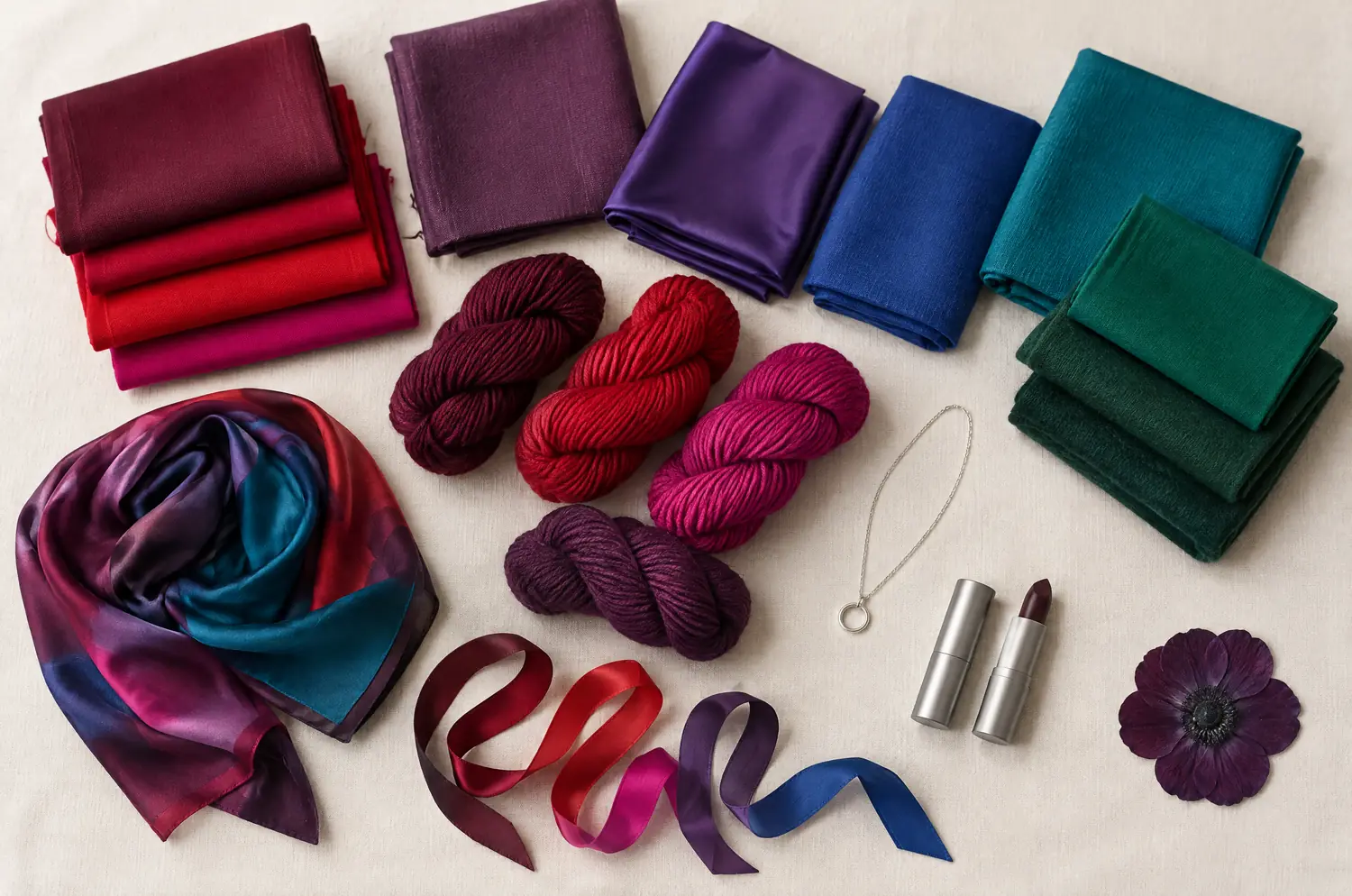
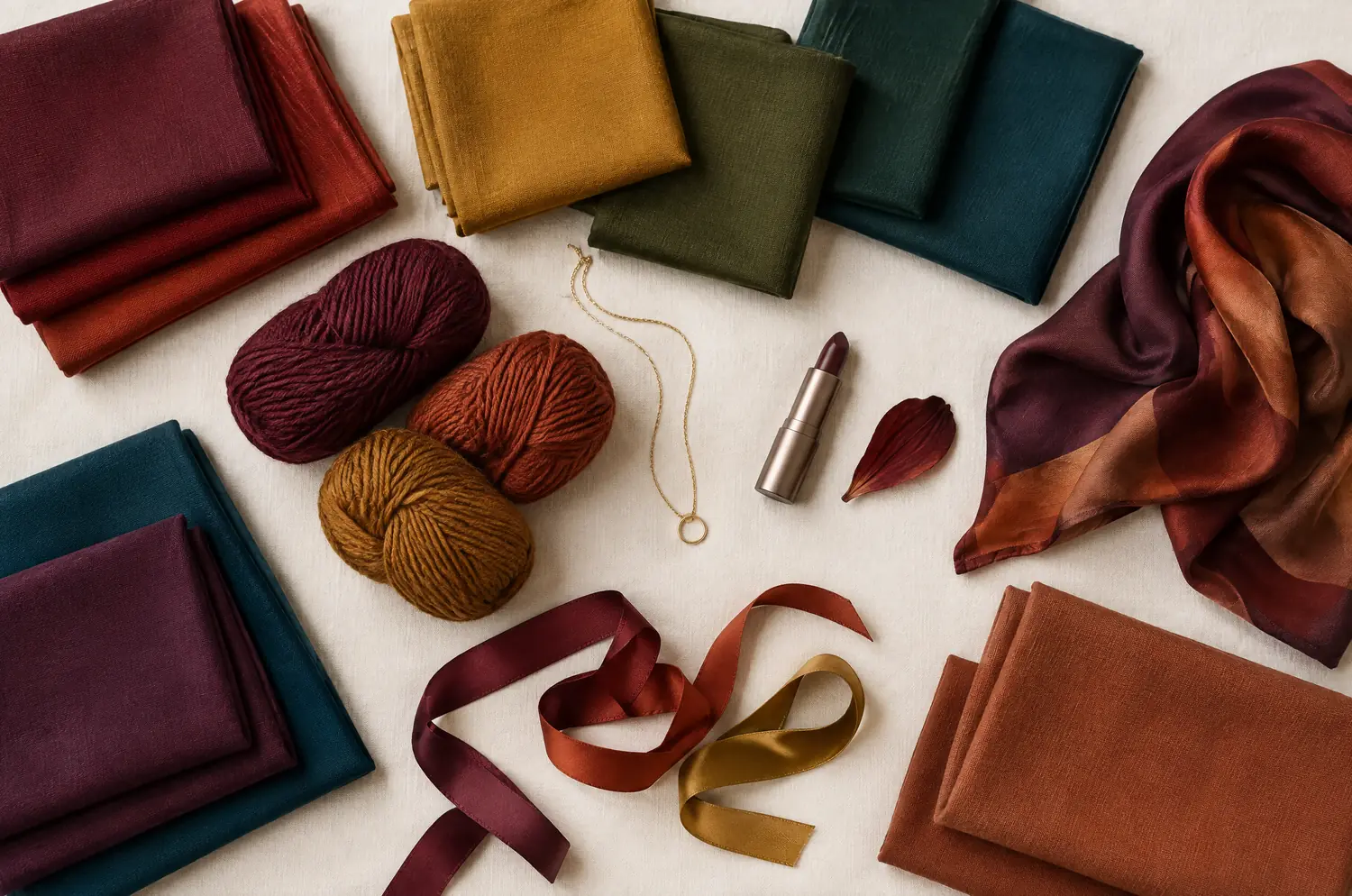
Side by side
Deep Autumn and Deep Winter palettes
Same scale, same page: look at the swatches before you read the differences.
- Warm Burgundy
#6E1A24 - Brick Red
#9E2B1F - Tomato
#C0392B - Spiced Orange
#C65A1E - Rust
#A44A1F - Dark Mustard
#B8860B - Dark Olive
#4B5320 - Spruce Green
#1E4D3A - Deep Turquoise
#0E6E6A - Dark Petrol Blue
#0F4C5C - Eggplant
#4A2040 - Dark Terracotta
#A14A2E
Neutrals
- Cream
- Dark Khaki
- Chocolate
- Espresso
Colors to avoid
- Baby Pink
- Sky Blue
- Pearl Gray
- Cool Fuchsia
- Cool Burgundy
#5C0F2E - Cherry Red
#B0102E - Pure Red
#D0102A - Raspberry Pink
#C81E5A - Fuchsia
#C2187A - Plum
#5E1F4F - Deep Violet
#4B1F6F - Royal Blue
#1F3FA8 - Midnight Blue
#14213D - Deep Turquoise
#007C89 - Emerald
#00704A - Cool Spruce Green
#0B4F3F
Neutrals
- Black
- Charcoal
- Navy
- Pure White
Colors to avoid
- Golden Beige
- Rust
- Mustard
- Peach
The four axes
2 axes differ, the rest is shared
Temperature, lightness, intensity and contrast: the gauge shows where each one sits, the table says it in words.
The two sub-seasons
- Temperature
- 12Differs1 Neutral to warm2 Neutral to cool
- Lightness
- 12SameDark
- Intensity
- 12Differs1 Rich and intense2 Saturated
- Contrast
- 12SameHigh
Line by line
| What is compared | Deep Autumn | Deep Winter |
|---|---|---|
| TemperatureDiffers | Neutral to warm | Neutral to cool |
| Lightness | Dark | Dark |
| IntensityDiffers | Rich and intense | Saturated |
| Contrast | High | High |
| Signature color | Warm Burgundy | Cool Burgundy |
| Neutrals | Cream, Dark Khaki, Chocolate, Espresso | Black, Charcoal, Navy, Pure White |
| Metals | Yellow gold, bronze, dark copper. Garnet, dark amber. | Silver, platinum, white gold. Onyx, garnet, sapphire. |
| Lips | Brick, warm burgundy, warm plum, dark tomato red. | Burgundy, cherry, plum, deep red. A dark lip comes naturally to you. |
| Hair color | Chocolate brown, dark brown with mahogany or coppery tones, deep auburn. | Cool dark brown, black, very dark brown. Avoid golden or coppery tones. |
Why does Deep Autumn feel like a forest floor in November?
Depth leads. Deep Autumn is dark before it is anything else, and warm second.
The temperature runs neutral to warm, the intensity is rich and the contrast is high. Picture bark, wine, spruce and embers. Warm Burgundy is the signature, with Brick Red, Dark Olive and Eggplant around it.
On a face, dark colors give you radiance instead of darkening you. Pastels and light colors flatten you into something bland. Black works better on a Deep Autumn than on the other Autumns, even if Chocolate and Espresso flatter more.
Eyes and hair are often dark and intense. Notice that pattern, but don’t treat it as a test. The full Deep Autumn page has the whole palette.
Deep Winter is depth with a cool, crisp edge
Same first trait, different base. Deep Winter is dark first, then cool.
The temperature runs neutral to cool, the intensity is saturated and the contrast is high. Think of a winter night: midnight sky, evergreens, garnet and snow. Cool Burgundy leads, with Cherry Red, Emerald and Plum alongside it.
Black really suits you here, even right at your face, and Pure White gives it a sharp partner. Warm, earthy colors like Rust and Mustard turn you yellow. Light, powdery colors leave you pale.
Eyes and hair are often dark too, with an intense gaze. See the Deep Winter page for the full set of shades.
Which two differences separate Deep Autumn from Deep Winter?
Two. Temperature comes first for the eye, intensity second. The rest is shared.
Depth and contrast match. Both are dark, both are high contrast, so a deep head of hair or a strong, defined look won’t decide anything. Don’t hunt for a difference there.
Temperature first. Deep Autumn runs neutral to warm, Deep Winter neutral to cool, and the two ranges meet at neutral. That is why people mix them up. A warm base suits Brick Red and Dark Terracotta. A cool base suits Raspberry Pink and Royal Blue. Put Rust on a Deep Winter and the skin turns yellow. Put Cool Fuchsia on a Deep Autumn and it is too cool to carry its weight.
Then intensity. Deep Autumn is rich and intense, a depth that feels full and warm, like wine. Deep Winter is saturated and clean-cut, a depth with edges. On a Deep Winter, warm colors take away the crisp definition and the features blur.
The two-color test. In daylight, with no makeup, hold a piece of fabric in each of these two colors up to your face. Rest your eyes between the two and redo it another day. If the same color keeps winning, you have a direction: a first hint, not a verdict.
Which burgundy wins: Warm Burgundy or Cool Burgundy?
Set up the way the guide on color draping at home explains, then come back here for this pair.
Both burgundies are dark, and your contrast is high either way, so neither axis helps. Look at temperature. Does your skin turn yellow or gray next to one of them? Does the face look flat and tired next to the other?
If Warm Burgundy lights you up and Cool Burgundy flattens you, that points to Deep Autumn. The reverse points to Deep Winter.
Then look at intensity. Does the fabric look loud on you, or faded? The one that sits quietly and lets your face lead is the one to trust.
Add a second pair: Spruce Green against Cool Spruce Green. Try it again on another day. If the same side keeps winning, you have a direction. It is a first hint, not a verdict.
What if you land between Deep Autumn and Deep Winter?
Start with what is certain. Depth leads in both, so you belong in the dark, saturated end of the wheel. Pastels and powdery colors fall flat on either side.
The two sit on a border, so a split result makes sense. In my view, it is a reason to look closer, not a reason to worry.
Some shades travel well. Deep Turquoise is in both palettes. Spruce Green, Dark Petrol Blue and Eggplant each have a cooler cousin in Deep Winter: Cool Spruce Green, Cool Petrol Blue and Cool Eggplant. Test the pair, not just one side.
Black won’t break the tie either. A Deep Autumn handles it better than the other Autumns, so wearing black well doesn’t move you into Winter. The same goes for metals: yellow gold and bronze lean Autumn, silver and white gold lean Winter. Take that as a direction and let your skin answer.
A quiz or an app can’t settle this, because it can’t see your skin react. The free color analysis quiz gives you a likely season and a sub-season hint to start from. My advice: then compare lips and eyes on the Deep Autumn makeup and Deep Winter makeup pages. The Deep Autumn guide is on a waitlist, not out yet.
Keep exploring
More on these two sub-seasons
Palette Deep Autumn color palette
The most intense Autumn: dark, rich colors with strong contrast.
Hair color Deep Autumn hair color
Deep Autumn hair color is dark, warm and rich: chocolate, mahogany and deep auburn. Here is how to choose, what to skip and what to tell your colorist.
Compare Soft Autumn vs Deep Autumn
Soft Autumn vs Deep Autumn: three differences, what each looks like on your face, and a quick drape test to settle it if you sit somewhere between the two.
Palette Deep Winter color palette
The darkest Winter: deep, crisp, very intense colors.
Outfits Deep Winter outfits and capsule wardrobe
Deep Winter outfits from eight capsule pieces: what to buy first, formulas for office, weekend and evening, and how to wear the colors that don’t suit you.
Compare Deep Winter vs True Winter
Deep Winter vs True Winter comes down to two axes: how dark you are and how cool. Here is what each looks like on a face and how to test it for yourself.
Questions
Deep Autumn or Deep Winter: your questions
How do I tell Deep Autumn from Deep Winter?
Check temperature first, then whether a color feels rich or crisp. Deep Autumn comes alive in warm, full shades like Brick Red and Dark Olive. Deep Winter comes alive in cool, clear ones like Emerald and Royal Blue. Depth and contrast are shared, so they won’t help you choose.
Can I be both Deep Autumn and Deep Winter?
You can sit on the border, but you still land on one sub-season. The two are neighbors and share depth, so a mixed reading makes sense. Pick the side your skin favors across several color pairs, and borrow shared shades like Deep Turquoise from the other palette.
Does dark hair or gray hair decide between them?
No. Both sub-seasons often come with dark hair and dark eyes, so hair can’t separate them. Dyed hair doesn’t change your season, and gray hair doesn’t decide it. The reading comes from how your skin reacts to colors near your face, so cover your hair and watch the skin.
Which metals suit Deep Autumn and Deep Winter?
Deep Autumn leans toward yellow gold, bronze and dark copper. Deep Winter leans toward silver, platinum and white gold. Treat that as a direction, not a law. Hold each metal near your face like a fabric and see which one your skin answers to.
What should each one avoid?
Deep Autumn skips Baby Pink, Sky Blue, Pearl Gray and Cool Fuchsia, which are too light or too cool. Deep Winter skips Golden Beige, Rust, Mustard and Peach, which are too warm or too light. Both lists lack the weight a dark face needs.
What if the quiz says Deep Autumn and my drape test says Deep Winter?
Trust what you see on your skin. A quiz only reads your answers, and it can’t watch your complexion react to a color. Repeat the Warm Burgundy and Cool Burgundy duel on another day, add a second pair, and see which side keeps winning. If it stays split, you’re on the border.
Deep Autumn or Deep Winter? Check it.
The free quiz shows you your likely season in two minutes. Then run the two-color test on your own bare face, in daylight: a first hint, not a verdict.