
Compare · neighboring sub-seasons
Warm Spring vs Warm Autumn: The Two Differences That Matter
“If you’re warm, you’re warm. Spring or Autumn, it’s the same thing.” It isn’t. The warmth is shared. The contrast is shared. What separates these two is how light and how bright the color is.
Side by side
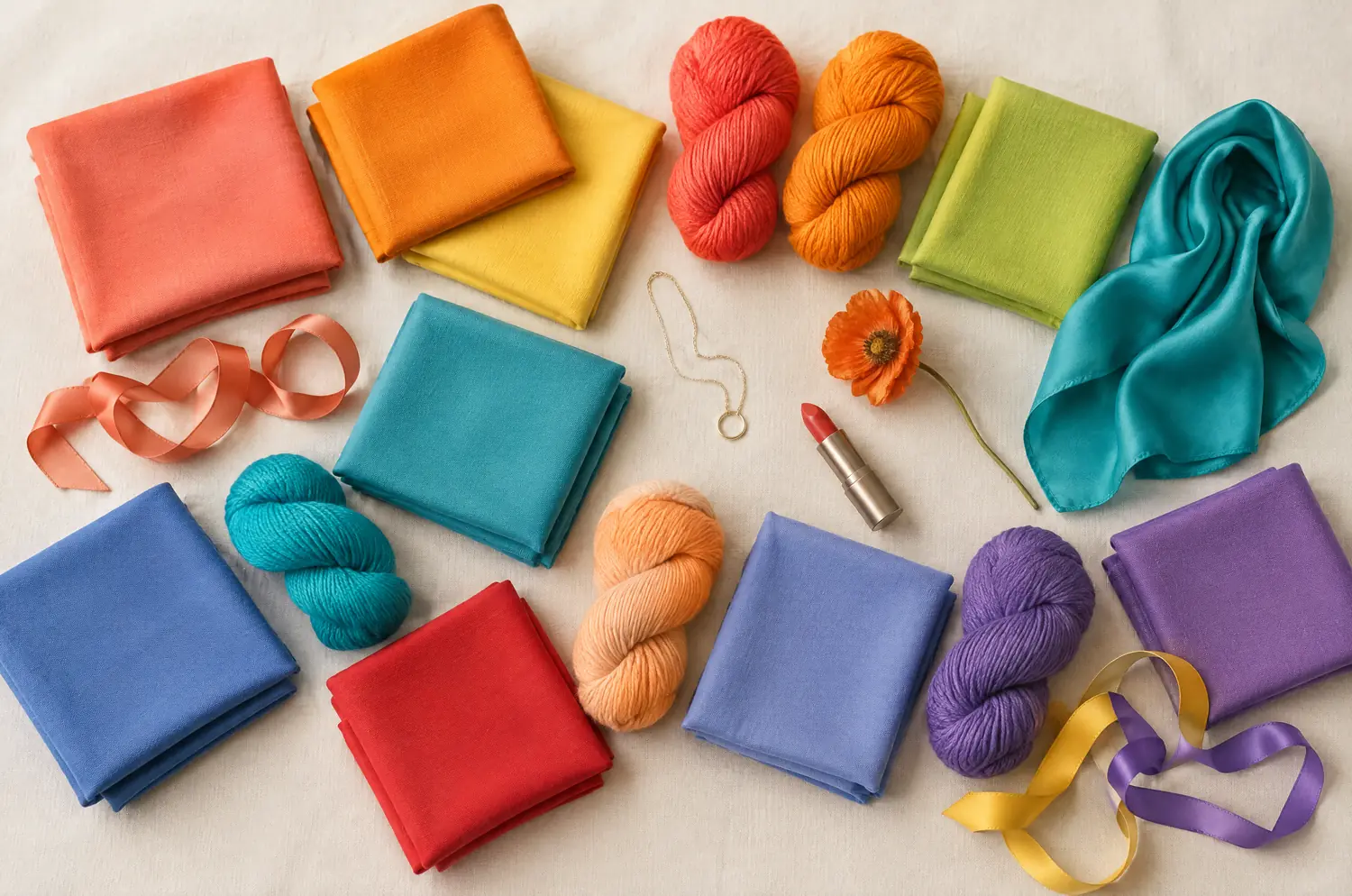
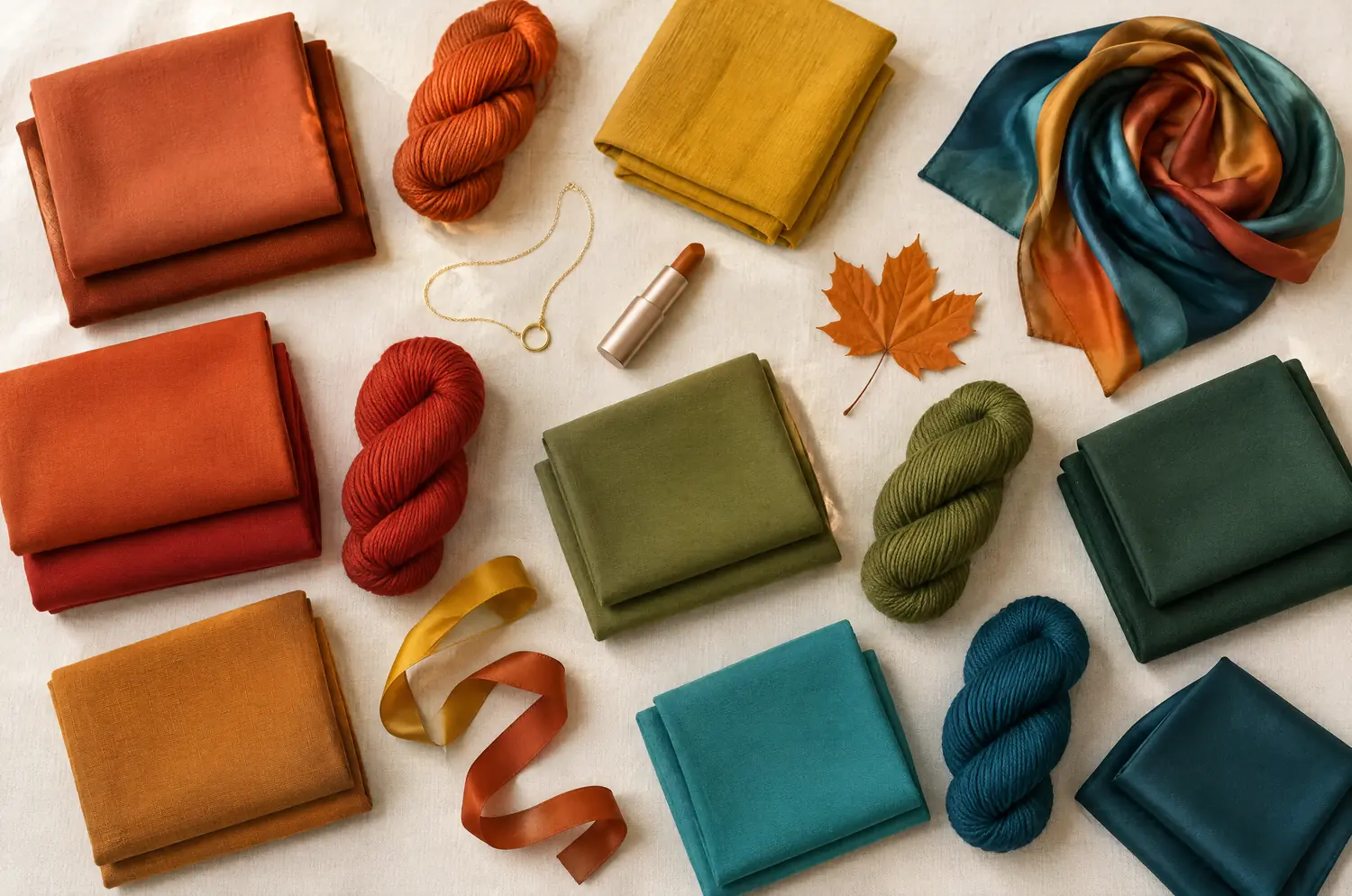
Warm Spring and Warm Autumn palettes
Same scale, same page: look at the swatches before you read the differences.
- Coral
#FF6F52 - Bright Orange
#FF8C1A - Sunshine Yellow
#FFD23F - Meadow Green
#5DB84C - Pear Green
#B5D334 - Warm Turquoise
#1FB7A6 - Lagoon Blue
#2E9CCA - Poppy Red
#E8382F - Salmon
#FF8E72 - Bright Peach
#FFAB6B - Warm Periwinkle
#6D7FD9 - Warm Violet
#8A5FBF
Neutrals
- Cream
- Camel
- Golden Brown
- Light Khaki
Colors to avoid
- Black
- Cool Fuchsia
- Blue Gray
- Optic White
- Terracotta
#C1502E - Rust
#A8451F - Burnt Orange
#D2691E - Burnt Coral
#E0623F - Tomato Red
#C8321F - Mustard
#D4A017 - Ochre
#C9862B - Olive Green
#6B7A2A - Moss Green
#4F6B3A - Warm Forest Green
#2F5D3A - Warm Turquoise
#2A8C82 - Petrol Blue
#1F5F6B
Neutrals
- Cream
- Camel
- Khaki
- Chocolate
Colors to avoid
- Black
- Fuchsia
- Cool Gray
- Glacier Blue
The four axes
2 axes differ, the rest is shared
Temperature, lightness, intensity and contrast: the gauge shows where each one sits, the table says it in words.
The two sub-seasons
- Temperature
- 12SameVery warm
- Lightness
- 12Differs1 Medium to light2 Medium
- Intensity
- 12Differs1 Bright2 Rich, slightly muted
- Contrast
- 12SameModerate
Line by line
| What is compared | Warm Spring | Warm Autumn |
|---|---|---|
| Temperature | Very warm | Very warm |
| LightnessDiffers | Medium to light | Medium |
| IntensityDiffers | Bright | Rich, slightly muted |
| Contrast | Moderate | Moderate |
| Signature color | Coral | Rust |
| Neutrals | Cream, Camel, Golden Brown, Light Khaki | Cream, Camel, Khaki, Chocolate |
| Metals | Yellow gold, golden brass, cream pearls. Turquoise and coral. | Yellow gold, copper, bronze, brass. Amber, tiger’s eye, turquoise. |
| Lips | Coral, poppy red, rich peach. Orange-leaning reds are your reds. | Terracotta, brick, tomato red, burnt coral. |
| Hair color | Golden blonde, honey, light copper, golden brown. Always keep warm tones. | Red, coppery, auburn, golden brown, dark honey. Warm tones were made for you. |
Warm Spring is warmth with the lights on
Warmth leads here. Warm Spring (also called True Spring) is very warm, medium to light and bright, with moderate contrast between your hair, eyes and skin.
Think Coral, Sunshine Yellow, Warm Turquoise. Add Poppy Red and Meadow Green. These colors look sunlit and clear, and nothing in the palette is hazy.
Yellow gold suits you far better than silver. A coral or a soft orange gives you a healthy glow right away.
The pitfalls are the cool colors. They pull the yellow out of your skin instead of giving it a golden glow.
Why does Warm Autumn look so rich?
Warmth leads here too. Warm Autumn (also called True Autumn) is very warm, medium in lightness and rich, slightly muted, with the same moderate contrast.
Its colors are those of a forest in October: Rust, Terracotta, Olive Green, Petrol Blue. Mustard sits in the palette too, and it is a color that is hard for almost everyone.
Yellow gold, copper and bronze suit you far better than silver.
Cool colors work against you here too, but in a different way: they bring out redness and gray out your complexion.
Intensity and lightness: what do they change on a face?
Two axes differ, and two are shared. Here they are, in the order your eye meets them.
Intensity (also called clarity) is the one the eye catches first. Warm Spring is bright. Warm Autumn is rich and slightly muted.
On a Warm Spring, a clean, clear color looks fresh and awake, and a smoky one may leave you looking tired. On a Warm Autumn, it runs the other way. A very bright shade can talk over you, while a rich, softened one settles in beside your skin.
Lightness (also called depth) comes second. Warm Spring is medium to light, Warm Autumn medium.
The gap is small, so you feel it more in a whole outfit than in a single swatch. Airier colors lift a Warm Spring. A little more weight suits a Warm Autumn.
Now the shared ground, so you don’t go hunting for a difference that isn’t there. Both are very warm. Both have moderate contrast. Copper, honey and golden tones show up in the natural coloring of both, so your hair alone won’t separate them.
The two-color test. In daylight, with no makeup, hold a piece of fabric in each of these two colors up to your face. Rest your eyes between the two and redo it another day. If the same color keeps winning, you have a direction: a first hint, not a verdict.
Coral or Rust: which one does your face answer to?
The setup (daylight, a bare face, hair covered, fabric under your chin) is in the article on color draping at home.
Here, use the signature color of each: Coral for Warm Spring, Rust for Warm Autumn. Rust is the deeper of the two. Hold one, then the other, then both side by side.
Ask the intensity question first. With Coral, does your face look rested and bright, or does the color look loud? With Rust, does your face look warm and grounded, or does it look faded?
Then the lightness question. Which one do you see first, your face or the color?
Temperature won’t settle this pair, since both colors are very warm. If neither one flatters you, go back to the quiz or the season pages for another angle.
Repeat the duel after a night’s sleep. If the same side keeps winning, you have a direction. Treat it as a lead to follow, not a ruling.
What do you do when you sit on the border between the two?
These two are neighbors in the method. Same warmth, but Warm Autumn is deeper and more muted, Warm Spring lighter and brighter.
Start with that sentence and ask which half sounds like your best colors. Sunlit and clear? Deep and rich?
If you’re split, borrow carefully. A Warm Spring can take Ochre or Warm Forest Green from the Autumn palette for a richer accent. A Warm Autumn can take Salmon or Bright Peach from the Spring palette for a clearer one. Both palettes already share Cream and Camel as base neutrals.
My advice: don’t ask a quiz to make the call. The ten-question free quiz is good for narrowing things down, but it works from your answers, and this choice is made on how your skin reacts to color.
If the Autumn side wins but feels softer than rich, read Soft Autumn against Warm Autumn. If it wins cleanly, the Warm Autumn outfits page shows how to build with it.
Which lip and which metal point to which season?
Lips split along the same line. Warm Spring wears coral, poppy red and rich peach, the orange-leaning reds. Warm Autumn wears terracotta, brick, tomato red and burnt coral. Coral and burnt coral look like cousins, and the difference between them is exactly the one you have just been testing.
Metals mostly agree. Yellow gold works for both, so it won’t settle anything. Beyond gold, Warm Spring goes to golden brass, cream pearls, turquoise and coral. Warm Autumn goes to copper, bronze, amber and tiger’s eye.
Hair color overlaps. Golden brown and honey appear on both lists, so a hair color alone won’t split them. Warm Spring adds golden blonde and light copper, and Warm Autumn adds red, auburn and dark honey. Keep the warm tones either way.
Keep exploring
More on these two sub-seasons
Palette Warm Spring color palette
Sunshine in your skin: golden, cheerful, clear colors.
Palette Warm Autumn color palette
The heart of Autumn: colors of spices, leaves and fire.
Outfits Warm Autumn outfits and capsule wardrobe
Warm Autumn outfits built from eight pieces: what to buy first, three outfit formulas, what replaces black, and how to wear the colors you were told to skip.
Compare Soft Autumn vs Warm Autumn
Soft Autumn vs Warm Autumn: softness leads in one, warmth in the other. Here are the three differences you can see on a face and a quick test to settle it.
Questions
Warm Spring or Warm Autumn: your questions
How do I tell Warm Spring from Warm Autumn?
Start with the Coral and Rust duel, not with your hair. Warm Spring comes alive in lighter, clearer shades, Warm Autumn in deeper, richer ones. If one side keeps winning, you have a direction, and the two season pages let you check it.
Can I be both Warm Spring and Warm Autumn?
You can sit between them, since they are neighbors. But you still have a leading side. Ask whether your best colors feel clear and sunlit or deep and rich, and borrow a few shades from the other palette only after that.
Can my hair tell me which one I am?
No. Copper, honey and golden brown suit both palettes. I never place anyone from a single trait. Gray hair changes nothing either: with the hair covered, it’s the skin and the eyes that get read.
Which colors do Warm Spring and Warm Autumn share?
Cream and Camel are base neutrals in both palettes, and both include a Warm Turquoise. Both also dim under cool pinks and bluish grays. What differs is how bright and how deep the rest of the colors run.
My quiz said Spring, but Rust looks better on me. Now what?
A quiz only reflects the answers you gave. It can’t watch your skin meet a fabric. Repeat the duel with Coral and Rust on a different morning, and if Rust keeps winning, follow the fabric. Then read both season pages to confirm.
Warm Spring or Warm Autumn? Check it.
The free quiz shows you your likely season in two minutes. Then run the two-color test on your own bare face, in daylight: a first hint, not a verdict.