
Compare · two sub-seasons
Soft Summer vs Bright Winter: Two Differences That Matter
Your quiz says Soft Summer. A second opinion says Bright Winter. In the fitting room, a gray-pink sweater and a hot pink one both seem fine.
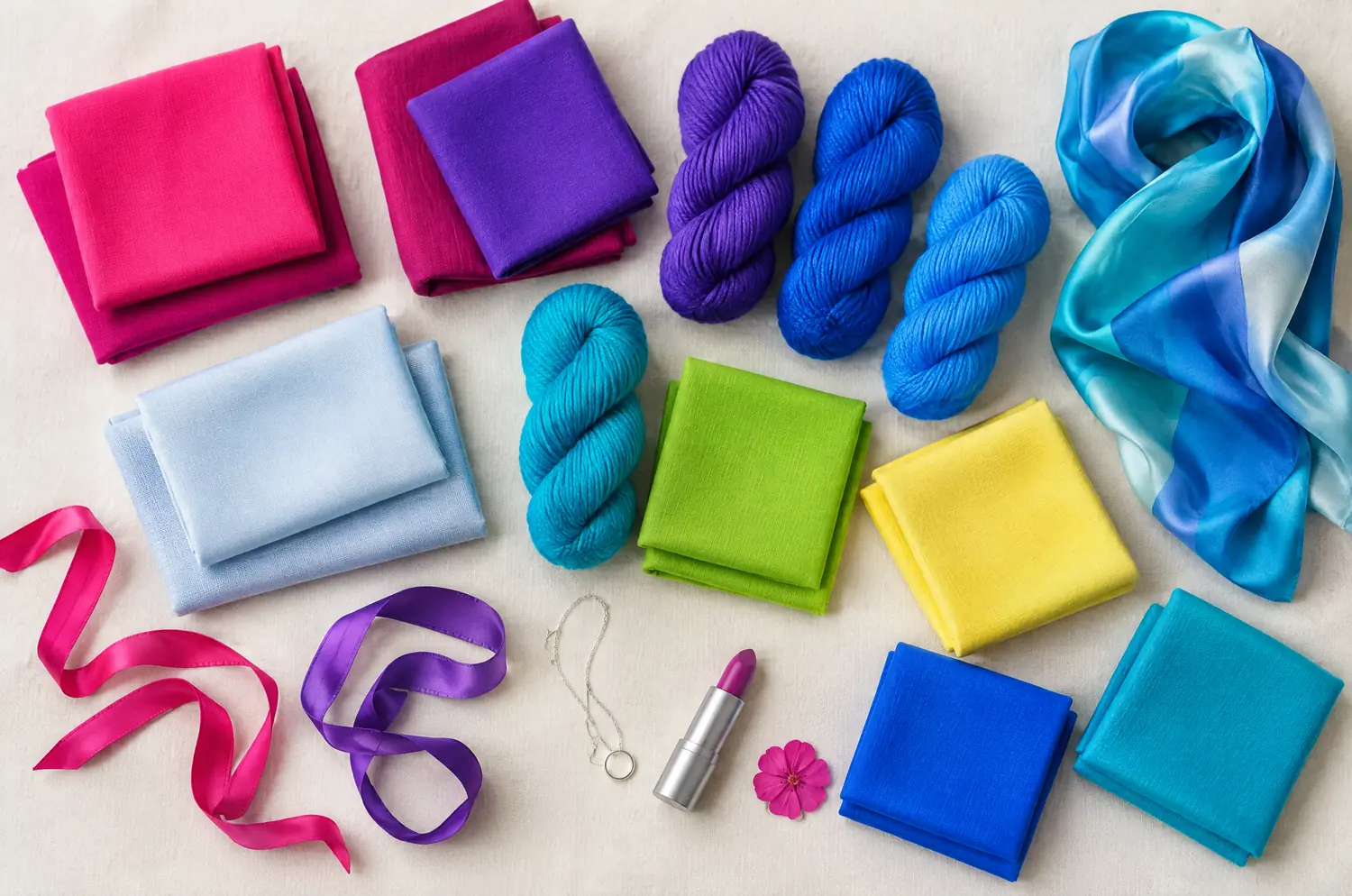
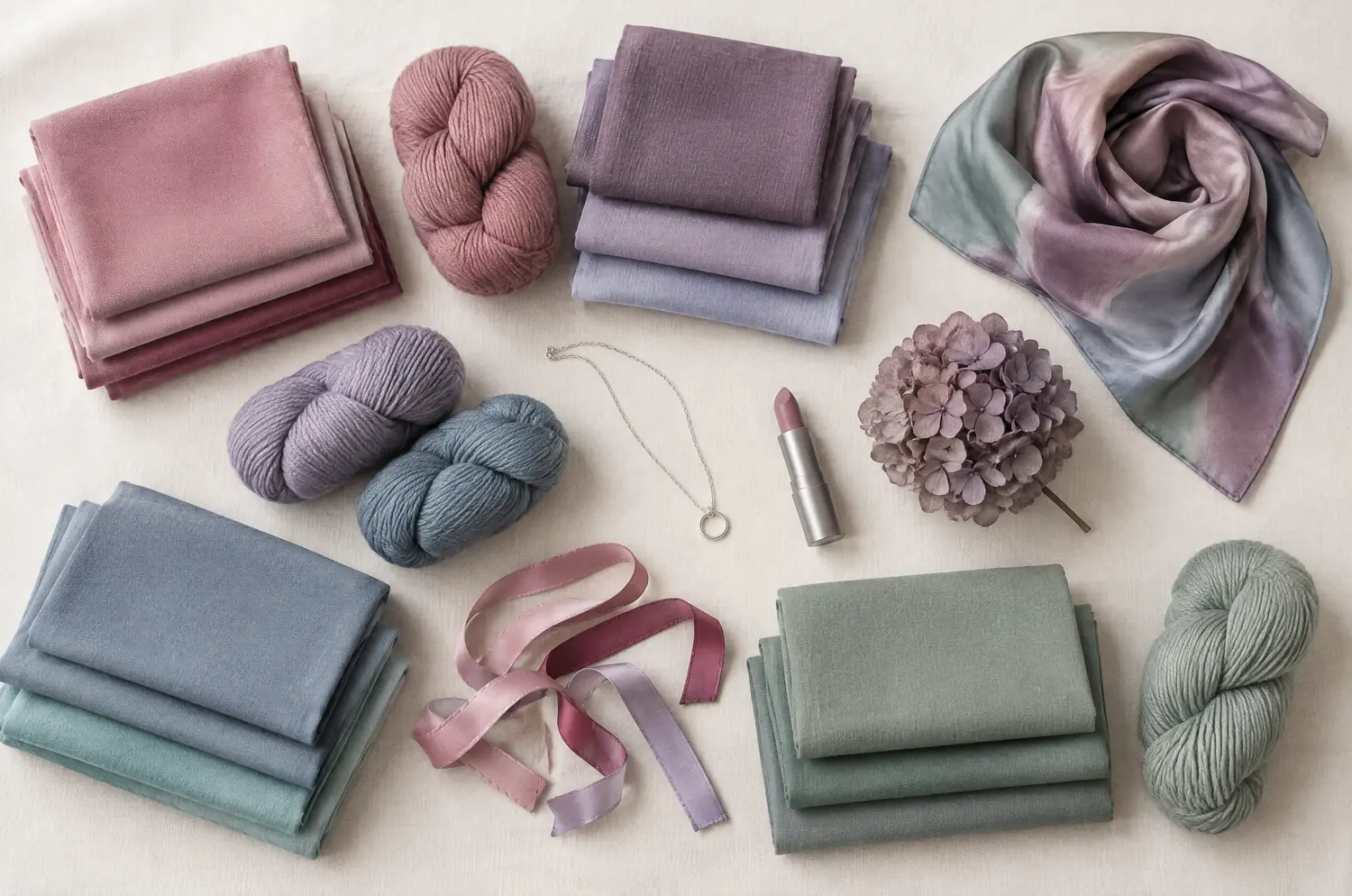
Side by side
Soft Summer and Bright Winter palettes
Same scale, same page: look at the swatches before you read the differences.
- Dusty Rose
#C48A94 - Tea Rose
#D9A8AE - Muted Raspberry
#A85068 - Soft Burgundy
#8A4756 - Soft Plum
#7B5871 - Grayed Mauve
#A690A8 - Gray Lavender
#A9A6C9 - Gray Blue
#8198AE - Slate Blue
#5F7890 - Grayed Turquoise
#6FA3A3 - Verdigris
#6F9088 - Cool Sage
#93A99A
Neutrals
- Off-White
- Dove Gray
- Taupe
- Grayed Navy
Colors to avoid
- Black
- Bright Orange
- Bright Yellow
- Electric Fuchsia
- Shocking Pink
#FF1493 - Fuchsia
#E0119D - Magenta
#C2108F - Bright Red
#E3172B - Bright Violet
#6A1FE0 - Electric Blue
#0A4BFF - Azure Blue
#1A8CFF - Bright Turquoise
#00B8D9 - Bright Emerald
#00A86B - Acid Apple Green
#7ED321 - Lemon Yellow
#FFF046 - Glacier Blue
#CFE6F5
Neutrals
- Black
- Pure White
- Silver Gray
- Navy
Colors to avoid
- Grayed Beige
- Dusty Rose
- Khaki
- Dull Mustard
The four axes
2 axes differ, the rest is shared
Temperature, lightness, intensity and contrast: the gauge shows where each one sits, the table says it in words.
The two sub-seasons
- Temperature
- 12SameNeutral to cool
- Lightness
- 12SameMedium
- Intensity
- 12Differs1 Very soft, grayed2 Very bright
- Contrast
- 12Differs1 Low2 Very high
Line by line
| What is compared | Soft Summer | Bright Winter |
|---|---|---|
| Temperature | Neutral to cool | Neutral to cool |
| Lightness | Medium | Medium |
| IntensityDiffers | Very soft, grayed | Very bright |
| ContrastDiffers | Low | Very high |
| Signature color | Dusty Rose | Fuchsia |
| Neutrals | Off-White, Dove Gray, Taupe, Grayed Navy | Black, Pure White, Silver Gray, Navy |
| Metals | Brushed silver, rose gold, white gold. Matte or satin finishes. | Shiny silver, platinum, graphic pieces, brilliant stones. |
| Lips | Rosewood, dusty rose, muted raspberry. Satin finishes. | Fuchsia, bright pink, clear red. A bold, radiant lip is your best asset. |
| Hair color | Ash brown, ash dark blonde, soft brown. Very blended highlights rather than strong contrasts. | Crisp, shiny colors: cool brown, black, or a very light, cool blonde. Avoid blended, golden effects. |
How does Soft Summer stay quiet and cool at once?
Gray comes first here. The color arrives already hazed.
Soft Summer sits at a neutral-to-cool temperature, at medium depth, with very soft, grayed color and low contrast. Think of pebbles, driftwood and heather at the end of the day.
Dusty Rose, Gray Blue and Soft Plum belong here. So do Verdigris and Cool Sage, which are greens with the gray left in. Dove Gray and Taupe do the quiet work around them.
Little separates your hair from your eyes and your skin. That is why tone-on-tone outfits feel natural, and why a loud color tends to walk in ahead of you.
Black and Electric Fuchsia are on this sub-season’s avoid list. They are too sharp for a face this blended.
What happens when intensity leads and the contrast is turned up?
Brilliance leads here, and it asks for a face that can answer.
Bright Winter shares the neutral-to-cool temperature and the medium depth. But the color is very bright and the contrast is very high. Think of a city at night: neon, shop windows, reflections on ice.
Fuchsia, Electric Blue, Bright Emerald and Lemon Yellow are the voice of this palette. Black and Pure White are real neutrals here, and a dazzling color on top of black is the signature move.
Eyes stand out. Brows do too. Lips and skin keep their own edges. The face reads sharply, even from across a room.
Dusty Rose, Grayed Beige and Khaki are on the avoid list. They are too muted, and they put out the brilliance.
Intensity and contrast: what do the two differences look like on a face?
Two axes differ. Two are shared. Start with what is shared, so you don’t hunt for a difference that isn’t there.
Both sub-seasons are neutral to cool, and both sit at medium depth. Neither is a warm palette, and neither asks you to go very pale or very dark. If your question is “is it warm or cool?” or “is it light or deep?”, these two give you the same answer.
The first difference is intensity, and the eye catches it first. Soft Summer is very soft and grayed. Bright Winter is very bright.
Hold a muted color near a Bright Winter and the face can look flat, as if the lights were dimmed. Hold a vivid one near a Soft Summer and the color arrives before the person does.
The second is contrast. Soft Summer is low, so features melt gently into each other. Bright Winter is very high, so eyes, brows, lips and skin stand apart. A blended palette suits the first face. A graphic palette suits the second.
The two-color test. In daylight, with no makeup, hold a piece of fabric in each of these two colors up to your face. Rest your eyes between the two and redo it another day. If the same color keeps winning, you have a direction: a first hint, not a verdict.
Dusty Rose or Fuchsia: which one does your face accept?
Sit by a window with a bare face and your hair covered, then hold one plain fabric at a time under your chin, as color draping at home explains. Then spend your attention on this pair.
Hold Dusty Rose first, then Fuchsia, one at a time.
Watch intensity. With Fuchsia, does the color look loud and the face small beneath it? Or does your face rise to meet it? With Dusty Rose, does the color look faded, as if your skin were pale next to it? Or does it settle in and look easy?
Then watch contrast. Do your eyes and lips sharpen next to the Fuchsia? Or do your features seem to blur under the Dusty Rose, and then get clearer with the Fuchsia?
Dusty Rose winning points toward Soft Summer. Fuchsia winning points toward Bright Winter. Rest your eyes between tries, and repeat on another day.
If the same side keeps winning, you have a direction. If it flips from one try to the next, don’t force a result. That points to the next section.
What if you sit between Soft Summer and Bright Winter?
These two are not neighbors in the method. Soft Summer’s closest neighbor is Soft Autumn. Bright Winter’s is Bright Spring. So a tie between them is unusual, and it often means your real answer sits next door to one of them.
Read the leading trait first. Does your face look best when the color is toned down, or when it is switched on? In my view, that question settles more than any single shade.
If you are still undecided, look at what the palettes share: cool-leaning pinks, berries and blues. Compare a pink and a blue from each palette, one at a time.
Use that overlap in clothes, not as a verdict. Try the cousin shade that sits nearest your face and see whether your skin stays calm or goes flat.
My advice: don’t let a quiz settle this. A quiz reads your answers. It can’t watch your skin change under a color. Take the free color analysis quiz for a likely season, then use the two shades above to check it. For a closer neighbor, see how Cool Summer differs from Soft Summer or how Bright Winter differs from True Winter.
Which small choices lean toward softness, and which toward brilliance?
Not the season, but they back up the direction.
Soft Summer lips lean to rosewood, dusty rose and muted raspberry, in satin finishes. The eye line is smudged rather than graphic. Bright Winter lips lean to fuchsia, bright pink and clear red, and a bold lip is the point.
Hair follows the same split. Soft Summer reads best in ash brown and soft brown with very blended highlights. Bright Winter reads best in crisp, shiny cool brown, black or a very light cool blonde, without golden blending.
Metals lean the same way: a brushed, satin finish for Soft Summer, a shiny, graphic one for Bright Winter. Treat that as a direction, not a law. Your Soft Summer makeup page goes further on lips and eyes.
Keep exploring
More on these two sub-seasons
Palette Soft Summer color palette
The most blended season: grayed, hushed colors with a quiet elegance.
Makeup Soft Summer makeup
Soft Summer makeup comes down to haze, not color: rosewood lips, taupe eyes, tea rose cheeks. See what to wear, what to skip and why it works on your face.
Hair color Soft Summer hair color
Soft Summer hair color starts with ash brown, ash dark blonde and soft brown. Here is how to pick between them, what to skip and what to tell your colorist.
Outfits Soft Summer outfits and capsule wardrobe
Soft Summer outfits made simple: eight capsule pieces, the order to build them, outfit formulas and the neutrals that replace black. Begin near your face.
Compare Bright Spring vs Soft Summer
Bright Spring vs Soft Summer: three differences set them apart, temperature, intensity and contrast. See what each looks like on a face and how to decide.
Compare Cool Summer vs Soft Summer
Cool Summer vs Soft Summer comes down to three differences: coolness, softness and contrast. Here is how they look on a face and how to settle it at home.
Questions
Soft Summer or Bright Winter: your questions
What is the quickest way to separate Soft Summer and Bright Winter?
Look at intensity first, then contrast. Soft Summer is grayed and low in contrast, so it looks best blended. Bright Winter is vivid and sharp, so it looks best with clear color and defined features. Temperature and depth won’t help, because both are neutral to cool and medium.
Can I be both Soft Summer and Bright Winter?
You get one sub-season, but your face can lean toward the border. Because these two aren’t neighbors, a split result often means a nearby sub-season fits better. Ask which trait leads for you, softness or brilliance, and test the rest from there.
Can my hair color tell me which one I am?
No. Ash brown fits Soft Summer, and black or a very light cool blonde can fit Bright Winter, but hair is only a clue. Dyed hair changes nothing about your sub-season. Cover it, then watch your skin and eyes react to color.
My quiz points to one and my fabric test to the other. Now what?
They see different things. A quiz reads your answers, while a drape shows your skin reacting to color. Repeat the Dusty Rose and Fuchsia duel on another day. If one side keeps coming out ahead, take that as your direction, then read both season pages.
Which colors should I skip in each?
Soft Summer skips Black, Bright Orange, Bright Yellow and Electric Fuchsia, which overpower a soft face. Bright Winter skips Grayed Beige, Dusty Rose, Khaki and Dull Mustard, which put out the brilliance. Each avoid list is the other palette’s strength.
Soft Summer or Bright Winter? Check it.
The free quiz shows you your likely season in two minutes. Then run the two-color test on your own bare face, in daylight: a first hint, not a verdict.