
Compare · two Winters
Bright Winter vs True Winter: Four Real Differences
These two Winters share a season and not one axis. Don’t hunt for one big difference. There are four. They pile up on your face.
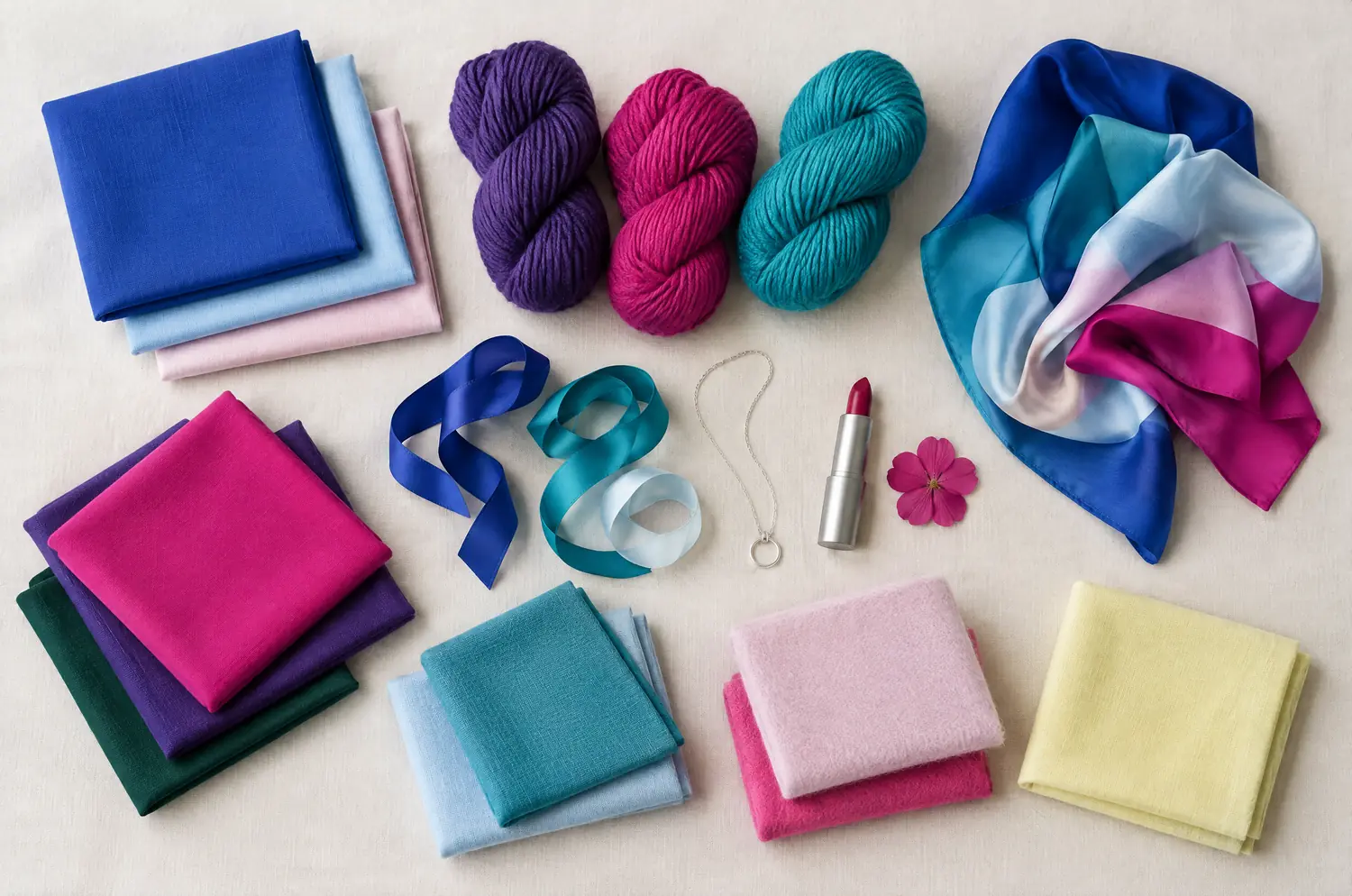
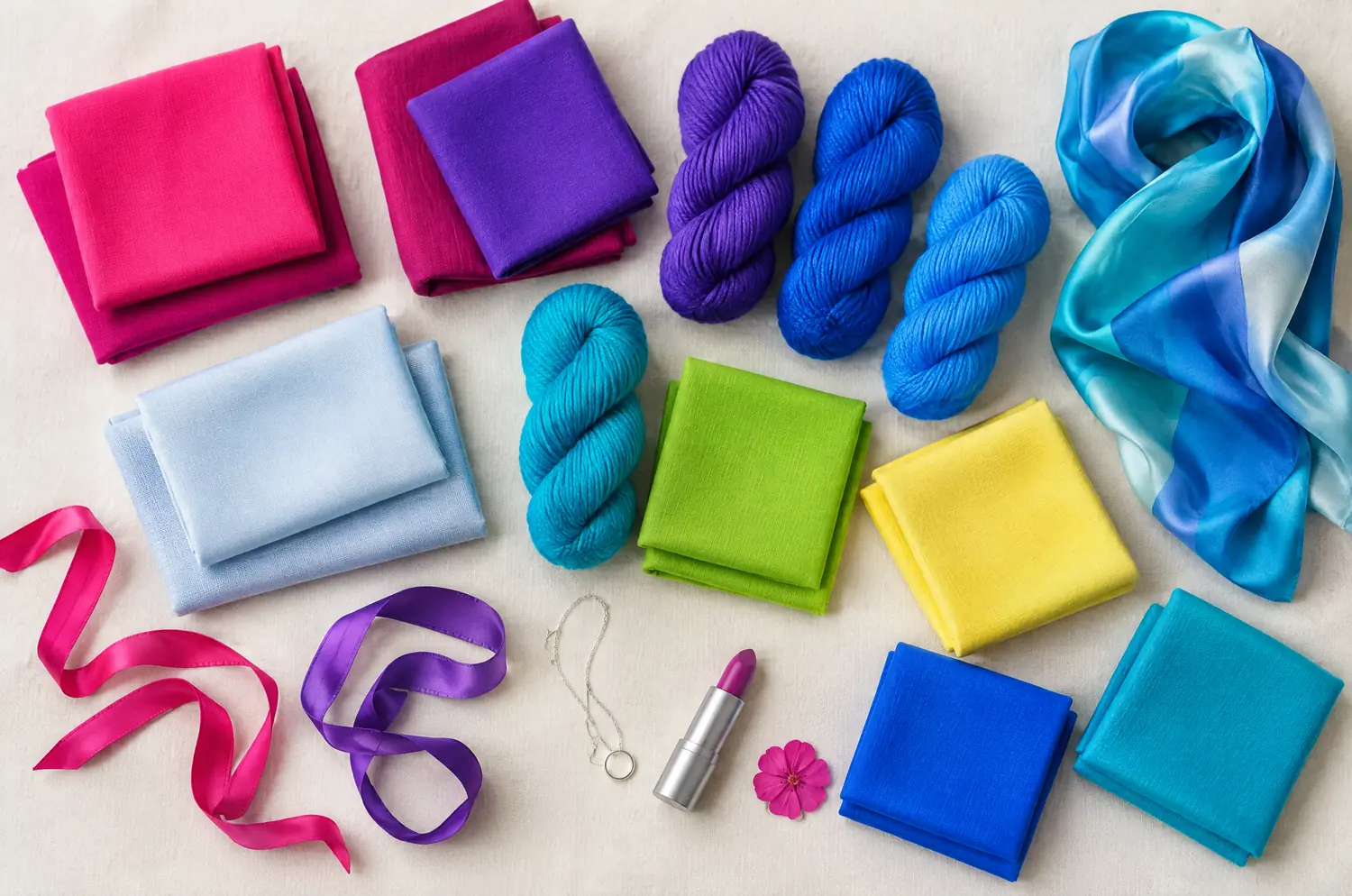
Side by side
Bright Winter and True Winter palettes
Same scale, same page: look at the swatches before you read the differences.
- Shocking Pink
#FF1493 - Fuchsia
#E0119D - Magenta
#C2108F - Bright Red
#E3172B - Bright Violet
#6A1FE0 - Electric Blue
#0A4BFF - Azure Blue
#1A8CFF - Bright Turquoise
#00B8D9 - Bright Emerald
#00A86B - Acid Apple Green
#7ED321 - Lemon Yellow
#FFF046 - Glacier Blue
#CFE6F5
Neutrals
- Black
- Pure White
- Silver Gray
- Navy
Colors to avoid
- Grayed Beige
- Dusty Rose
- Khaki
- Dull Mustard
- Royal Blue
#1F45C4 - Cobalt Blue
#0047AB - Cool Turquoise
#0097A7 - Emerald
#00875A - Pine Green
#0A5C4A - Violet
#5B2A9D - Fuchsia
#D4127C - Bright Cool Pink
#F0388C - Raspberry Red
#C8102E - Icy Pink
#F6D5E3 - Glacier Blue
#CFE6F5 - Icy Lemon
#F4F29A
Neutrals
- Black
- Pure White
- Steel Gray
- Navy
Colors to avoid
- Orange
- Mustard
- Warm Brown
- Khaki
The four axes
4 axes differ, the rest is shared
Temperature, lightness, intensity and contrast: the gauge shows where each one sits, the table says it in words.
The two sub-seasons
- Temperature
- 12Differs1 Neutral to cool2 Very cool
- Lightness
- 12Differs1 Medium2 Medium to dark
- Intensity
- 12Differs1 Very bright2 Saturated
- Contrast
- 12Differs1 Very high2 High
Line by line
| What is compared | Bright Winter | True Winter |
|---|---|---|
| TemperatureDiffers | Neutral to cool | Very cool |
| LightnessDiffers | Medium | Medium to dark |
| IntensityDiffers | Very bright | Saturated |
| ContrastDiffers | Very high | High |
| Signature color | Fuchsia | Fuchsia |
| Neutrals | Black, Pure White, Silver Gray, Navy | Black, Pure White, Steel Gray, Navy |
| Metals | Shiny silver, platinum, graphic pieces, brilliant stones. | Silver, platinum, white gold. Diamond, sapphire, emerald. |
| Lips | Fuchsia, bright pink, clear red. A bold, radiant lip is your best asset. | Raspberry, fuchsia, blue-toned red. Cool reds are your reds. |
| Hair color | Crisp, shiny colors: cool brown, black, or a very light, cool blonde. Avoid blended, golden effects. | Black, cool brown, ashy dark brown. Gray or white hair looks superb on you. |
Why does Bright Winter feel like neon on a cold night?
Bright Winter leads with intensity, also called clarity: how pure and undiluted a color is. Temperature runs neutral to cool, depth sits in the middle, and contrast is very high.
Your eyes are often very defined, sometimes very light or very bright. Your colors have to answer back: Shocking Pink, Bright Turquoise, Lemon Yellow, set against black or Pure White.
A muted color does the opposite. Grayed Beige and Dusty Rose dim the brilliance that is your signature, and the face goes quiet.
Its neighbor is Bright Spring, a little warmer, and that pair has its own page.
True Winter is the cold, clean center of Winter
True Winter leads with coolness. The temperature is very cool, the depth runs medium to dark, the colors are saturated, and the contrast is high.
Your colors are pure and icy: Royal Blue, Emerald and Raspberry Red, with Icy Pink and Glacier Blue when you want something light. Black, Pure White and Steel Gray hold it together.
What goes wrong is warmth. Orange, Mustard and Warm Brown turn your skin yellow and blur the contrast you naturally have.
Its neighbor is Cool Summer, just as cool but softer and lower in contrast, and that pair has its own page.
The two-color test. In daylight, with no makeup, hold a piece of fabric in each of these two colors up to your face. Rest your eyes between the two and redo it another day. If the same color keeps winning, you have a direction: a first hint, not a verdict.
What do Fuchsia and Royal Blue show on your face?
The setup is in the guide to color draping at home, so I’ll skip it here. Bare face, daylight, hair covered, one fabric at a time.
Fuchsia sits in both palettes by name, so the pink alone settles nothing. Use Bright Winter’s electric version and watch your eyes. If they brighten and your skin looks lit from inside, that points to Bright Winter. If the pink looks louder than you do, look the other way.
Then Royal Blue, the cool, saturated pull of True Winter. If your face looks clear and settled and the features sharpen, that points to True Winter. If your skin goes flat or gray, the blue isn’t yours.
Keep an eye on three things. Does your skin turn yellow or gray? Does the color look loud or faded? Do your features stand out or blur?
Rest your eyes between tries. Then repeat on another day. When one color keeps taking the lead, you have a direction.
What if you land between Bright Winter and True Winter?
They aren’t neighbors in the method, so there’s no bridge season. Being between them means you have Winter’s cool, crisp base and haven’t found what leads.
Ask about the leading trait first. If the most vivid colors suit you best and a softened one dims you, start with Bright Winter. If coolness matters more than shine, and anything warm makes you look tired, start with True Winter.
Fuchsia and Glacier Blue sit in both palettes. So do black, Pure White and Navy. That’s safe ground while you decide, and you can test Royal Blue or a Bright Cool Pink against them.
Neither a quiz nor an app can separate these two. The free color analysis quiz can point you toward Winter in ten questions, but only your skin next to a fabric tells you which Winter.
If depth is your doubt, read Deep Winter against True Winter.
Do lipstick, hair and metals tell them apart?
Only a little, and never alone.
On lips, Bright Winter leans to fuchsia, bright pink and clear red. True Winter leans to raspberry and blue-toned red. Both are cool, so your lipstick won’t decide it.
For metals, both wear silver and platinum. Bright Winter adds graphic pieces and brilliant stones. True Winter adds white gold, diamond and sapphire.
On hair, both wear black and cool brown. A very light, cool blonde fits Bright Winter. Ashy dark brown fits True Winter, and gray or white hair looks superb on it.
Keep exploring
More on these two sub-seasons
Palette Bright Winter color palette
The most dazzling Winter: electric colors and maximum contrast.
Compare Bright Spring vs Bright Winter
Bright Spring vs Bright Winter: same brilliance, but warmth and contrast split them. Here is what each looks like on a face and how to decide between them.
Palette True Winter color palette
The heart of Winter: icy, pure colors with no warmth at all.
Compare Cool Summer vs True Winter
Cool Summer vs True Winter: both are very cool, so temperature won’t settle it. Here are the three differences that do, and a quick test to help you decide.
Compare Deep Winter vs True Winter
Deep Winter vs True Winter comes down to two axes: how dark you are and how cool. Here is what each looks like on a face and how to test it for yourself.
Questions
Bright Winter or True Winter: your questions
How do I tell Bright Winter from True Winter?
Put one electric piece and one pure, icy piece side by side. Bright Winter comes alive for the electric one. True Winter looks most at ease in the icy one. Judge the face you see first, not the fabric.
Can I be between Bright Winter and True Winter?
Yes. Both are Winters, so the cool, crisp base is right. Ask which loses more when it goes soft: if a gentle shade dims you, lean Bright Winter. If warmth is what tires you, lean True Winter.
Does gray hair change whether I’m a Bright Winter or a True Winter?
No. Your skin and eyes set the season, and I never place anyone from a single trait. Dyed or gray hair doesn’t change it. True Winter happens to carry gray or white hair beautifully, but that doesn’t rule Bright Winter out.
Which metals suit Bright Winter and True Winter?
Silver and platinum work for both. Bright Winter wears them shiny and graphic, with brilliant stones. True Winter adds white gold, diamond, sapphire and emerald. True Winter wears silver far better than yellow gold. If you lean Bright Winter, hold both against your jawline in daylight.
Which colors do they both avoid?
Khaki is on both lists. Beyond that, each has its own: Bright Winter dims in muted shades like Grayed Beige and Dusty Rose, while True Winter turns yellow in Orange, Mustard and Warm Brown. One drops the shine. The other adds warmth.
Bright Winter or True Winter? Check it.
The free quiz shows you your likely season in two minutes. Then run the two-color test on your own bare face, in daylight: a first hint, not a verdict.