Free: the color analysis quiz. Find your season in 2 minutes →Free quiz: your season in 2 minutes →

Capsule Wardrobe by Color Season: Start With Your Palette

A capsule wardrobe works when color comes first. Start with your palette and neutrals, then build eight pieces that match your sub-season and your face.

Lisa Routa, color analyst

By Lisa RoutaPublished · 7 min read

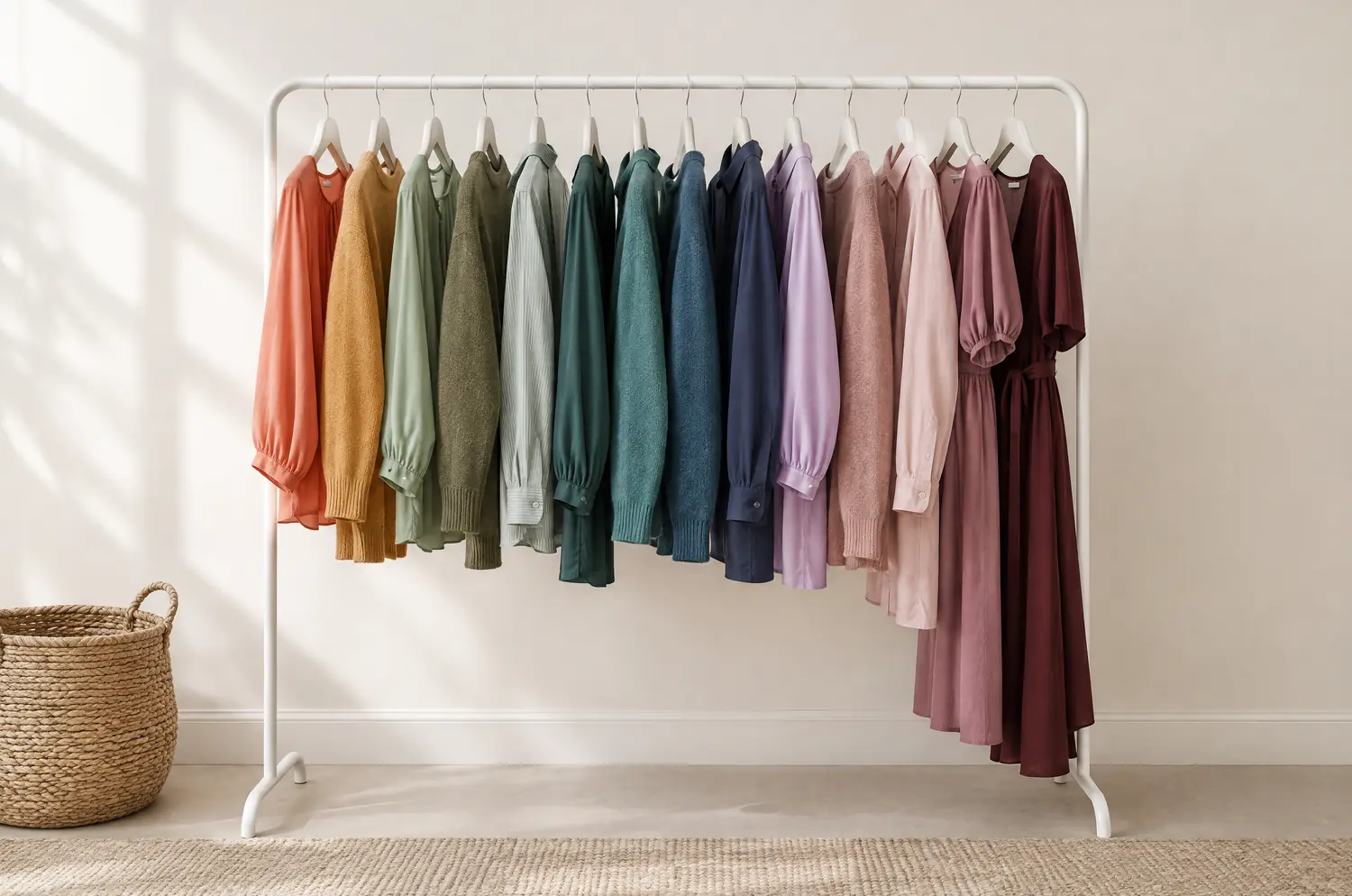
A clothing rack sorted by color, from warm shades to cool shades, in a bright room
On this page8 sections
  1. Why does a capsule fail when it starts with the list?
  2. Which neutrals carry a capsule?
  3. What does each of the eight pieces do?
  4. Where do the four calendar capsule articles fit in?
  5. What should you check before you buy a piece?
  6. How do you build a capsule from the closet you already have?
  7. Frequently asked questions
  8. Pair two pieces by a window before you buy anything

You open your closet with a list in your hand. Gray cardigan. White shirt. Black pants.

You bought every item. Everything goes with everything.

You step to the mirror.

Nothing clashes. And you look tired.

The list never saw your face. It could tell you how many pants to buy. It couldn’t tell you which ones would smooth your skin.

Why does a capsule fail when it starts with the list?

Because a color doesn’t stay on the fabric. Held near your face, it reflects onto your skin.

One shade of beige evens out your complexion and brightens your eyes. The shade next to it drops a shadow under your chin and turns your skin yellow. People see the sweater before they see you.

A list can’t know which of those two you’re buying. Your palette can.

It’s not about owning less. It’s about owning pieces that agree. When every piece shares the temperature, depth and clarity of your palette, they combine without effort. Nothing fights anything else.

You’ll find the full palette for each of the twelve sub-seasons on the season pages. Each one also lists its own eight capsule pieces.

Which neutrals carry a capsule?

Neutrals are the base colors: the coat, the pants, the blazer, the shirt you wear under everything. Yours are not the same as anyone else’s.

Here are six sub-seasons side by side. They are examples, not your answer.

Sub-season Four neutrals Signature color
Light Spring Ivory, Golden Beige, Light Camel, Warm Light Gray Peach
Bright Spring Warm Off-White, Light Gray, Bright Navy, Camel Bright Coral
Cool Summer Soft White, Medium Gray, Cool Taupe, Navy Raspberry
Soft Autumn Cream, Sand Beige, Warm Taupe, Chestnut Light Terracotta
Deep Autumn Cream, Dark Khaki, Chocolate, Espresso Warm Burgundy
True Winter Black, Pure White, Steel Gray, Navy Fuchsia

Read across the rows. Navy shows up in three of them: Bright Navy for a Bright Spring, Navy for a Cool Summer, Navy for a True Winter.

The word is close. The shade isn’t, so check the swatch on your own season page.

For a base, take three of your four neutrals. Add your signature color and one accent from your palette. That makes five colors. A Soft Autumn could use Cream, Warm Taupe and Chestnut, with Light Terracotta and Sage Green on top.

If beige is your reflex, read my guide to neutrals for every sub-season first. The safe color for one sub-season is the drained one for another.

What does each of the eight pieces do?

Eight pieces to start. In my view, that’s enough to see whether the colors work together before you spend more.

Every sub-season page uses the same roles:

  • a coat or trench
  • a blazer
  • a shirt
  • a sweater
  • a T-shirt
  • jeans
  • a dress
  • pants

Only the colors change. Here are two sub-seasons, so you can see the gap.

  • A Soft Autumn: sand beige trench coat, warm taupe blazer, cream shirt, sage green sweater, soft salmon T-shirt, jeans, light terracotta dress and chestnut pants.
  • A Deep Winter: black coat, navy blazer, pure white shirt, cool burgundy sweater, charcoal T-shirt, dark jeans, emerald dress and black pants.

Same eight roles, two different closets. Neither one would work on the other’s face.

Notice where the neutrals go. Coat, blazer and pants carry them. The sweater, T-shirt and dress bring the palette colors. That split keeps the closet calm and still gives you something to wear close to your face that is alive.

Treat these eight as a first draft. Swap one when your week demands it, provided the replacement comes from your palette.

Where do the four calendar capsule articles fit in?

Two kinds of seasons meet here, and they are easy to mix up.

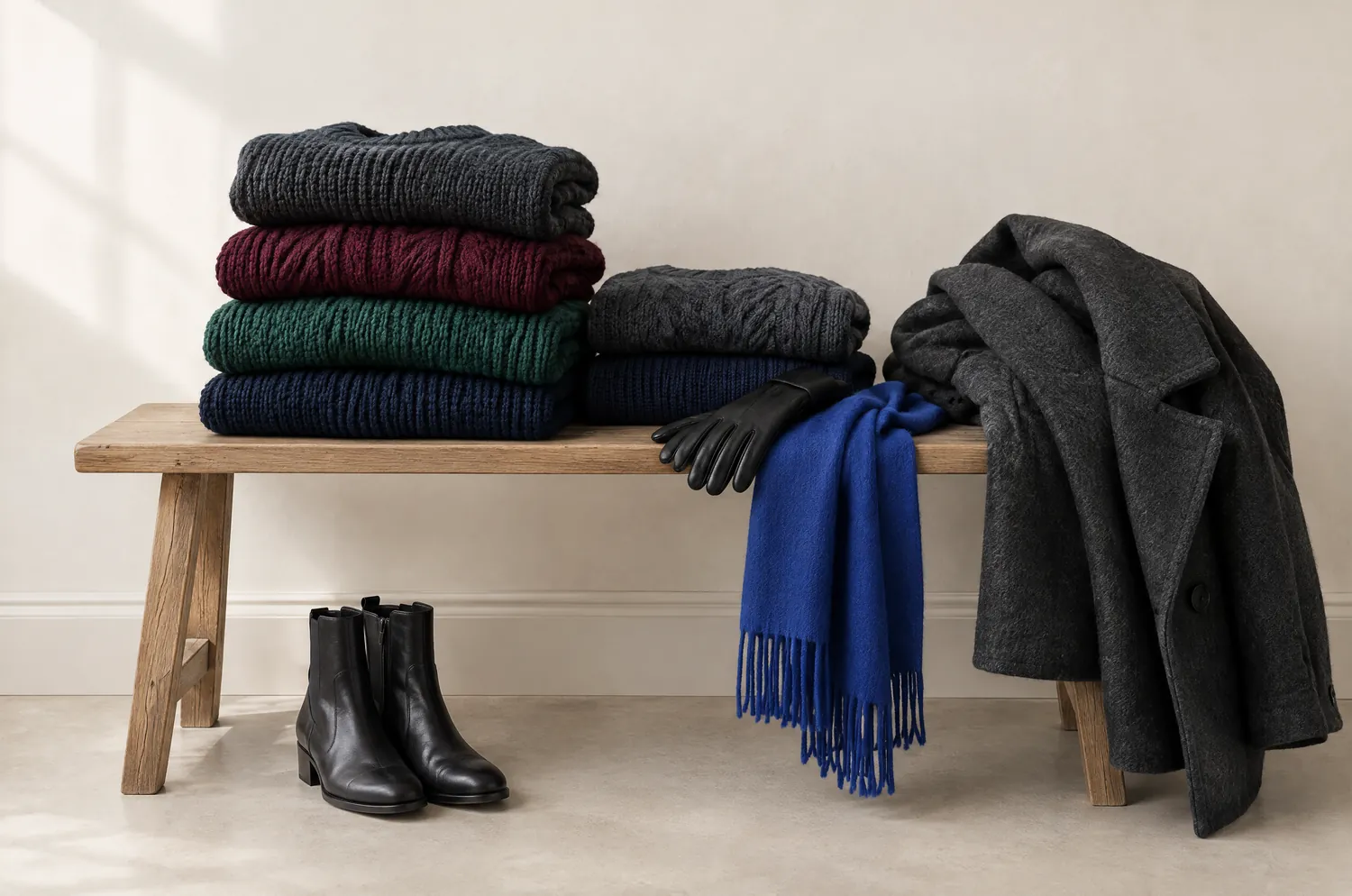
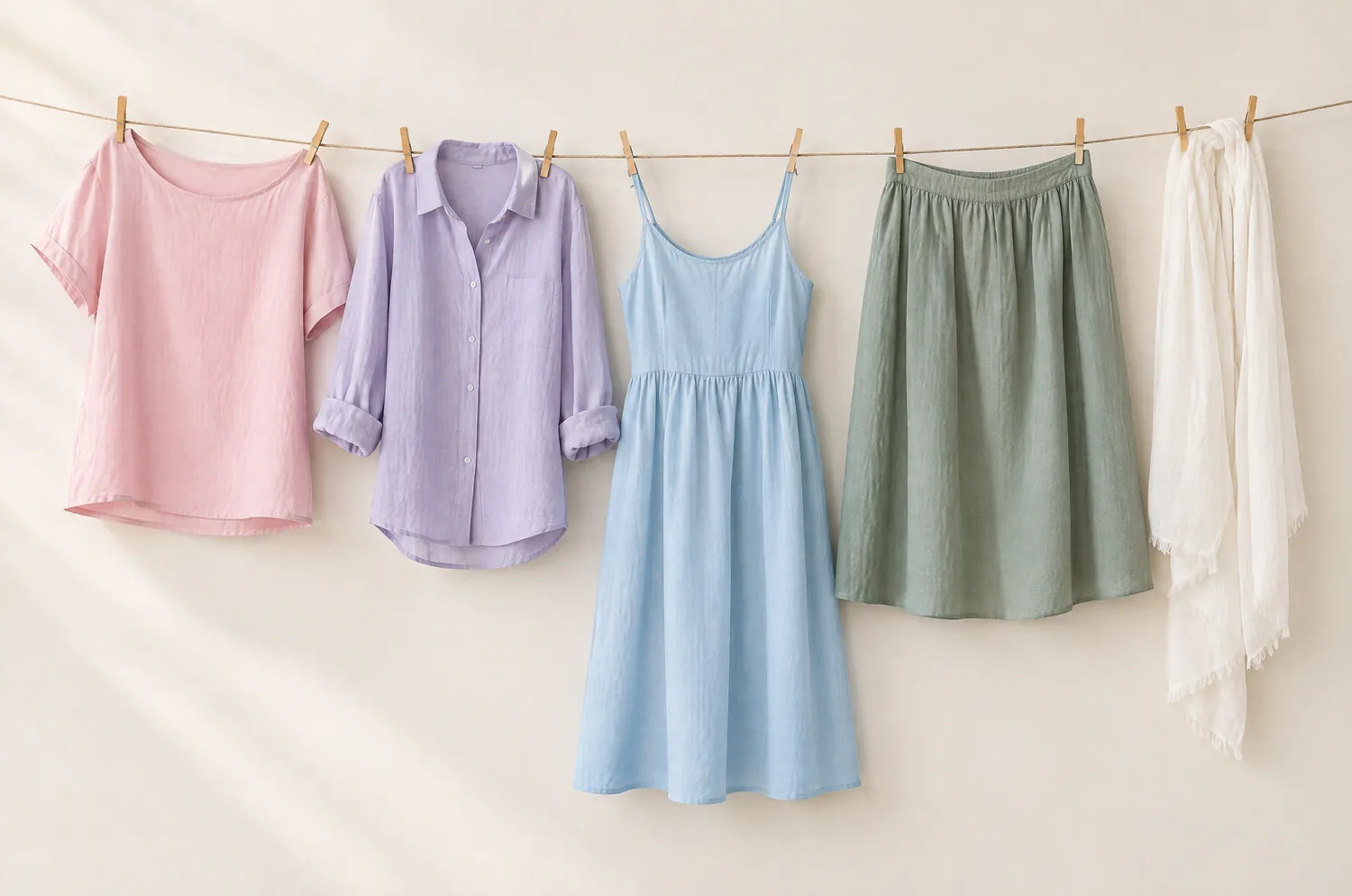
Your color season (Spring, Summer, Autumn or Winter) doesn’t change with the weather. A Deep Winter in July is still a Deep Winter. The calendar only changes what you can wear: wool in January, linen in July.

So read the article for the weather you’re dressing for. Then take the colors from your own sub-season, whatever the calendar says.

This article is the method underneath them. Those four are the same method, dressed for a different temperature.

What should you check before you buy a piece?

Three things matter more than the label on the tag.

First, the color near your face. A shirt, a sweater, a scarf: these go under your chin. They deserve the most care. In my view, one well-chosen top does more for you than a new pair of pants.

Pants, shoes and bags sit far from your face. A color slightly outside your palette is easier to forgive down there.

Second, the fabric. The same shade reads differently in a matte linen and a shiny satin. A Soft Autumn does well with matte, textured fabrics: linen, suede, cable knit. A Bright Spring looks best in crisp, slightly shiny ones such as poplin and silk. A Deep Winter wears smooth, dense fabrics: worsted wool, satin, velvet.

Third, the prints. Your sub-season page lists its own. Light Spring, Light Summer and Soft Summer lean toward fine, blended prints. Deep Winter and Bright Spring lean toward crisp, graphic ones. Contrast is a clue here, not a verdict, so hold a print near your face before you commit.

One more rule. Look at the piece in daylight. Fitting-room light is flat, often greenish, and it changes every color in it.

Color gives you the shade. The cut that balances your silhouette is a separate question: start with body shapes for women.


How do you build a capsule from the closet you already have?

You don’t empty it. You sort it.

Stand by a window with your hair covered. Hold each top under your chin, one at a time. Notice what your complexion does.

Sort what you own into keep, adjust and release. Keep what brightens you. Release what you never liked on you.

The pieces to adjust need a decision. Wear those pieces far from your face, or put a palette color between the piece and your skin. A scarf or a T-shirt underneath does it. And if a piece gives you confidence on a day that matters, wear it. Your goal for the day can outrank the palette.

Then fill the gaps one piece at a time, starting with what you wear most. Before you pay, ask whether it works with at least three things you own. My advice: buy the piece that works over the three that almost do.

Frequently asked questions

What is a capsule wardrobe?

It’s a small group of clothes picked to work together. Few colors, shapes that answer each other, and pieces you really wear. The aim is a closet where nothing sits alone. Color is what makes the group hold, so choose it first.

How many pieces should a capsule wardrobe have?

Eight is a good start, one piece for each job from the outer layer to the bottom half. That is enough to test your colors in real outfits. Add more only when you notice a gap in your week, not because a number tells you to.

How do I choose colors for a capsule wardrobe?

Use your sub-season. Take three of its neutrals, its signature color and one accent you’d be glad to wear. Those five colors are the frame. Not sure of yours yet? Take the quiz below, then check the result with fabric held under your chin.

Can I have a capsule wardrobe if I love color?

Yes. Your palette is full of color, and the capsule only asks that the colors belong together. Keep neutrals for the large pieces and put your brightest shades in tops, scarves and dresses. A closet in coral, emerald or raspberry can be a capsule too.

Is black allowed in a capsule wardrobe?

It depends on your sub-season. Black is a core neutral for the three Winters, and it sits on the avoid list of several other sub-seasons. Check yours on its season page, then hold black under your chin in daylight and see what your skin does.

Pair two pieces by a window before you buy anything

Try this today. Pick a top and a bottom you already own. Take them to a window and hold the top under your chin.

Does your skin look even and awake, or does a shadow settle in? Then ask if the pair goes with a third piece you own. Judge it for yourself.

To know which colors to look for in the first place, take the free color analysis quiz. Ten questions, no sign-up, and you get a likely season to start from.

A capsule isn’t a smaller closet. It’s one where everything agrees with your face.

With all my heart and passion, Lisa

Free quizWhat’s your color season?10 questions, no sign-upTake the quiz

Go further

A closed cream booklet on linen, surrounded by fabric squares and paper chips in a pastel gradientPDF guides by sub-seasonOne guide for each of the 12 sub-seasons: palette, outfits, makeup and hair.From $29.99
A closed cream booklet on linen, surrounded by fabric squares and paper chips in a pastel gradient

Free

Get Lisa’s color advice by email

New articles and new guides from Lisa, in your inbox.

Keep reading

Read next

Seasons mentioned in this article

Ready to find your colors?

Take the free quiz for a first hint of your season, then explore the 12 seasons to see your palette.

Free quizThe 12 seasons