Free: the color analysis quiz. Find your season in 2 minutes →Free quiz: your season in 2 minutes →

Kibbe Body Types vs the 5 Body Shapes: Which to Use

Kibbe body types vs the 5 body shapes: what each system reads, why the Kibbe test feels so confusing, and which one helps you pick clothes that suit you.

Lisa Routa, color analyst

By Lisa RoutaPublished · 6 min read

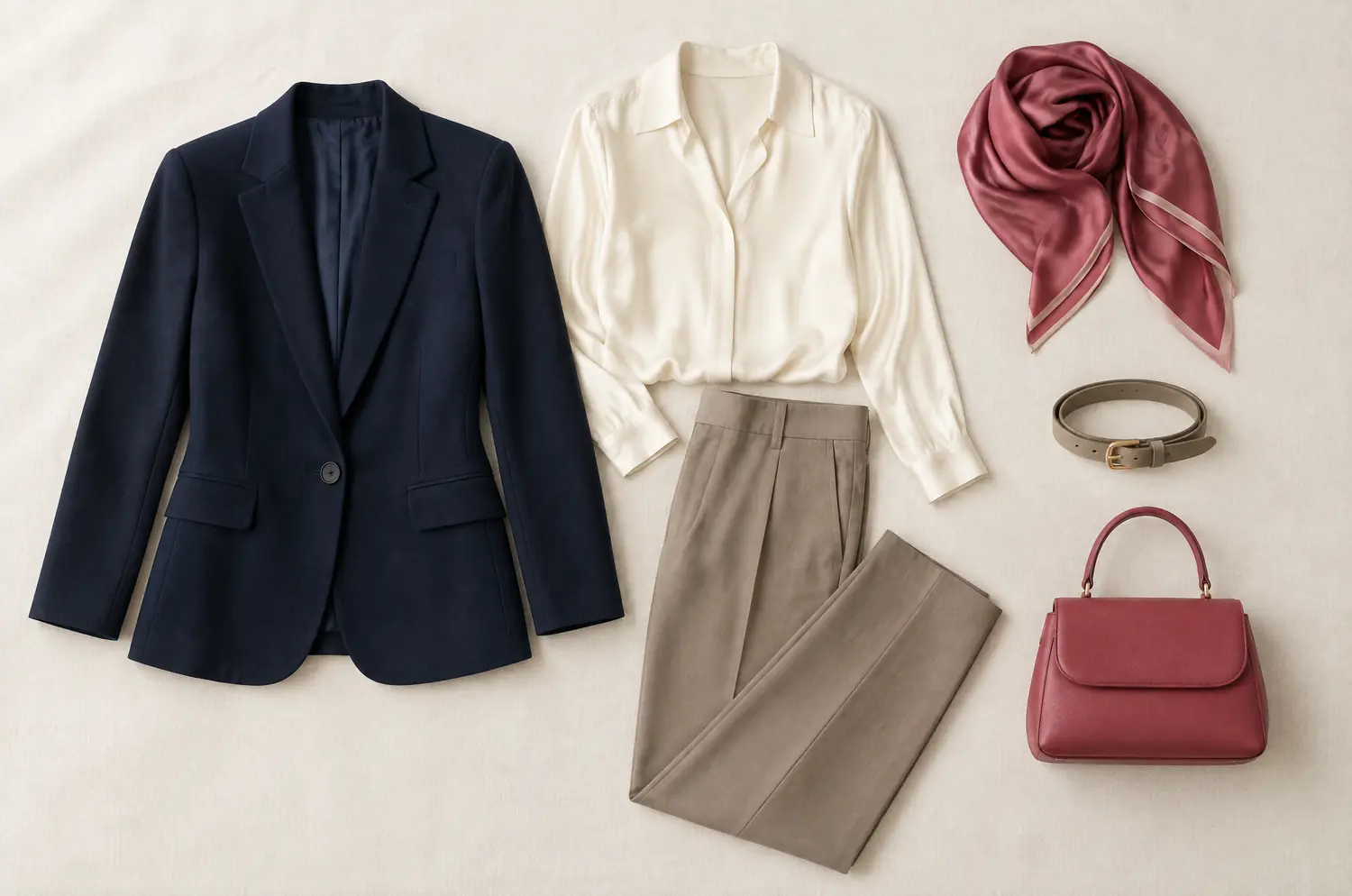
An outfit laid flat: a midnight blue jacket, a cream blouse, taupe pants, a silk scarf, a belt and a raspberry and taupe bag
On this page8 sections
  1. What are Kibbe body types?
  2. Why does the Kibbe test feel so confusing?
  3. What do the 5 body shapes look at instead?
  4. Kibbe or the 5 shapes: how do they compare?
  5. Can you use both?
  6. How do you get dressed with the 5 shapes?
  7. Questions people ask
  8. What if your clothes still never look right?

“What’s your Kibbe type?”

You see it in a comment.

Then in a video.

Then in a message from a friend.

So you search, and an hour later you have a pile of unfamiliar names and no answer you can use.

The names aren’t the problem. The two systems ask different questions, and nobody tells you which one you need.

What are Kibbe body types?

David Kibbe is a New York stylist who began his career as an actor. In the 1980s he published a book called Metamorphosis, and it introduced his Image Identity system.

“Image identity” is his own name for the categories. Online, people call them Kibbe body types, and that’s the name the quizzes use.

The idea rests on yin and yang. Yin is soft, rounded and curved. Yang is sharp, angular and long.

You’re placed on that scale by your bone structure, by how soft or sharp your body looks and, in many versions, by your facial features. Height plays a part too.

The result is five families: Dramatic, Natural, Classic, Gamine and Romantic. Dramatic sits at the sharpest yang end and Romantic at the softest yin end. Inside each family you find identities with names like Soft Dramatic or Flamboyant Gamine.

The original book counted thirteen identities. Kibbe later narrowed his system to ten, and he has since published a newer book, Power of Style.

So this is a full style philosophy, aimed at your whole image. It isn’t only a way to sort outlines.


Why does the Kibbe test feel so confusing?

Because several things stack up.

  • The vocabulary is new. Yin, yang, line and essence carry a specific meaning here, and clear explanations are hard to find.
  • Much of what you read comes from other people explaining the system, and their explanations don’t always agree.
  • You judge yourself. Bone structure, softness and height are read from a mirror or a photo, so the same person can get two different results.
  • People don’t agree on what to look at. Some tests ask about your nose, mouth and jaw, yet some followers say the face no longer counts.
  • The count changed. Many guides still list thirteen identities, while his later system has ten.

None of that means you did something wrong. Kibbe has said himself that a quiz alone won’t find your style, so I’d treat any Kibbe quiz as a first hint, not a verdict.

What do the 5 body shapes look at instead?

My guide uses five shapes: inverted triangle, rectangle, hourglass, apple and pear. They look at one thing only: the relationship between shoulders, waist and hips.

Then each shape comes with a goal for the cut. The aim is an outfit that feels balanced from top to bottom, with the waist setting it off.

You find your shape with three questions, and no tape measure is needed. The article on what is my body shape takes you through them.

Your shape is a tendency rather than a verdict. If you land between two, keep the advice from both.

Kibbe or the 5 shapes: how do they compare?

Kibbe image identities The 5 body shapes
Where it comes from David Kibbe, a New York stylist, and his 1980s book The familiar outlines, as I use them in my guide
What it reads Yin and yang: bone structure, softness, often the face, and height The balance between shoulders, waist and hips
Categories Five families, thirteen identities at first, ten later Five shapes
How you find yours Quizzes, photos and comparisons, with results that vary Three questions, no measuring
What you get A whole style identity The aim and the cuts for your outline
Best for Exploring your overall style Choosing what to buy and wear

These are two different measuring sticks. One doesn’t convert into the other, so don’t try to turn a Kibbe result into a shape, or a shape into a Kibbe family.

Can you use both?

Yes. They don’t cancel each other, and neither one needs the other.

Use Kibbe if you enjoy exploring your overall style identity. Use the five shapes when you want to know which cut to pick in a shop or at your screen.

Both start from the body you have. The Kibbe approach aims at harmony with your natural lines, and my guide is about accepting your strengths and playing them up.

And if the Kibbe vocabulary wears you out, skip it. You don’t need it to get dressed.

What matters most is how you feel. If a piece feels right on you, wear it, whatever any label says.

How do you get dressed with the 5 shapes?

Three steps, in this order.

  1. Find your shape. Answer the three questions, or try the body shape calculator for a first hint, then check it against your mirror.
  2. Read what that shape asks of a cut. Say your answers point to pear: the aim is to define the waist, flatter your upper body and keep volume away from the hips. The pear article shows how. Another shape has another aim: for the inverted triangle it is to draw the eye downward and soften the shoulder line without adding volume on top. Body shapes for women lists all five.
  3. Change one piece at a time. Try something new, step back, and ask whether the outfit feels balanced from the shoulders down.

Shape answers the cut, and color answers the shade. For the shade, take the color analysis quiz. It takes about two minutes and points to a likely season. It’s a color quiz, not a Kibbe test.

Questions people ask

What are the Kibbe body types?

In the ten-identity version: Dramatic, Soft Dramatic, Flamboyant Natural, Soft Natural, Dramatic Classic, Soft Classic, Flamboyant Gamine, Soft Gamine, Theatrical Romantic and Romantic. The first book listed thirteen, so a list you read elsewhere may not match this one.

How do I find my Kibbe body type?

Look at your overall outline in a mirror or a full-length photo: your bones, how soft or sharp the lines look, and your height. Then compare yourself with each description. The judgment is yours to make, which takes patience. Kibbe also works with clients in person in New York.

Is the Kibbe test accurate?

Think of it as a first hint. Online tests are written by other people, and they ask you to judge softness and bone structure yourself. Kibbe has said that a test alone can’t find your style. If a result and your mirror disagree, trust the mirror.

Are Kibbe types the same as apple, pear and hourglass?

No. Apple, pear and hourglass are outlines drawn by the shoulders, the waist and the hips. Kibbe identities describe bones, softness and height. They’re built on different questions, so a result in one system doesn’t tell you your place in the other.

Where does the Kibbe system come from?

From David Kibbe’s book Metamorphosis, which he published in the 1980s. His word for the categories is image identities. Years later the system found a new audience online, where the identities are usually called Kibbe body types.

What if your clothes still never look right?

A system name doesn’t change what happens when you try something on and it still isn’t right. The piece ends up in the return pile.

What you need then is a clear sense of the cut that suits your outline. My Body Shape Guide helps you choose it once your shape is clear, so you buy with more certainty and the outfit holds together. It stays on cuts, not colors.

With all my heart and passion, Lisa

Go further

The body shape guide by Lisa Routa: the cover and two pagesBody shape guide (PDF)For your shape: the cuts to pick and the cut to skip in every piece, so you get dressed with confidence.$24.99
Free quizWhat’s your color season?10 questions, no sign-upTake the quiz
A closed cream booklet on linen, surrounded by fabric squares and paper chips in a pastel gradient

Free

Get Lisa’s color advice by email

New articles and new guides from Lisa, in your inbox.

Keep reading

Read next

Ready to find your colors?

Take the free quiz for a first hint of your season, then explore the 12 seasons to see your palette.

Body shape guideFree quiz