Free: the color analysis quiz. Find your season in 2 minutes →Free quiz: your season in 2 minutes →

Body Shapes for Women: The 5 Shapes and How to Dress Them

Body shapes for women: inverted triangle, rectangle, hourglass, apple and pear. Find yours with three questions and see the cuts that balance each one.

Lisa Routa, color analyst

By Lisa RoutaPublished · 7 min read

A clothing rack sorted by color, from warm shades to cool shades, in a bright room
On this page8 sections
  1. What is a body shape, and what is it not?
  2. What do the five shapes look like side by side?
  3. Why is the goal the same for every shape?
  4. How do you find your shape without a tape measure?
  5. Do you have to follow every recommendation?
  6. Where do colors fit in?
  7. Questions people ask
  8. Which cuts will you pick before the next order?

You open the package on your bed. The dress looked wonderful on the model.

You pull it over your head and step to the mirror. Something is off. The shoulders, the waist, the length: you can’t say what.

So the dress goes back in the bag, and you start to wonder what’s wrong with you.

Nothing is wrong with you. Not your shoulders. Not your waist. The cut simply wasn’t made to work with your body.

What is a body shape, and what is it not?

Your body shape is the general outline of your silhouette. It describes how your upper body, your waist and your lower body balance each other.

Use it for one reason. Getting dressed is about creating harmonious outfits, and a cut that suits your outline gets you there faster.

That’s the whole point. A shape is a tendency, not a verdict, and it isn’t a box you have to fit into.

It’s also not a ranking. No shape is better than another, and nobody is asked to look like a different silhouette.

What do the five shapes look like side by side?

The guide names three of them with letters that draw the outline: V, H and X. Here they are in my order.

Shape How I describe it What you aim for One cut to try
Inverted triangle (V) Defined shoulders, an elegant upper body Draw the eye downward, soften the shoulder line Flare jeans
Rectangle (H) Slender, fluid, adaptable Create shape and curves Wrap dress
Hourglass (X, or 8 if you’re curvy) Shoulders and hips in balance, harmonious curves Show off your curves and your waist Cinched dress
Apple Generous and full of life, with a naturally full bust Draw the eye downward, lengthen the silhouette Empire dress
Pear A very feminine silhouette, hips naturally highlighted Flatter the upper body, define the waist Puff sleeves

You’ll also hear the apple called the O shape or the round shape, and the pear called the A shape or the triangle shape. The rest of this page says apple and pear.

Why is the goal the same for every shape?

Because an outfit looks harmonious when the top and the bottom answer each other, with the waist as the point that sets them off.

What changes from one shape to the next is where the balance has to come from.

If your shoulders are the strongest line, you draw the eye down. If your hips are the strongest line, you bring the light up to your upper body. If you’re already balanced, you follow your curves. If your outline is straight, you create some shape.

No one is asked to give anything up. You’re choosing what the clothes do for you.

Here’s how that plays out, one shape at a time, with the article that goes deep on each.

  • Inverted triangle: flared sleeves lighten the shoulders, and a trapeze dress adds volume at the hips. My advice is to skip the boat neck and the square neck, which accentuate the width of the shoulders. The inverted triangle article covers the dresses, jeans, necklines and sleeves.
  • Rectangle: a peplum dress or a wrap dress defines the waist and gives the silhouette some curves. A straight dress with a linear cut does the opposite. The rectangle article goes through the dresses, jeans and belts.
  • Hourglass: a dress that defines the waist, with or without a belt, plays up your curves. A straight, loose dress covers the waist. The hourglass article shows how to follow your curves without squeezing them.
  • Apple: flowing cuts like the trapeze dress skim over the tummy and show off the legs. A dress that clings works against that. The apple article is about flow and comfort.
  • Pear: sleeves with volume, like puff or cap sleeves, add width at the shoulders and balance the hips. Straight-cut and low-waisted dresses send the eye to the hips, which works against the balance. The pear article covers the tops, sleeves, necklines and pants.

Notice what the “to avoid” cuts are. They aren’t faults of a body. They’re cuts that pull the outfit away from balance.

Necklines and sleeves do a lot of this work, because they sit where the eye lands first. A V-neck draws the eye toward the center of the body, which suits the inverted triangle and the rectangle. For the pear, the guide goes the other way: a boat neck or a cowl neck adds width or volume at the top, so the upper body answers the hips.

The waist ties it together. A wrap dress appears in the guide for all five shapes, each time for its own reason: to draw the eye down, to define the waist, to follow the curves, to create a visual waist, to flatter the hips.


How do you find your shape without a tape measure?

You don’t need a formula. The descriptions in the table and three questions are enough to point you somewhere.

  1. What dominates, your shoulders or your hips? Shoulders point to the inverted triangle. Hips that are naturally highlighted point to the pear.
  2. Are your shoulders and hips balanced around a defined waist? That’s the hourglass.
  3. Is your silhouette straight and slender, with a waist that barely shows? That’s the rectangle. Is it generous, with a naturally full bust? That’s the apple.

If you recognize yourself in two descriptions, read both and keep what speaks to you. A shape is not a box.

Prefer to tap through the questions? The free body shape calculator asks them with pictures and shows a close second when your answers are mixed.

For a slower walk through the questions, use this article on finding your body shape.

Do you have to follow every recommendation?

No. How you feel matters most.

Wear what makes you feel good, even when it ignores the advice above. Every person is unique, and the cuts in the guide are a way to choose, not a rulebook.

You can also play up what you love. If you have defined shoulders and you want to show them off, I encourage you to do it.

An outfit works when it serves your personality and your plans, not the other way around.

Where do colors fit in?

Shape answers the cut. Color answers the shade.

The cut draws your outline. The color lights up your complexion. They work side by side, and neither one replaces the other.

Nothing on this page tells you which shades to wear: shape and color are two separate questions, and the free color quiz takes care of the second. And if you came here from Kibbe body types, they measure something else again; Kibbe vs the 5 body shapes explains the difference.

Questions people ask

What are the five female body shapes?

Five outlines, named for what stands out: shoulders that lead, a straight line, balanced curves, a generous middle or highlighted hips. Three carry letters, V, H and X, and the hourglass becomes an 8 if you’re curvy. Each has its own goal and its own cuts to wear.

How do I know which body shape I am?

Look at what stands out first, your shoulders or your hips. Then see whether they balance around a defined waist, and whether your outline is straight or generous.

If two descriptions fit, read both and keep the one that feels like you.

How should I dress for my body shape?

Start with the balance your shape looks for. Jeans are a good example. The guide suggests flare for the inverted triangle, high-waisted for the rectangle, fitted stretch for the hourglass, and straight for the apple and the pear. Those are examples, not the only answer, and each shape also has cuts to skip.

Is one body shape better than another?

No. Shapes aren’t ranked, and nobody has to borrow another outline. Each one has strengths worth playing up, in whatever way you like. A shape is a tendency that helps you choose a cut, so the only comparison worth making is between two garments, not two bodies.

Do I have to follow body shape advice to the letter?

No. If a piece makes you feel good, wear it, whatever the guidance says. The suggestions only shorten the search in a fitting room. Treat them as a starting point you can bend, test on one piece, and drop whenever your own comfort tells you something different.

Does my body shape tell me which colors to wear?

No. Your shades come from your color season, read from how your skin, eyes and hair respond near your face. A cut can’t change that, and a color can’t choose your cut. You can sort out either one first.

Which cuts will you pick before the next order?

Choose the cut before you click on the next order.

You don’t need a new body. You need to walk into the fitting room knowing which cut to pick, so getting dressed gets faster and the outfit looks balanced.

That’s what my Body Shape Guide is for. Once you know your shape, it goes through the cuts to wear and the one to avoid in each clothing category, with photos and notes.

With all my heart and passion, Lisa

Go further

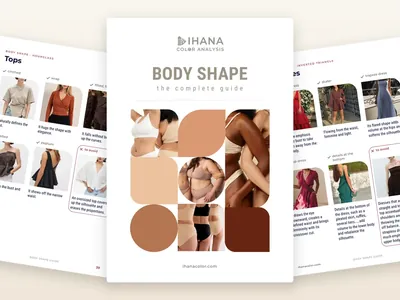
The body shape guide by Lisa Routa: the cover and two pagesBody shape guide (PDF)For your shape: the cuts to pick and the cut to skip in every piece, so you get dressed with confidence.$24.99
Free quizWhat’s your color season?10 questions, no sign-upTake the quiz
A closed cream booklet on linen, surrounded by fabric squares and paper chips in a pastel gradient

Free

Get Lisa’s color advice by email

New articles and new guides from Lisa, in your inbox.

Keep reading

Read next

Ready to find your colors?

Take the free quiz for a first hint of your season, then explore the 12 seasons to see your palette.

Body shape guideFree quiz