Free: the color analysis quiz. Find your season in 2 minutes →Free quiz: your season in 2 minutes →

Winter Capsule Wardrobe: Start With Your Color Season, Not the List

A winter capsule wardrobe starts with five colors from your palette, not a list of pieces. Here are the neutrals, accents and fabrics for your color season.

Lisa Routa, color analyst

By Lisa RoutaPublished · 9 min read

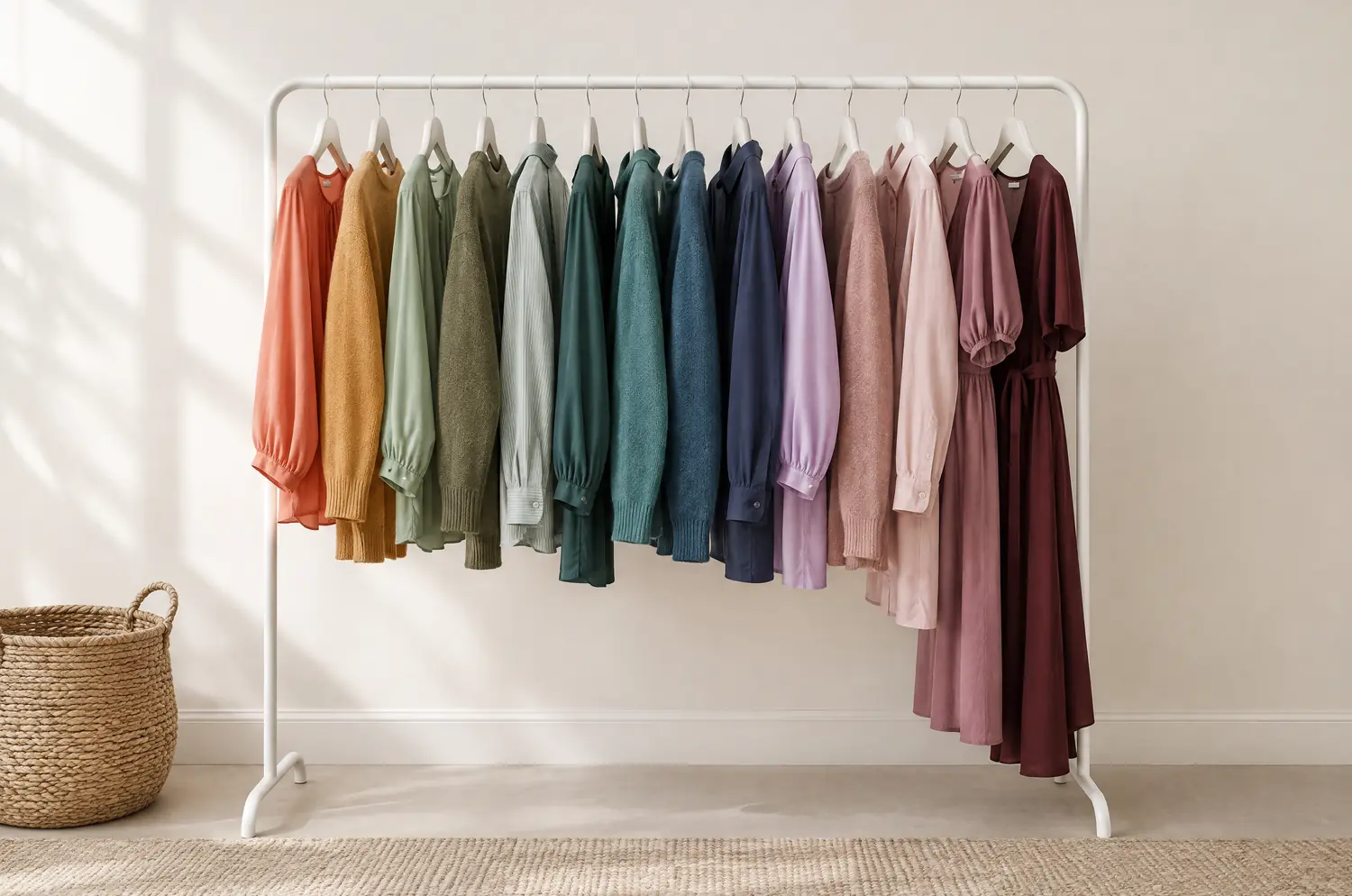
A clothing rack sorted by color, from warm shades to cool shades, in a bright room
On this page10 sections
  1. Why does the same winter list fail on different faces?
  2. Which five colors should carry a winter capsule?
  3. What does each Winter wear on the coldest days?
  4. What changes if you’re a Spring, a Summer or an Autumn?
  5. Which fabrics and finishes go with the coat and the collar?
  6. What does a Winter capsule look like in eight pieces?
  7. How do you layer so your color reaches your face?
  8. How do you test a coat before you buy it?
  9. Questions people ask
  10. Sort the winter layers that touch your face today

What goes in a winter capsule wardrobe?

You type it, and a list comes back.

A black coat. A camel coat. A gray sweater.

A cream knit. Dark jeans.

It sounds sensible. It’s also written for nobody in particular.

Winter doesn’t change your face. The cold doesn’t turn a Soft Summer into a Deep Winter in January, and a list that flatters one face leaves another looking tired.

So the honest answer is less simple than a shopping list. Colors first, pieces second.

Why does the same winter list fail on different faces?

A color held near your face sends its tint back onto your skin. In winter, more of your clothes sit right there. A coat collar, a scarf and a turtleneck all end within inches of your chin.

That’s the catch. In January you wear layers up to the neck, so the knit does the job a summer top does in July.

Two gray sweaters that look identical on the hanger can behave very differently. On one face, the skin evens out and the eyes brighten. On another, a shadow settles under the chin, and people see the sweater before they see you.

In my view, a list from a stranger gets the shapes right and the colors wrong. The colors are the part that touches you.

Don’t know your season yet? The free quiz points you to a likely season in about two minutes. It can’t watch your skin react to colors, so treat it as a starting point.

Which five colors should carry a winter capsule?

Five, not ten. That limit is what makes a small closet feel big.

Each one has a job:

  • A dark neutral, for the coat and the boots
  • A light neutral, for the collar and anything near your face
  • A middle neutral, to join the two
  • An anchor color, the shade you reach for first
  • An accent, the one you want to wear this winter

Take those five two at a time and you get ten pairings, before you add a single scarf. That’s why the choice of colors matters more than the count of pieces.

Your neutrals aren’t your neighbor’s. A navy that works for one sub-season looks flat on another, because neutrals carry a temperature and a depth like any color. The full logic is in the guide to neutrals by season.

If you wear one coat all winter, choose its color for the collar and the face. The accent comes last, because it’s the easiest to swap.

What does each Winter wear on the coldest days?

The three Winters share a cool, crisp base. True Winter is the coolest of them. Deep Winter is darker, Bright Winter is brighter, and both are a touch less cool.

Deep Winter (also called Dark Winter) is dark and clear. The coat goes black, charcoal or navy, with Pure White near the face. Cool Burgundy, Cool Spruce Green or Plum bring the color.

What to skip: Golden Beige, Rust, Mustard and Peach. They turn your skin yellow. The usual trap is reaching for camel and warm brown to escape black. They dull you. Try navy, spruce green or burgundy instead.

True Winter is the heart of the season, very cool and saturated. Black and Pure White look right together here, with Steel Gray in the middle. Royal Blue, Emerald and Fuchsia carry the color.

What to skip: Orange, Mustard, Warm Brown and Khaki. They are too warm and blur your contrast. Beige and cream soften you too much. Your light is Pure White or an icy shade, like Icy Pink or Glacier Blue.

Bright Winter (also called Clear Winter) is the brightest of the three. Black works, but give it company: Pure White or a dazzling color next to your face. Shocking Pink and Electric Blue do that job.

What to skip: Grayed Beige, Dusty Rose, Khaki and Dull Mustard. They put out the brilliance that is your signature. Beige and taupe erase you faster than anything else.

Sub-season Coat Knit Scarf or accent
Deep Winter Black, charcoal or navy Cool Burgundy or Cool Spruce Green Plum or Deep Violet
True Winter Black, navy or Steel Gray Royal Blue or Emerald Fuchsia or Icy Pink
Bright Winter Black, navy or Silver Gray Shocking Pink or Electric Blue Bright Emerald or Glacier Blue

What changes if you’re a Spring, a Summer or an Autumn?

The colors don’t change. The fabrics do.

A Light Summer in January still wants Soft White, Pearl Gray and Soft Navy, just in thick wool. Same palette as in July, heavier cloth.

The table shows how six other sub-seasons choose a coat, a collar color and the neutral to leave on the rack.

Sub-season Coat Near the face Skip
Warm Spring Camel or Golden Brown Cream Black
Bright Spring Bright Navy Warm Off-White Taupe
Cool Summer Navy or Medium Gray Soft White Terracotta
Soft Summer Grayed Navy or Taupe Off-White Black
Warm Autumn Chocolate or Camel Cream Cool Gray
Deep Autumn Espresso or Chocolate Cream Pearl Gray

Read the last column. Taupe is a comfortable neutral for a Soft Summer and one of the colors a Bright Spring should skip. A coat neutral isn’t interchangeable.

The black coat deserves a second look. In several palettes outside Winter, black is a color to avoid, and it can leave your face looking drained. If you love yours, keep it. Then put a scarf in a palette color between the coat and your chin, so the color reaches your face first.

Autumn has its own version of this guide: the autumn capsule wardrobe. Same method, different colors.

Which fabrics and finishes go with the coat and the collar?

Fabric is the second half of the answer, and it shows first at the collar of your coat.

Deep Winter does well in dense, smooth cloth: worsted wool, black leather, velvet. True Winter leans crisp: worsted wool again, poplin for shirts, patent leather for boots or a bag. Bright Winter wants shine: satin, silk, poplin.

Contrast matters too. Winter sits at moderate to high contrast, and Bright Winter at very high, so let the dark meet the light.

A black coat over a Pure White shirt works for all three. Navy with Glacier Blue suits a True Winter. Black with Shocking Pink suits a Bright Winter. Prints do the same job: houndstooth and black and white stripes for Deep and True Winters, color blocking for Bright.

What does a Winter capsule look like in eight pieces?

Each Winter page lists one. The skeleton is the same: a coat, a blazer, a white shirt, a sweater, a T-shirt, dark jeans, pants and a dress.

Deep Winter: a black coat, a navy blazer, a Pure White shirt and a Cool Burgundy sweater, then a Charcoal T-shirt, dark jeans, black pants and an Emerald dress.

True Winter keeps the coat, blazer and shirt, then swaps in a Royal Blue sweater, a Steel Gray T-shirt and a Fuchsia dress.

Bright Winter puts a Shocking Pink sweater and an Electric Blue T-shirt in those slots, with Silver Gray pants and a Bright Emerald dress.

See what moves: the pieces near the face, and the dress. See what stays: the coat, the jeans, the shirt. That’s how five colors stretch across a whole winter.

How do you layer so your color reaches your face?

In winter the neckline is crowded. A collar, a scarf and a hat compete for the few inches under your chin.

Let one color win that space. A palette-colored scarf, knit or turtleneck sits closest to the skin, and the coat stays behind it in a neutral.

A Deep Winter can set a Cool Burgundy scarf against a black coat. A True Winter can put Pure White under a navy coat. A Bright Winter can pair a black coat with a Shocking Pink knit. Hats follow the same logic: a hat sits near your face, so it counts as a top.

How do you test a coat before you buy it?

Store lighting lies. A yellow bulb warms everything, your skin included.

Carry the coat to a window or the front door. Tie your hair back. Put it on with the collar open and hold your palette color under your chin.

Check three things. Do your eyes look brighter? Does your skin look even? Do shadows gather under your chin or around your eyes?

My advice: replace what you wear most first, starting with whatever touches your face. Leave the accents for last.

Questions people ask

What goes in a winter capsule wardrobe?

A coat or two, a few knits, shirts for layering, pants, boots, and the scarf, hat and gloves that finish the look. The number matters less than your week, so count what you really wear. Choose the colors first, and every piece will pair with several others.

What colors belong in a winter capsule wardrobe?

Five from your own palette: neutrals, an anchor color and an accent. For a Deep Winter, that could be black, charcoal and Pure White, with a Cool Burgundy knit and an Emerald scarf. Other seasons follow the same recipe with their own colors.

How do I choose winter neutrals for my color season?

Start with the neutrals listed on your sub-season page, then check the coat color against your bare face by a window. Pick the darkest for the coat and the lightest for the collar. If a neutral makes your skin look gray or yellow, swap it for the next one on the list.

Is black allowed in a winter capsule wardrobe?

Yes, and for the three Winters it’s a core neutral. A Bright Winter should give it company, Pure White or a vivid shade. Light Spring and Cool Summer list it among the colors to skip, so there it’s your call: keep a coat you love and add a palette scarf at the collar.

How do I add color without breaking my palette?

Put the new color in something small near your face: a scarf, a hat, a knit under an open coat. Choose it from your palette and hold it up by a window first. Keep the coat and boots in your neutrals, so the accent can change from one winter to the next.

Sort the winter layers that touch your face today

Pull out every coat, scarf, hat and knit you own that reaches your neck or chin. Go to a window in daylight, makeup off, hair pulled away from your face.

Hold each piece up and make two piles: the ones that brighten your face and the ones that tire it. The first pile is the start of your capsule.

Once you know your sub-season, the PDF guides by sub-season are the next step. They aren’t out yet. Sign up for the waitlist from your own sub-season page.

A cold season is long. Let the coat you wear most days be one that likes your face.

With all my heart and passion, Lisa

Free quizWhat’s your color season?10 questions, no sign-upTake the quiz

Go further

A closed cream booklet on linen, surrounded by fabric squares and paper chips in a pastel gradientPDF guides by sub-seasonOne guide for each of the 12 sub-seasons: palette, outfits, makeup and hair.Coming soon
A closed cream booklet on linen, surrounded by fabric squares and paper chips in a pastel gradient

Free

Get Lisa’s color advice by email

New articles from Lisa, and a note when the PDF guides open.

Keep reading

Read next

Seasons mentioned in this article

Ready to find your colors?

Take the free quiz for a first hint of your season, then explore the 12 seasons to see your palette.

Free quizThe 12 seasons