
Compare · neighboring sub-seasons
Cool Summer vs True Winter: The Real Differences
Cool Summer or True Winter? Both are very cool, so temperature won’t settle it. It’s less simple than a coin toss, and easier to read than you think. The answer sits in how much edge your face carries.
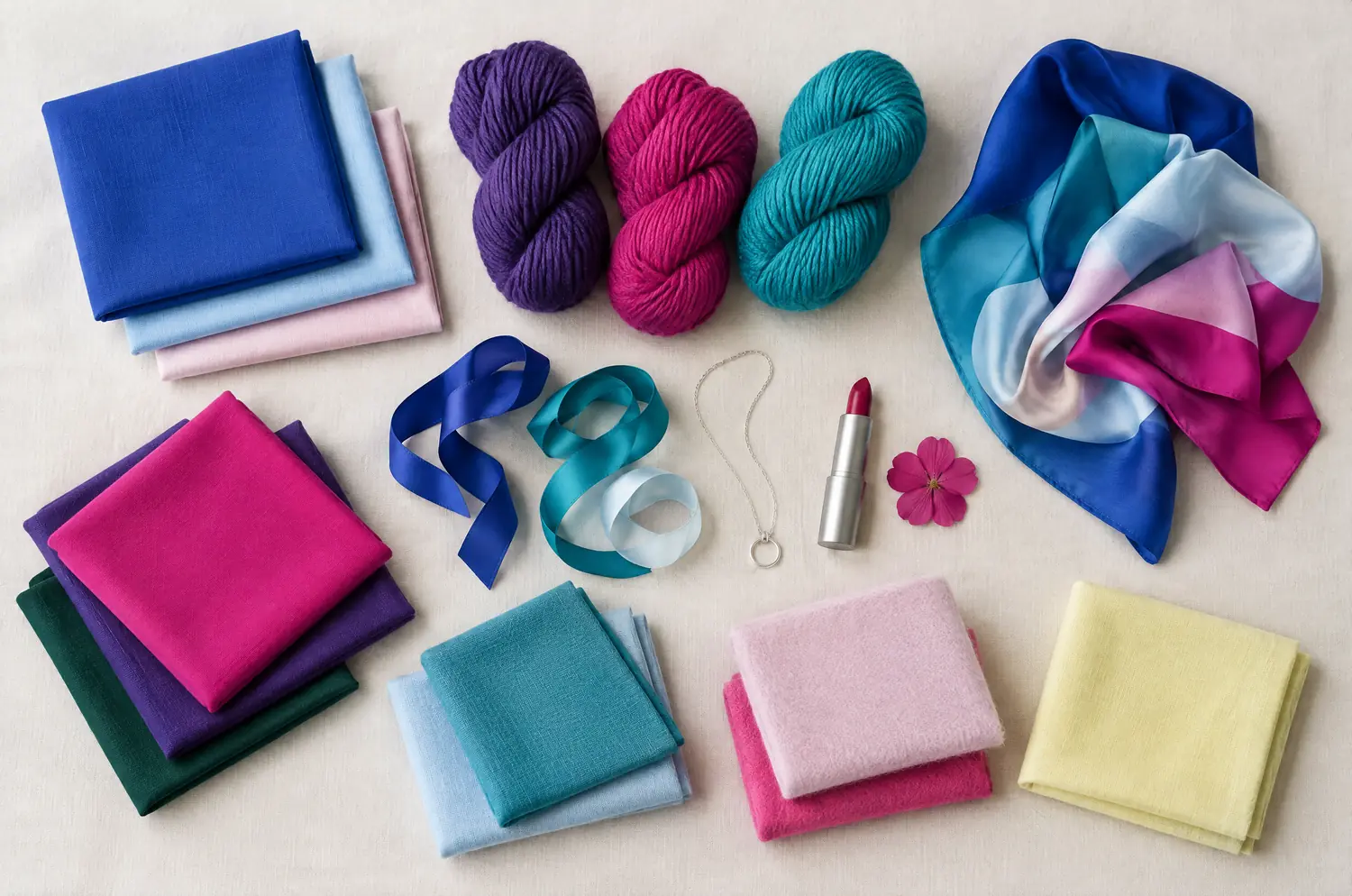
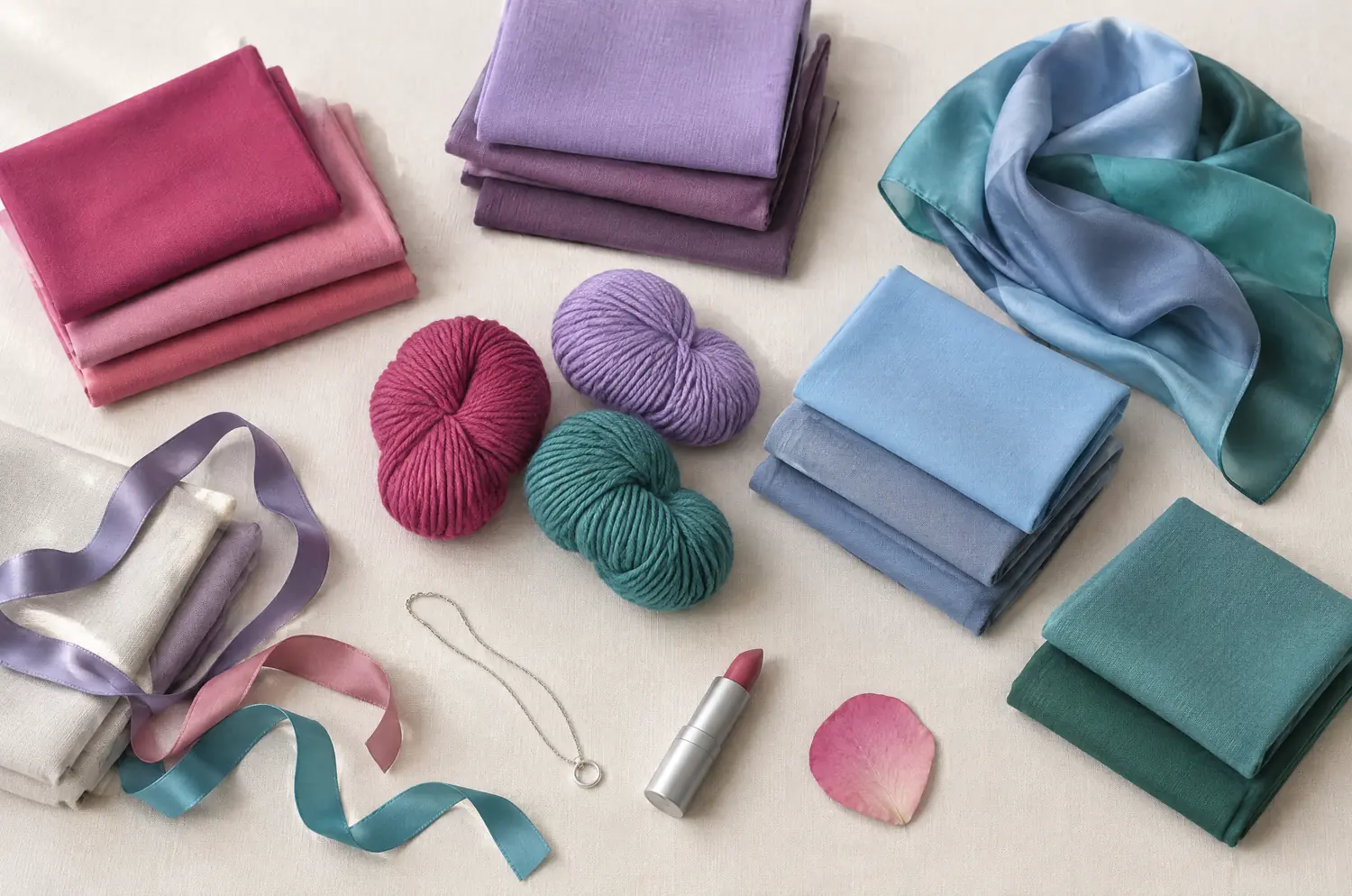
Side by side
Cool Summer and True Winter palettes
Same scale, same page: look at the swatches before you read the differences.
- Raspberry
#C73866 - Pink
#E57BA2 - Cool Watermelon
#E0607E - Soft Cherry
#B5364F - Mauve
#A777B8 - Light Plum
#8E5A8E - Cool Lavender
#9E8FD1 - Cool Sky Blue
#8FBDE3 - Denim Blue
#4F6FA8 - Gray Blue
#7C93B5 - Cool Turquoise
#4FA8A8 - Soft Spruce Green
#3F7F73
Neutrals
- Soft White
- Medium Gray
- Cool Taupe
- Navy
Colors to avoid
- Orange
- Golden Yellow
- Terracotta
- Black
- Royal Blue
#1F45C4 - Cobalt Blue
#0047AB - Cool Turquoise
#0097A7 - Emerald
#00875A - Pine Green
#0A5C4A - Violet
#5B2A9D - Fuchsia
#D4127C - Bright Cool Pink
#F0388C - Raspberry Red
#C8102E - Icy Pink
#F6D5E3 - Glacier Blue
#CFE6F5 - Icy Lemon
#F4F29A
Neutrals
- Black
- Pure White
- Steel Gray
- Navy
Colors to avoid
- Orange
- Mustard
- Warm Brown
- Khaki
The four axes
3 axes differ, the rest is shared
Temperature, lightness, intensity and contrast: the gauge shows where each one sits, the table says it in words.
The two sub-seasons
- Temperature
- 12SameVery cool
- Lightness
- 12Differs1 Medium2 Medium to dark
- Intensity
- 12Differs1 Soft to medium2 Saturated
- Contrast
- 12Differs1 Moderate2 High
Line by line
| What is compared | Cool Summer | True Winter |
|---|---|---|
| Temperature | Very cool | Very cool |
| LightnessDiffers | Medium | Medium to dark |
| IntensityDiffers | Soft to medium | Saturated |
| ContrastDiffers | Moderate | High |
| Signature color | Raspberry | Fuchsia |
| Neutrals | Soft White, Medium Gray, Cool Taupe, Navy | Black, Pure White, Steel Gray, Navy |
| Metals | Silver, white gold, platinum. Gray pearls, amethyst, aquamarine. | Silver, platinum, white gold. Diamond, sapphire, emerald. |
| Lips | Raspberry, blue-toned pink, soft cherry. Your red is a cool red. | Raspberry, fuchsia, blue-toned red. Cool reds are your reds. |
| Hair color | Ash tones: ash blonde, ash brown, cool brown. Gray or white hair looks naturally good on you. | Black, cool brown, ashy dark brown. Gray or white hair looks superb on you. |
Cool Summer: how does a very cool palette stay so quiet?
Cool Summer is the heart of the Summer season. Its colors are bluish and fresh, and they never shout.
Think of old roses, lavender and blue-green leaves under an overcast sky. Raspberry, Mauve and Gray Blue are typical. Denim Blue and Soft Spruce Green sit just as easily in the palette.
The depth is medium and the intensity soft to medium. Contrast between your hair, eyes and skin is moderate, so the face reads as gentle rather than graphic.
Silver suits you far better than gold. Black is too harsh. Navy does the job instead.
True Winter: why does the same coolness come with an edge?
True Winter is the heart of Winter, and coolness leads here too. But the colors come pure and icy, with nothing grayed in them.
Picture snow under a blue sky: white, black, bright blue, red berries. Royal Blue, Emerald and Fuchsia are the voices of this palette. Icy Pink and Glacier Blue add the frost.
The depth runs from medium to dark and the intensity is saturated. Contrast is high, so the face carries strong, defined features.
Black beside pure white is a pairing that belongs to this palette. Orange, mustard and warm browns turn the skin yellow and blur that crisp contrast.
Lightness, intensity, contrast: what do the three differences look like on a face?
Three axes differ, and temperature is the one they share.
The shared one is temperature. Both are very cool, and both lose their glow in orange. If you’re hunting for a difference there, stop. You won’t find it.
Contrast is the easiest to see in a mirror. It’s the gap between your hair, your eyes and your skin, and it shows up on a fair, olive, tan or deep skin tone alike. In True Winter that gap is high. In Cool Summer it’s moderate, so the face reads as blended rather than outlined.
Intensity is the second. True Winter is saturated, Cool Summer soft to medium. Hold a strong color up and ask whether it looks clean on you or arrives before you do. Your skin answers that, not the palette.
Lightness is the third. True Winter runs from medium to dark, Cool Summer sits at medium. Hold something very dark near your face and see whether you disappear into it or the color simply frames you.
The two-color test. In daylight, with no makeup, hold a piece of fabric in each of these two colors up to your face. Rest your eyes between the two and redo it another day. If the same color keeps winning, you have a direction: a first hint, not a verdict.
What happens on your face when Raspberry meets Fuchsia?
Set up your test the way the color draping article explains: window light, a clean face, hair wrapped away, each fabric held alone under your chin.
Then hold Raspberry, and Fuchsia after it. Don’t judge the fabric. Judge what happens around your eyes and jawline.
With the Raspberry, watch whether the color sits quietly beside your features. That leans Cool Summer.
With the Fuchsia, ask whether your eyes look sharper and your skin cleaner, or whether the color arrives before you do. Sharper leans True Winter. Color first leans Cool Summer.
Repeat it another day with a second pair: Soft Cherry, from the Cool Summer palette, against Raspberry Red, from the True Winter one. When one side keeps coming out ahead, you know which season page to read first. It gives you a direction to follow, and nothing more.
Can you be a bit of both, Cool Summer and True Winter?
That’s plausible. These two are neighbors in the method: same coolness, with Cool Summer softer and lower in contrast, True Winter more saturated and crisper.
Start with contrast, the clearest clue when coolness is shared. Then check intensity. If both point the same way, follow that direction. If they split, you sit in the middle, and that’s an honest place to be: both palettes are cool, so you’re not dressing against your skin either way.
Cool Turquoise and navy appear in both palettes, each in a different shade. Start there. Anything you borrow beyond that is a test, not a license: try one shade at a time and watch your skin before you commit.
In my view, a screen flattens two seasons split by softness and contrast. A selfie shows color, not how your skin answers a fabric.
The free quiz takes ten questions and gives you a likely season. The fabric at your chin adds what the questions can’t.
If one of the sister comparisons fits your doubt, read Cool Summer against Soft Summer or True Winter against Deep Winter.
Do lipstick and hair part ways too?
For Cool Summer, lips stay in blue-toned pink and soft cherry, with gray, cool taupe and plum on the eyes. True Winter goes for fuchsia and blue-toned red, with a crisp black line.
Hair tells you less than you’d expect. Ash blonde and cool brown suit Cool Summer. Black and ashy dark brown suit True Winter. Gray or white hair looks good on both.
Details for the softer side live on the Cool Summer makeup page.
Keep exploring
More on these two sub-seasons
Palette Cool Summer color palette
Cool made gentle: blues, pinks and raspberries without any harshness.
Outfits Cool Summer outfits and capsule wardrobe
Cool Summer outfits built on eight pieces: navy, gray, raspberry and soft white, how to wear them, and what to do with orange and black. Start with navy.
Compare Cool Summer vs Soft Summer
Cool Summer vs Soft Summer comes down to three differences: coolness, softness and contrast. Here is how they look on a face and how to settle it at home.
Palette True Winter color palette
The heart of Winter: icy, pure colors with no warmth at all.
Compare Bright Winter vs True Winter
Bright Winter vs True Winter: all four axes differ, so the answer is on your face. Here is what each difference looks like and a quick test to settle it.
Compare Deep Winter vs True Winter
Deep Winter vs True Winter comes down to two axes: how dark you are and how cool. Here is what each looks like on a face and how to test it for yourself.
Questions
Cool Summer or True Winter: your questions
Am I a Cool Summer or a True Winter?
Neither name shows on a face, so look at how loud a strong color feels on you. If it blends in and stays quiet, think Cool Summer. If it sharpens your features and holds its own, think True Winter. Then check it with a fabric at your chin.
Is Cool Summer the same as Cool Winter?
No. Cool Winter is another name for True Winter, so Cool Summer vs Cool Winter is the same comparison as this page. They share their coolness and sit next to each other in the method. They are neighbors, not twins.
Does hair color decide between them?
No. Dark hair doesn’t make you a Winter, and ash blonde doesn’t make you a Summer. Hair is one part of the picture, and dyed or gray hair doesn’t move your season. Cover it so your skin and eyes do the talking, then watch how each color treats your face.
What if my quiz says one and the drape says the other?
Give more weight to the drape, because only the fabric shows your skin reacting. Repeat it on another day, then read both season pages and see which one describes you.
Can I wear black as a Cool Summer?
Black is on the Cool Summer avoid list, and navy is the neutral the palette offers instead. Black is one of True Winter’s neutrals. If you wear it, keep it away from your face and put a cool pink or navy near it.
Cool Summer or True Winter? Check it.
The free quiz shows you your likely season in two minutes. Then run the two-color test on your own bare face, in daylight: a first hint, not a verdict.