
Compare · two Winters
Deep Winter vs True Winter: The Two Differences That Matter
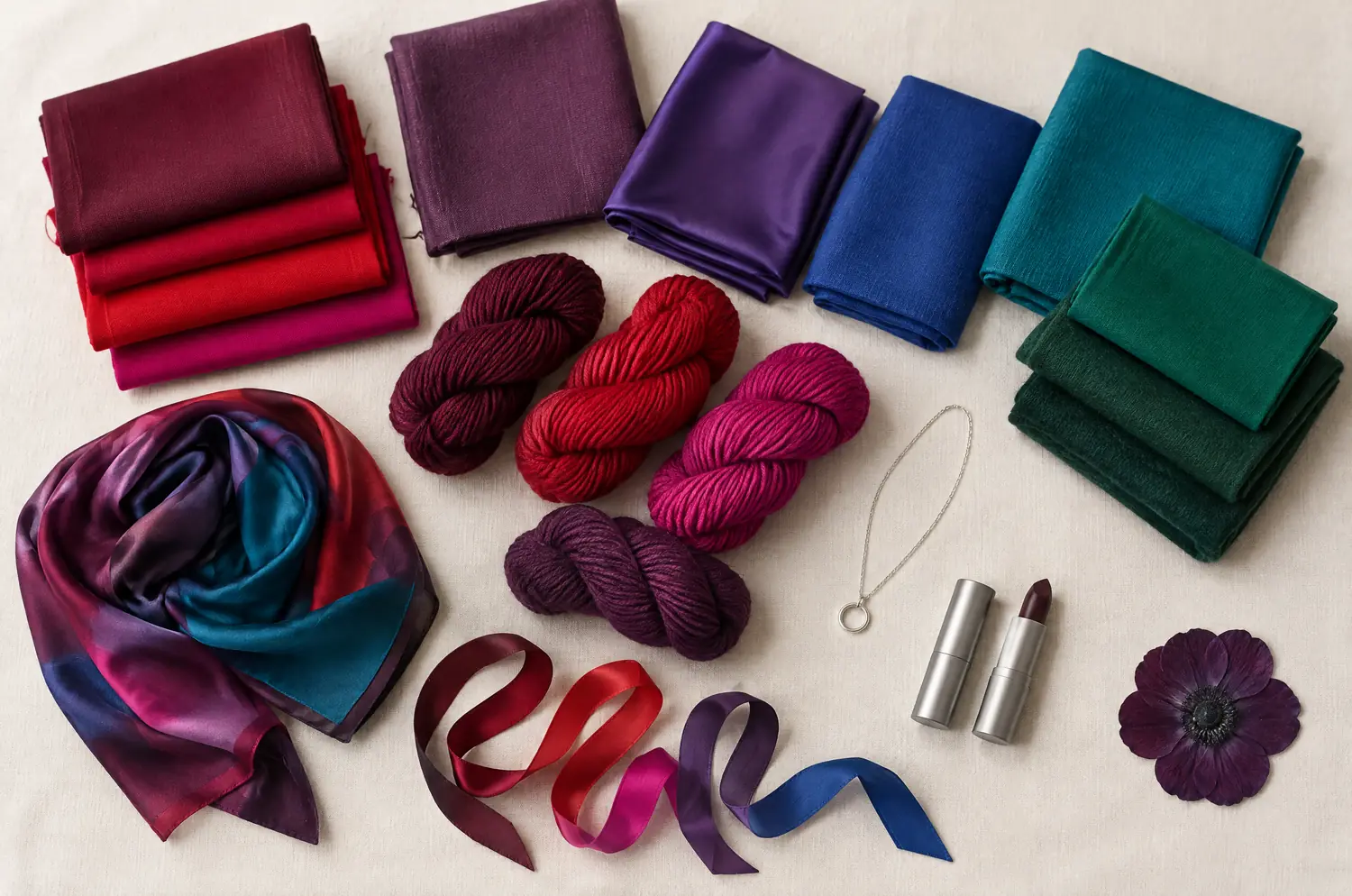
Hold a dark burgundy under your chin. Then a bright fuchsia. Watch your face, not the fabric.
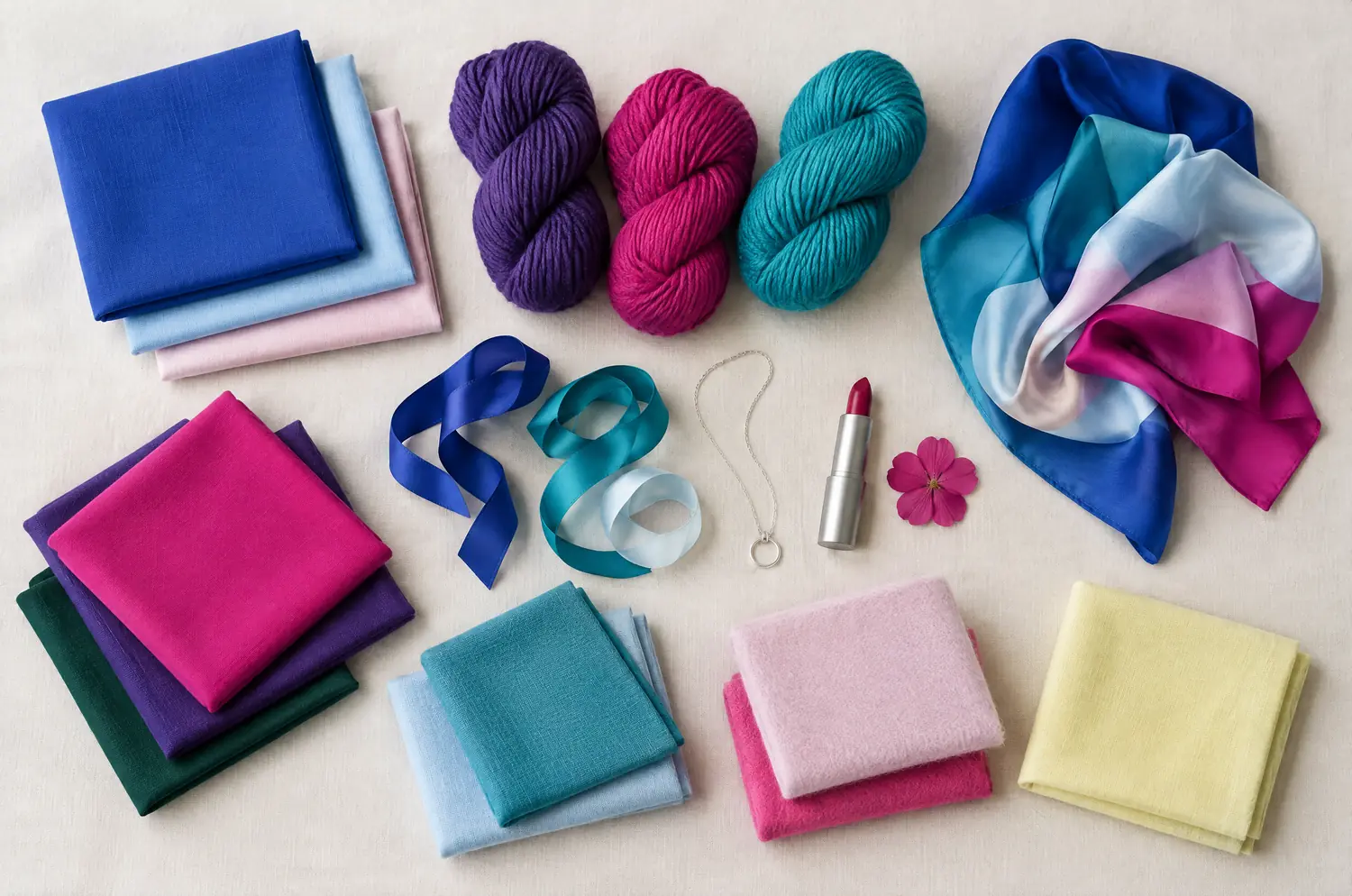
Side by side
Deep Winter and True Winter palettes
Same scale, same page: look at the swatches before you read the differences.
- Cool Burgundy
#5C0F2E - Cherry Red
#B0102E - Pure Red
#D0102A - Raspberry Pink
#C81E5A - Fuchsia
#C2187A - Plum
#5E1F4F - Deep Violet
#4B1F6F - Royal Blue
#1F3FA8 - Midnight Blue
#14213D - Deep Turquoise
#007C89 - Emerald
#00704A - Cool Spruce Green
#0B4F3F
Neutrals
- Black
- Charcoal
- Navy
- Pure White
Colors to avoid
- Golden Beige
- Rust
- Mustard
- Peach
- Royal Blue
#1F45C4 - Cobalt Blue
#0047AB - Cool Turquoise
#0097A7 - Emerald
#00875A - Pine Green
#0A5C4A - Violet
#5B2A9D - Fuchsia
#D4127C - Bright Cool Pink
#F0388C - Raspberry Red
#C8102E - Icy Pink
#F6D5E3 - Glacier Blue
#CFE6F5 - Icy Lemon
#F4F29A
Neutrals
- Black
- Pure White
- Steel Gray
- Navy
Colors to avoid
- Orange
- Mustard
- Warm Brown
- Khaki
The four axes
2 axes differ, the rest is shared
Temperature, lightness, intensity and contrast: the gauge shows where each one sits, the table says it in words.
The two sub-seasons
- Temperature
- 12Differs1 Neutral to cool2 Very cool
- Lightness
- 12Differs1 Dark2 Medium to dark
- Intensity
- 12SameSaturated
- Contrast
- 12SameHigh
Line by line
| What is compared | Deep Winter | True Winter |
|---|---|---|
| TemperatureDiffers | Neutral to cool | Very cool |
| LightnessDiffers | Dark | Medium to dark |
| Intensity | Saturated | Saturated |
| Contrast | High | High |
| Signature color | Cool Burgundy | Fuchsia |
| Neutrals | Black, Charcoal, Navy, Pure White | Black, Pure White, Steel Gray, Navy |
| Metals | Silver, platinum, white gold. Onyx, garnet, sapphire. | Silver, platinum, white gold. Diamond, sapphire, emerald. |
| Lips | Burgundy, cherry, plum, deep red. A dark lip comes naturally to you. | Raspberry, fuchsia, blue-toned red. Cool reds are your reds. |
| Hair color | Cool dark brown, black, very dark brown. Avoid golden or coppery tones. | Black, cool brown, ashy dark brown. Gray or white hair looks superb on you. |
Why does Deep Winter read as dark first and cool second?
Deep Winter leads with depth, also called lightness. Everything about it is dark: the colors that suit it, and often the hair and eyes too. The temperature leans cool, but only neutral to cool. Coolness isn’t the headline here.
Think of a winter night. Cool Burgundy, Midnight Blue, Plum and Cool Spruce Green all carry real weight. Black suits you, even right at the neckline.
What fails is anything light, powdery or warm. Soft pastels make you look pale. Rust and Mustard turn your skin yellow and take away the crisp edge of your features.
The colors are saturated. The contrast is high. Nothing hazy, nothing dusty. See the full Deep Winter palette for every shade.
Why does True Winter read as cold first and dark second?
True Winter leads with coolness. It’s very cool, and its depth sits at medium to dark, so it isn’t the darkest of the Winters.
Picture a snowy landscape under a blue sky. Royal Blue, Fuchsia, Raspberry Red and Emerald are the core. Then come the icy accents: Icy Pink and Glacier Blue, which have a place in this palette.
Black and white together just look right on you. Silver and platinum beat yellow gold by a wide margin. A raspberry or fuchsia lipstick looks easy.
Anything orange-leaning, golden or brown does the opposite. Orange, Mustard, Warm Brown and Khaki blur your contrast and make the complexion look tired. The full True Winter palette shows what to reach for instead.
Two axes set these Winters apart, and two bring them together
Depth and temperature.
Depth is the first gap. Deep Winter is dark, True Winter medium to dark. Deep Winter eyes and hair are often dark, so check whether the darkest colors sit comfortably on you. Try the lighter icy accents of True Winter too, and watch your skin.
Temperature is a second gap.
Very cool against neutral to cool is a step on the scale, not a change of family. True Winter looks cleanest when every color is cold. Deep Winter sits a notch nearer the middle.
Now what they share. Both are saturated, and both have high contrast.
A dusty or hazy shade looks wrong on either face. Black, pure white, navy, silver and Emerald work for both. If you’re hunting for a difference there, stop. It isn’t there.
The two-color test. In daylight, with no makeup, hold a piece of fabric in each of these two colors up to your face. Rest your eyes between the two and redo it another day. If the same color keeps winning, you have a direction: a first hint, not a verdict.
Cool Burgundy or Fuchsia: which one does your face answer to?
The setup is the usual one: color draping at home explains it, so I won’t repeat it here. This pair needs its own questions.
Cool Burgundy is the signature of Deep Winter. Fuchsia is the signature of True Winter, and both palettes hold a Fuchsia. So this duel is about darkness and coolness, not about a forbidden color. Put each under your chin, one at a time.
First, watch depth. Does your face hold against Cool Burgundy, with eyes and lips still clear, or does the color take over? A face that holds is a clue toward Deep Winter. A color that takes over is worth comparing with how you look in Fuchsia.
Second, watch temperature. Does your skin turn gray or yellow near either color? Try it and see which one keeps your skin clean. Each win is a clue toward the sub-season whose signature it is.
Repeat it on another day. Whichever side keeps coming out ahead gives you a direction to check, not a ruling. The light in the room can shift a result, so keep it the same each time.
What if you sit between Deep Winter and True Winter?
Start with the leading trait. Ask which pull is stronger on you: the darkness or the coolness.
These two are not each other’s neighbors in the method. Deep Winter borders Deep Autumn, and True Winter borders Cool Summer. So if you feel a pull toward another season, it is a different one for each of these two.
While you test, stay on what both share: Black, Pure White, Navy and silver. They keep you on safe ground until the cloth test gives you a direction.
A quiz cannot watch your face change when a fabric comes near, which is what separates these two. The free color analysis quiz will point you toward a likely season in ten questions. Use it as a starting point, then do the cloth test.
If your doubt is really about warmth, read Deep Autumn vs Deep Winter. If it is about softness, try Cool Summer vs True Winter.
Lipstick and hair: where the two palettes part ways
Lipstick is where you can watch the two palettes at work. Deep Winter wears burgundy, cherry, plum and deep red, and a dark lip comes naturally. True Winter wears raspberry, fuchsia and blue-toned red, the cool reds. The Deep Winter makeup page goes through eyes and cheeks.
Hair overlaps: black sits in both palettes. Deep Winter adds cool dark brown and very dark brown. True Winter adds cool brown and ashy dark brown, and it welcomes gray or white hair.
Cover your hair for the test, dyed or natural. It can’t tell you which side you’re on.
Metals are shared: silver, platinum and white gold.
Keep exploring
More on these two sub-seasons
Palette Deep Winter color palette
The darkest Winter: deep, crisp, very intense colors.
Outfits Deep Winter outfits and capsule wardrobe
Deep Winter outfits from eight capsule pieces: what to buy first, formulas for office, weekend and evening, and how to wear the colors that don’t suit you.
Compare Deep Autumn vs Deep Winter
Deep Autumn vs Deep Winter share the same depth. Two things separate them: warmth and crispness. Here is how they look on a face and how to test it at home.
Palette True Winter color palette
The heart of Winter: icy, pure colors with no warmth at all.
Compare Bright Winter vs True Winter
Bright Winter vs True Winter: all four axes differ, so the answer is on your face. Here is what each difference looks like and a quick test to settle it.
Compare Cool Summer vs True Winter
Cool Summer vs True Winter: both are very cool, so temperature won’t settle it. Here are the three differences that do, and a quick test to help you decide.
Questions
Deep Winter or True Winter: your questions
How do I tell Deep Winter from True Winter?
Ask which trait leads on you, depth or coolness. Deep Winter is the darker of the two and a notch less icy. True Winter is the colder one, with a little less weight. Then drape Cool Burgundy and Fuchsia against your bare face, hair covered, and compare.
Can I be both Deep Winter and True Winter?
You can feel close to both. Ask whether depth or coolness pulls harder on you. Black, Pure White, Navy and silver belong to both palettes, so you lose little while you decide.
Does hair color decide between the two?
No. Black and cool dark brown show up in both palettes, so hair rarely separates them. Gray or white hair doesn’t either. The reading is made on skin and eyes with the hair covered, and dyed hair changes nothing.
Which metals suit Deep Winter and True Winter?
Silver, platinum and white gold suit both. The stones differ: onyx and garnet for Deep Winter, diamond and emerald for True Winter, with sapphire for either. Treat that as a direction, then try a piece near your face.
What if my quiz says one and my cloth test says the other?
Lean on the draping for your direction. The quiz works from your answers and can’t watch how your skin reacts to a color. Repeat the test on another day and see whether one side keeps coming out ahead.
Deep Winter or True Winter? Check it.
The free quiz shows you your likely season in two minutes. Then run the two-color test on your own bare face, in daylight: a first hint, not a verdict.