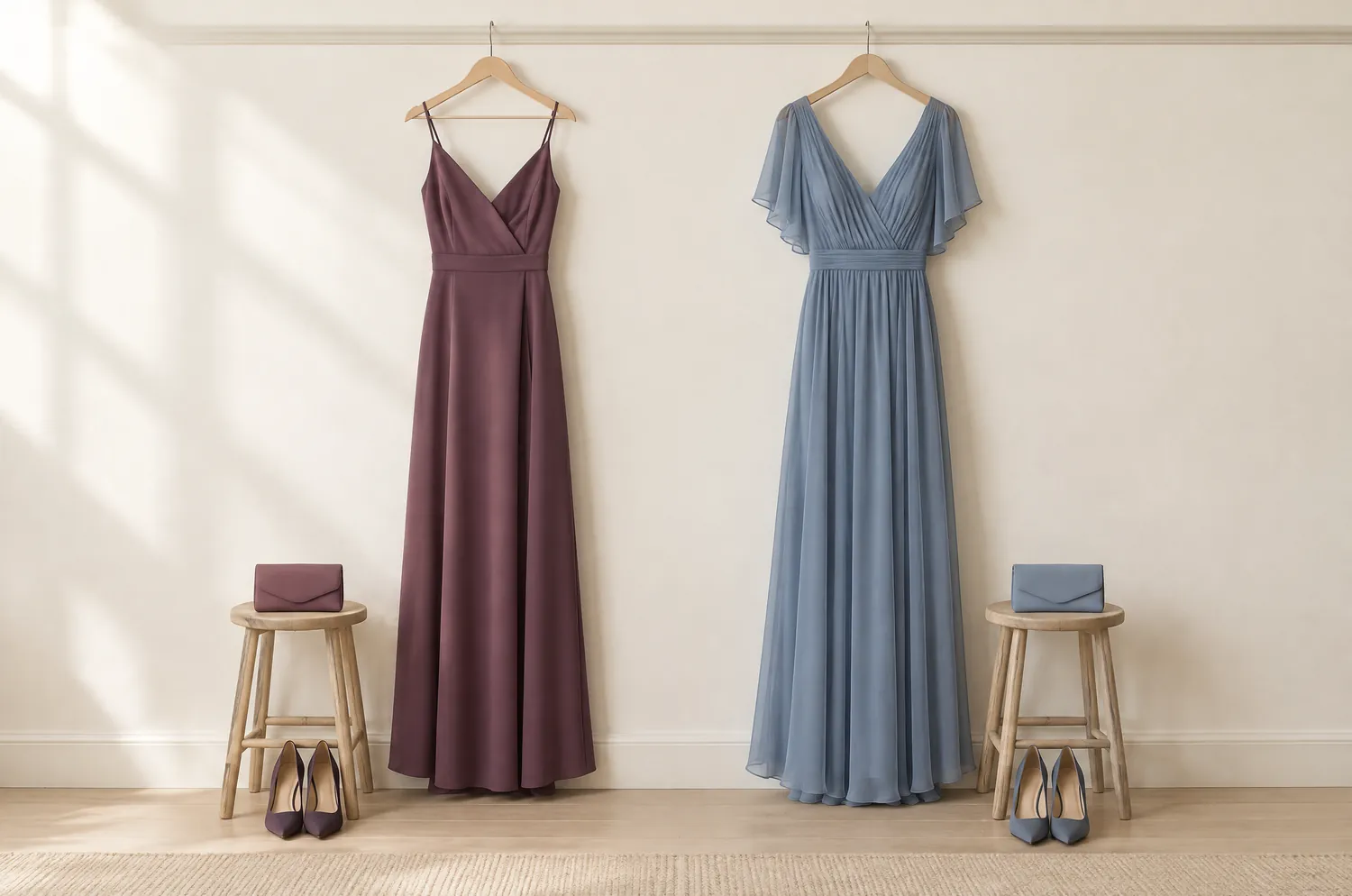
Your Color Palette for Clothes: How to Find It and Shop With It
A color palette for clothes starts with your sub-season, not a trend. Here is how to find yours, sort neutrals from accents and check a color before you buy.
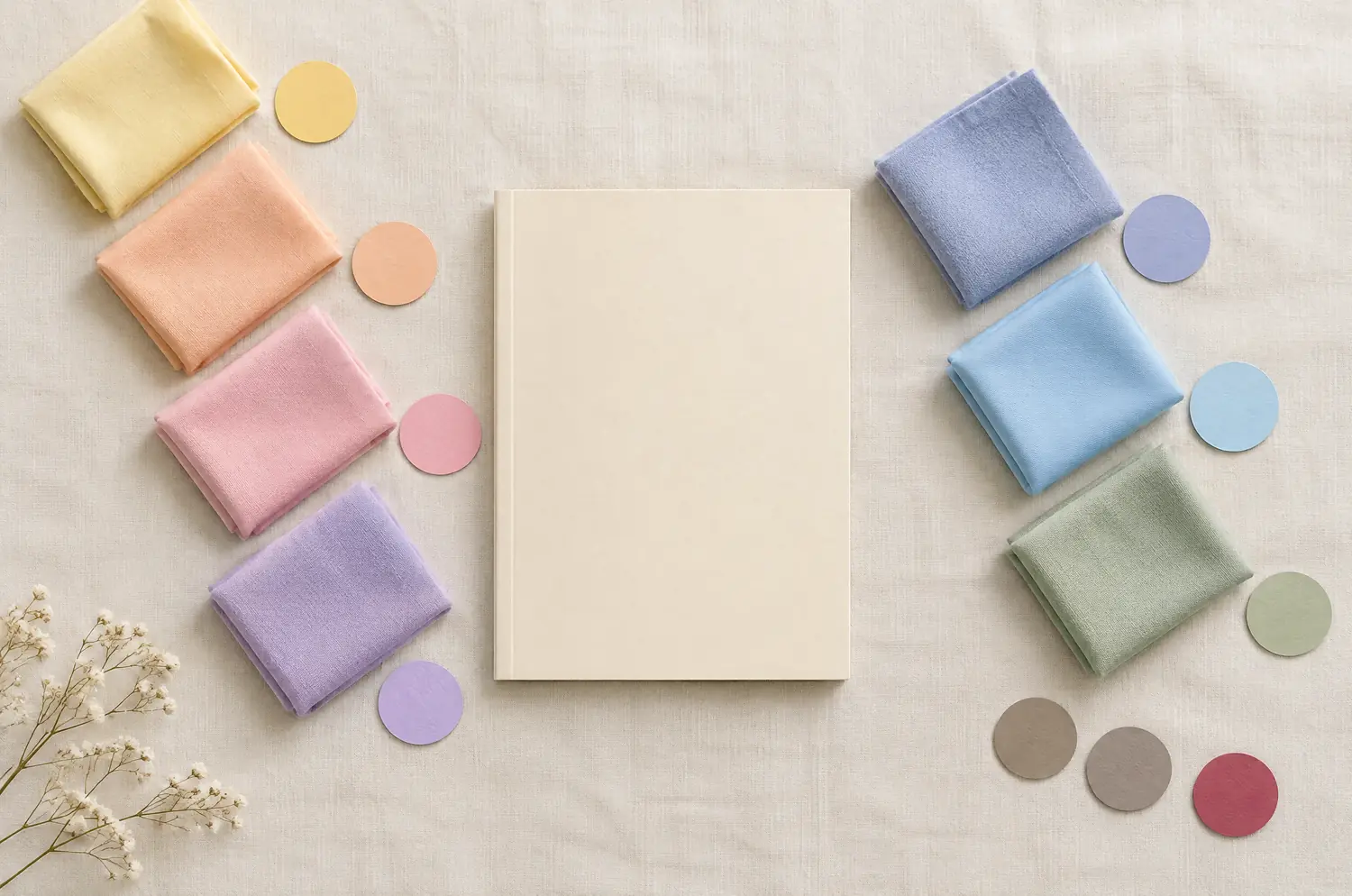
That’s the question, plainly. It sounds like it wants a list. A card of twelve swatches, and you’re done.
It’s less simple than that. And more useful.
The palette that belongs to you follows from your sub-season, and no rack or trend report can hand it to you. Once you have it, shopping gets faster and a closet gets calmer.
Why isn’t a palette just a list of colors you like?
Because liking a color and wearing it well are two different things. A coral you love can leave you looking tired. A dusty rose you barely noticed on the hanger can smooth your whole face.
Here’s the mechanism. Fabric held near your face reflects its color onto your skin. Some colors give back a glow. Others cast a shadow or turn your skin gray or yellow, and people see the sweater before they see you.
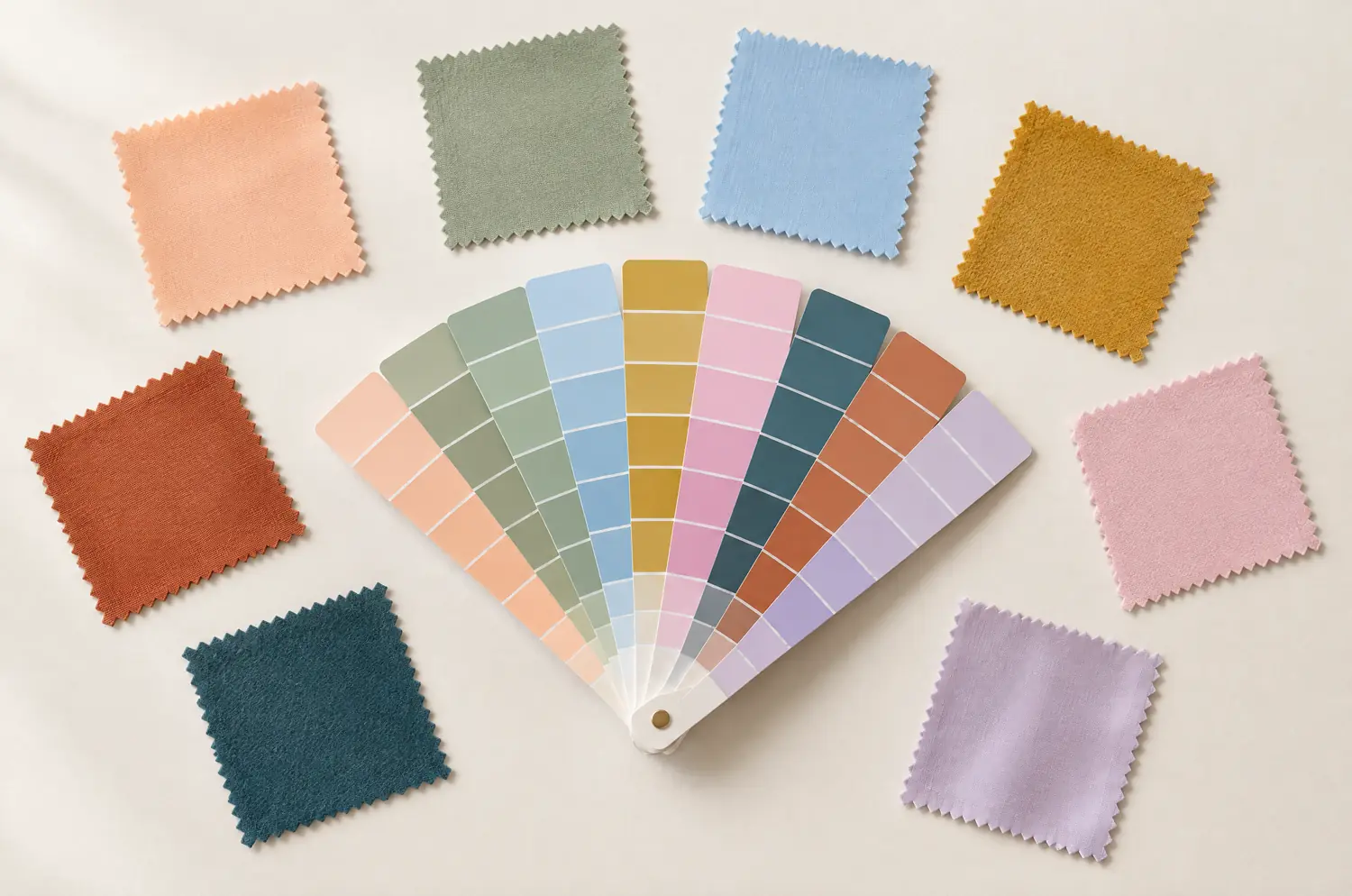
A palette gathers colors that share three qualities with your coloring: temperature (warm or cool), lightness (how light or dark) and intensity (how bright or soft). Colors that share them sit well together, so a palette mixes easily.
That’s why a palette belongs to one of the twelve sub-seasons, three for each season. Two palettes can share a word without sharing a shade. Warm Spring has Coral, Bright Spring has Bright Coral and Warm Autumn has Burnt Coral. Same family name, three different jobs.
How do you find the palette of your sub-season?
The palette comes after the season, so begin there. Three steps, in this order.
Take the free quiz. It gives you a likely season and a hint of the sub-season in about two minutes. It can’t see your skin react to colors, so read the answer as a direction.
Drape at home. Stand near a window with daylight on your bare face and your hair tied back or covered. Hold solid colors under your chin, one pair at a time, and watch your skin. The draping at home guide walks you through the setup.
Read the pages of your likely season and its neighbor on the seasons page. Compare the palettes with what you saw in the mirror.
Neighbors are where people stall. Soft Autumn and Soft Summer can both look good on you, and no swatch will pick for you. A trained eye saves you from going in circles.
What does the free 8-color card give you, and what doesn’t it?
The personal color palette tool is free. You tap 8 points on your own photo and save a card of your 8 colors. There’s no AI, nothing is uploaded, and it names no season.
So what is it for? It’s a record of your own coloring, a reference you can keep beside a season page while you compare. It doesn’t tell you which clothes suit you.
A photo has limits too. It’s lit one way and often edited. Treat the card as a reference, then let colors held near your face have the last word.
What belongs in a palette besides the pretty colors?
Three kinds of colors, three jobs.
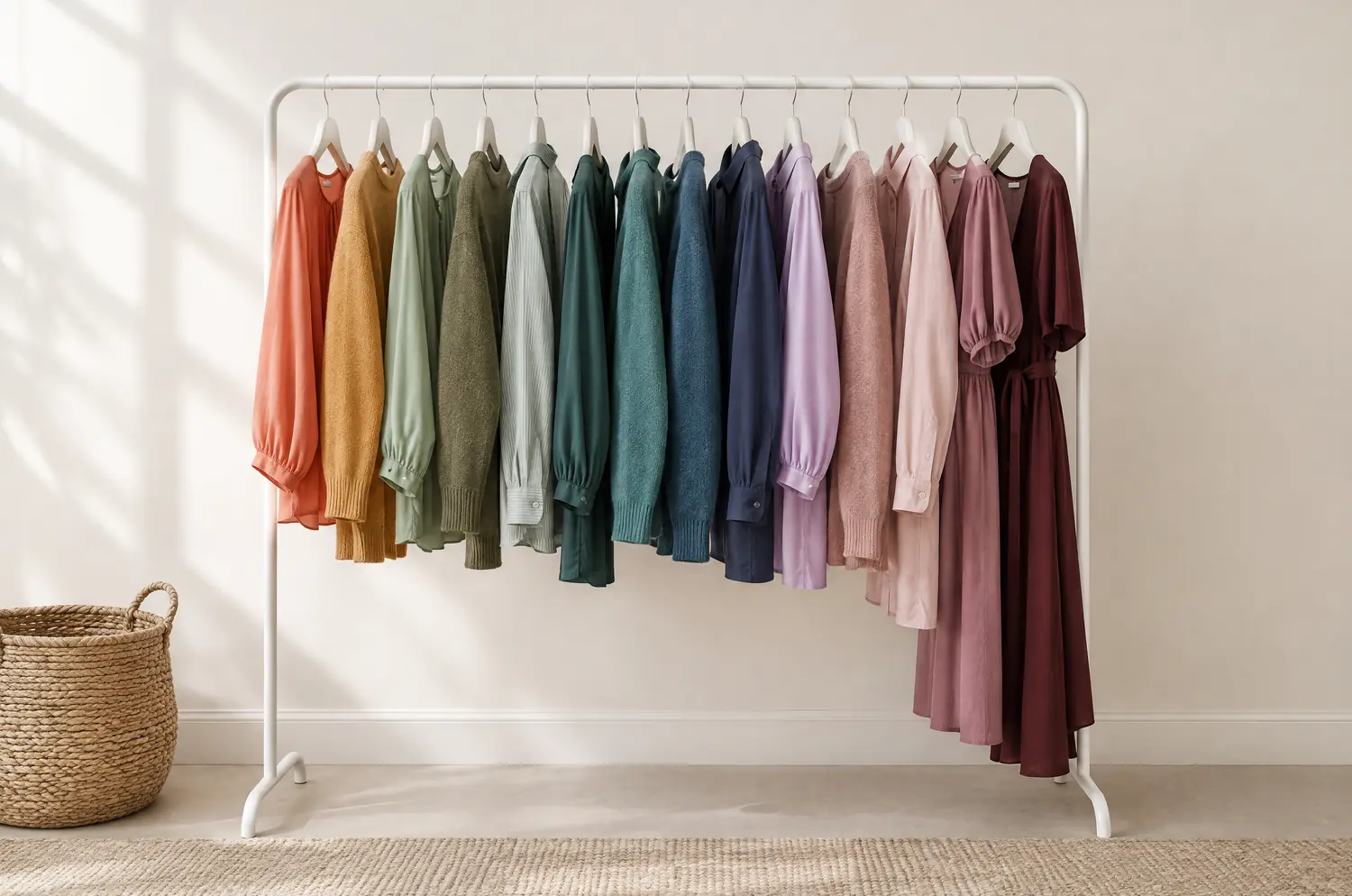
Neutrals are the base: coats, pants, shoes, the bag. Accents are the colors you want near your face, in a top, a scarf or a sweater. Keep-away colors drain you when they touch your skin. You can still wear them, lower down.
My advice: sort your neutrals first, because they fill most of your closet. Here is a glimpse from five sub-seasons, not a full palette.
Sub-season
Accent
Neutrals
Keep away from your face
Light Spring
Peach
Ivory, Light Camel
Black, Charcoal
Soft Summer
Dusty Rose
Dove Gray, Grayed Navy
Black, Bright Orange
Warm Autumn
Rust
Camel, Chocolate
Cool Gray, Glacier Blue
Deep Winter
Cool Burgundy
Black, Pure White
Rust, Peach
True Winter
Fuchsia
Steel Gray, Navy
Mustard, Warm Brown
Read it by columns. Black is a neutral for Deep Winter and True Winter, and a keep-away color for Light Spring and Soft Summer. Camel for a Warm Autumn is not Light Camel for a Light Spring.
Wear it. A palette is a shopping tool, not a fence. In my view, a color you love deserves a fair try before you give it up.
Sometimes the color that helps you reach a goal wins over the palette: an interview outfit, a required uniform, a dress you adore. Then move it away from your face.
Wear it low, in pants, a skirt, shoes or a bag.
Put a scarf, collar or top from your palette between it and your skin.
Add a lipstick from your sub-season to bridge the gap.
Questions people ask
How do I find my color palette for clothes?
Find your sub-season first, because the palette follows from it. Start with the free quiz for a direction, then hold solid colors under your bare chin in daylight, hair covered, and compare them in pairs. When two neighbors both look good, an outside opinion helps.
How many colors should a clothing palette have?
Enough to dress a week without repeating yourself, and no more than you’ll use. In practice that means a few neutrals for the base and a few accents for near your face. A season’s full palette is wider, but your closet only needs the corner you’ll actually wear.
What is the difference between a color palette and a color season?
Your season is the label, the result of reading your coloring, like Soft Autumn. Your palette is the set of colors that label points to. The season tells you where to look. The palette tells you what to put on the hanger. You need the first to trust the second.
How do I check a color when I shop online?
Treat the product photo as a rumor. Photos are lit and often edited, and screens differ. Match the color to a family in your palette before you order, then open the package by a window and hold it to your bare face. Judge there, not on the screen.
Can I wear colors outside my palette?
Yes. Wear them low, in pants, shoes or a bag, or put a scarf or collar from your palette between the color and your face. A lipstick from your sub-season also bridges the gap. The palette exists to make shopping easier, not to fence you in.
Hold your almost-right piece to your face, then decide
Take the piece in your closet that was almost right. Hold it to your bare face by a window, then hold the closest color from your sub-season beside it. Look at your skin both times, and decide for yourself.
That gap is what shopping with a palette closes. My Digital Color Palette puts the colors of your season on your phone, made to be read with the brightness all the way up. Open it in a store or while you shop online, and check a color on the spot. It shows you your colors but doesn’t name your season, so find that first.
Once you’ve seen that gap, you’ll shop differently.