Rectangle Body Shape: How to Dress It and Define Your Waist
Rectangle body shape (H): slender and adaptable. My advice on dresses, jeans and belts that define the waist, and the cuts that work against your balance.
It has a fluid line, and a fluid line takes shape easily.
That’s the rectangle body shape, also called the H: slender, dynamic and adaptable. That last word is its superpower. You can play with volume, movement and the waist, and your body stays exactly as it is.
Same body. Same you.
What changes is the cut.
Why does a straight line need shape, not a different body?
Balance is the goal: upper body and lower body in tune, with the waist linking them.
On a rectangle, the line runs straight down. A straight, unstructured garment follows that line and stretches it. The natural waist disappears from view, and so does any sense of curve.
So the work comes down to three moves:
Define the waist.
Add volume up top or down below.
Break the vertical line with movement, ruffles or drape.
None of this asks you to become another silhouette. Your line is the starting point, and the clothes draw on it.
Not sure this is your shape? You may also see it called the straight body shape or the rectangle body type. The article on how to tell your body shape helps you place yourself, and the five shapes side by side show where the rectangle sits among them.
Which dresses give your waist something to follow?
A dress is the easiest piece to play with, because it covers the whole line at once.
Four cuts do the job:
The wrap dress creates a defined waist, and its crossover brings femininity.
The peplum dress marks the waist and adds volume at the hips.
The empire dress gives structure to the upper body and suggests soft curves.
The trapeze dress flares out at the hips and softens the silhouette.
A ruffle dress is a fifth option. The details bring movement to the bust or the hips, depending on where they sit.
The cut to skip is the straight dress with linear lines. It repeats the rectangle and erases the natural waist. If you want to compare dress cuts across all five shapes, this dress article lays them out.
How do jeans, pants and skirts add roundness?
Below the waist, you’re looking for volume around the hips and a waist that reads clearly.
For jeans, flare and bootcut put volume at the hem, and the flare suggests curves. Mom and barrel cuts are a little loose, which rounds the hips and marks the waist. Wide-leg jeans give the lower half its dimension. A high rise shows off the legs and draws a waist.
Straight jeans trace the outline without shaping it, and a low rise erases the waist. Those are the two to leave on the rack.
Pants follow the same logic. Look for high-waisted pants, bootcut or flare cuts, a paperbag or carrot fit, or flowy fabrics. Pockets or buttons at the hips can also draw feminine curves. Low-rise, straight pants only stiffen the line.
For skirts, a flared, pleated, ruffled, wrap or peplum cut brings movement or recreates a waist. Straight or tube skirts keep the line linear.
Piece
Cuts that shape
Cut that works against you
Dresses
Wrap, peplum, empire, trapeze
Straight, linear
Jeans
Flare, bootcut, mom, high rise
Straight leg, low rise
Skirts
Wrap, flared, pleated, peplum
Straight, tube
Coats
Trench, wrap, cinched
Straight, oversized
Belts
Wide, contrasting
Thin, worn low
How do belts, jackets and tops mark the waist?
The waist is your anchor point, so anything that draws it works for you.
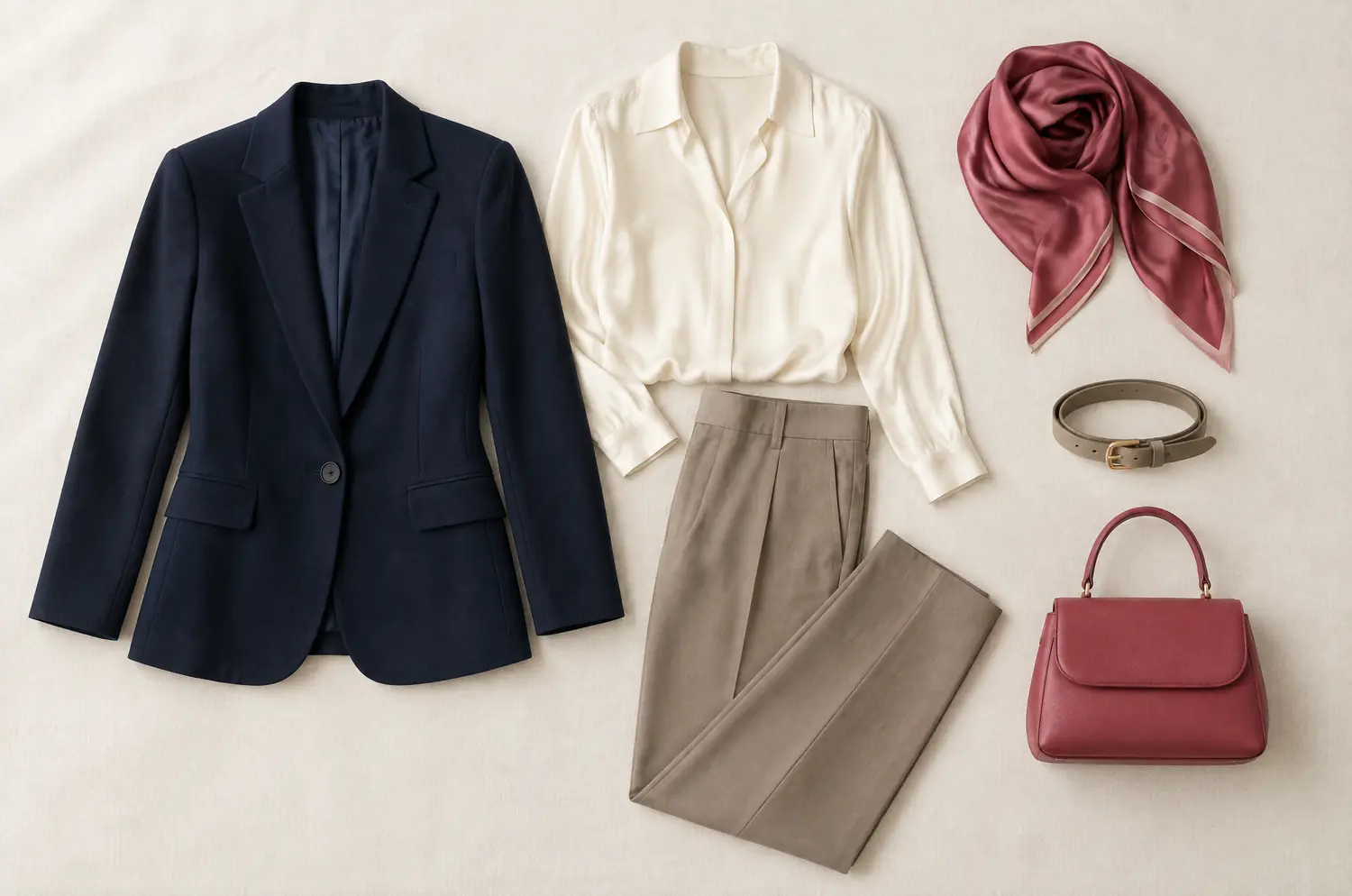
A wide belt defines it visibly and gives the outfit structure. A contrasting belt does it with color: it draws the eye to the waist. Shape answers the cut. Color answers the shade, and the free color quiz gives you a likely season to start from.
A thin belt worn low does the reverse. It compresses the silhouette without defining anything.
On top, a few cuts help:
A wrap top emphasizes the waist with its crossover effect.
A draped, gathered or belted top suggests curves on a straight line.
A peplum top adds volume at the hips.
A top with details, such as ruffles, ties or prints, adds roundness.
For jackets, a cinched blazer feminizes the silhouette right away. A short jacket puts the focus on the waist, as long as it ends just above it or slightly on it. A peplum jacket adds volume at the hips and structure at the waist. Long, straight jackets stretch the vertical line without defining anything.
Coats follow their own reasons. A trench has a structured cut and a belt that balance the bust and the hips. A wrap coat nips in the waist, and a fitted, cinched one defines it. Straight or oversized coats weigh the outline down and cover the waist.
What can sleeves and necklines add up top?
The upper body is the other place to put volume.
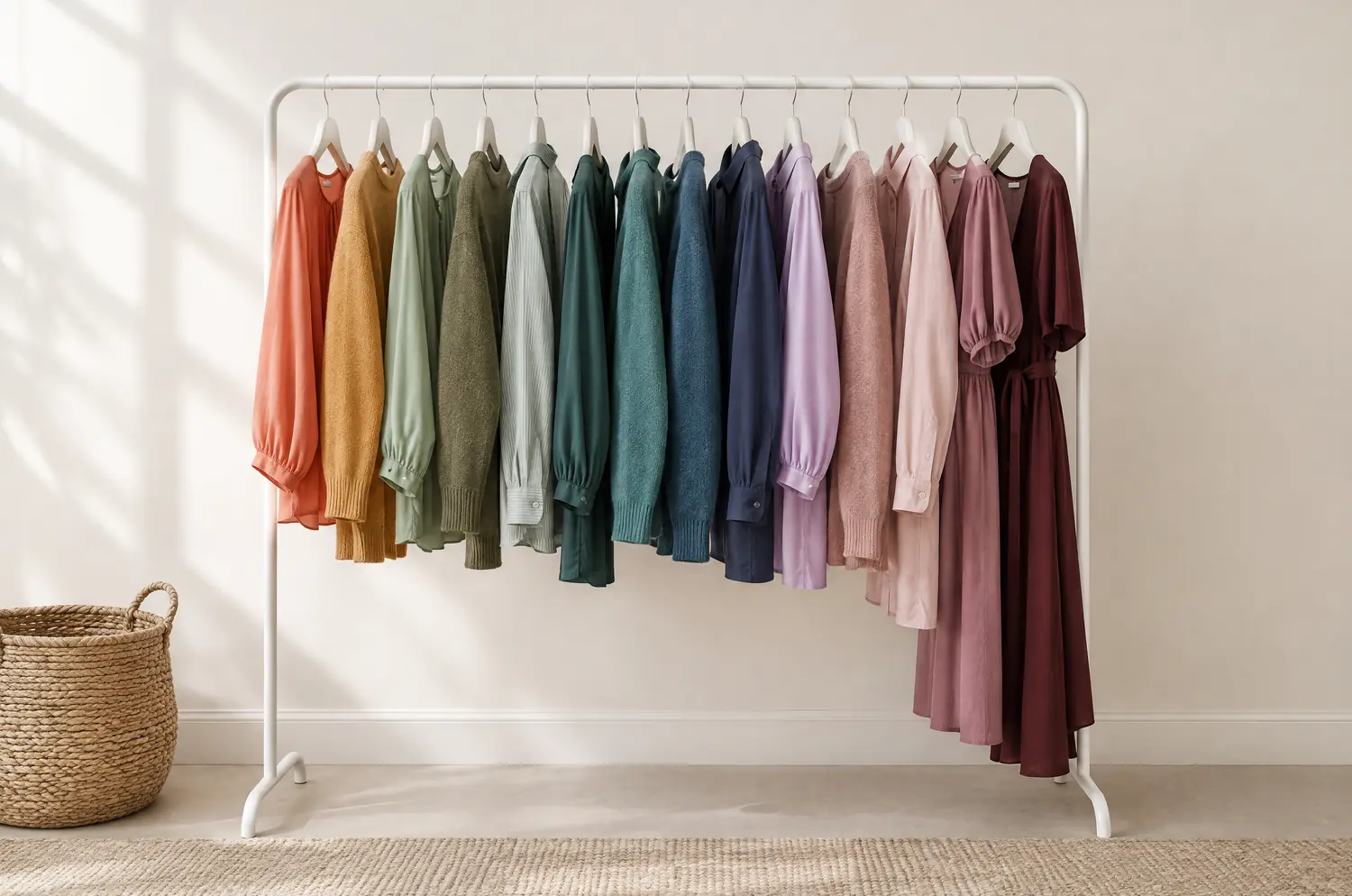
Balloon sleeves add volume and suggest more defined shoulders. Puff sleeves bring roundness. Ruffled sleeves bring movement to the shoulders, and pagoda sleeves flare to break the vertical line of the torso. Shoulder pads give structure up top and make the waist look more defined.
Skip short sleeves with no volume, which make the silhouette sag. Skip flared long sleeves too, since they pull the eye to the hips.
For necklines, a V-neck lengthens the torso and guides the eye inward. A square neckline gives the silhouette structure. A sweetheart softens the features and shapes the bust. A cowl neck adds softness, and an asymmetrical one breaks the straight line.
The Sabrina neckline repeats the rectangle with its straight line. In some cases, a bustier, a boat neck, a fitted turtleneck or a high round neck can also compress the silhouette.
What if you love a straight cut?
Then keep it. Wear what you feel good in, even when it doesn’t follow these recommendations.
If you want a straight top anyway, add structure around it. Tuck it into flared, high-waisted bottoms, add a belt, and finish with a structured jacket. That creates harmonious lines.
The same goes for sweaters. A straight, oversized one amplifies the vertical line, while layering, texture and details give depth and balance the volumes.
In my view, these cuts are leads, not orders. Keep what speaks to you.
Questions people ask
What is most flattering on a rectangle body shape?
Pieces that give a fluid line a waist or some roundness. Think of a wrap dress, a cinched blazer, a wide belt or puff sleeves. They bring curves to a silhouette that runs straight.
What should a rectangle body shape avoid?
Cuts that follow the straight line: linear dresses, tube skirts, straight jeans, low rises, long straight jackets and a thin belt slung low. They stress the vertical and leave the natural waist undefined. You can still wear them. They just pull against the balance of the outfit.
What type of jeans look best on a rectangle body shape?
Look at flare, bootcut, mom or barrel, wide-leg and high-waisted pairs. Each puts volume or definition where a straight line needs it. A straight leg or a low rise gives the waist nothing to rest on.
How do I define my waist with a rectangle shape?
Start with a wide or contrasting belt. A wrap or peplum top, a cinched blazer or a fitted coat also draws the waist visibly. High-waisted jeans and pants redraw it from below. A short jacket puts the focus there too, as long as it ends just above the waist or slightly on it.
Is the H shape the same as the rectangle?
Yes. H is the letter and rectangle is the name, for one and the same silhouette. The advice doesn’t change: create shape and curves. You may also run into the straight body shape, which points to the same silhouette.
The next time you check your waist in the mirror
Put on a wrap dress, or a wide belt over a top you already own. Then look at where your eye goes.
You may see the line pause at the waist, with somewhere to go from there. That’s the difference a cut makes on a fluid silhouette.
If clothes keep looking not quite right and you’re tired of buying and sending back, my Body Shape Guide gives you the cuts to favor and the one to skip, so you shop for the cuts that work instead of trying everything. It starts once you know your shape, and it’s about cuts, not colors.
Your line is fluid. Let the clothes do the drawing.
With all my heart and passion, Lisa
Go further
Body shape guide (PDF)For your shape: the cuts to pick and the cut to skip in every piece, so you get dressed with confidence.$24.99See the guide