What Is Viscose Fabric? Feel, Wear and Care (It’s Rayon)
What is viscose fabric? On a US label it’s called rayon. I explain how it feels, how it compares with cotton and polyester, and how to wash it carefully.
You turn over the tag on a dress. It says rayon. Or viscose. Or one on the neck tag and the other on the website.
So is it natural? Synthetic? Something else?
You’ll hear two confident answers. “It’s synthetic.” “No, it comes from wood.”
Each one skips something. The real answer sits between them.
Is viscose the same as rayon on a US label?
Yes, on a US label.
Federal law asks for the fiber content on a US clothing label, with the generic name of each fiber and its share by weight, from most to least. The generic name is rayon. The international name, viscose, is also allowed, so you may see either one.
Modal and lyocell are types of rayon on a US label too, so a tag may name one of those instead. Both are rated higher than viscose for durability: good for modal, very good for lyocell.
The same tag shows who made the garment and, for imports, where. Care instructions fall under the Care Labeling Rule, so read them as their own line.
Is viscose natural or synthetic?
Neither one. It sits in between.
Natural fibers come from plants or animals: cotton, linen, wool, silk. Synthetic fibers are made from petrochemicals: polyester, nylon, acrylic. Viscose belongs to a third family, the man-made cellulosic fibers, also called regenerated.
Its starting point is natural cellulose, mostly from wood. Its finish line is a chemical process. These fibers often imitate silk or cotton, but they are more fluid and often cheaper.
How is viscose made, in a few words?
The wood cellulose goes through a chemical process, then is regenerated as a fiber. The process uses caustic soda and carbon disulfide.
That process is why I rate the environmental impact moderate to high. The source of the wood plays a part too.
How does viscose feel and wear?
Fluid and soft. It breathes. It looks like silk. It turns up in satin, crepe and chiffon.
The trade-off is durability, which I rate as medium. Viscose can shrink or wrinkle easily. A piece that feels fluid on day one still needs gentle handling.
Viscose is a fiber, not a fabric. Rayon can show up in several fabrics:
jersey and poplin
satin and crepe
chiffon and voile
corduroy and seersucker
These fabrics can blend rayon with cotton, silk or polyester. Only the content line on your label tells you what’s in yours.
How does viscose compare with cotton and polyester?
Viscose (rayon)
Cotton
Polyester
What stands out
Fluid, soft, silk-like look
Soft, versatile, absorbs moisture
Durable, wrinkle-resistant, dries fast
Breathability
Breathable
Breathable
Not very breathable
Durability
Medium, can shrink or wrinkle
Medium, wears and shrinks if quality is low
High technically, but ages poorly in appearance
Dryer
Avoid
Low heat, short cycle
Low heat
Environmental impact
Moderate to high
High if conventional
High
Viscose and cotton are both soft and breathable, and both are medium for durability. Cotton takes up moisture well and is made in several textures. Viscose is the fluid one, with the silky look. I can’t tell you which of the two lasts longer.
Polyester is rated high for technical durability. It holds up to stretching and many washes, and it barely shrinks. But it is not very breathable, it holds on to odors, and it ages poorly in appearance: it pills and the surface loses its softness. Polyester fabric has the full picture.
In my view, choose by the job.
Want movement and a silky look? Viscose gives you that. Want a piece that resists repeated washing? Polyester does, with the trade-offs above.
Is viscose toxic? What I can and can’t tell you
The process uses caustic soda and carbon disulfide, and I rate its environmental impact moderate to high. The finished fabric is regenerated cellulose. That’s all I can tell you about it.
I can’t say anything about the finished fabric and your skin, and I won’t guess. If a fabric bothers your skin, a health professional is the right person to ask.
How should you wash viscose?
Here’s what I suggest for viscose: a machine cycle at 85°F (30°C), no dryer and a gentle iron.
The label on your garment comes first, so follow the tag you have. Care instructions on a US label come in words or in symbols, and they cover washing, drying, ironing and dry cleaning. Laundry symbols and what they mean reads each one.
Viscose can shrink or wrinkle easily. That’s why I suggest skipping the dryer and keeping the iron gentle.
Frequently asked questions
Is viscose the same as rayon?
Yes. On a US label the fiber is called rayon, and viscose is the international name that may appear instead. The tag has the last word on care.
Is viscose a natural or a synthetic fabric?
Neither. Its starting point is wood cellulose, not petroleum, but it is not a plant fiber like cotton either. A chemical process sits in between, which makes it a man-made cellulosic fiber, also called regenerated.
Does viscose shrink?
It can. Shrinking and wrinkling are the weak spots of this fiber. The cautious choice is 85°F (30°C), and your tag sets the limits.
Can you put viscose in the dryer?
Skip it. Rayon (viscose) can shrink or wrinkle easily, so my advice is to avoid the dryer. The dryer symbol on your tag is the final word for that garment, even when it differs from my advice.
Is viscose vegan?
Yes, viscose is vegan. A blend can add other fibers, though, so read the whole content line on the tag before you buy.
Is viscose breathable?
Yes. Viscose breathes, and it is fluid and soft too. Cotton is breathable as well, while polyester is noted as not very breathable. The fabric matters as well: voile is ultra-light and airy, corduroy is soft, warm and ribbed, and both can contain rayon.
Read the fiber line on one garment today
Pick one top or dress you own. Find the tag. Read the percentages, then the care line.
If it says rayon or viscose, give the care line a second look.
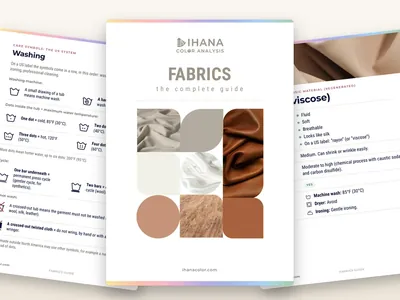
If a sweater has ever shrunk in the wash, or a “silky” dress pilled after a month, that comes from not knowing what a fabric will do before it is on your body. My Fabric Guide is for that moment: it helps you read a label and look after the piece without guesswork.
Start with that one tag.
With all my heart and passion, Lisa
Go further
Fabric Guide (PDF)Know what a fabric will do in the wash and on your skin before you buy it.$19.99See the guide