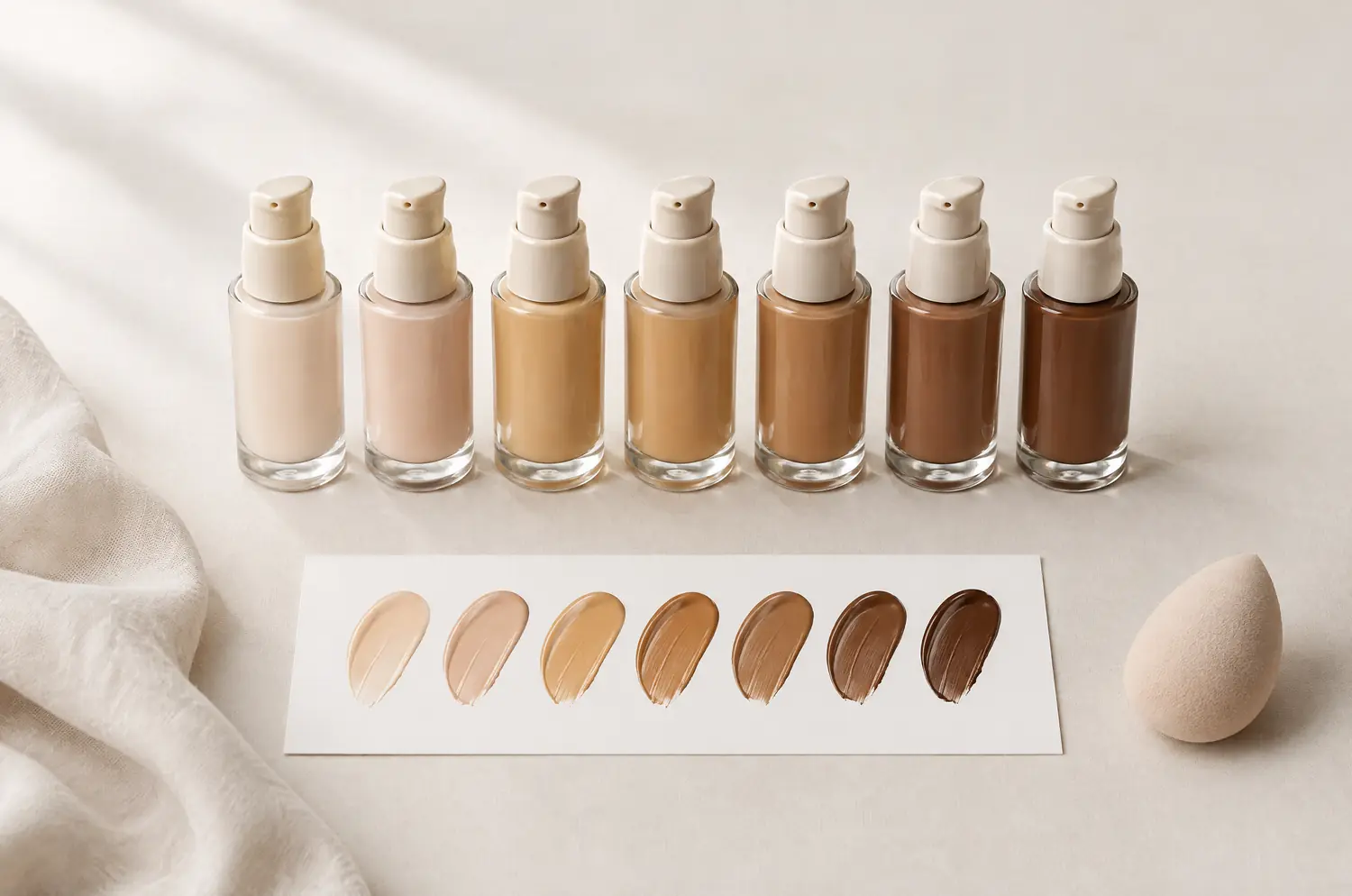
Yellow, Pink, Peach or Red Undertone: What Each One Looks Like
Skin with a yellow undertone, or pink, peach or red? What each one looks like, which way each leans, warm or cool, and how to read your own in daylight.
Here is what you might notice, and two colors from the palettes to hold up for each.
What you notice
Which side it leans
Two colors to hold up
A yellow or golden glow
Warm
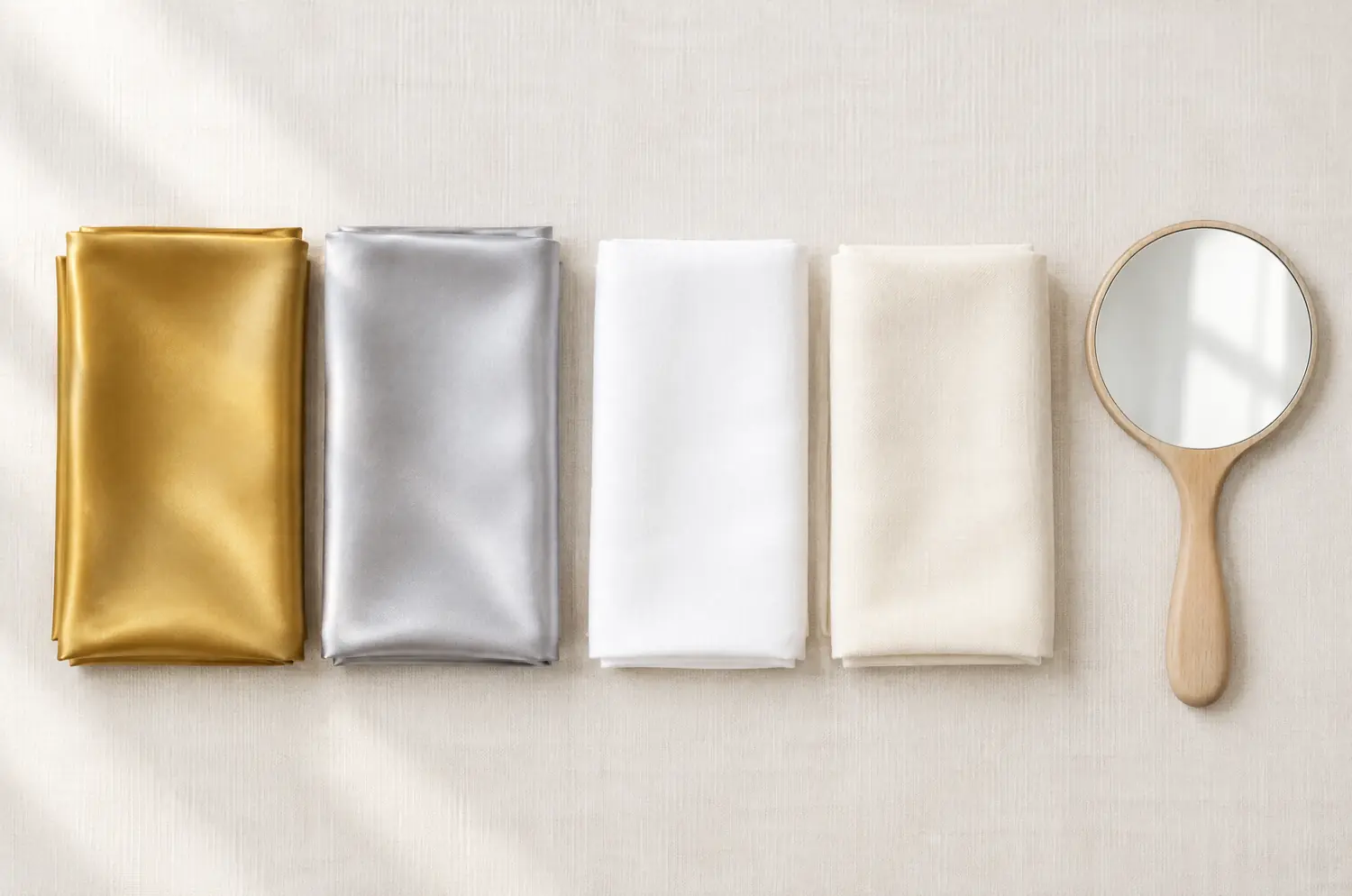
Cream and Soft White
A peach or apricot glow
Warm, sometimes neutral
Peach and Powder Pink
A pink or rosy cast
Cool
Coral and Raspberry
Redness in the face
Surface first, not a side
Poppy Red and Raspberry Red
In every pair, the first color leans warm and the second leans cool. These are test colors, not a result. The one that smooths your skin and brightens your eyes points to your side.
What does skin with a yellow undertone look like?
Golden is the better word.
A yellow undertone is a base closer to honey or butter than to rose. It shows up on fair, tan and deep skin alike. It has nothing to do with how light or dark you are.
Yellow here doesn’t mean you look unwell. It describes the base, not your health or your mood.
You may notice that a soft cream sits more gently on you than a stark white. Warm Spring and Soft Autumn both list optic white among the colors to avoid, because a stark white can sit harder on a golden base.
Two things fool people.
A yellow bulb warms the whole mirror, and your face with it. And a garment can push skin toward yellow without your base being yellow at all. When the color is wrong, you see a shadow under the chin and a gray or yellow face, and you notice the garment before the person.
Don’t lean on veins or a tan. The vein test explains why they mislead.
What do pink and blue add on the cool side?
Pink is the word you hear first. A pink undertone is a rosy base, the opposite of the golden one.
It does not need to look pink on the surface. Blue is the faintest of the three. Nobody has blue skin. It is a word for a slight cool cast, closer to a cool shadow than to a color you could name.
A cool base doesn’t mean pale. It doesn’t mean pink cheeks either. Fair, tan and deep skin can each lean cool.
On a pink-based face, a raspberry often reads smoother than a coral. Among the 12 sub-seasons, Cool Summer and True Winter are the two described as very cool. Warm Spring and Warm Autumn are the two very warm ones.
A peachy skin tone usually leans warm, because the gold carries the base. When the pink side is just as strong, it can sit between the two. Neutral-warm is a fair reading for that face.
Peach cheeks after a walk are a flush. A peach undertone is still there when you’re rested.
The shade is another matter. Peach as a shade is on the palette of Light Spring, which is slightly warm. It is also on the avoid list of Deep Winter, which is neutral to cool. A peach shirt is a color question. A peach glow in your skin is a base question.
For a face that glows in both, try Peach against Powder Pink. If both work, you are probably between the two sides. That’s not a failure. Several sub-seasons sit exactly there.
What do neutral-warm and neutral-cool look like?
They’re the in-between readings. Neutral-warm leans golden with a softer pull. Neutral-cool leans rosy with the same softness.
Six sub-seasons live in that middle zone. Bright Spring, Soft Autumn and Deep Autumn tilt gently toward gold. Soft Summer, Bright Winter and Deep Winter tilt gently toward rose.
So a face can have a little gold and a little rose, and still have a lean. Compare a few pairs and note where your skin looks smoothest.
Is redness an undertone, or just your skin’s surface?
Mostly, it is the surface.
Sun, cold, exercise, a rough week and irritation all bring red up in the face. It comes and goes. It can appear on a warm base as easily as on a cool one.
When someone says red undertone, they usually mean a rosy cast that is still there when your face is calm. Even then, redness alone doesn’t name a side. Colors held near the face do.
My advice: read your skin when it is calm, and look at an area that is not flushed, such as the jaw or the neck. If the red comes and goes, it belongs to the surface.
Color can make redness louder. Orange brings out redness, for example. Notice that effect, but do not take it for your base.
How do you read your shade in daylight, one pair at a time?
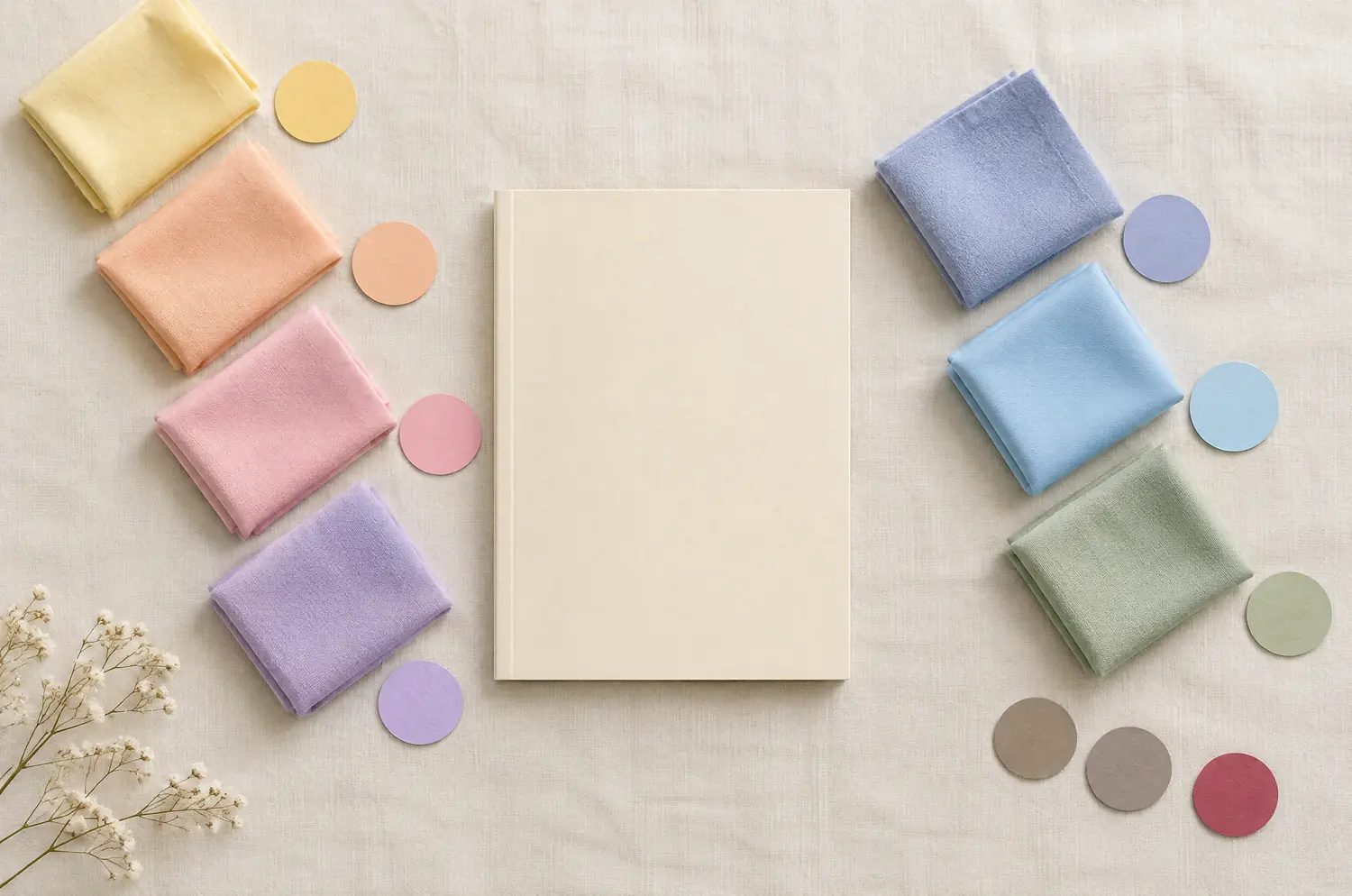
Face a window. Bare skin, no makeup. Cover your hair with a neutral cloth so its color does not bounce onto your face.
Pick the row of the table that is closest to what you noticed. Hold the first color under your chin, then the second. Watch what happens to your skin and your eyes.
When the color is right, your skin looks even and rested, and your eyes brighten. When it is wrong, a shadow settles under your chin, and your face turns gray or yellow.
Rest your eyes for a minute between pairs. Then try another row, and repeat on another day.
The family that lights you up across several rows is where to look first. If the pairs disagree, blame the light or a flush first, and neutral second.
What does it mean if my skin has yellow undertones?
It means the shade under your skin color leans golden, which sits on the warm side. It says nothing about how light or deep your skin is, and it can’t name your sub-season alone. Hold a cream and a soft white to your bare face and see which one smooths you.
Is a pink undertone warm or cool?
Cool. A pink or rosy base sits opposite the golden one. Two cautions: a flush can look pink without being your base, and some faces carry pink and gold together, which reads neutral. Compare a coral and a raspberry in daylight before you decide.
How do I tell if I have a peach undertone?
Look for a soft blend of pink and gold that stays when you are rested. Then hold a Peach and a Powder Pink to your face. If the peach smooths you, you lean warm. If the pink does, you lean cool. If both work, neutral is a fair guess.
Is red skin cool or warm?
Redness isn’t a side by itself. A flush from sun, cold or a rough week sits on the surface and shows up on any undertone. Judge your base on a rested face, in an area that isn’t flushed, then compare a Poppy Red with a Raspberry Red.
Can your undertone change over time?
Your undertone holds. Sun, hair dye, makeup and the years change what sits on top, so your face can look warmer in August and paler in February. Gray hair changes your contrast, not your undertone. The full answer on color season change goes further.
Pick one row of the table and try it today
Choose the row that is closest to what you see in the mirror. Take two cloths in those colors, face a window, and hold them under your chin one at a time. Write down which one smooths your skin.
Then spend two minutes on the color analysis quiz. Ten questions, no sign-up. You get a likely season and a sub-season hint, which tells you which page to read next.
Your undertone is already there. You only have to put the right color next to it.