Skin undertone is the tone under your skin, not your skin color. Find yours, see what warm, cool, neutral and olive look like, and what it can’t decide.
Picture two people with the same pale complexion. One could glow in a soft coral. The other could turn slightly gray in it and wake up in a raspberry pink.
Same complexion. Different reaction. Something else is at work.
It’s not your skin color. It’s the color your skin sits on, underneath, the one that stays when the tan fades and the flush calms down.
Once you can name it, the mystery of “it looked great on her” starts to make sense.
How is undertone different from overtone and skin tone?
These three words get mixed up, and the mix-up causes most of the confusion.
Skin tone is how light or deep your skin is. Think fair, light, medium, tan, deep. Complexion is how that skin looks on a given day.
Overtone, also called surface tone, is the color you see on top: pink, golden, flushed, sun-warmed. It moves with the sun, a cold wind, a glass of wine, a bad night.
Undertone is what stays underneath.
Skin tone
Overtone (surface tone)
Undertone
What it describes
How light or deep your skin is
The color on top: pink, tan, flushed
The color underneath: warm, cool, neutral, olive
What moves it
Sun, time of year
Sun, redness, tiredness, cold
Very little
What to do with it
Pick a makeup depth, read a chart
Look past it
Choose your warm or cool side of the palette
Here is why this matters. A pale person can have a warm undertone. A deep person can have a cool one. A tan person can be either.
So nobody can read your undertone from your skin color, whether at a glance or on a photo. If you want a chart that runs from fair to deep with undertones attached, the skin tone chart lays it out.
What do warm, cool, neutral and olive each look like?
Four readings, with a few in-betweens.
Warm leans golden, yellow or peachy. Gold can light up your face. Very icy pinks and blue-grays tend to flatten it.
Cool leans pink or blue. Silver and platinum sit well. Orange, mustard and warm brown can leave you looking tired.
Neutral doesn’t lead with gold or pink. Both warm and cool colors can work on you, though not all of them. A neutral often leans a little to one side, so the finer readings are neutral-warm and neutral-cool.
That is how several sub-seasons are described. Bright Spring, Soft Autumn and Deep Autumn are neutral to warm. Soft Summer, Deep Winter and Bright Winter are neutral to cool.
Olive is the one people misread most. The skin shows neither a clear gold nor a clear pink. You may catch a muted green-gray or a softened gold under the surface.
Olive isn’t a shade of tan, and it isn’t a question of how light you are. It turns up in warm and cool seasons alike. People often file it under warm or cool and then buy the wrong colors. The article on olive skin tone colors goes deeper.
How do you find your undertone at home?
Set the stage first, or nothing else counts.
Sit by a window in daylight. A yellow bulb warms everything, your skin included. Take your makeup off. Tuck your hair under a neutral cloth, because hair reflects its color onto your face.
Then try these five checks, one at a time:
Look at the veins inside your wrist. Greener leans warm, bluer or purple leans cool, a mix leans neutral or olive. This is the check people get wrong most, because blue and green are hard to tell apart.
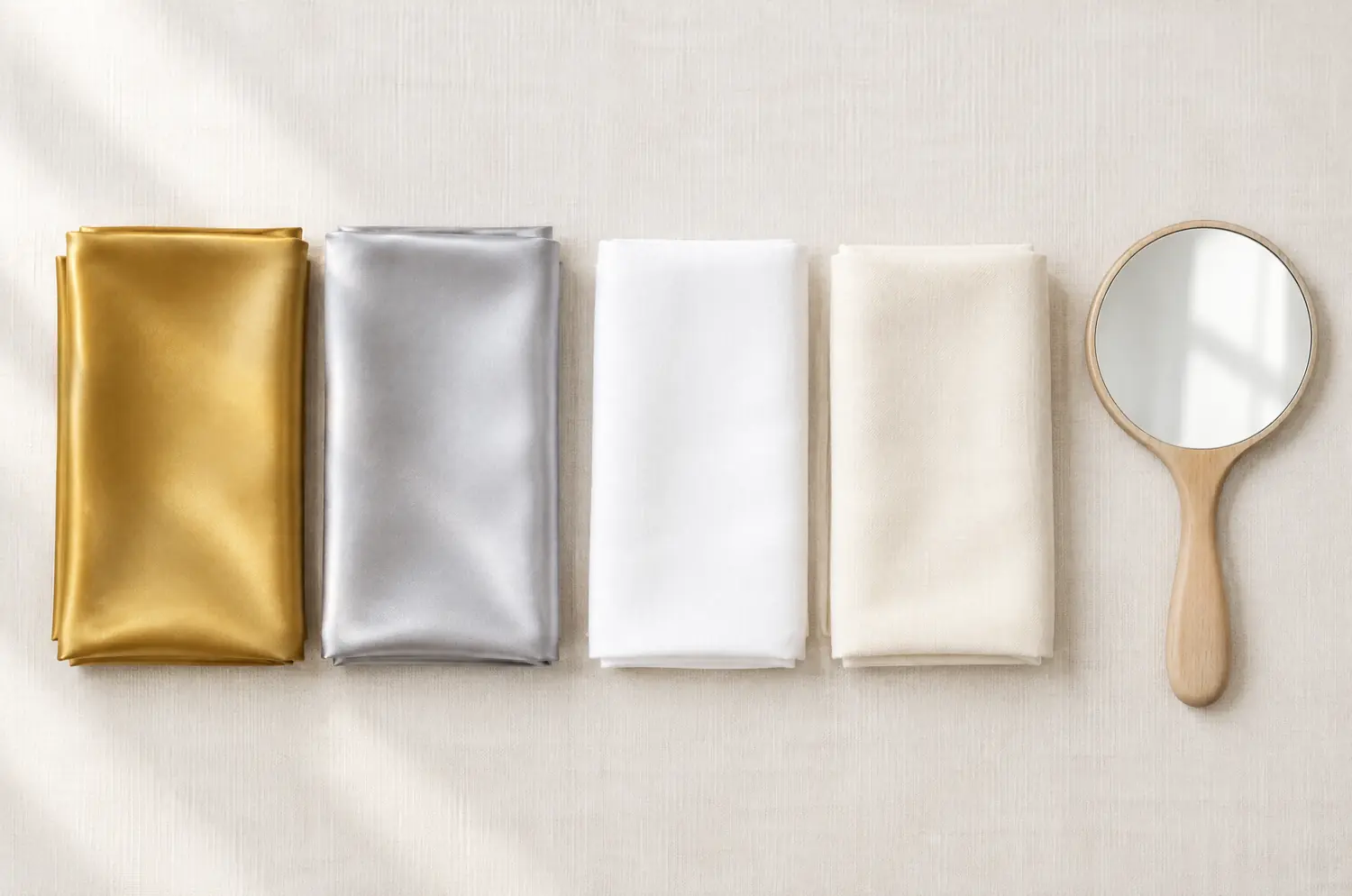
Hold a gold piece, then a silver one, against your neck or cheek, not your hand. Notice which one brightens your face. Gold comes in yellow and rose, and silver varies too, so the answer is rough.
Hold pure white, then cream, under your chin. If cream softens you and white washes you out, you lean warm. If white wakes you up and cream turns you yellow, you lean cool.
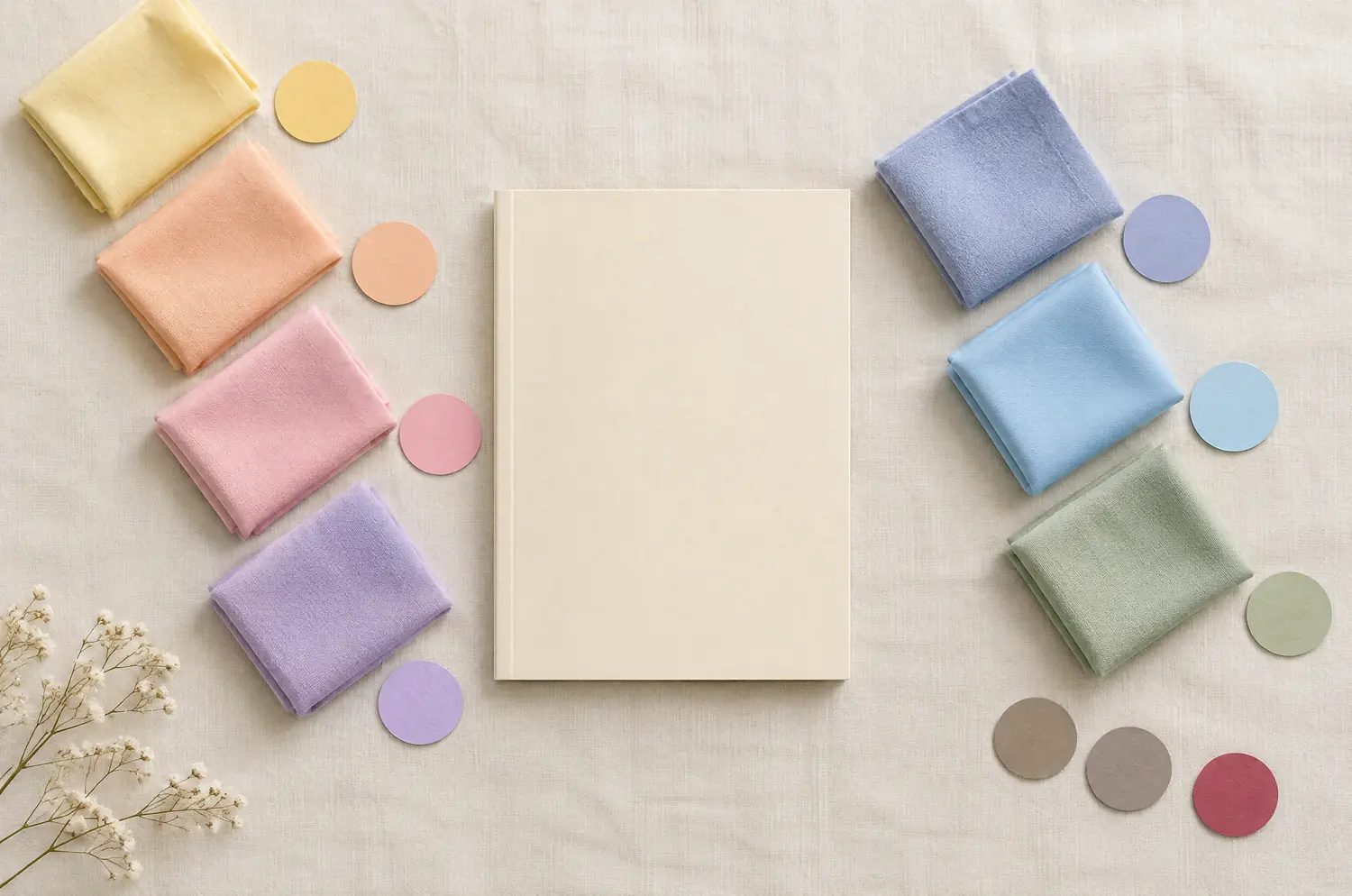
Drape two solid, matte pieces of fabric big enough to cover your collarbones. Choose a warm coral and a cool raspberry pink. Ask which one evens out your skin, softens the shadows under your eyes and lights up your gaze.
Think about the compliments. Which colors have people noticed? Which ones earned an “are you tired?” Listen to them, not to your taste.
Watch for one trap in the fourth check. A blue fabric makes blue eyes look vivid, and that tells you nothing about your skin. Judge the face under the eyes and around the jaw.
When several checks point the same way, you have a lean. Not an answer. A lean. Write each result down as you go, because memory tidies things up and notes don’t. The article on warm vs cool undertone goes through six tests and shows where each one fails.
Why do your tests disagree, and what then?
First, you did nothing wrong. Really. Mixed results are information.
Disagreement is common with neutral and olive undertones. Both sit near the middle, so veins look green and blue, and gold and silver both work. In a home setting the two blur together. The difference shows when colors are held near the face one after another, with someone watching how the skin responds.
Other things can also skew a test:
Taste. A favorite color proves nothing about your skin, and a color you skip may be the one your face wants.
Light. A fitting room, a lamp or a screen changes what you see.
Your skin that day. Tan, redness and tiredness belong to the surface, not to your undertone.
Two versions of one color. Reds come warm and cool, so you may be comparing two different reds without knowing it.
Your own eyes. You’ve looked at your face for years, and it’s hard to see it fresh.
In my view, no home undertone test is a measurement. It’s a way of getting your attention onto the right thing.
What about photos? A filter or an AI that reads your undertone from a picture is entertaining, but the answer shifts with light, camera and screen. My advice: use it as a prompt for your own look, then confirm with real fabric by a window.
What does your undertone tell you about your season?
Directly, and only halfway.
Undertone gives you temperature, the first of the three axes of seasonal color analysis. It tells you warm or cool. It doesn’t tell you light or deep, or bright or soft.
Your reading
Seasons it points to
Sub-seasons with that temperature
Warm
Spring or Autumn
Warm Spring, Warm Autumn (very warm); Light Spring (slightly warm)
Warm and cool seasons alike, once the other two axes are read
Depends on depth and clarity
Two people can share a warm undertone and land in different places. Warm Spring is very warm, medium to light and bright. Warm Autumn is very warm too, but medium in depth and richer, slightly muted. Same temperature, different answer.
That is why your undertone can narrow your search without ending it. You can browse all four seasons and twelve sub-seasons once you have a lean.
What does your undertone change in makeup, hair and jewelry?
It changes what blends and what sits on top.
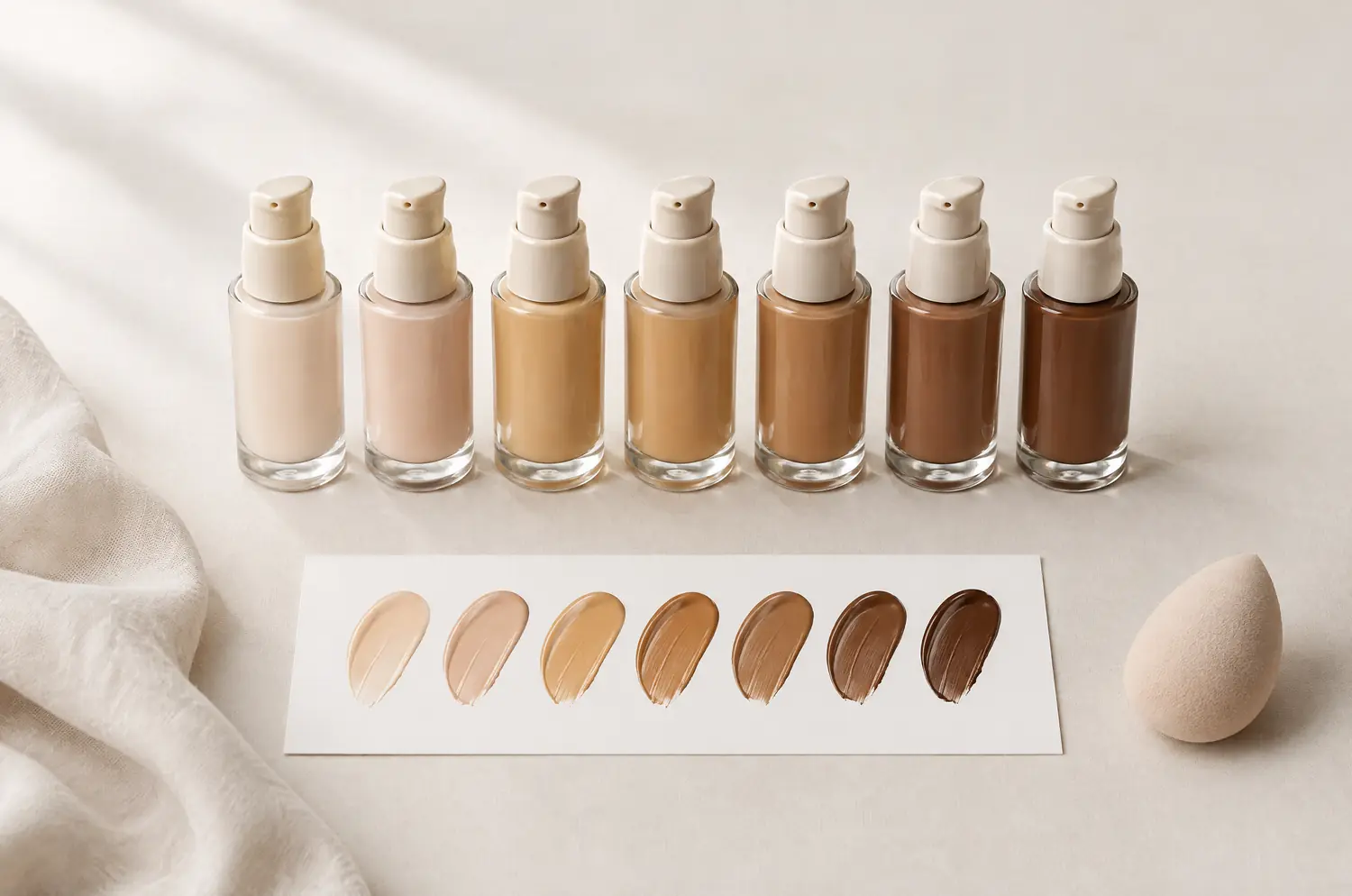
For a base, hold swatches along your jaw in daylight and see which one disappears. Lips and cheeks follow the same logic, though your sub-season refines the choice.
A Warm Autumn leans toward terracotta, brick, tomato red and burnt coral on the lips. A True Winter leans toward raspberry, fuchsia and blue-toned red. Both choices follow the undertone, and the exact shade follows the season.
Hair follows the same logic. Warm Autumn does well with golden brown, coppery tones and dark honey. Cool Summer does well with ash tones: ash blonde, ash brown, cool brown. Deep Winter does better away from golden or coppery tones.
Metals are where people want a rule. “Gold for warm, silver for cool.” It depends.
Yellow gold, white gold, rose gold and silver each read differently, and your depth and clarity matter too. Hold the metal near your face and watch what your skin does.
Your questions
What are the four types of skin undertone?
Warm, cool, neutral and olive. Think of them as points on a map rather than boxes: plenty of people sit between two, which is why analysts also say neutral-warm or neutral-cool. Olive stands apart, with a greenish cast that neither warm nor cool quite explains.
What colors look best with warm undertones?
Warm undertones live in Spring and Autumn, and depth and clarity decide the rest. A Warm Spring looks best in Coral and Meadow Green. A Warm Autumn does well in Terracotta and Rust. Icy pinks and blue-grays are the usual trouble. Your sub-season page holds the full palette.
What is a neutral undertone?
It’s a base that doesn’t pull clearly toward gold or toward pink. You can wear some warm shades and some cool ones, just not every one. A neutral may lean a little one way. Mixed results across your home checks, like green and blue veins, often point here.
Does a tan change my undertone?
A tan changes your surface tone, not the undertone underneath. Redness and tiredness do the same. So test your skin in its natural state: no self-tanner, no makeup, no fresh sunburn. If you’ve just come back from a trip, wait until the tan has faded or lean on the compliments you got before.
Can AI tell me my undertone?
It can offer a guess, but the guess may change from one photo to the next, since lighting, camera and screen all alter the colors it reads. Use it as a prompt, then hold real fabric near your bare face and watch. Only you, or a trained eye, can see that reaction.
Try pure white against cream by a window today
You need two minutes, daylight and two plain pieces of cloth: one pure white, one cream. A T-shirt and a dish towel will do.
Tuck your hair back and take off your makeup. Hold each under your chin and look at your skin, not the cloth. Write down which one smooths you and which one turns you yellow or gray.
Then try the free quiz. Ten questions, no sign-up. You get a likely season, and your notes tell you whether it matches what you saw.
Your undertone is half the picture. Go and look at it.