Free: the color analysis quiz. Find your season in 2 minutes →Free quiz: your season in 2 minutes →

Olive Skin Undertone: What It Is and Which Colors Work

Olive skin undertone is not warm or cool by default. Learn how to read an olive undertone, which colors, hair and makeup work, and why it isn’t one season.

Lisa Routa, color analyst

By Lisa RoutaPublished · 8 min read

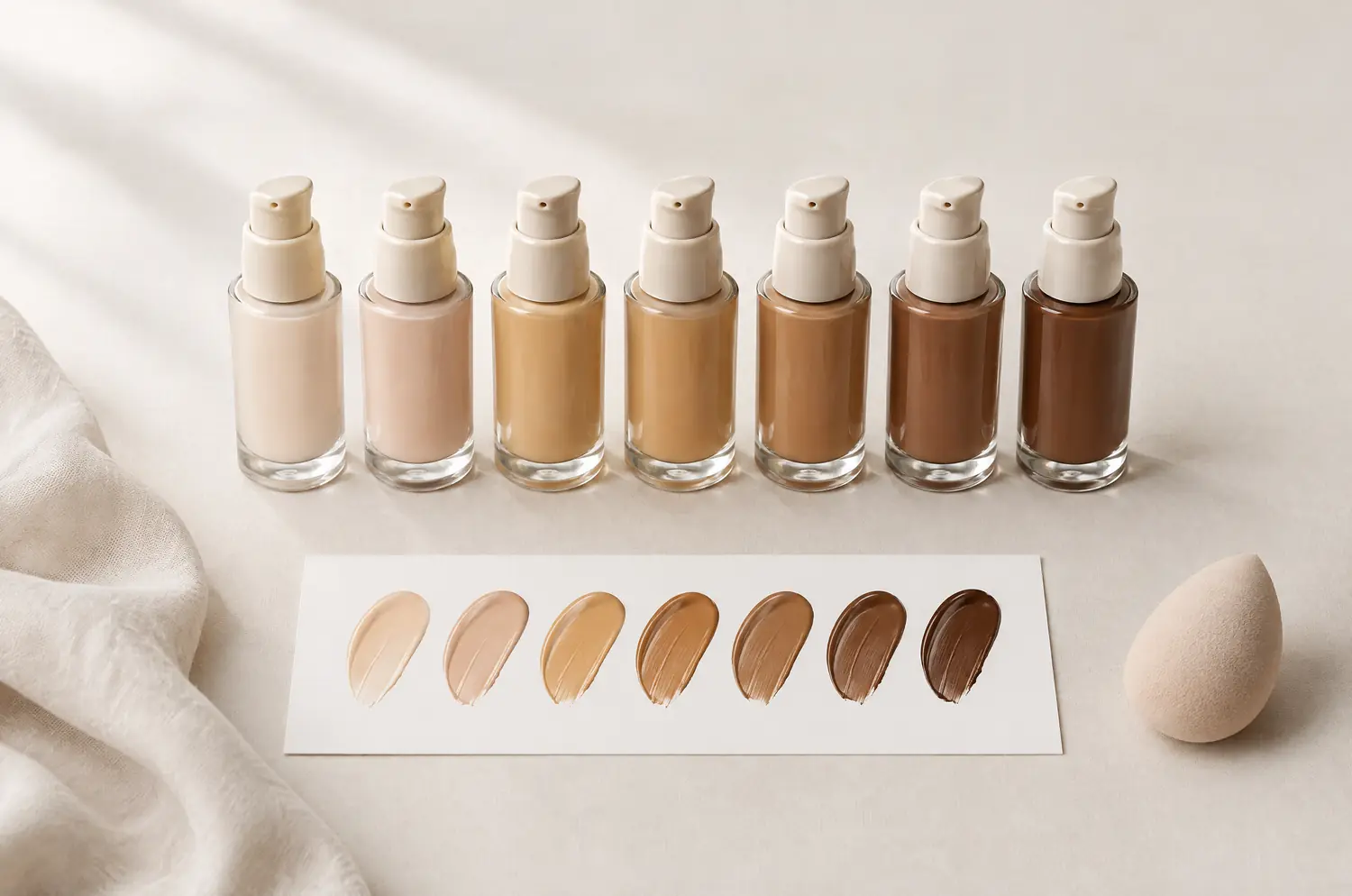
Foundation bottles from the lightest to the deepest shade, with their swatch tests
On this page12 sections
  1. What does olive mean?
  2. Why is olive so hard to place as warm or cool?
  3. What separates warm olive, cool olive and neutral olive?
  4. Is it possible to have olive skin with cool undertones?
  5. Why does daylight matter so much for olive?
  6. Which colors tend to work on olive skin?
  7. Does olive green suit olive skin?
  8. What colors should you avoid with olive skin?
  9. How does olive skin change your hair and makeup choices?
  10. Is olive one season?
  11. Frequently asked questions
  12. What you notice when you hold the first color up

Everyone says olive skin is warm. Or that it’s “just tan.”

Both are shortcuts. Both skip the looking.

A rule takes a second. A face takes a minute.

Then you stand by a window, bare-faced, and you see something else: a faint green-gold cast, neither pink nor yellow.

That cast is real. It’s also the reason olive skin confuses every shortcut.

What does olive mean?

Olive describes what you see, not who you are.

Some skins carry a subtle green or gray-gold note under the surface. Not a green face. A softness, a slight muting, as if a touch of khaki had been mixed into the skin.

That’s why people ask what undertone olive skin is. Undertone is the tone under the surface of your skin. Olive sits across the usual categories: yellow and green mixed, sometimes with a pink or a golden lean on top.

So “olive” is a description of the cast. The temperature still has to be read separately.

Why is olive so hard to place as warm or cool?

Because the usual clues, the metal you wear and the pinks you try, often give mixed answers.

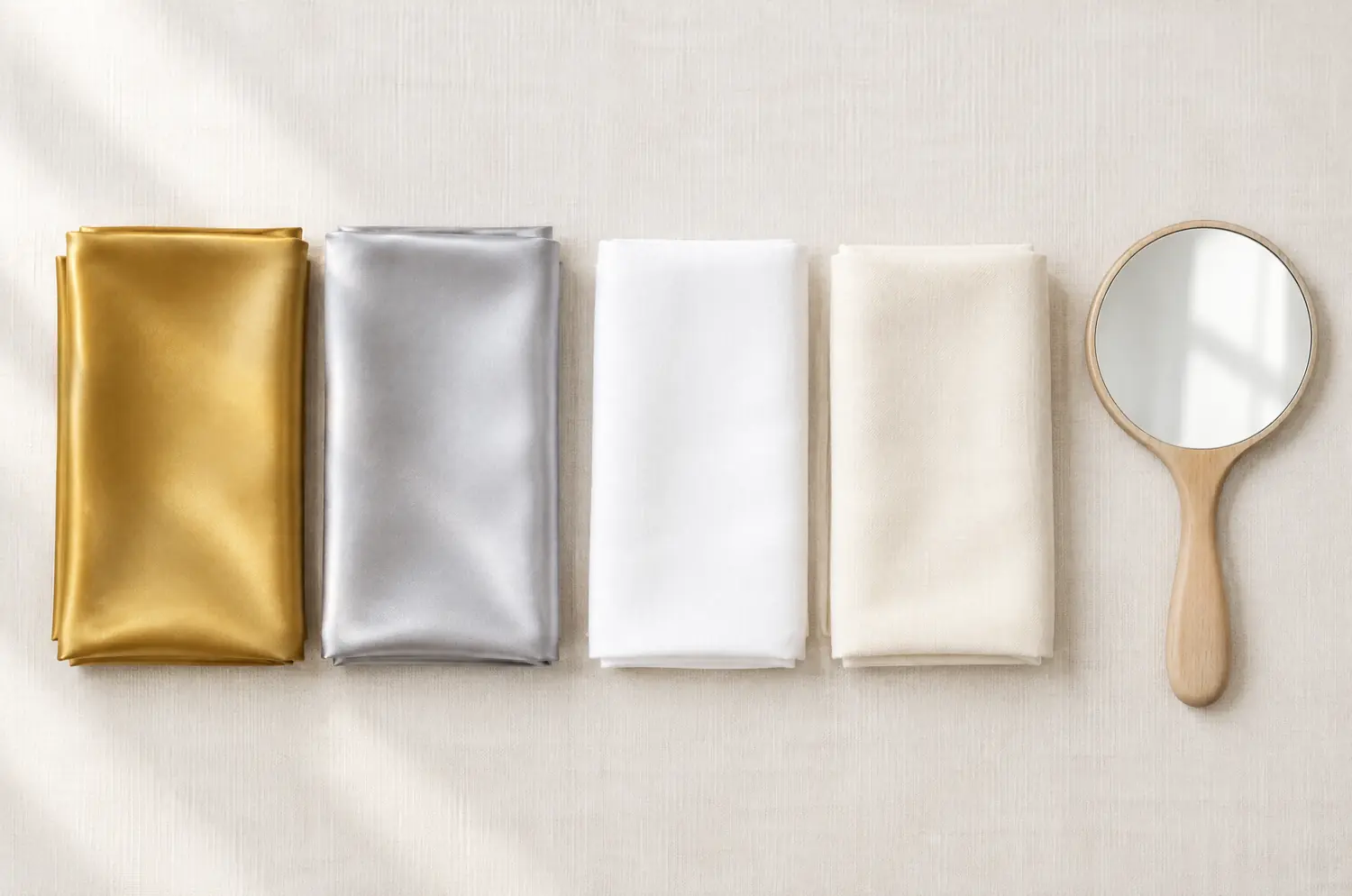
Gold and silver can both look fine on you. So can a pink and a peach. Then a pure yellow-gold fabric turns you sallow, and a stark cool one turns you gray.

That mixed result is a clue, not a verdict. It may point to neutral, or to a reading you haven’t tested in daylight yet. It depends on you, not on the word olive.

Veins and wrist checks add little here. Green-looking veins don’t prove warm, and the green cast of olive can muddy them further. My advice: skip them and trust your face. The tests in warm vs cool undertone show where each one fails.

What separates warm olive, cool olive and neutral olive?

All three exist. They are readings of the undertone, not three types of people. Here is what you look for.

Reading What you see near your bare face What drains you
Warm olive Golden or cream tones smooth the skin, a hint of glow appears Icy pastels and stark cool pinks turn the skin gray
Cool olive Rosy, bluish or gray-leaning tones calm the skin, eyes brighten Orange and golden yellow make the skin look sallow
Neutral olive Both sides work, the skin only looks off at the extremes Very loud colors on either side take over

To check, sit by a window with a bare face and covered hair. Hold a soft peach and a soft rose under your chin, one after the other. Watch what happens to your skin.

If one side wins again on another day, you have a direction. If neither wins clearly, neutral is a valid answer.

Is it possible to have olive skin with cool undertones?

Yes. A cool olive exists. The green-gold cast is on the surface, and underneath, the skin can lean toward rose or blue.

The sign is what rosy and gray-blue tones do for you. If a raspberry or a dusty blue clears your complexion while a mustard sits on top of it, you’re reading cool. Hair color and eye color won’t settle it for you.

Why does daylight matter so much for olive?

A green-gold cast is subtle, and light changes it fast. A yellow bulb warms everything, your skin included. Makeup shifts the skin too, and hair near your face throws its own color onto it.

So test by a window, with a bare face and your hair covered or tied back. Hold each color for a few seconds, then rest your eyes before the next one. If the answer surprises you, redo it on another day.

Which colors tend to work on olive skin?

It depends on the reading, so there is no single list.

Add a very pale pastel and a neon shade to your test pairs, and see what each does to your skin. A color reflects onto your face, so the answer comes from your own test, not from the word olive.

Here’s how the readings can map onto sub-seasons. These are examples from the palettes, not a ranking.

Sub-season Temperature and intensity Shades to hold near your face
Warm Spring Very warm, bright Coral, Meadow Green, Warm Turquoise
Soft Summer Neutral to cool, very soft Dusty Rose, Slate Blue, Verdigris
Soft Autumn Neutral to warm, very soft Soft Olive, Sage Green, Light Terracotta
Warm Autumn Very warm, rich Olive Green, Terracotta, Rust
True Winter Very cool, saturated Emerald, Pine Green, Royal Blue

Does olive green suit olive skin?

Not automatically. Olive Green sits in the Warm Autumn palette, Soft Olive in Soft Autumn and Dark Olive in Deep Autumn. The other palettes don’t carry an olive shade by name.

So an olive sweater near your face is a test like any other. For some people it smooths the skin. For others it adds a green note you don’t want. Hold it up, and let your skin answer.

What colors should you avoid with olive skin?

There’s no universal list, because the answer changes with your reading. What you avoid is what makes your skin look gray, yellow or tired in your test.

Each sub-season has its own avoid list, and the lists differ. Soft Autumn avoids Fuchsia and Electric Blue. Deep Winter avoids Mustard and Rust. Two different readings, two different lists.

None of this is a ban. If a color keeps making you look tired in your test, you’ll know why, and you can decide when it is still worth wearing.

How does olive skin change your hair and makeup choices?

Hair and makeup follow your reading, not the word “olive.”

For hair, start from the reading, not from the word olive. A warm reading goes with golden brown, honey or chocolate. Soft Autumn does well with golden light brown and melted caramel. Deep Autumn does well with chocolate brown or deep auburn.

A cool reading calls for cooler tones. Soft Summer does well with ash brown and soft brown, with very blended highlights. Deep Winter does well with cool dark brown or very dark brown, and avoids golden or coppery tones.

Whatever you choose, hold a swatch or a strand against your bare face first. Hair throws its tone back onto your skin, so a shade that fights your reading will show.

Makeup follows the same logic. Warm Autumn takes terracotta, brick and burnt coral on the lips, with bronze, copper or khaki on the eyes. Soft Autumn leans to rosy peach, apricot and warm rosewood, with soft bronze and moss green.

On the cooler side, Soft Summer takes rosewood, dusty rose and muted raspberry, with taupe, gray-brown and verdigris on the eyes. True Winter takes raspberry and blue-toned red, with gray, charcoal and a crisp black line.

Foundation is the trickiest part. A base with too much pink can make a green-gold cast stand out. Test a swatch along your jaw in daylight, and pick the one that matches your skin.

Blush is where you can tune. Peach or apricot for warm readings, tea rose or cool pink for cool ones.

Jewelry follows the same test. Warm Autumn leans to yellow gold, copper and bronze. Soft Summer leans to brushed silver and rose gold. Soft Autumn takes rose gold too. Hold the metal near your face before you decide.


Is olive one season?

No. Every skin tone shows up in all four seasons, olive included.

What decides the season is the combination of temperature, depth and clarity, with contrast as a clue. An olive complexion can be light or deep, soft or bright, warm or cool. A skin cast is a single clue among several.

For the full method, read the seasonal color analysis guide, with the three axes and the twelve sub-seasons.

Frequently asked questions

How do I tell if I’m olive undertone?

Stand at a window with no makeup and look along your cheeks and jaw. A faint green or gray-gold note, rather than pure pink or pure yellow, is the sign. It names the cast only. Your temperature still has to be read separately, with colors held near your face.

What colors do olive skin tones look good in?

It depends on your reading. Warm olives often glow in terracotta and rust. Cool olives often prefer dusty rose and slate blue. Test a few pairs near your face and see which one evens out your skin.

What is a neutral muted skin tone?

It’s a skin that sits near the middle on temperature and carries a soft, slightly grayed look rather than a bright one. Neither warm nor cool dominates. Soft Autumn and Soft Summer are neighboring sub-seasons, and they differ mainly in temperature.

What hair color suits cool olive skin?

Ash brown, cool brown and soft ash blonde tend to keep a cool reading calm. Golden or coppery tones can pull the skin toward yellow. Try a color against your face in daylight before committing.

What colors should I avoid with olive skin tone?

Avoid whatever turns your skin gray, yellow or tired when you test it. No list holds for every olive skin. Your sub-season’s avoid list is a place to start, and your own test counts more.

What you notice when you hold the first color up

You won’t see “olive” and stop there. You’ll see where the skin smooths and where it tires.

That’s how you read your undertone. For a first hint, take the free color analysis quiz: ten questions, a likely season and a sub-season hint. It can’t see your skin react to color, so take the hint to your mirror and test it.

With all my heart and passion, Lisa

Free quizWhat’s your color season?10 questions, no sign-upTake the quiz

Go further

A closed cream booklet on linen, surrounded by fabric squares and paper chips in a pastel gradientPDF guides by sub-seasonOne guide for each of the 12 sub-seasons: palette, outfits, makeup and hair.Coming soon
A closed cream booklet on linen, surrounded by fabric squares and paper chips in a pastel gradient

Free

Get Lisa’s color advice by email

New articles from Lisa, and a note when the PDF guides open.

Keep reading

Read next

Seasons mentioned in this article

Ready to find your colors?

Take the free quiz for a first hint of your season, then explore the 12 seasons to see your palette.

Free quizThe 12 seasons