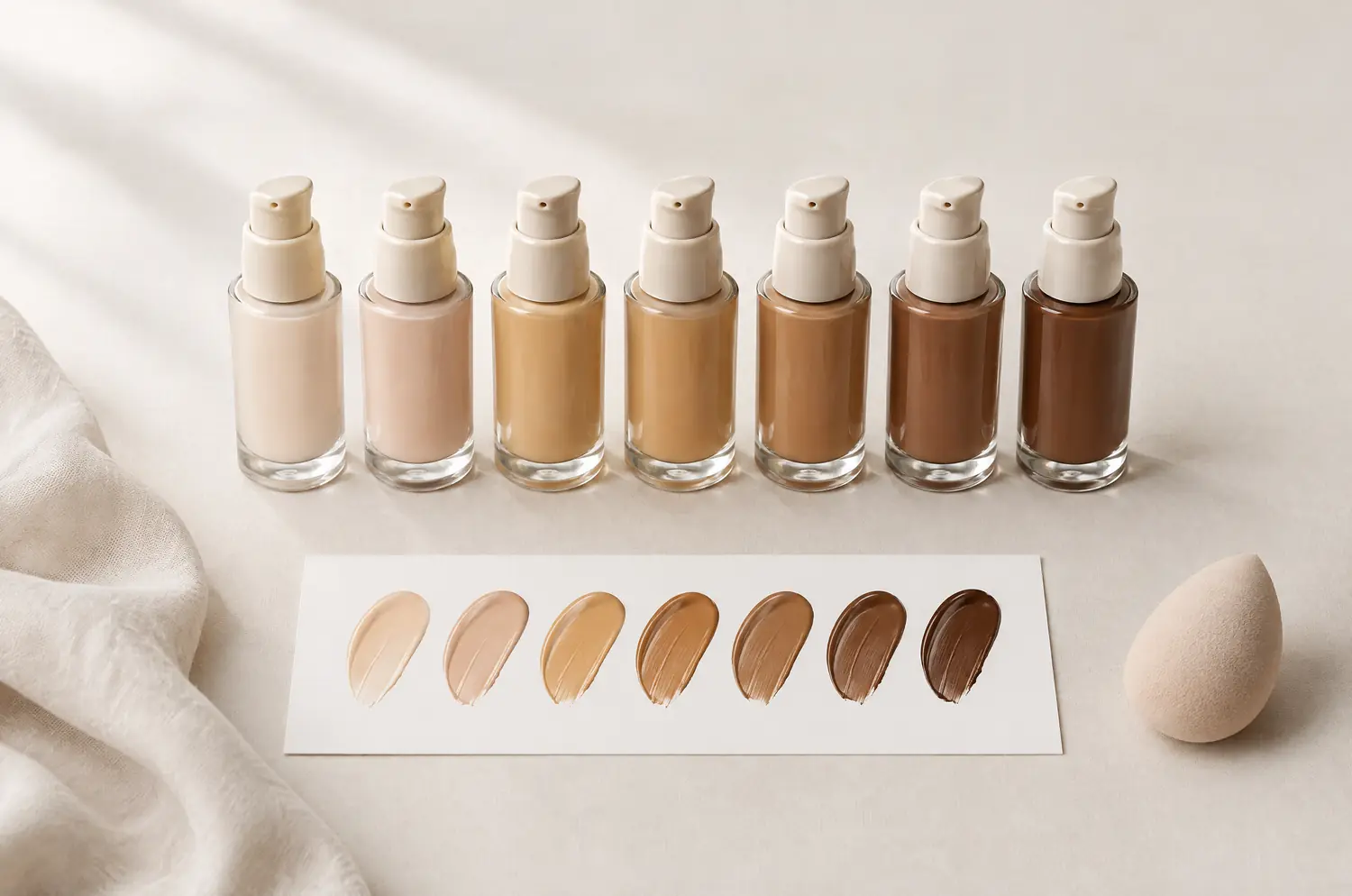
The word covers three different things. A medium skin tone you have all year. A suntan that comes and goes with the sun. And a color, the beige-brown shade that shops call tan.
I mean the first one here: a medium skin tone, somewhere between fair and deep. It tells you how deep your skin is. It doesn’t tell you whether the color beneath is golden, pink, neutral or olive.
That hidden hue is your undertone, the underlying color that stays put when sun, a flush or a bad night change the look of your skin. My guide to skin undertone shows you how to find yours.
Two tan faces can sit on opposite sides. One has a golden, peachy base and glows next to mustard. Another has a pink base and looks yellow next to the same mustard.
A third is neutral. A fourth has an olive undertone, a greenish or grayish cast that people often mistake for warm.
Then come two more variables. Depth is how light or dark your coloring reads overall. Intensity is how vivid or muted it reads.
Add contrast, how far apart your hair, eyes and skin sit in lightness, and three people with the same skin tone can need three different palettes.
So the shortcuts fail. “Tan skin, dark hair, so Winter.” “Tan skin, so warm, so Autumn.”
A warm tan, a cool tan and an olive tan all exist, and each points somewhere different. Hair follows the same logic, and I cover it in hair color for tan skin.