
Compare · two sub-seasons
True Winter vs Warm Autumn: The Four Real Differences
“They’re both rich and dramatic, so they must be close.” They’re not close. Not on temperature. Not on depth. Not on softness or contrast.
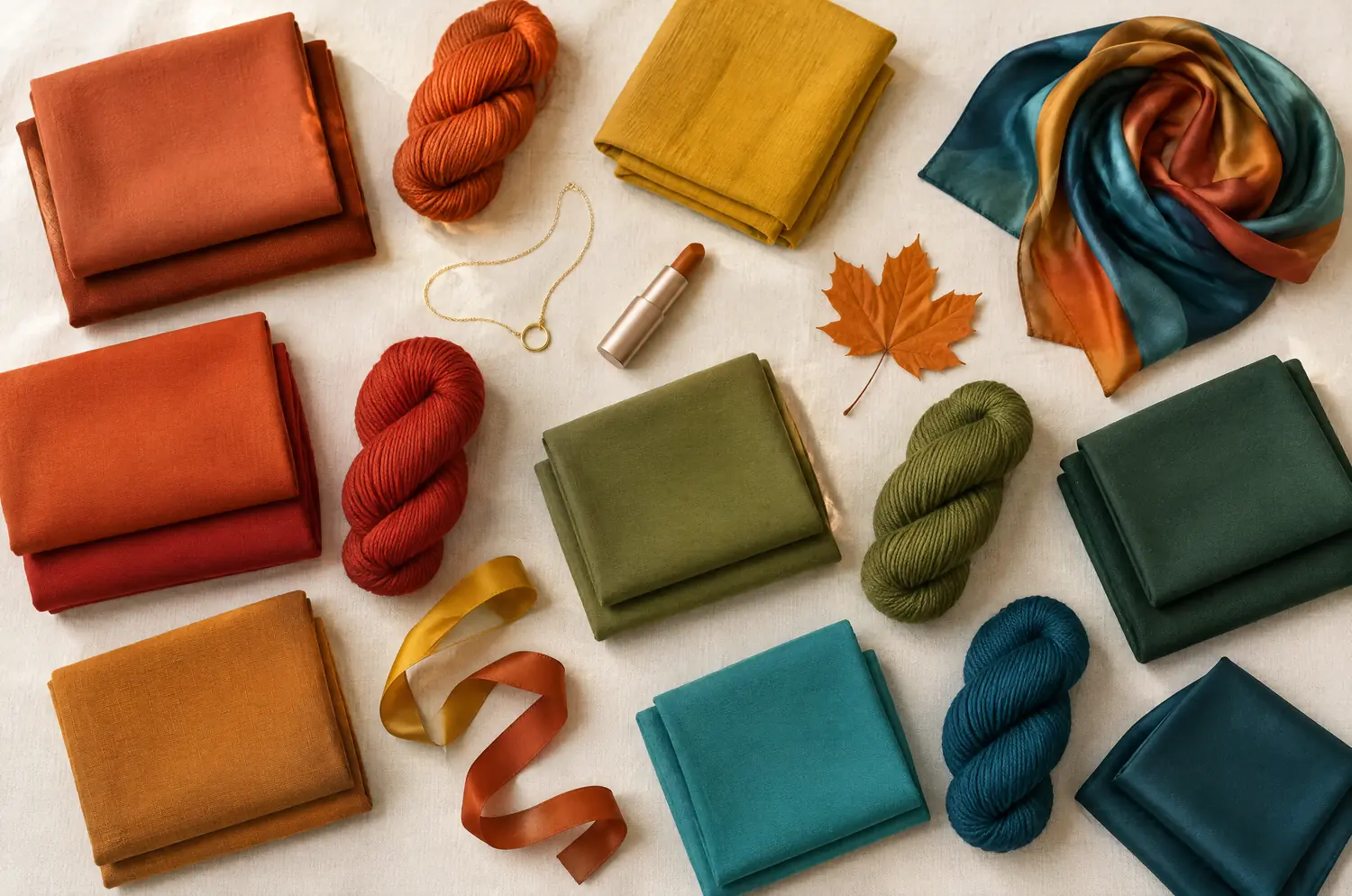
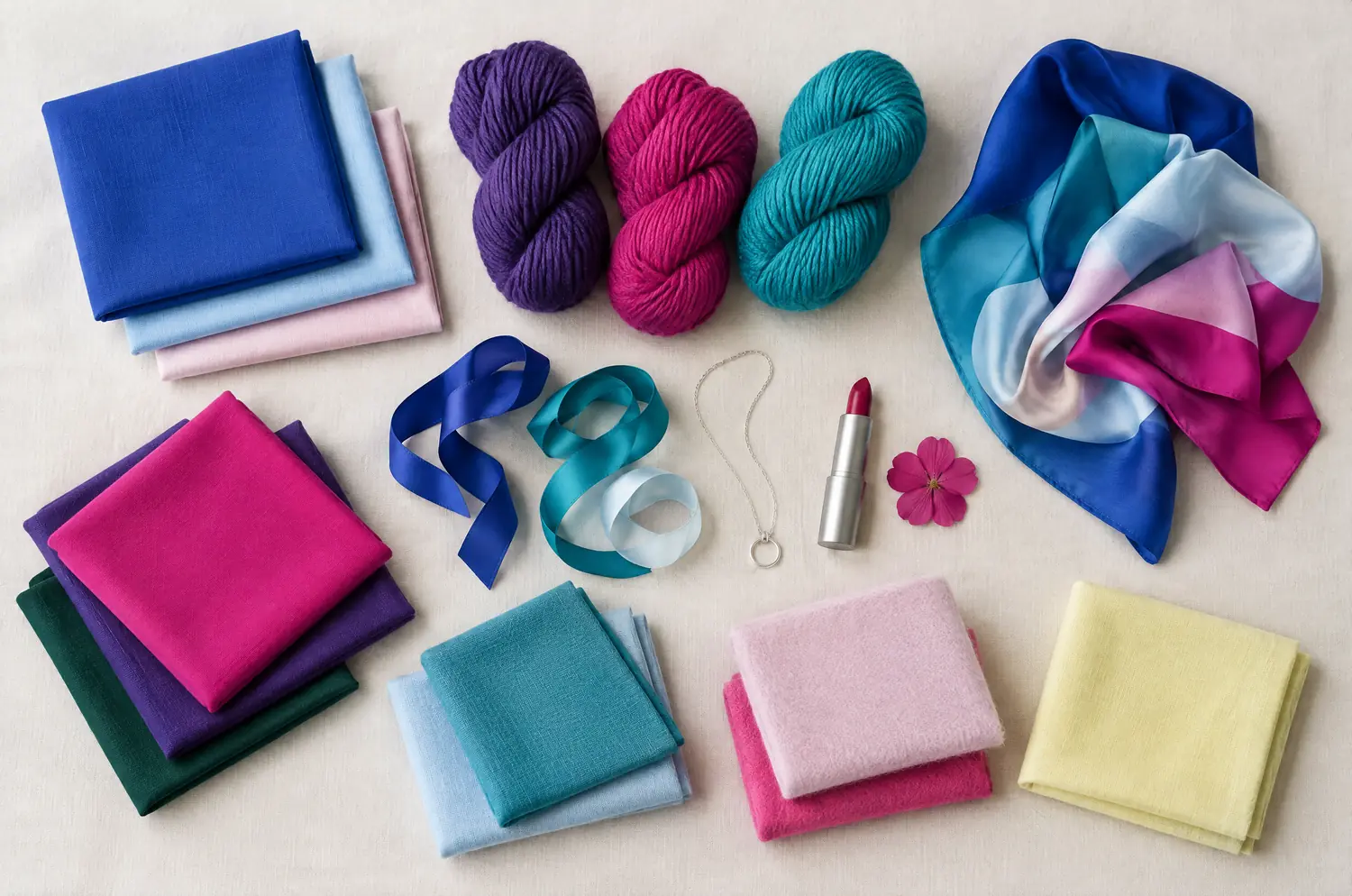
Side by side
True Winter and Warm Autumn palettes
Same scale, same page: look at the swatches before you read the differences.
- Royal Blue
#1F45C4 - Cobalt Blue
#0047AB - Cool Turquoise
#0097A7 - Emerald
#00875A - Pine Green
#0A5C4A - Violet
#5B2A9D - Fuchsia
#D4127C - Bright Cool Pink
#F0388C - Raspberry Red
#C8102E - Icy Pink
#F6D5E3 - Glacier Blue
#CFE6F5 - Icy Lemon
#F4F29A
Neutrals
- Black
- Pure White
- Steel Gray
- Navy
Colors to avoid
- Orange
- Mustard
- Warm Brown
- Khaki
- Terracotta
#C1502E - Rust
#A8451F - Burnt Orange
#D2691E - Burnt Coral
#E0623F - Tomato Red
#C8321F - Mustard
#D4A017 - Ochre
#C9862B - Olive Green
#6B7A2A - Moss Green
#4F6B3A - Warm Forest Green
#2F5D3A - Warm Turquoise
#2A8C82 - Petrol Blue
#1F5F6B
Neutrals
- Cream
- Camel
- Khaki
- Chocolate
Colors to avoid
- Black
- Fuchsia
- Cool Gray
- Glacier Blue
The four axes
All four axes differ, none is shared
Temperature, lightness, intensity and contrast: the gauge shows where each one sits, the table says it in words.
The two sub-seasons
- Temperature
- 12Differs1 Very cool2 Very warm
- Lightness
- 12Differs1 Medium to dark2 Medium
- Intensity
- 12Differs1 Saturated2 Rich, slightly muted
- Contrast
- 12Differs1 High2 Moderate
Line by line
| What is compared | True Winter | Warm Autumn |
|---|---|---|
| TemperatureDiffers | Very cool | Very warm |
| LightnessDiffers | Medium to dark | Medium |
| IntensityDiffers | Saturated | Rich, slightly muted |
| ContrastDiffers | High | Moderate |
| Signature color | Fuchsia | Rust |
| Neutrals | Black, Pure White, Steel Gray, Navy | Cream, Camel, Khaki, Chocolate |
| Metals | Silver, platinum, white gold. Diamond, sapphire, emerald. | Yellow gold, copper, bronze, brass. Amber, tiger’s eye, turquoise. |
| Lips | Raspberry, fuchsia, blue-toned red. Cool reds are your reds. | Terracotta, brick, tomato red, burnt coral. |
| Hair color | Black, cool brown, ashy dark brown. Gray or white hair looks superb on you. | Red, coppery, auburn, golden brown, dark honey. Warm tones were made for you. |
True Winter: what does very cool, saturated color do to a face?
Coolness leads. Medium-to-dark depth, saturated color and high contrast all follow from it.
Think of a snowy landscape under a blue sky. Pure White, Black, Royal Blue, red berries. Fuchsia and Raspberry Red feel at home in True Winter, and so do Emerald and Icy Pink. Everything is pure, icy and clean.
The color is as defined as the features. Eyes, brows and skin stand apart from each other, and a clean, crisp shade keeps up with them. Orange, Mustard and Warm Brown turn the skin yellow and blur that definition.
Warm Autumn: why does a warm palette look so lived-in?
Warmth leads here, and the eye reads it first. Medium depth, rich but slightly muted color and moderate contrast come second.
Picture a forest in October. Rust, Terracotta, Olive Green, Moss Green, bark and berries. Warm Autumn wears Mustard and Petrol Blue easily, and Cream, Camel and Chocolate hold the whole thing together.
The color is full but never glassy. There is a slight haze of earth in it, and that is what makes it look natural on the right face. Fuchsia, Cool Gray and Glacier Blue pull the other way: they bring out redness and gray out the complexion. Black is on the avoid list too.
The two-color test. In daylight, with no makeup, hold a piece of fabric in each of these two colors up to your face. Rest your eyes between the two and redo it another day. If the same color keeps winning, you have a direction: a first hint, not a verdict.
How do Fuchsia and Rust sort out True Winter and Warm Autumn?
The setup is in the color draping at home article: daylight, bare face, hair tied back or covered, one fabric at a time. Here, only this pair matters.
Hold Fuchsia, then Rust, under your chin. Then ask four things, one per axis.
Does your skin turn yellow or gray? If Rust turns your complexion yellow, that side may not be yours. If Fuchsia turns it gray, the same goes for that one.
Contrast: do your eyes and brows keep their edge, or melt into the skin?
Intensity: does the color shout over you, or sit pale beside your face?
Does your face disappear, or does the color take over? That is the lightness question, and the gentlest one here.
If one color keeps coming out ahead as you repeat the test, that’s your direction. One round points. It doesn’t decide.
When both palettes seem to work, where do you stand?
Start with the leading trait. Does your skin answer to coolness or to warmth? It’s the first thing to check.
Because these two share no axis, a true in-between is unusual. More often, one of them is a near miss and your real home is a neighbor.
True Winter borders Cool Summer, which is softer and lower in contrast. Warm Autumn borders Warm Spring, which is lighter and brighter. Test those two before you decide: Cool Summer against True Winter and Warm Spring against Warm Autumn are the pages for it.
Both palettes hold greens and blue-greens, each in its own temperature. If you want to borrow an idea, keep the family and take the shade from your own side: Emerald or Pine Green for True Winter, Warm Forest Green or Warm Turquoise for Warm Autumn.
In my view, a quiz or an app can’t settle this pair. They can’t watch your skin react to color. The free color analysis quiz tells you where to start looking, and your own mirror finishes the job.
Silver or gold, raspberry or brick: what do lips, hair and metals add?
They add a second opinion, not a ruling.
On the True Winter side, silver and a raspberry lip tend to feel easy. On the Warm Autumn side, yellow gold and a terracotta lip do. Try one of each near your face and watch your skin.
Hair color is a colorist’s direction, not a sign of your season. Cool brown or black suits the first palette, auburn or golden brown the second, but hair doesn’t decide. Dyed hair changes nothing about your season. The reading is made on your skin and eyes, with the hair covered.
Keep exploring
More on these two sub-seasons
Palette True Winter color palette
The heart of Winter: icy, pure colors with no warmth at all.
Compare Bright Winter vs True Winter
Bright Winter vs True Winter: all four axes differ, so the answer is on your face. Here is what each difference looks like and a quick test to settle it.
Compare Cool Summer vs True Winter
Cool Summer vs True Winter: both are very cool, so temperature won’t settle it. Here are the three differences that do, and a quick test to help you decide.
Compare Deep Winter vs True Winter
Deep Winter vs True Winter comes down to two axes: how dark you are and how cool. Here is what each looks like on a face and how to test it for yourself.
Compare Soft Summer vs True Winter
Soft Summer vs True Winter: four axes set them apart. Here is what each looks like on a face, plus a drape test with Dusty Rose and Fuchsia to settle it.
Palette Warm Autumn color palette
The heart of Autumn: colors of spices, leaves and fire.
Questions
True Winter or Warm Autumn: your questions
How do I tell True Winter from Warm Autumn?
Look at temperature first, since it is the widest gap between them. Your skin either brightens near cool, clean color or warms up near golden, earthy color. The other three axes then confirm what you saw.
Can I be both True Winter and Warm Autumn?
Not really, since they share no axis. If both seem to work, you are likely closer to a neighbor: Cool Summer next to True Winter, or Warm Spring next to Warm Autumn. Test those palettes before choosing, and let the leading trait, coolness or warmth, break the tie.
Does black hair or gray hair decide it for me?
No. Black hair doesn’t rule out any season, and neither does gray or white hair. Cover your hair and watch what Fuchsia and Rust do to your skin and eyes. That reaction is what counts, not the strands.
What if the quiz points to one palette and the fabrics point to the other?
A quiz is a hint about where to start. It can’t see your skin react to a color, so follow what the fabrics do on your face.
True Winter or Warm Autumn? Check it.
The free quiz shows you your likely season in two minutes. Then run the two-color test on your own bare face, in daylight: a first hint, not a verdict.