“I got my season from Color Me Beautiful, so I’m done.”
Maybe you’ve said it yourself.
You’re not done. You’re started. One palette per season is a direction, not a finish line, and twelve sub-seasons help you read the rest of the map.
Color Me Beautiful sorted people into four seasons in 1980. Here is what the book said, what twelve sub-seasons add, and how to find the idea that fits you.

By Lisa Routa
“I got my season from Color Me Beautiful, so I’m done.”
Maybe you’ve said it yourself.
You’re not done. You’re started. One palette per season is a direction, not a finish line, and twelve sub-seasons help you read the rest of the map.
Color Me Beautiful is a book by Carole Jackson, published in 1980. It became a bestseller in the early 1980s, and it stayed in print for years.
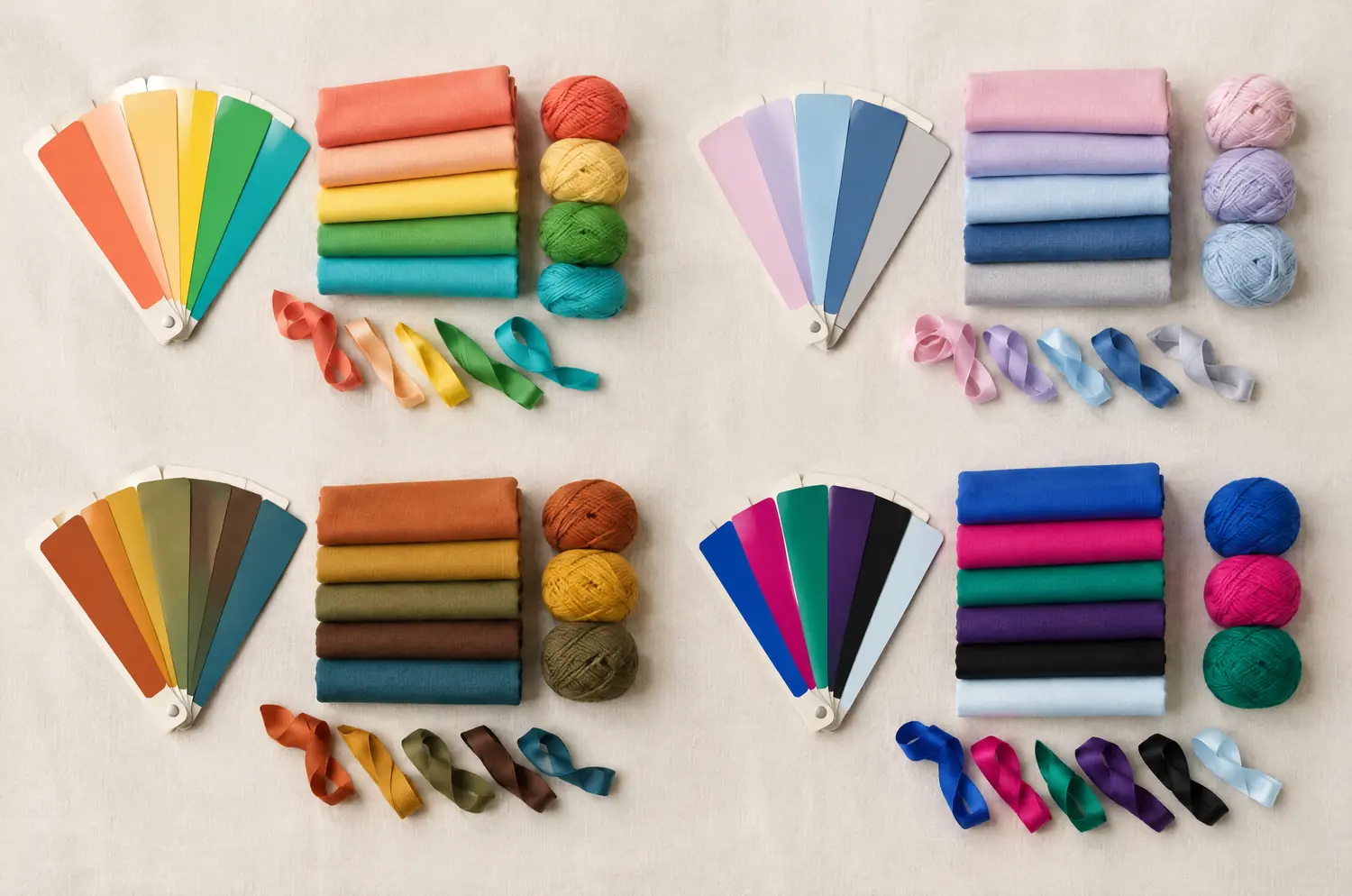
Its idea is simple. Everyone belongs to one of four seasons: Spring, Summer, Autumn or Winter.
Winter and Summer are the cool seasons, with blue undertones. Spring and Autumn are the warm ones, with yellow undertones. Undertone is the color that sits beneath your skin’s surface, and it isn’t the same as your skin tone.
Each season comes with its own recommended palette.
How do you find your season? By draping. You hold colors near your face, one at a time, and watch what they do to your skin. Colors held near the face are still how an analysis goes on this site.
Jackson also built a consulting business and licensed her system to other consultants.
The four-season idea was later criticized as too rigid for the range of human coloring.
So analysts began splitting each season into finer groups, called sub-seasons.
This is a comparison of two ideas, four seasons and twelve. It does not describe what any company teaches now.
Three questions instead of one.
The first is temperature: is your coloring warm or cool? That’s the question the book already asked.
The second is depth, also called lightness: how light or dark is your coloring overall?
The third is clarity, also called intensity: are your colors soft and muted, or clear and vivid?
Contrast, the gap between hair, eyes and skin, is a clue on top of these. It helps, and it never decides alone.
Take Summer. Its three sub-seasons are Light Summer, Cool Summer and Soft Summer. None of the three leans warm. They differ in how light and how soft the colors need to be.
Light Summer is very light with a slightly cool base. Cool Summer is the coolest of the three, with medium depth and moderate contrast. Soft Summer is very soft and grayed, leaning neutral to cool.
Same family, three different palettes. That’s the gap a single Summer palette can’t cover.
| Four seasons | Twelve sub-seasons | |
|---|---|---|
| What you decide | Warm or cool, then which of four | Temperature, depth and clarity, with contrast as a clue |
| What you get | A direction and one palette per season | A narrower palette, with neutrals and colors to avoid |
| What you hold in mind | Four names | Twelve names, three per season |
| Where you may hesitate | Between two of the four | Between neighbors that share a trait, like Soft Autumn and Soft Summer |
Neither column is a ranking. Four is faster to learn. Twelve is finer to wear.
Because precision has a limit.
In my view, twelve seasons are enough to be precise, and few enough to stay clear. You can hold twelve in your head. Two fabrics and a window are how you start telling neighbors apart.
Sixteen splits each season in four, and I find the finer shades harder to use day to day. The reasoning is in 12 or 16 color seasons.
Good. You’re not starting from zero.
Your book season points to a direction. A Summer or a Winter says cool. A Spring or an Autumn says warm. That already narrows the field.
My advice: treat the name as a direction, and don’t assume it carries over unchanged. Then look at the sub-seasons.
Open the page for that season and read its three sub-seasons side by side. One of them will feel closer to your face. The neighbor may feel close too, and that’s normal.
Then check it on your own face. How to find your color season walks you through the drape test one pair at a time. If a result surprises you, trust the fabric under your chin before you trust the label.
Carole Jackson wrote it, and it came out in 1980. A result from the book is a starting direction. It gives you a place to begin, not the full palette.
Four: Spring, Summer, Autumn and Winter. Spring and Autumn are the warm ones, with yellow undertones. Summer and Winter are the cool ones, with blue undertones. Each season has its own recommended palette, and sub-seasons are a later idea that splits them further.
With four seasons, you sort yourself by warm or cool, then pick a name. With twelve, you also weigh how light and how soft or vivid your coloring is, so each season holds three palettes. The seasonal color analysis page lays out all twelve.
I can’t tell you from a name alone. Your book season gives you a cool direction. The sub-season depends on how light and how soft your coloring is. Read the three Summers, drape a few colors near your bare face in daylight, and notice which one calms your skin.
No. The free quiz on this site is its own tool: ten short questions, no account needed. It points to a season and a sub-season to explore.
This quiz can’t watch your skin react to colors, so draping still matters.
Start with a piece of paper. Write the season the book gave you.
Then open the three sub-season pages that belong to it, and pick one color from each palette. Hold them under your chin by a window, one at a time, and notice which one makes your skin look calmer.
For a second reading, the free color analysis quiz gives you something to set beside your own test.
The book gave you a place to start. Your season’s three palettes are the next step.
With all my heart and passion, Lisa
Keep reading
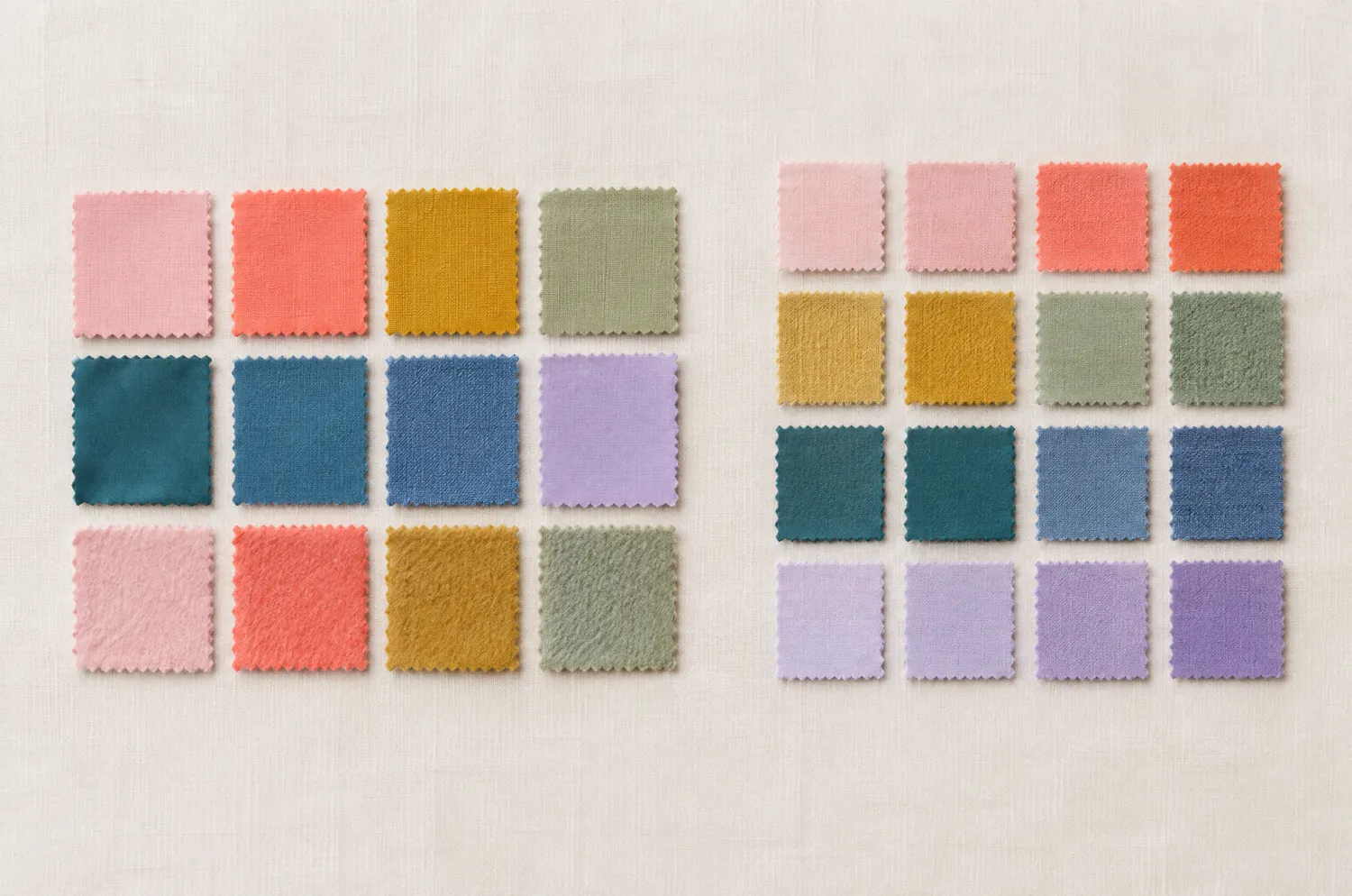
Seasons mentioned in this article
Take the free quiz for a first hint of your season, then explore the 12 seasons to see your palette.