Free: the color analysis quiz. Find your season in 2 minutes →Free quiz: your season in 2 minutes →

Eyeshadow for Hazel, Blue, Brown and Green Eyes: Season First

Eyeshadow for hazel eyes, plus blue, brown and green: why your color season picks the shades before your iris does, and how to read the table for your eyes.

Lisa Routa, color analyst

By Lisa RoutaPublished · 6 min read

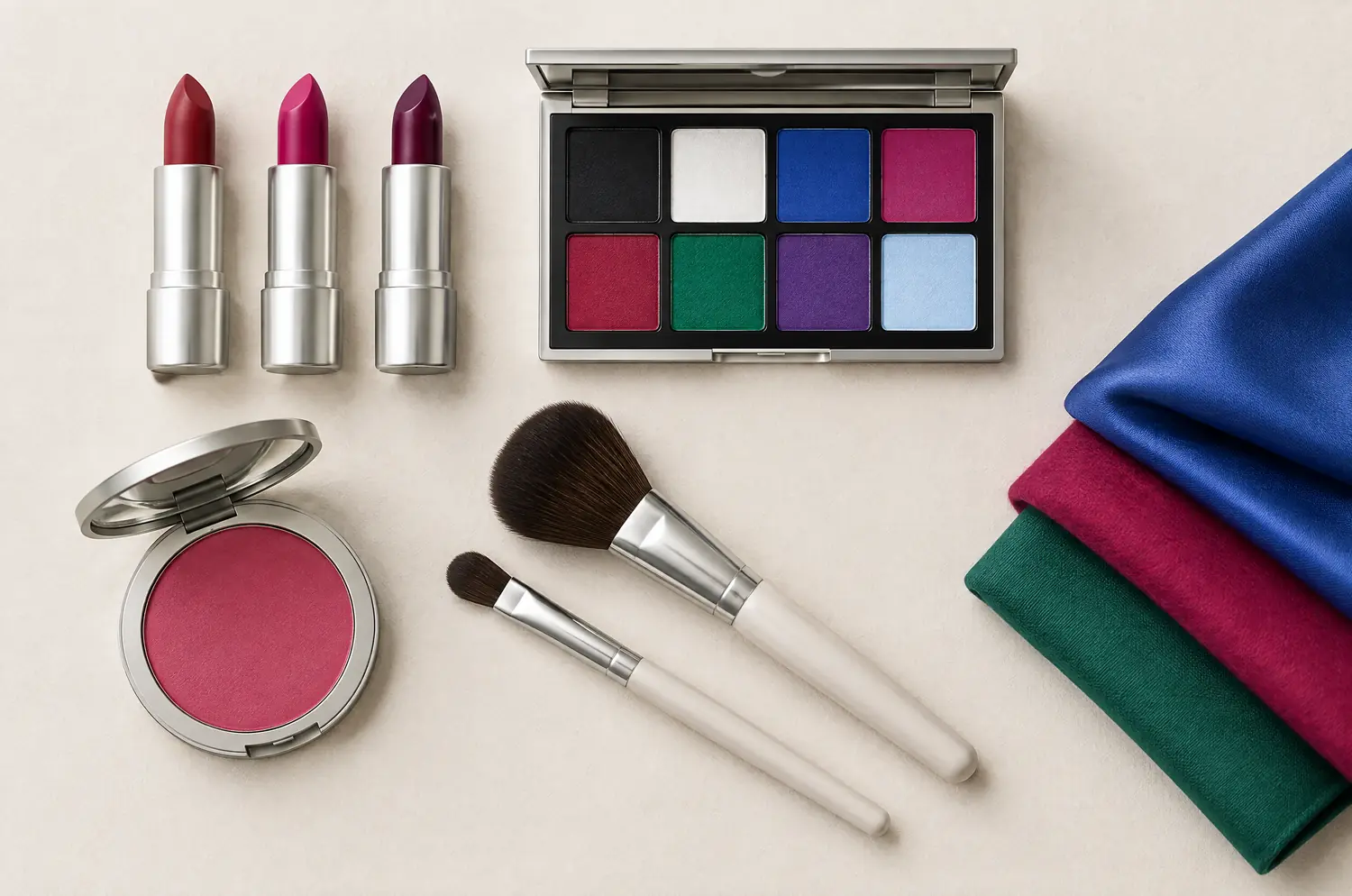
Lipsticks, eyeshadows and blush in the raspberry, royal blue and emerald shades of Winter
On this page7 sections
  1. Why doesn’t your eye color pick your eyeshadow?
  2. What do you read instead of your eye color?
  3. Which eye shades belong to which sub-season?
  4. What does each eye color ask of the table?
  5. Which mistakes dull the eyes?
  6. Frequently asked questions
  7. What your lid looks like when the row is right

What eyeshadow goes with hazel eyes?

You’ve probably read the answer: green and gold. Hazel, so green and gold.

You may even have bought the palette. And in the mirror, your eyes looked exactly the same.

Nothing woke up. Nothing cleared. Nothing changed.

The question is fair. The answer is less simple than a one-line rule, because your iris is not what the shadow touches.

Why doesn’t your eye color pick your eyeshadow?

Because a shadow never lands on the iris.

It lands on your eyelid. Skin.

A color sitting that close sends its tone back onto the skin before it says anything to your eyes. If it agrees with your complexion, the skin looks even and the eyes look clearer. If it doesn’t, shadows appear and the makeup shows before you do.

Your eyes are one trait. Your hair and your skin are two others, and the three depend on partly independent systems. So two people with blue eyes can have very different faces around them.

In my view, a rule that starts from the iris starts from the wrong place. Start from the face.

What do you read instead of your eye color?

Three axes, plus one clue.

Temperature: is your coloring warm or cool, or somewhere between? Depth, also called lightness: how light or dark your palette runs. Clarity, also called intensity: how bright and crisp versus soft and muted.

The clue is contrast: how far apart your hair, eyes and skin sit in depth. Low, moderate or high, it supports the other three and never settles the question by itself.

Together they give you a sub-season. If you don’t know yours yet, the free quiz gives you a likely season in about two minutes. Then check it at a window, face bare, hair pulled back or covered, one color at a time.

For the full logic of lips, cheeks and eyes by undertone, see makeup for your undertone. Your sub-season sharpens that answer.

Which eye shades belong to which sub-season?

Here are the eye shades from my sub-season pages, grouped by a shared quality. Each row pairs two sub-seasons that have that quality in common.

Family First sub-season Its neighbor in the family
Light Light Spring: champagne, peach, light golden brown, soft green Light Summer: light gray, rosy taupe, lavender, soft blue
Warm Warm Spring: gold, light bronze, green, turquoise Warm Autumn: bronze, copper, khaki, warm brown
Cool Cool Summer: gray, cool taupe, plum, navy True Winter: gray, charcoal, navy, silver
Soft Soft Summer: taupe, gray-brown, soft plum, verdigris Soft Autumn: soft bronze, warm taupe, matte gold, moss green
Bright Bright Spring: light gold, a touch of turquoise or green Bright Winter: silver, a touch of bright blue or violet
Deep Deep Autumn: dark bronze, chocolate, eggplant, deep khaki Deep Winter: charcoal, plum, navy, deep cool brown

Read it by row, not by color name. Copper, for example, belongs to Warm Autumn here. It isn’t on the True Winter list.

Families are not boxes. Two neighbors overlap, and you may sit between them. Your own page has the full detail, such as Soft Autumn makeup or Deep Winter makeup.

What does each eye color ask of the table?

Each one asks the same thing: find your row first.

Hazel eyes

Hazel is a mix of brown, green and sometimes gold. It can look different next to a green sweater and under a yellow bulb.

That’s why I won’t tell you which shade belongs to hazel. Your skin decides that, so check it. Pick one shade from your sub-season’s row, look at it in daylight, and ask a single question: do my eyes look clearer, or flatter?

If your eyes look clearer, keep going. If they look flatter, try another shade from the same row, then redo it another day.

Blue eyes

Blue is on the table, but only in some rows. Soft blue for Light Summer, navy for Cool Summer, True Winter and Deep Winter, a touch of bright blue for Bright Winter.

Turquoise appears in Warm Spring and Bright Spring, but that’s a different shade. Soft Autumn lists no blue. Warm Autumn lists none either.

So “blue eyes, so blue shadow” fails for part of the table. Your row decides, not your iris.

Brown eyes

“Brown eyes go with everything” sounds generous. It really means the rule has no grip.

Look at the table: it doesn’t narrow anything by iris. Warm Spring lists gold and light bronze, Soft Summer gray-brown and soft plum, Deep Winter charcoal and navy. Your row decides, because the skin around your eyes is what the shade has to agree with.

My advice: stop searching for a brown-eyes palette. Search for your own.

Green eyes

A green shade appears in the eye lists of five sub-seasons: soft green for Light Spring, green for Warm Spring, a touch of green for Bright Spring, verdigris for Soft Summer and moss green for Soft Autumn.

The other seven don’t list one. Green eyes are not asked to wear green.

Blue-green and light brown eyes follow the same logic: find your row, then see whether your eyes look clearer.


Which mistakes dull the eyes?

  • Matching the shadow to the iris. The skin around it is what the shade has to agree with.
  • Testing under a yellow bulb. It warms everything, your lid included.
  • Testing with your hair loose. Hair reflects its color onto your face.
  • Reaching for black by default. Brown mascara is on the lists for Light Spring, Soft Autumn and others, while Deep Autumn and Deep Winter list black.
  • Letting the eyes and the lips compete. Two strong features fight for the same spot, so keep one of them quiet.
  • Judging in a single try. Do it again another day, at another hour.

Frequently asked questions

What eyeshadow colors suit hazel eyes?

It depends on your sub-season, not on the word hazel. Hazel mixes brown, green and gold, and each of those shows differently depending on what sits near it. Pick a shade from your own row of the table, then watch for eyes that look clearer instead of flatter.

What is the best eyeshadow for blue eyes?

The one on your sub-season’s list. A Light Summer reads lavender and soft blue, a Soft Summer reads taupe and verdigris, a Deep Autumn reads dark bronze and eggplant. Same blue iris, different answer, because your skin and temperature change what works around it.

What eyeshadow looks good on brown eyes?

Brown eyes don’t narrow the choice, so your season does all the work. Gold and light bronze belong to Warm Spring, silver to True Winter, champagne to Light Spring. Start from your sub-season page and try one shade at a time before you add a second.

Does my color season matter more than my eye color?

Yes. Eyeshadow is applied to skin, and your season describes how your skin reacts to colors. Your eye color is only one trait, and no single trait places you in a season. Use the iris as a detail, not as the starting point.

Can I wear the same eyeshadow if I have blue and brown eyes?

Yes. Your two eyes sit in the same face, with the same skin and the same season, so one palette serves both. Choose from your sub-season’s list and check the result in daylight. The shade doesn’t need to match either iris.

What your lid looks like when the row is right

Next time you hold a shade up in the mirror, watch your lid first. When the row is right, the skin settles and the eye above it looks clearer. When it isn’t, you’ll see the shade before you see your eyes.

Want your whole sub-season in one document? The PDF guides by sub-season are on sale: pick yours and have your palette, makeup, outfits and hair in one PDF.

With all my heart and passion, Lisa

Free quizWhat’s your color season?10 questions, no sign-upTake the quiz

Go further

A closed cream booklet on linen, surrounded by fabric squares and paper chips in a pastel gradientPDF guides by sub-seasonOne guide for each of the 12 sub-seasons: palette, outfits, makeup and hair.From $29.99
A closed cream booklet on linen, surrounded by fabric squares and paper chips in a pastel gradient

Free

Get Lisa’s color advice by email

New articles and new guides from Lisa, in your inbox.

Keep reading

Read next

Seasons mentioned in this article

Ready to find your colors?

Take the free quiz for a first hint of your season, then explore the 12 seasons to see your palette.

Free quizThe 12 seasons