Best Colors for Your Eye Color (and Why Eyes Alone Don’t Decide)
Best colors for brown eyes, plus green, blue and hazel. Eye color is one clue, never your season. Here is what to wear and what to check before you decide.
What you see: the green sweater, and a face that went flat.
It happens with brown eyes.
It happens with blue eyes.
It happens with hazel. You read that gold sets off brown, you buy the gold, and your skin turns yellow.
Eye color is a real clue. It is also one of three signs on your face, and the other two are quieter.
Eyes get noticed first. That doesn’t make them the verdict.
Why is eye color only one of three signs?
Your face gives you three signs at once: hair, eyes and skin. Eyes get the most credit because people meet your gaze first.
A color analysis reads three axes. Temperature: warm or cool. Depth, also called lightness. Clarity, also called intensity, which is how soft or bright your coloring looks.
Contrast, the gap between hair, eyes and skin, adds one more clue. Your eyes feed it.
Your undertone, the tone under the surface of your skin, isn’t in the iris. You read it on the skin.
Hair, eyes and skin depend on systems that are only partly independent. So a blue eye can sit in warm skin or in cool skin, and so can a brown one. Eye color alone never rules out a season.
In my view, eye color is a good place to start looking and a poor place to stop. Hair works the same way, and hair color as one clue explains why a redhead or a blonde can’t be filed by hair alone.
What are the best colors for brown eyes?
Brown isn’t one color. It runs from pale amber to near black, and the color that helps depends on where yours sits.
Golden or amber-brown eyes carry warm flecks. Warm greens and warm reds repeat those flecks and make the eye look richer. A deep blue sits across the color wheel from orange-brown, so it can make the warmth in the eye stand out.
Dark brown eyes hold depth. Deep greens, deep blues and purples tend to make them look defined. White near the face does the same, because the dark eye stands out against it.
Soft, gray-brown eyes like softer company. Grayed tones are gentler on them than crisp, saturated ones.
If you already know your sub-season, its palette outranks this list. Warm Brown sits on the avoid list of a Light Summer, even if brown eyes seem to invite it. The eyes suggest, and the rest of the face decides.
What makes green eyes stand out?
Green is rarely pure green. Look closely and you’ll find gold, gray or brown in it. You choose which one to bring forward.
There are two routes. The first is contrast. Red-leaning tones sit opposite green on the color wheel. A wine or a reddish brown can make the green look richer.
The second is echo. A green near your face repeats the green in your eyes and feels calmer. Gold flecks like a yellow-leaning green. Gray-green eyes like a blue-leaning green or a grayed one.
Watch the size of the patch. A very bright green sweater is a big shape, and your eye is a small one. The big shape can win.
How do you dress blue, hazel and gray eyes?
Orange-leaning tones such as peach sit opposite blue on the wheel, so they can make blue eyes read clearer. A blue garment echoes the eye instead. A deep blue can make the eye look darker and more intense.
Hazel is the eye color that changes its answer with the garment. It mixes green, gold and brown.
Wear green and the green comes forward. Wear a warm brown and the gold takes over. Wear purple and the green flecks sharpen.
Gray eyes borrow from what’s around them. A blue shirt makes them look bluer, a green one greener, a gray one grayer. That makes them flexible, and it makes the eye an unreliable guide to what suits you.
So the garment decides which part of the eye you see. Your skin still has to agree.
Why can a color that flatters your eyes tire the rest of your face?
Because your skin takes up more of the picture than your eyes do. Fabric near your face reflects its color onto your skin.
Some colors light up the eyes and still cast a shadow under the chin. They can make dark circles stand out, turn the skin gray or yellow, or push redness forward. Orange does this to some people. People notice the fabric first and you second.
My advice: let your eyes suggest, and let your skin decide. If a color loves your eyes but not your face, it isn’t banned. Wear it away from your face, in pants, a bag or shoes.
Which eyeshadow shades follow your eyes, and which follow your season?
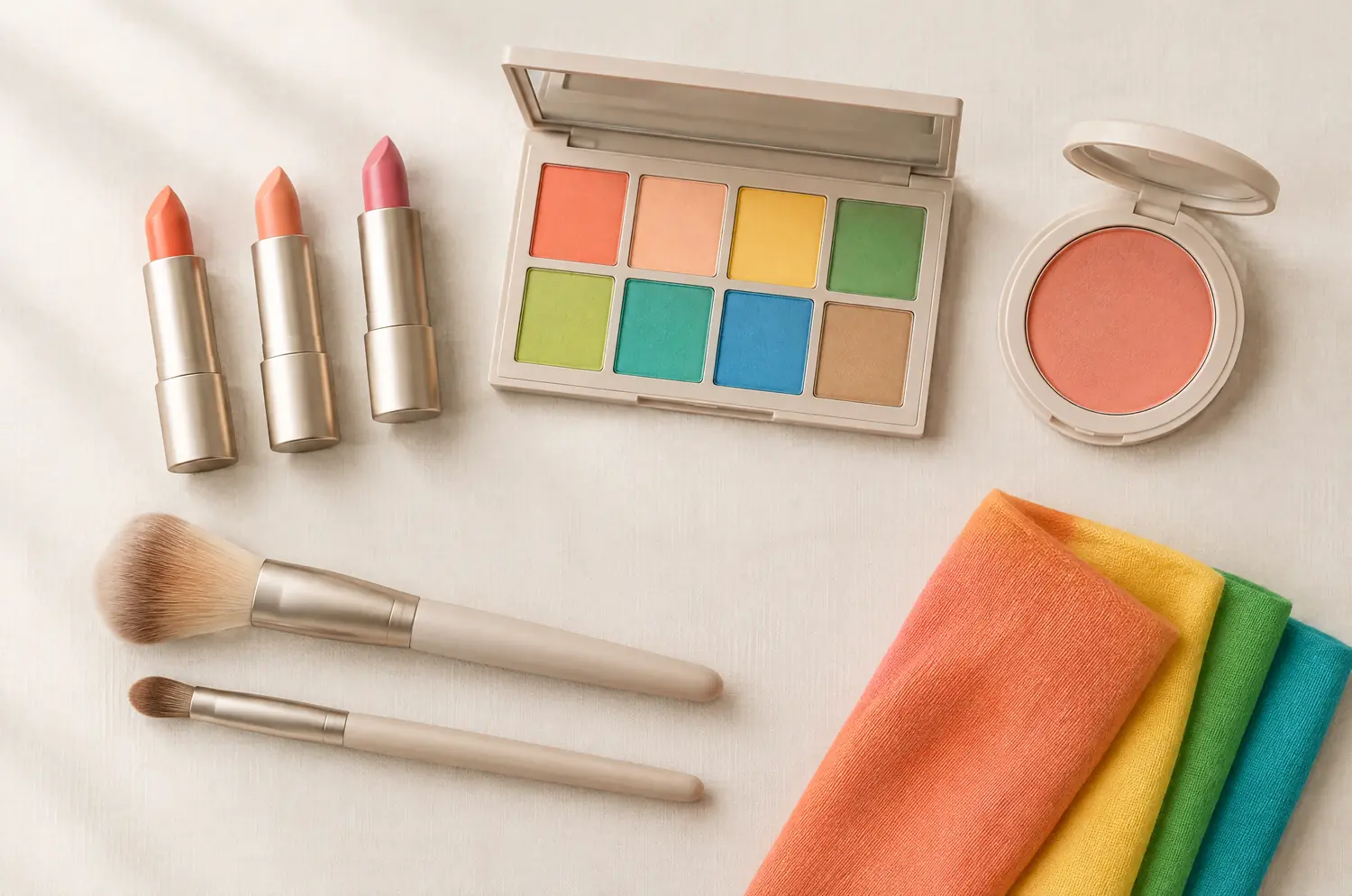
Eyeshadow sits right on the eye, so choosing by eye color is natural. A shade that contrasts with your iris will brighten it. That’s a fair first move.
But the shadow also sits on your lid, next to your brow. Its temperature and softness matter as much as its contrast with the iris. Two people with brown eyes can need opposite shadows.
Sub-season
Eyeshadow shades
Mascara or liner
Light Spring
Champagne, peach, light golden brown, soft green
Brown mascara rather than black
Warm Autumn
Bronze, copper, khaki, warm brown
Brown or warm black mascara
Light Summer
Light gray, rosy taupe, lavender, soft blue
Gray-brown or navy mascara
Deep Autumn
Dark bronze, chocolate, eggplant, deep khaki
Black mascara
Bright Winter
Silver, a touch of bright blue or violet
A graphic black line
These five rows differ in temperature and depth on purpose, so you can see the lid change. A brown-eyed Warm Autumn and a brown-eyed Light Summer get the same eye color and completely different lids. If you don’t know your sub-season yet, start with a light touch and judge the whole face.
Each sub-season page lists its makeup, along with palette, colors to avoid, hair color, jewelry advice and outfits. Once you have a direction, browse the sub-season pages.
How do you check your eyes against your season?
Treat your eye-color pick as a candidate. Then test it.
Stand facing a window. Take off your makeup and tie a neutral cloth over your hair. Hold one color at a time under your chin, and set your eye-color pick against a color from another temperature.
Then look at the whole face, not only at the eyes. A winning color evens out your skin, softens shadows under the eyes and brightens the gaze. A losing color puts a gray or yellow cast on the skin, and the garment takes over.
Rest your eyes between tries. Redo the test on another day, because tired eyes lie. The setup, the order and the common traps are in color draping at home.
Say you have blue eyes. Hold a peach and a soft blue under your chin, one at a time. Maybe the peach makes the blue clearer, but your skin looks tired. Maybe the soft blue is quieter and your skin looks even. Either result is useful: one is your eyes’ favorite, the other is yours.
If one side keeps winning, you have a direction. To turn it into a sub-season, follow how to find your color season. And if your undertone is the part you’re unsure about, how to find your undertone goes through it step by step.
Start with what your brown is made of. Amber flecks can answer to earthy greens, while near-black brown can carry a stronger contrast. Every sub-season’s list differs, so check yours. Hold two candidates under your chin, hair covered, and keep the one that also calms the skin around your eyes.
What color makes green eyes pop?
Red-leaning tones such as wine or a reddish brown can make green eyes look richer. A green near your face does the opposite job and calms them. Compare both in daylight, and keep whichever also evens out your skin.
Do hazel eyes change color with what you wear?
No, the iris stays the same. What changes is which flecks you notice. Hold a green and a warm brown beside your face in turn and see which part of the eye speaks up. Then ask which of the two also suits your skin.
Can my eye color tell me my season?
Only partly. Your eyes feed your contrast, but they can’t place you in a season or rule one out. Hold colors near your bare face with your hair covered. Where your skin looks even and rested, you’ll find your direction.
Should I pick eyeshadow by eye color or by season?
Let your sub-season set the temperature, then let your iris guide the contrast. The makeup list on your season page shows whether gold, silver, taupe or plum belongs on your lid. No sub-season yet? Use a light hand and judge the whole face in daylight.
Pick your eye-color shade and one rival, then compare
Pick the color you think suits your eyes. Pick a second one from the other temperature, say a warm gold against a cool pink. Hold them under your chin one at a time, hair covered, and look at the whole face. Note which one wins, then repeat tomorrow.
For a direction to check against, try the free color analysis quiz. Ten questions, no sign-up. Use the result to choose which two colors to hold up first, then let your own skin confirm or correct it.
Your eyes will tell you what they like. Your skin will tell you whether to listen.