Free: the color analysis quiz. Find your season in 2 minutes →Free quiz: your season in 2 minutes →

Redhead, Blonde or Gray: Does Your Hair Color Decide Your Season?

Best colors for gray hair, red hair and blonde hair start with your skin, not your strands. Here’s what hair tells you about your season, and what it doesn’t.

Lisa Routa, color analyst

By Lisa RoutaPublished · 9 min read

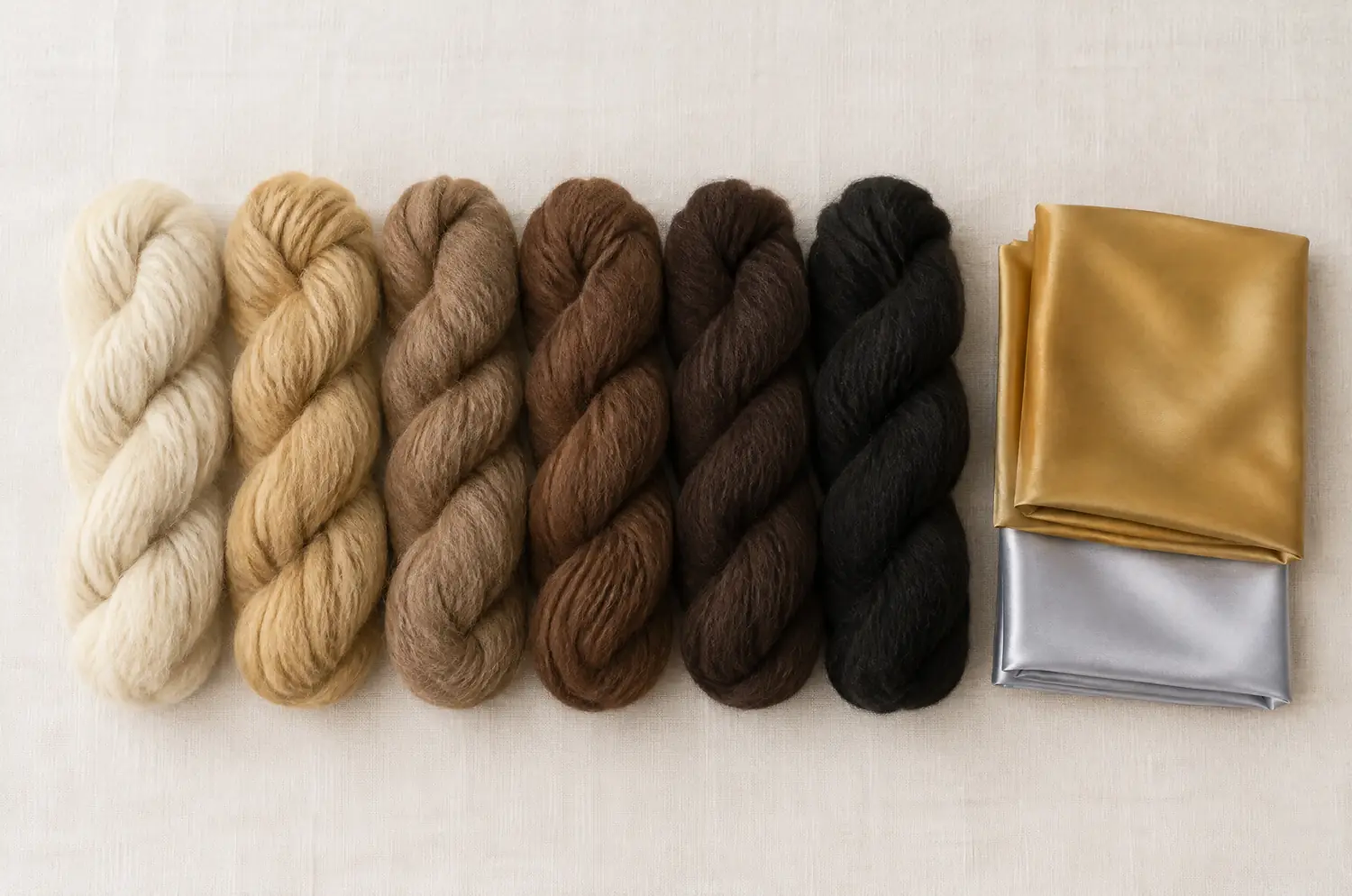
Six skeins of wool from platinum blond to black, next to a gold satin fabric and a silver satin fabric
On this page8 sections
  1. Why does the hair-color shortcut feel so convincing?
  2. What does red hair tell you, and what does it leave open?
  3. Can a blonde be a Winter?
  4. What about brown and black hair?
  5. What are the best colors for gray hair, and does your season change?
  6. Which colors do you keep, and which do you adjust?
  7. Your questions
  8. Cover your hair with a scarf and try one pair today

Is a redhead always an Autumn? Can a blonde ever be a Winter? And what happens to your colors when your hair turns gray?

Those questions get quick answers everywhere. “Redheads are Autumns.” “Blondes are Summers.” “Gray hair means pastels.”

The honest answer is less tidy. Hair color matters. It just can’t carry a season by itself.

You can keep the useful part of each shortcut and drop the part that sends you to the wrong rack.

Why does the hair-color shortcut feel so convincing?

Because it starts from something real.

Hair is the first thing anyone sees. Red hair is rich in warm pigment. Very light hair looks soft. So the mind jumps from the strands to a season, and the jump feels like logic.

It’s not the observation that fails. It’s the jump.

Hair, skin and eyes get their color from melanin, a pigment that comes in two kinds: one brown to black, one red to yellow. The mix differs from person to person. And the systems that set hair color, skin color and eye color are only partly independent of each other.

So two people can share a hair color and still wear different undertones. Undertone is the color beneath your skin’s surface, and it’s what your palette is built on, not your hair.

In my view, a hair color is a clue, not a rule. It tells you where to start looking. It never tells you where to stop.

Contrast works the same way. It’s the gap between your hair, your eyes and your skin, and it can be low, moderate or high. It helps, and it never decides alone.

What does red hair tell you, and what does it leave open?

Red is not one color.

It runs from strawberry blonde to copper to deep auburn, and the balance of pigments changes from one head to the next. That’s why “the best colors for redheads” has no single answer. A light, fresh red and a dark, rich red can sit in different places.

Warm seasons are where the shortcut comes from, and they do fit some redheads well. The hair suggestions for Warm Autumn include red, coppery and auburn. Warm Spring leans to light copper.

But a redhead can also have a neutral or cool undertone. Hair and skin don’t read from the same dial.

Then there’s a second trap: a color can flatter your hair and still not flatter your face.

A deep green makes red hair look rich. On some skin, it also brings out redness. Orange does the same thing. The color wins the hair and loses the complexion.

A color analysis for redheads therefore starts like any other: hair covered. Red hair is very reflective, and it throws its color onto your skin. If you leave it out, you’re judging the hair, not the face.

Once the hair is out of the picture, the answers get specific:

  • A Warm Autumn redhead might find Rust, Olive Green and Terracotta.
  • A Warm Spring redhead might find Coral and Meadow Green.
  • A Deep Autumn redhead might find Spruce Green and Warm Burgundy.
  • Another redhead might find her skin lights up with something cooler.

Red hair, then, isn’t a result. It’s a very good reason to check.

Can a blonde be a Winter?

Yes, and hair is the wrong place to look.

The rule “blond means soft, soft means not Winter” skips a step. Light hair says little about the rest of your face. Dark eyes, defined brows and a clear gaze can push contrast up, even when the hair is very light.

You can see this in the hair advice for Bright Winter, which includes a very light, cool blonde. Winter is about cool, clear, saturated colors that your skin can carry without fading. That’s a reaction, not a hair shade.

Blondes also show up in every other season:

  • Golden blonde sits comfortably in Light Spring, with Peach and Light Coral.
  • Light ash blonde fits Light Summer, with Powder Pink and Lavender.
  • Honey dark blonde fits Soft Autumn, with Sage Green and Light Terracotta.

So what are the best colors for blonde hair? The ones that suit your undertone, depth and intensity, which can be warm or cool, soft or bright, light or deeper. Your hair color narrows nothing until your skin has had its say.

What about brown and black hair?

The same logic applies, with the same surprise.

Dark hair isn’t automatically Winter or Autumn. Brown hair turns up in all four seasons. The hair suggestions include golden brown for Warm Spring, ash brown for Soft Summer, chocolate brown for Deep Autumn and cool dark brown for Deep Winter.

Skin works the same way. Fair, olive, tan and deep skin tones all show up in every season. If you have dark hair and deep skin, my advice: don’t let anyone give you a season before they’ve seen you with the right colors near your face. The article on dark and deep skin tones goes further on how to read undertone and intensity there.

Here is what each hair color can and can’t tell you:

Hair What it can tell you What it can’t tell you
Red A lot of warm pigment in the hair Your skin’s undertone
Blond That your hair is light How much contrast your face carries
Brown or black That your hair is deep Whether your colors are warm or cool
Gray or white That your hair has its own temperature Your season, which hasn’t moved

What are the best colors for gray hair, and does your season change?

Your season doesn’t change.

You might have a photo of yourself in a red that lit up your face. Now your hair is turning gray, and the same red feels different. Someone tells you to swap your whole palette. Someone else says gray hair means pastels.

Neither is a rule.

Not for gray hair.

Not for white.

Your undertone doesn’t depend on your hair, so it doesn’t move when your hair does. Gray and white hair show up in all four seasons.

What changes is your contrast. Your hair is one of the three pieces of it, and when it shifts, the gap shifts.

Depending on your skin and your earlier hair color, the frame around your face can get softer or sharper. There is no rule here. There is your face.

Gray and white also have a temperature of their own. A white can lean bluish, beige or yellowish. That doesn’t rewrite your palette. It changes how your colors sit next to your frame.

To judge a color against gray or white hair, hold it near your face in daylight with your hair showing. Ask whether the color and the tint of your hair argue with each other. If they do, the eye goes to the clash and not to your face.

Some palettes are friendly to it. The hair notes for Cool Summer say gray or white hair looks naturally good on you, and the notes for True Winter say it looks superb. For warm seasons, the question is just which of your colors still balance the frame.

Which colors do you keep, and which do you adjust?

Keep your temperature. Adjust inside it.

Temperature comes from your undertone, not your hair. Depth, also called lightness, and intensity, how soft or bright a color is, are the two axes you can tune.

Go through your own palette one color at a time. Do your darker shades feel heavier than before? Do your lighter ones feel flat? Does a bold red still carry your face, or does a softer shade sit better now?

I know of no rule that says you must fade your colors because your hair has faded. A bright palette stays bright. A soft palette stays soft.

If you’re a… Keep from your palette Check with your gray hair showing
Warm Spring Coral, Meadow Green Does Poppy Red still lift you, or does Coral sit better?
Soft Summer Dusty Rose, Slate Blue Does Dove Gray blend with your hair or sharpen it?
Warm Autumn Rust, Olive Green Does Chocolate feel heavier than it used to?
Deep Winter Cool Burgundy, Royal Blue Does Navy look crisp next to your hair, or does Black feel heavy?

Do this in two passes. First, cover your hair with a neutral cloth and drape your colors in pairs. That pass finds your palette, and it doesn’t change.

Then uncover your hair and look only at balance: which colors feel too heavy or too faint next to your current frame.

That second look doesn’t decide your season. It tells you how deep or how bright to go inside it. The article on color draping at home walks through the setup.

Should you keep your gray or color it? That’s your choice, not a color rule.

If you color it, stay within the temperature of your undertone and test a strand first.

If you keep it, look at its tint in daylight. A yellowish white can pull your complexion toward yellow, and a stylist can soften the tint without coloring everything. The article on hair dye and your season covers what dye does and doesn’t change.

Makeup stays in your palette. If your brows are darker than your hair now, a slightly softer shade in your temperature can ease the frame. Glasses frames are one more color near your face: choose from your palette, in a depth that answers your contrast.


Your questions

Are redheads always Autumn or Spring?

No. Red hair points toward warm colors, which is why the shortcut exists, but a clue isn’t a ruling. Hair and skin pigment come from partly separate systems, so a redhead can lean cool underneath. Cover your hair, hold a warm and a cool color near your face in turn, and let your skin choose.

Can a blonde really be a Winter?

Yes. Picture very light hair on someone whose skin brightens with fuchsia or royal blue and turns sallow next to golden beige. That reaction points to Winter, not the strands. Cover your hair and test cool, clear colors before you rule anything out.

Do gray hair and white hair change my season?

No. Your season stays put. What you can check is the tint of your gray, whether it leans bluish, beige or yellowish, and how it sits beside your colors. Glasses frames, brows and a lip color are easy places to test that in daylight, with your hair showing.

Should I cover my hair when I test colors?

Yes. Hair reflects its color onto your skin and changes how contrast looks, and red hair does this strongly. Under a plain cloth, you see what your skin does with each color. Decide your palette that way. Then use your hair-out view only to judge balance, never to pick a season.

Is there one best color for gray hair?

No. A Soft Summer and a Deep Winter can both have silver hair and need very different colors near their faces. Start from your own palette, then tune its depth and intensity to your frame. Your temperature is the anchor, and the tint of your gray tells you what to test next.

Cover your hair with a scarf and try one pair today

You don’t need a result to start. You need one scarf.

Cover your hair with a plain cloth. Hold a warm color and a cool color under your chin, such as a coral and a raspberry. Notice which one smooths your skin and which one pulls it gray or yellow. Then uncover your hair, and ask only whether anything now feels too heavy or too faint.

When you want a likely season to work from, try the free color analysis quiz. It takes ten questions and about two minutes, and it can’t see your skin react, so keep your scarf nearby.

Your hair is part of the picture. It was never the whole picture.

With all my heart and passion, Lisa

Free quizWhat’s your color season?10 questions, no sign-upTake the quiz

Go further

A closed cream booklet on linen, surrounded by fabric squares and paper chips in a pastel gradientPDF guides by sub-seasonOne guide for each of the 12 sub-seasons: palette, outfits, makeup and hair.Coming soon
A closed cream booklet on linen, surrounded by fabric squares and paper chips in a pastel gradient

Free

Get Lisa’s color advice by email

New articles from Lisa, and a note when the PDF guides open.

Keep reading

Read next

Seasons mentioned in this article

Ready to find your colors?

Take the free quiz for a first hint of your season, then explore the 12 seasons to see your palette.

Free quizThe 12 seasons