Best Colors for Dark Skin: Why Deep Skin Isn’t One Season
The best colors for dark skin depend on your season, not your shade. Here is how to read undertone and clarity on deep skin, and which myths to let go.
You type “best colors for dark skin” into a search bar.
The first list says jewel tones. The second says bright colors only. The third says you’re a Winter, so you can stop looking.
You pull an emerald scarf over your shoulder. Your face goes flat.
Then you notice the rust sweater on the chair, the one you almost gave away. Next to your face, it looks right.
The list didn’t fail on colors. It failed on you.
Why isn’t deep skin a single season?
Because how dark your skin is counts as one trait, and a season takes more than one.
A season rests on temperature (warm or cool), depth (also called lightness: how light or dark a color is) and clarity (also called intensity: how bright or muted it is). Contrast, the gap between hair, eyes and skin, adds a clue. Your skin shade answers none of these questions.
So “dark skin, so Winter” isn’t a rule. It’s a shortcut. In my view, it’s a shortcut with a cost: it files you before anyone has looked at you.
Deep skin can land in Deep Winter. It can land in Deep Autumn. It can also land in Warm Spring, Soft Summer or Bright Winter.
The word “deep” in those two sub-seasons describes the colors, not your skin. Someone with fair skin can be a Deep Winter, and someone with deep skin can be a Light Summer.
What is the difference between skin tone and undertone?
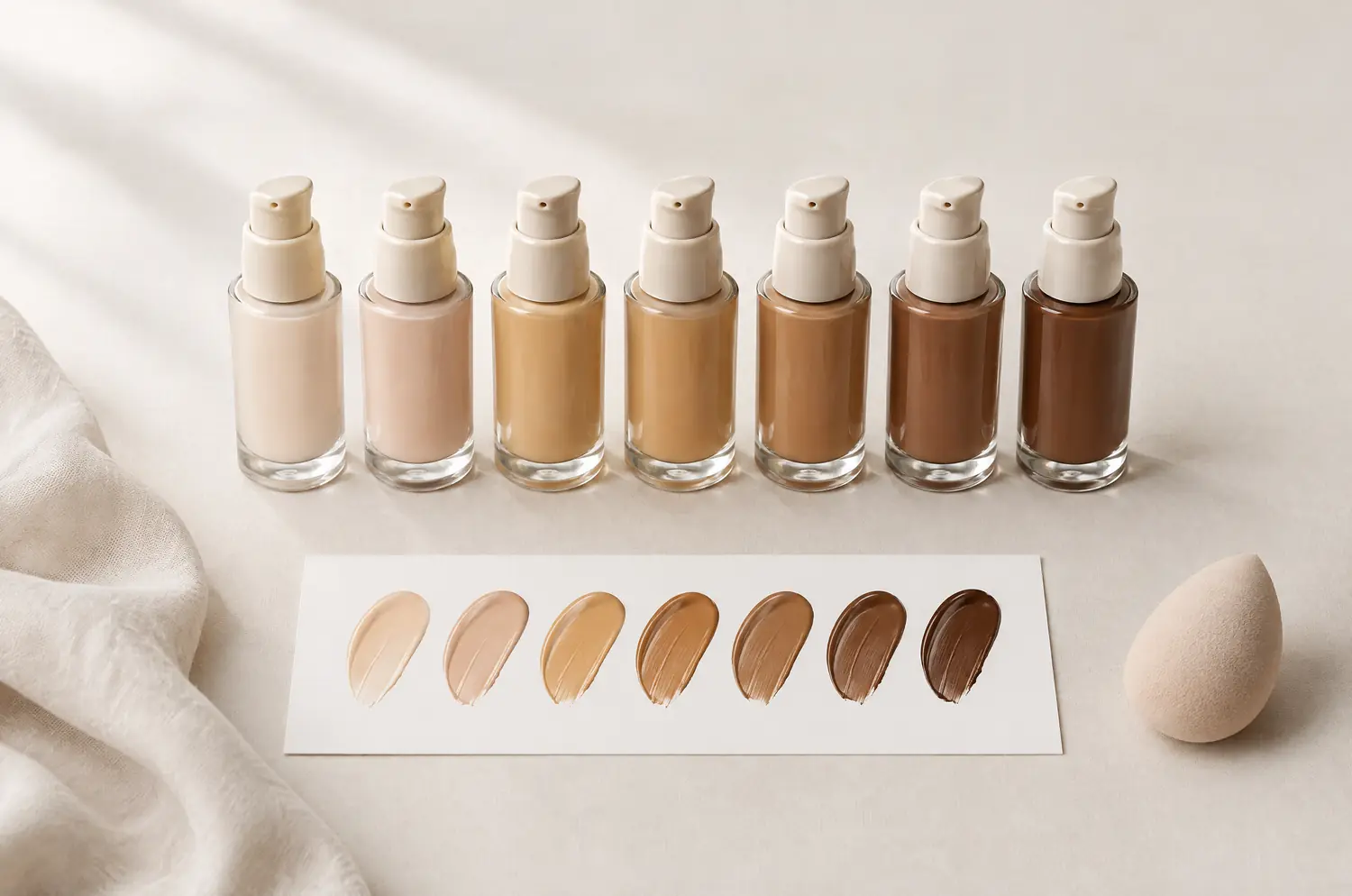
Skin tone is how light or dark your skin looks. It shifts with sun and with life.
Undertone is the color beneath your skin’s surface, and it tends to stay steadier. Warm, cool, neutral or olive. The four readings are laid out in my guide to skin undertone.
The two don’t travel together. Deep skin can carry a warm, cool, neutral or olive undertone, and so can fair skin. For names from fair to deep, the skin tone chart is the place to start.
Words like “brown” or “mixed” can describe you well. They don’t tell you your undertone, your contrast or your season. Two people can use the same word and have very different coloring, just as two people who say “blonde” do.
Why do home undertone tests struggle on deeper skin?
The best-known one looks at the veins on your inner wrist. Green leans warm, blue leans cool.
On deeper skin, those veins are often hard to see. The test has nothing to read. Where you can see them, blue and green are hard to tell apart on any skin.
Your skin isn’t complicated. The test is looking in the wrong place.
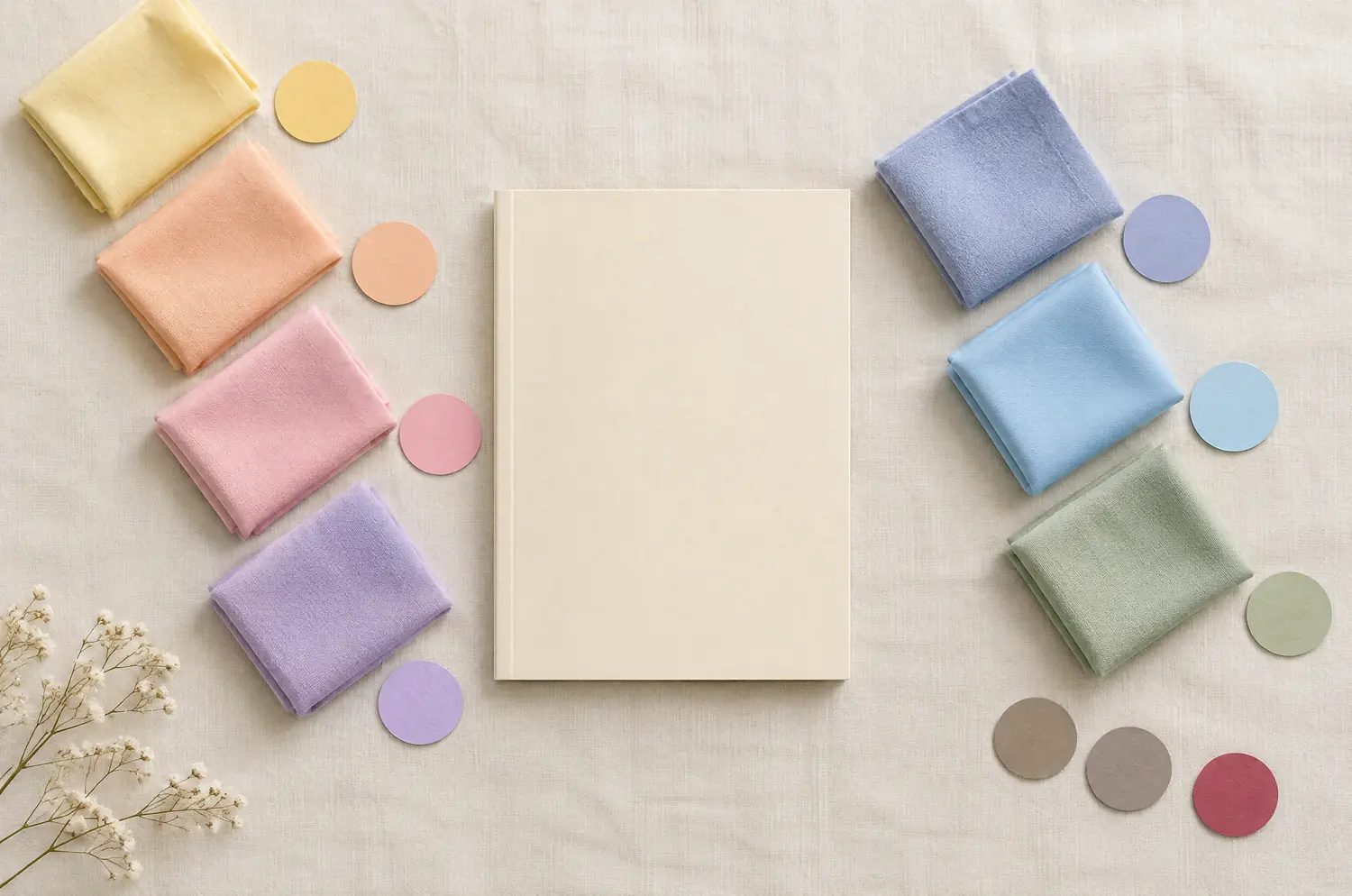
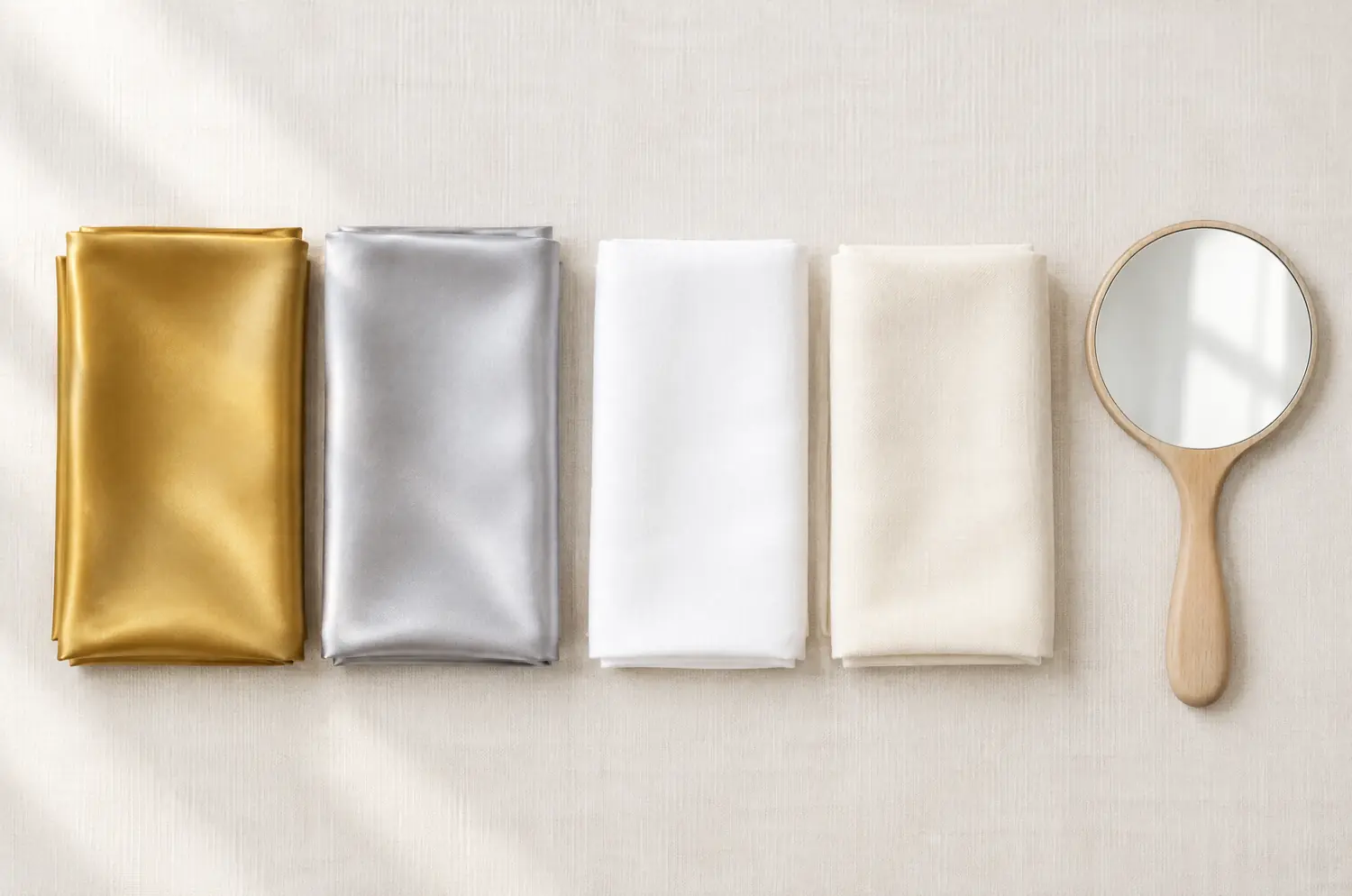
Look at the face instead. Use natural light, makeup off, hair wrapped in a neutral cloth. Then compare colors in pairs:
Pure white against cream, to see which one wakes your face up
Coral against raspberry, to see which one evens out your skin
Gold against silver, held at your jaw rather than on your hand, to see which one brightens your eyes
Bright red against dusty rose, to see which one carries you and which one overwhelms you
A winning color evens out your skin and puts light in your eyes. A losing one grays or yellows the skin, deepens the shadows, and you see the fabric before you see yourself.
My advice: mark each pair with a plus, a minus or a question mark, then repeat it another day. A pattern across several pairs gives you a direction. One pair gives you nothing.
How do clarity and contrast read on deeper skin?
Deep skin is not automatically a bright-color skin.
A saturated fuchsia can carry one face and overwhelm another. A Dusty Rose can rest one face and flatten another. You only find out by testing, never by assuming.
Contrast works the same way. It’s a gap, not a darkness. Very dark hair and dark eyes next to deep skin can sit close together. Gray hair, lighter hair or light eyes widen the gap.
Judge it on your own face. It’s a clue that never decides alone.
What do six of the twelve palettes look like side by side?
Deep skin can sit in any of these rows. The colors to try first change from one to the next.
Sub-season
Temperature
Clarity
First colors to try
Warm Spring
Very warm
Bright
Coral, Poppy Red, Warm Turquoise
Soft Summer
Neutral to cool
Very soft, grayed
Dusty Rose, Slate Blue, Verdigris
Warm Autumn
Very warm
Rich, slightly muted
Rust, Mustard, Olive Green
Deep Autumn
Neutral to warm
Rich and intense
Warm Burgundy, Spruce Green, Eggplant
Deep Winter
Neutral to cool
Saturated
Cool Burgundy, Emerald, Royal Blue
Bright Winter
Neutral to cool
Very bright
Fuchsia, Electric Blue, Bright Emerald
Notice how little these rows agree. A single list can’t be right for all of them.
Which myths about dark skin should you let go of?
“Deep skin means Winter.” Winter is one season of four. Spring, Summer and Autumn have deep skin tones too.
“Deep skin needs jewel tones.” Rich, saturated colors such as Emerald suit Deep Winter. The soft Dusty Rose and Slate Blue of Soft Summer sit at the other end.
“Pastels wash out deep skin.” That depends on your season. Test Powder Pink against a saturated pink before you decide.
“Deep skin has a warm undertone.” It can read warm, cool, neutral or olive, like any other skin.
“Black is the safe choice.” Black is not banned. It’s a base color for the three Winters and on the avoid list for several other sub-seasons.
Hair gets the same treatment as skin: one clue among several. My piece on hair color and color season takes apart the redhead and blonde versions of this myth.
Why do photo tools misread deep skin?
Your phone sets its own exposure. Depending on the room, the window behind you and the angle, the same skin comes out lighter, darker, grayer or yellower within seconds.
An app or a filter reads those pixels. It reads the photo, not your skin. Then it hands you one clean answer built on fuzzy data.
I would not hand my palette to a camera. Play with it if you enjoy it. An algorithm measures. A trained eye interprets.
Your questions
What color makes brown skin pop?
The one from your own palette, and it differs by season. On a Warm Spring it may be Coral or Poppy Red. On a Deep Winter it may be Emerald or Royal Blue. Hold two candidates side by side and pick the one that lights up your eyes.
What is my skin tone?
Skin tone is how light or dark your skin looks, from fair through tan to deep. Undertone is separate: the color beneath the surface, warm, cool, neutral or olive. Judge your skin tone on bare skin in natural light. You find the undertone by watching what colors do to your face.
What are the different types of dark skin color?
Dark skin ranges from medium brown to very deep, and each depth can carry a warm, cool, neutral or olive undertone. These combine in many ways, so one word never captures your coloring. The skin tone chart gives names, undertones and what to check next.
How do I know what season my coloring is?
Check three things: temperature, depth and clarity. Then compare colors in pairs near your face, in natural light, with makeup off and hair covered. The steps are in my guide to finding your color season. A quiz can point you in a direction first.
What colors are for all seasons?
None, as written. Even navy changes: Soft Navy for Light Summer, Grayed Navy for Soft Summer, Bright Navy for Bright Spring. Each season has its own version of a color family, so the shade matters more than the name.
What your face does when the right color arrives
Next time you stand at the mirror with a color near your jaw, forget the list. Watch your eyes. Watch the skin under them and around your mouth. The right color settles all of it, and you see yourself before you see the fabric.
Start with the free color analysis quiz. It gives you a likely season and a sub-season hint, then sends you to the page that goes with it.
Nobody should pick your colors before they have looked at you.