Winter Hair Colors: Which Shades Suit Your Sub-Season
Winter hair colors depend on your sub-season, not the calendar. See the dark, cool and vivid shades for Deep, True and Bright Winters, and where blond fits.
You’ve typed something like it. Maybe with “ideas” at the end.
It sounds like one question. It’s two.
The first is about the calendar: richer, deeper shades when the days get short. The second is about you: which shades work with your skin.
Only the second one gives you a color you’ll still like when the weather changes.
Is a winter hair color a trend or a sub-season?
Winter posts push deeper shades and richer tones. Trends change. And the photo that sold you a shade was taken on someone else’s skin.
Your hair sits right next to your face. It reflects its color onto your skin. A cool shade flatters a cool complexion. A golden shade may turn it yellow or gray.
So the calendar isn’t the filter. Your sub-season is.
Winter is cool, bright, clear and dark, with moderate to high contrast. Three things describe it: how warm or cool a color is, how light or dark, and how clear or muted. Each sub-season stresses a different one: Deep Winter its darkness, True Winter its coolness, Bright Winter its brilliance.
In my view, a trend should be a way to wear your color, not a reason to change it.
Which shades suit a Deep Winter?
Deep Winter (also called Dark Winter) is dark, neutral to cool and saturated, with high contrast. Think of a winter night: midnight blue sky, evergreens, garnet.
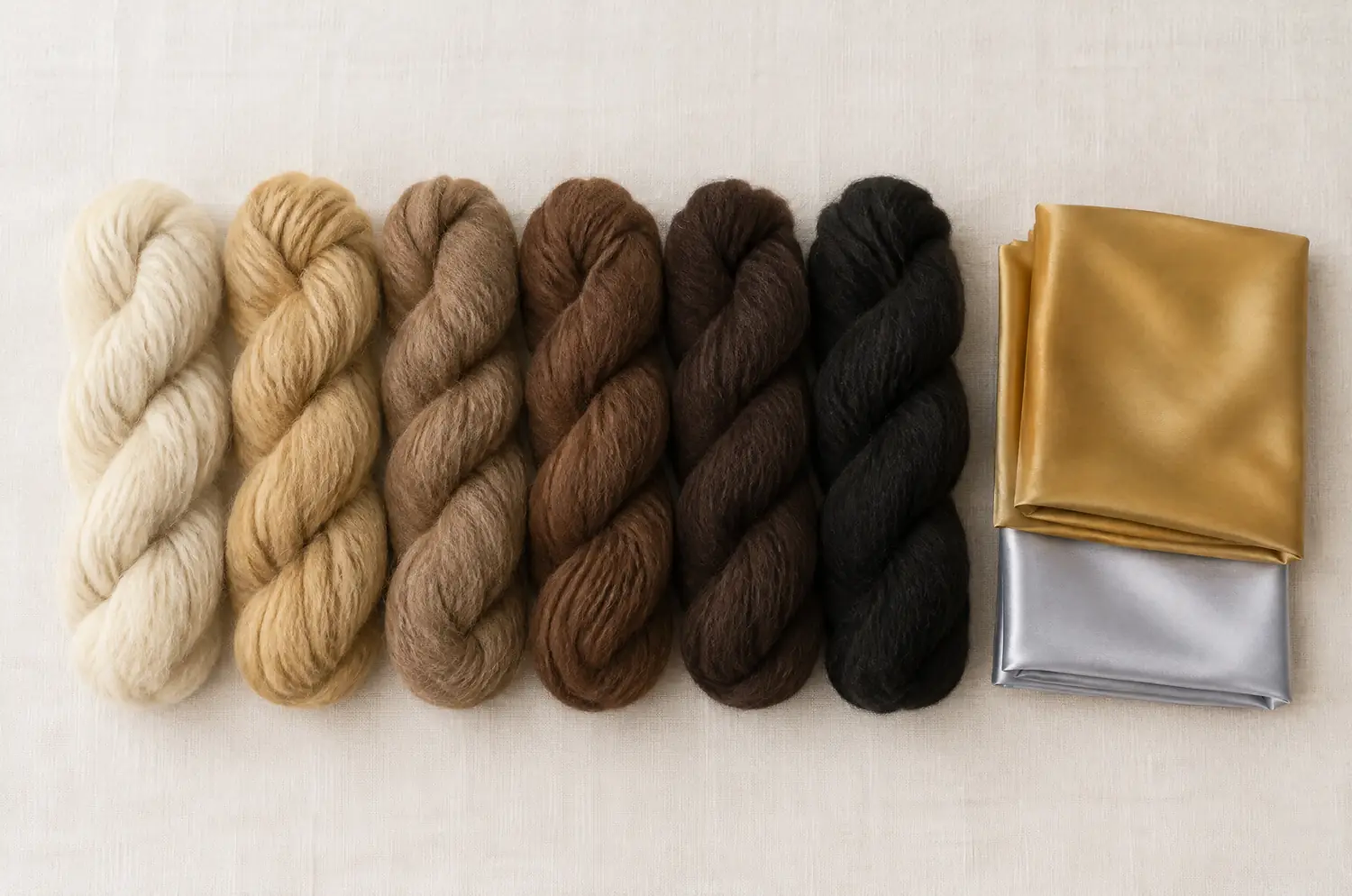
Your hair shades are cool dark brown, black and very dark brown.
Black suits a Deep Winter even near the face, so a very dark color sits comfortably. It gives your face a frame as deep as your colors.
The trap is lightening with gold. You lose the definition that makes your look.
A cool burgundy or plum lip looks right beside these shades.
Which shades suit a True Winter?
True Winter (also called Cool Winter) is very cool, medium to dark and saturated, with high contrast. Think of a snowy landscape under a blue sky: white, black, bright blue, red berries.
Your hair shades are black, cool brown and ashy dark brown. The key word is cool.
Gray or white hair looks superb on you too.
The common mistake is warming the color with caramel or honey. Silver and a raspberry or fuchsia lip look easy on you. A honey strand next to them looks like the odd one out.
Which shades suit a Bright Winter?
Bright Winter (also called Clear Winter) is neutral to cool, medium in depth and very bright, with very high contrast. Think of a city at night: neon, shop windows, reflections on ice.
Your hair shades are crisp and shiny: cool brown, black, or a very light cool blonde.
Finish matters here. Blended, golden effects soften the very thing that defines you. Muted colors dim a Bright Winter, and hair is no exception.
A bold lip in fuchsia or clear red keeps up with a sharp, glossy color.
Which shades work against each Winter?
Each sub-season has a neighbor next door. A hair color that wanders in that direction stops speaking Winter.
Sub-season
Look for
Skip
Closest neighbor
Deep Winter
Cool dark brown, black, very dark brown
Golden or coppery tones
Deep Autumn, warmer
True Winter
Black, cool brown, ashy dark brown
Caramel and honey warmth
Cool Summer, softer and lower in contrast
Bright Winter
Cool brown, black, very light cool blonde
Blended, golden effects
Bright Spring, warmer
Can a blond be a Winter?
Yes. Bright Winter’s hair shades include a very light, cool blonde, so blond hair doesn’t close the door on Winter.
What counts is the kind of blond. Cool, very light and crisp points toward Winter. Honey, golden or soft and blended points the other way.
For Deep Winter and True Winter, the hair shades listed are dark, and no blond appears among them. Draping decides, not a rule.
So drape before you decide.
Hold a pale, icy fabric under your chin with your hair covered. If your face stays clear and your eyes keep their definition, the idea is worth a conversation. If your skin looks flat, weigh that too.
If you do go light, ask for cool and crisp. A cool blond with sharp edges reads as Winter. A soft golden one reads as someone else’s palette.
The calendar doesn’t move your sub-season. Cold weather doesn’t make you a different Winter.
If your hair already sits in your direction, keep it. If it drifts warm, one swap may be enough: cool for gold.
If you’re a brunette, the question is the cast of your brown more than its depth. A cool brown and a warm brown can be equally dark and do opposite things to your skin.
My advice: change the tone before you change the depth. A new tone is easier to judge than a big leap in darkness.
Bring three words to your stylist: temperature, depth, clarity. Add what you want to avoid, such as “no gold.”
A photo helps less than you think. It shows another person’s skin under another light. Describe the cast you want, cool or golden, and say whether you want the finish blended or sharp.
Your questions
What hair color suits a Cool Winter?
Black, cool brown or an ashy dark brown. A Cool Winter is very cool and saturated, so the shade should read clean, with no honey or caramel warmth in it. Gray or white hair also suits this sub-season naturally, so you can let it show.
What color hair should a Deep Winter have?
Stay dark and cool: black, very dark brown or cool dark brown. Your contrast is high, and a dark frame keeps your face as sharp as your colors.
What hair color suits a Bright Winter?
Pick a cool brown, black or a pale cool blond, with a clean, glossy finish. Your colors are electric and your contrast is very high, so blended or golden effects dim you. If you lighten, check that the blond reads icy, not honey.
What hair colors should a Winter avoid?
Warm, golden ones: caramel, honey, copper and any soft golden blend. They can turn a Winter’s skin yellow and blur contrast. Treat that as a direction, not a ban. If you love a warm shade, set it against cool clothes near the face.
Should I change my hair color for winter?
Not because of the calendar. Your sub-season is the same in January and in July. If your hair already sits in your direction, keep it. If it drifts golden, one swap to a cooler tone may be enough, and a new tone is easier to judge than a big jump in darkness.
Hold a cool fabric against a golden one before you book
Sit by a window in daylight, bare face. Cover your hair with a neutral cloth.
Hold a black fabric under your chin, or a pure white one. Then hold a warm, golden fabric as a deliberate foil. Watch what happens to your skin: smoother and clearer, or yellower and more tired.
Redo it another day. Then judge for yourself.
Don’t know your sub-season yet? Take the free quiz. Ten questions, about two minutes, and it points you to a season and a sub-season to check in your mirror.
Note which fabric leaves your skin clearer, and take that cast to your stylist.