
Lips
- Peach
- Light coral
- Salmon pink
Light, glossy formulas rather than matte, dark ones.
Light Spring · makeup
People think a pale face needs pale, quiet makeup. Look closer. Yours needs warmth. It needs a little fresh color. Without it, you fade into the background.
At a glance
Start here. A dot of color shows when the shade is one of your palette colors.
Light, glossy formulas rather than matte, dark ones.
Brown mascara rather than black.
Applied lightly.
Because your face is built on lightness. Light Spring has low contrast: your hair, eyes and skin sit close together in value. A lip that is much darker than the rest of the face breaks that balance.
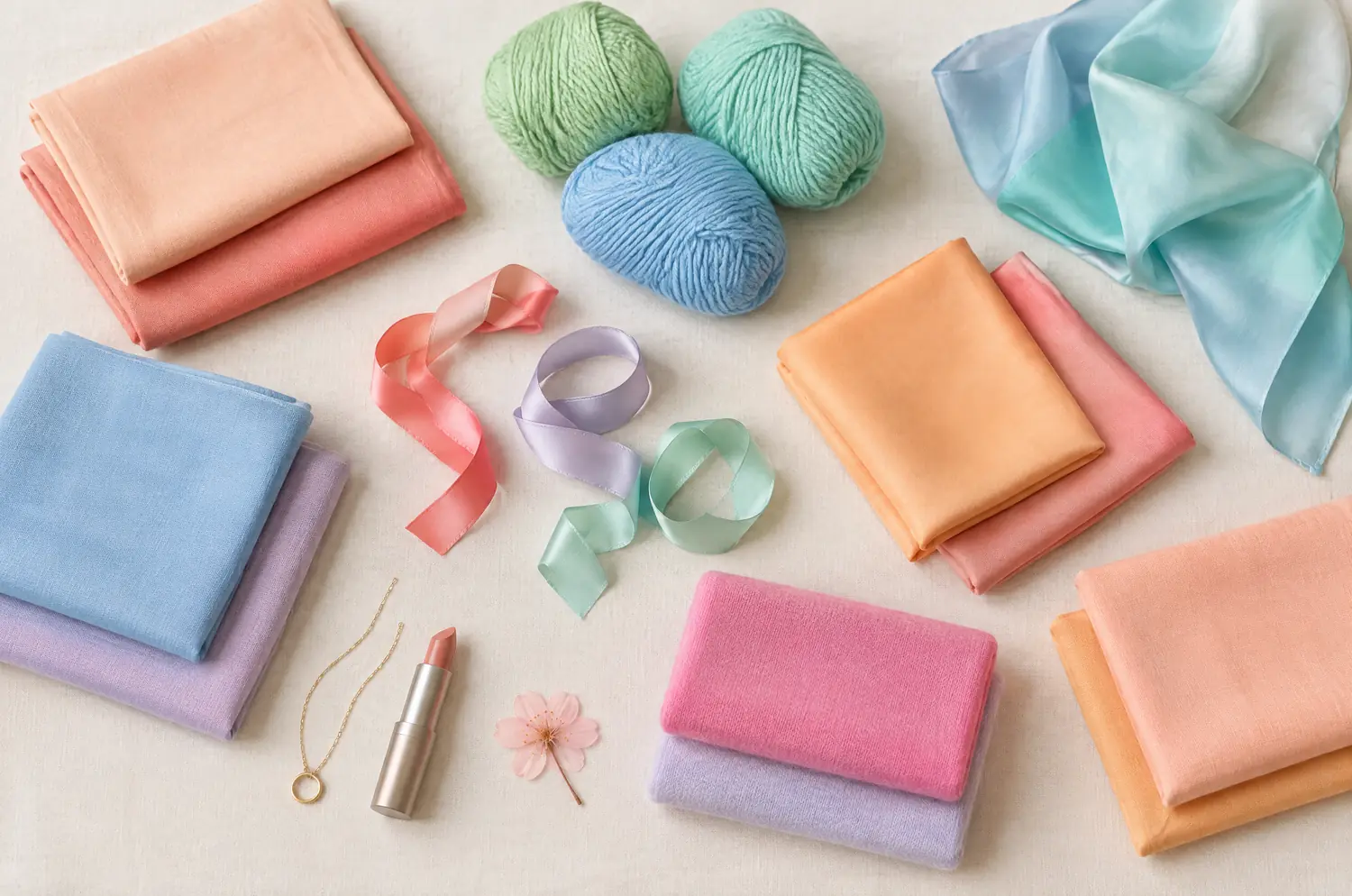
Peach is your signature color, so start there. It echoes the glow your skin already shows next to warm pastels. Light coral gives you more presence. Salmon pink is the choice if you want a touch more pink.
Pick a light, glossy formula over a matte, dark one. Dab a little on your lip, step to a window and check that your mouth looks fresh, not painted on.
A dark lipstick meant to add edge does the opposite. It takes over the face.
Soft, with a warm base. Champagne, peach, light golden brown and soft green are all yours.
Champagne over the whole lid is the easy start. It lifts the eye without drawing a line around it. Light golden brown in the crease adds shape, and soft green is there when you want a little color.
Wear brown mascara, not black. Black is a hard frame on a face this light, and it can make dark circles stand out.
For eyeliner, follow the same logic. Keep it thin, keep it in the brown family and smudge the edge a little. The goal is to define your eyes, not outline them.
Very light. Apricot or peach, applied lightly, is the whole answer.
Your medium, fresh intensity means the color should look like it came from inside the skin. Tap it on the apples of your cheeks and build it in thin layers. If you can see the edge of the blush, blend again.
If you use a bronzer, keep it slightly warm to match your temperature, and use it only as a touch of warmth. A heavy contour adds the depth your face doesn’t carry.
Not much. Match your skin, not your palette: test shades along your jaw until the edge disappears.
Then think about undertone, the cool, warm or neutral tone beneath your surface color. Yours leans slightly warm, so a base that turns pink or gray will fight the peach and coral above it.
Because your colors are light and fresh, choose a sheer, skin-like finish and let the lip and cheek do the talking. Heavy coverage buries the glow you’re trying to bring out.
Light Spring describes your coloring, not a skin shade. Fair, olive, tan and deep complexions can all land here, and the base follows the skin in front of you.
Peach, light coral and salmon pink echo your lip. Apricot echoes your cheek. Mint is in your palette too, so try it if you want something less expected. Ivory is a clean neutral when you want quiet.
Your fine gold jewelry, light yellow gold or rose gold, sits well beside all of them. For a head-to-toe idea of how these shades pair with clothes, see the Light Spring outfits.
Nothing is banned, but it isn’t your friend. Black, burgundy, charcoal and dark brown are on your skip list because they create a contrast your face can’t carry.
Black liner and a dark lip are the two I would leave in the drawer first. Your “darks” are a light camel or a warm light gray, and they give you definition without the weight.
If a goal calls for a darker look, a single small dose is fine. In my view, keep it to one place and leave the rest of the face light.
What to skip
Light yellow gold, rose gold, fine gold tones. Delicate pieces rather than chunky ones.
A direction, not a law: hold the metal near your bare face in daylight and watch your skin.
Too dark for you: they create a contrast your face can’t carry.
#0A0A0A#5A1326#33363B#3B2314Nothing is off-limits. If you love one of these, wear it away from your face.
Keep exploring
The lightest of the warm seasons: all light and freshness, never heavy.
Light Spring clothes: an eight-piece capsule wardrobe, outfit formulas, the neutrals that replace black and how to wear the colors to skip, lower down.
Light Spring vs Bright Spring: all four axes differ. I show what each difference looks like on a face and how to settle it with a simple drape test at home.
Light Spring vs Light Summer: both are very light, so the answer hides in two details. I show what warm and powdery look like on a face, and how to test it.
Light Spring vs Soft Autumn: all four axes differ, and I show what each looks like on a face, plus a quick drape test to settle it if you sit between them.
Light Spring vs Soft Summer: three axes set them apart, and one is shared. See what each looks like on a face, then settle it with a simple drape test.
Questions
Peach, light coral and salmon pink. All three are warm and light enough for your low contrast, so they don’t overpower you. Choose a glossy or sheer finish. A cool pink or rosewood leans toward your neighbor, so see how Light Spring differs from Light Summer.
Light yellow gold and rose gold lead, in delicate pieces rather than chunky ones. Treat that as a direction, not a law. Hold gold and silver near your face and see which one keeps your skin bright.
You can, but brown is kinder. Black can sharpen shadows under the eyes on a face this light. Try a thin brown line, smudged slightly, and compare the two by a window before you decide.
Apricot or peach, applied lightly. Start with a sheer tap on the apples of your cheeks and stop sooner than you think. A darker blush adds weight that a low-contrast face like yours doesn’t carry, and it pulls attention from your eyes.
Hold a peach and a powder pink up to your bare face. If the peach lights you up, you lean Light Spring. For a first hint, take the free color analysis quiz and see your likely season. A Light Spring guide is on sale, if you want your makeup and the rest of your sub-season in one PDF, and the hair color page covers your strands.
Check it. The free quiz shows you your likely season in two minutes, and the two-color test on the palette page helps you tell it from its neighbor: a first hint, not a verdict.