
Lips
- Fresh pink
- Light raspberry
- Rosewood
Sheer formulas.
Light Summer · makeup
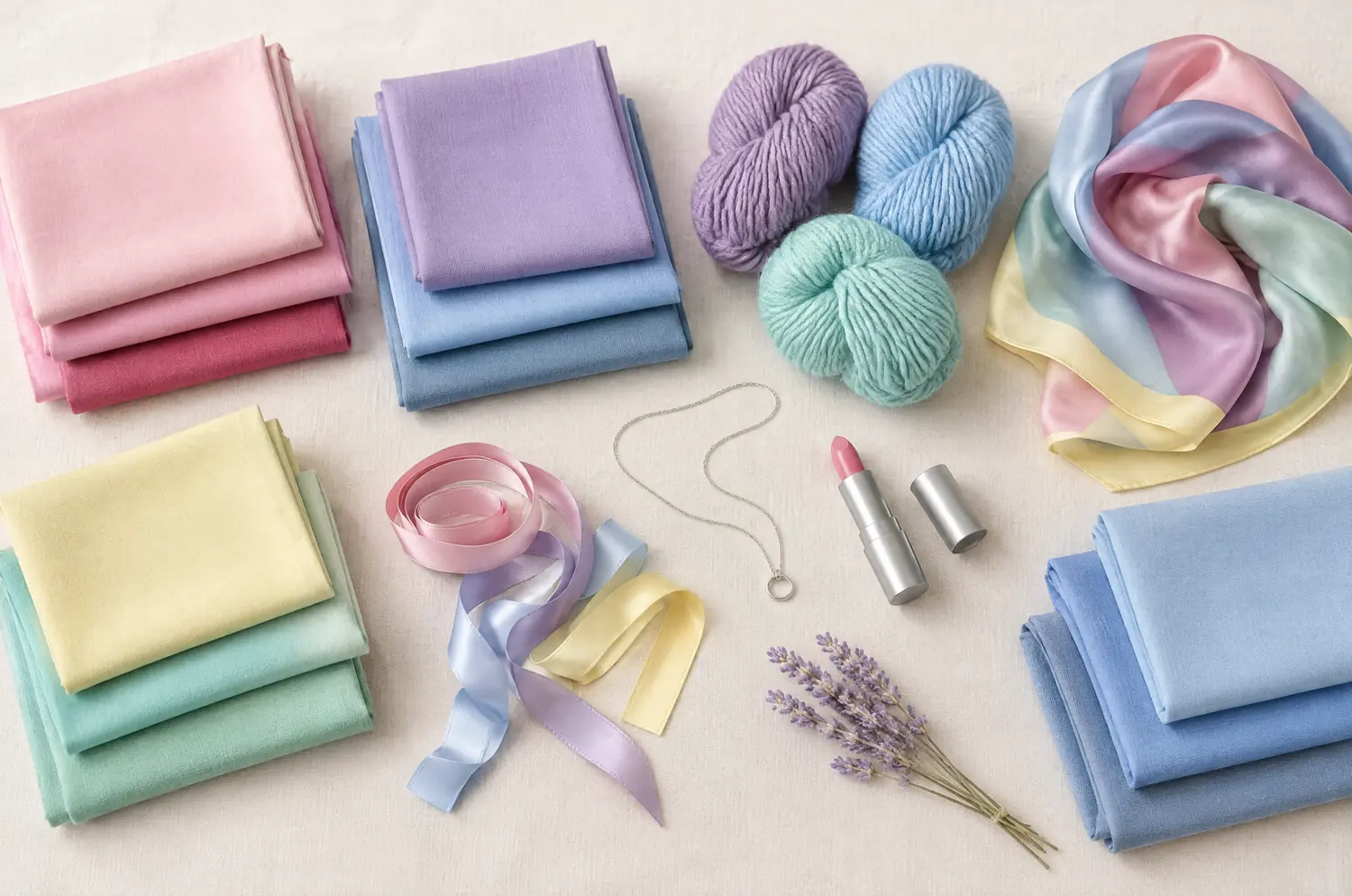
Hold a powder pink under your chin. Watch your skin settle. Your makeup should be that light.
At a glance
Start here. A dot of color shows when the shade is one of your palette colors.
Sheer formulas.
Gray-brown or navy mascara.
Very sheer. Light Summer is slightly cool, very light and soft, with low contrast between hair, eyes and skin. A heavy lip becomes the only thing anyone sees.
Start with a fresh pink. It echoes your signature Powder Pink without turning the face into a statement. Light raspberry and rosewood are the other two lip families in your palette. Try each beside the pink and keep the one your skin likes.
Keep the formula sheer and build it in layers. A thin first coat shows you quickly whether the shade belongs.
Peach and light coral are Light Spring lips, not yours. If you hesitate between the two, the Light Spring and Light Summer comparison shows how to tell.
They define without weighing down. Light gray, rosy taupe, lavender and soft blue all stay in the cool, soft range of your palette. They give the lid some depth while the eye keeps its freshness.
Choose one shade for the lid and another from the same list for the lash line. That’s enough. Your face has low contrast, so a smoky eye reads as a mask rather than a frame.
For mascara, use gray-brown or navy. For liner, follow the mascara: if you wear it, keep it thin and in the same soft family, never darker than your lashes. Keep the edges soft.
Almost. Fresh pink is the cheek shade, and a small amount of it brings back the glow. Tap it on the apples and blend toward the temples until you can’t tell where it stops.
If you use a bronzer, stay cool-toned and keep it pale. A golden-orange bronzer goes against your slightly cool temperature, and orange is on your avoid list. When in doubt, skip it and add one more light layer of pink.
Less than you think. Undertone is the tone under the surface of your skin, and yours leans slightly cool, so look for a base that doesn’t pull strongly yellow.
Match the skin, not the palette. Dab two shades along your jawline in daylight and keep the one that disappears into your neck.
Then keep the coverage light. Soft intensity means the skin itself should stay visible, with the color on top doing the talking. Light Summer describes the colors that suit you, not how fair you are. A person with tan or deep skin and a cool undertone can land here too, and the reaction to color decides.
They can, and they should be quiet about it. Powder Pink, lavender, Pale Aqua or Soft White on the nails all sit inside your palette. A sheer pink polish is the easiest start.
For jewelry, silver, white gold and very pale rose gold are your direction, along with pearls and moonstone. It’s a lean, not a law. Lay a gold chain and a silver one against your neck and watch which leaves your skin looking clearer.
For clothes to wear with all this, see the Light Summer outfits.
Because they are too dark or too warm. Black, orange, mustard and warm brown emphasize dark circles and turn the skin yellow. On eyes and lips, they also overpower a soft face.
It’s tempting to darken your makeup for more presence. Freshness is what gives you radiance, so build color in thin layers instead of going darker.
Black sits on your avoid list for a reason: near a light, low-contrast face it reads harsh. It isn’t forbidden, but lashes and lids are easier in gray-brown or navy.
What to skip
Silver, white gold, very pale rose gold. Pearls, moonstone.
A direction, not a law: hold the metal near your bare face in daylight and watch your skin.
Too dark or too warm: they emphasize dark circles and turn your skin yellow.
#0A0A0A#F26B1D#C99A1C#6B3F1DNothing is off-limits. If you love one of these, wear it away from your face.
Keep exploring
The lightest of the cool seasons: fresh, airy, powdery colors.
Light Summer clothes start with eight pieces, three outfit formulas and neutrals that replace black. See what to buy first and how to put it together.
Cool Summer vs Light Summer: all four axes differ, so the answer is on your face. Here is what each difference looks like and how to settle it at home.
Light Spring vs Light Summer: both are very light, so the answer hides in two details. I show what warm and powdery look like on a face, and how to test it.
Light Summer vs Soft Summer comes down to three axes: temperature, lightness and intensity. Here is what each looks like on a face and how to settle it.
Questions
Fresh pink, light raspberry and rosewood, all in sheer formulas. Begin with the pink, since it sits closest to your Powder Pink. Orange is on your avoid list, and peach and light coral are Light Spring shades, so they sit outside your lip palette.
Black is on your avoid list, because it looks harsh on a light, low-contrast face. Nothing stops you from trying it, but gray-brown or navy mascara sits closer to your palette. If you test black, check in daylight whether your eyes look framed or heavy.
Silver and white gold are the direction, with very pale rose gold as a soft alternative, plus pearls and moonstone. Yellow gold suits you less. It’s a lean, not a law, so hold each metal near your face in daylight and see which one leaves your skin clearer.
Fresh pink is the cheek shade in your palette. It adds a healthy flush without shifting the face warm or dark. Use a light hand and blend it outward toward the temples. Anything warmer is a guess, so test it near your face before you buy it.
Start with the free color analysis quiz. It gives a likely season, but it can’t see your skin react to colors, so confirm it by eye with the Light Summer and Soft Summer comparison.
The Light Summer guide is on sale as a PDF, with your makeup next to the rest of your sub-season. For hair, see the Light Summer hair color page.
Check it. The free quiz shows you your likely season in two minutes, and the two-color test on the palette page helps you tell it from its neighbor: a first hint, not a verdict.