What Colors Look Good on Me? Four Steps to Find Out
What colors look good on you? Check your closet, your undertone and color duels in daylight, then read your sub-season palette. Four steps, no guessing.
You typed it with a sweater in your hand, or a cart full of clothes you’re not sure about.
The question sounds like it should have a short answer. A list of ten flattering shades, done.
It doesn’t work that way.
No color looks good in general.
A color looks good on a face, in a certain light, next to your hair and your eyes.
The good news: you can find out. It takes four steps, a window and a little patience.
Why does one color flatter you and flatten someone else?
Because your skin reflects the color back onto your face.
A fabric under your chin throws its hue and its brightness onto your skin, your lips and the whites of your eyes. If the color agrees with your coloring, everything evens out. If it doesn’t, the face gets pulled apart.
Three things decide whether it agrees:
Temperature: warm (golden-based) or cool (blue-based)
Depth: light or dark
Clarity: bright and clear, or soft and grayed
Your face has a setting on each one. Find the three settings and the question gets much smaller. They are also the backbone of seasonal color analysis, which turns them into a palette you can shop with.
What is your closet already telling you?
Before any test, look at what you own. Ask yourself:
Which pieces still have their tags?
Which colors bring compliments?
Which colors bring “Are you tired?”
Which color do you grab by default because choosing feels risky?
Write the answers down. They don’t give you a season. They give you clues, and clues make the next steps faster.
The “Are you tired?” remark deserves a second look. It is often about the color you’re wearing, not about how much you slept.
And if your default is black, ask yourself whether you chose it or fled to it.
How do you read your undertone?
Undertone is the hue beneath the surface of your skin: warm, cool, neutral or olive. Neutral-warm and neutral-cool are the readings in between.
It is not your skin tone. Two people with the same fair skin can have opposite undertones, and two people with deep skin can too.
Don’t trust a single test. Veins, jewelry and white paper each give a clue, and each can mislead you. The article on six undertone tests shows where each one fails.
When your tests disagree, you may be neutral or olive. That is a real answer, not a failed experiment. It simply means the next step, the color duels, will tell you more than any shortcut.
Which color duels show your temperature, depth and clarity?
This is the step that gives you an answer, because it shows you your skin reacting.
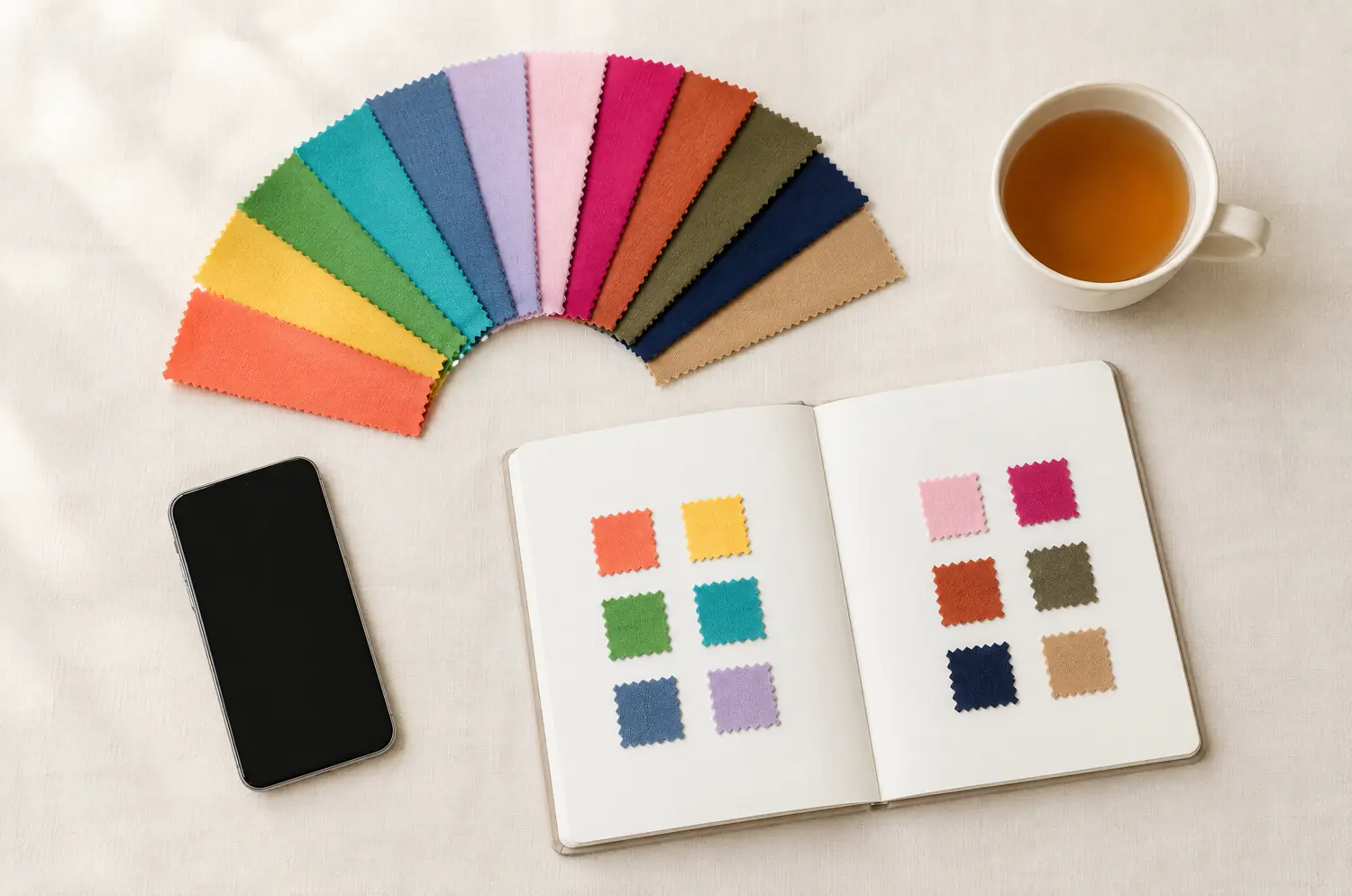
Face a window in natural light. Take your makeup off. Tie your hair back or cover it with a neutral cloth, so that your skin and your eyes are what you look at. Then hold one color under your chin at a time.
A solid sweater, a scarf or a sheet of colored paper will do. Color draping at home covers the setup in detail.
Axis
Hold up
If the first wins
If the second wins
Temperature
Coral and Raspberry
You lean warm
You lean cool
Temperature
A peach and a rose-pink
You lean warm
You lean cool
Clarity
Powder Pink and Fuchsia
You lean soft
You lean bright
Depth
A light blue and a navy
You lean light
You lean deep
No pair is pure. A light blue is also softer than a navy, for one. That’s why you run several pairs and let the pattern speak rather than any single duel.
For each pair, ask three things. Does your skin look smoother? Do your eyes look clearer, or flatter? Are you seeing your face, or the fabric?
Rest your eyes for a few seconds between pairs. After a strong color, everything looks different for a moment. When one kind of color keeps coming out ahead, you have a lean. Do a second round on a different day to check it.
What if your duels give mixed results?
Then you’ve still learned something. Mixed results usually come from one of three places.
Your pairs weren’t clean, so temperature and depth blurred together
Your light changed between rounds, from a bright window to a lamp
Your coloring sits between two neighboring sub-seasons
Write a plain note after each pair: warm, cool, soft, bright, light, deep. A page of notes shows a pattern better than memory does. Fitting-room mirrors can add their own tint, so check where the light comes from before you trust a result.
Why does the wrong color make you look tired?
It’s the same mechanism, in reverse.
A color that is too warm for you throws yellow onto your skin. One that is too cool or too gray can turn your skin gray. Orange brings out redness. A color that is too bright for a soft face overwhelms it, and one that is too soft for a high-contrast face flattens it.
Shadows under the eyes get darker. Your features seem to blur. People see the garment before they see you.
None of that makes a color forbidden. A palette is a tool you use on purpose. Some days the best color is the one that serves your goal: the red for a presentation, the navy for an interview. Wear it knowing what it does to your face, and put a kinder color closer to it.
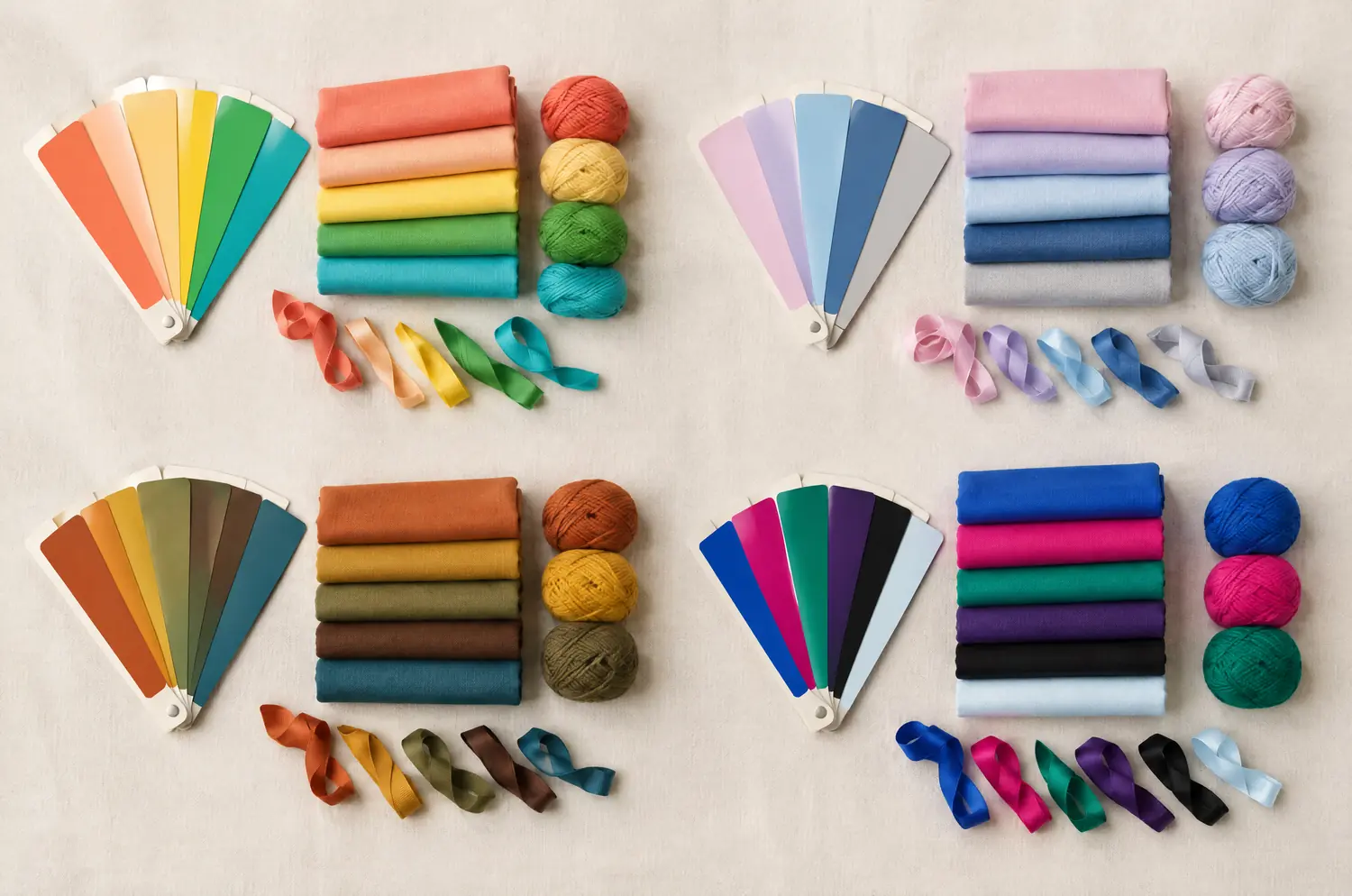
Start at the level of the four seasons. Match what kept winning to the row below.
What kept winning
Season to read first
Contrast
Warm, light, bright and clear colors
Spring
Low to moderate
Cool, muted, pastel and light colors
Summer
Low to moderate
Warm, dark colors, muted or desaturated
Autumn
Moderate to high
Cool, bright, clear and dark colors
Winter
Moderate to high
Contrast is the gap between your hair, your eyes and your skin. It is a clue, never the judge.
Each season splits into three sub-seasons, twelve in all. I work with 12 sub-seasons, not 16. Sixteen seasons split each one in four, finer shades that are harder to use day to day.
Open the twelve sub-season pages and read the ones that match your lean. Each has a full palette, the colors to avoid, makeup, hair color, jewelry advice and outfits. If two neighbors both look right, read both.
If you stay torn, a second pair of eyes helps. An app or a filter can’t watch your skin react to a color. You can, and a friend holding the fabrics can too.
Pale, tan or deep: does your skin tone change the answer?
Less than you’d think.
Skin tone is how light or deep your skin is on the surface. It tells you very little about your season by itself. Pale, tan and deep skin can each be warm, cool, neutral or olive underneath.
Every skin tone shows up in all four seasons. Fair, tan or deep, you can land in any of them.
That is why I never place anyone from a single trait, whether it’s skin, hair or eyes. What decides is the reaction you saw in step three.
If you want to find your surface tone first, the skin tone chart runs from fair to deep, with undertones and matching palettes.
Frequently asked questions
What is my skin tone?
It’s how light or deep your skin looks on the surface, from fair to deep. Look at your bare face by a window and name the depth first. Undertone is a separate question, so settle it afterward. On its own, skin tone doesn’t give you a season.
What colors make my eyes stand out?
Watch your eyes, not the name of their color. Hold a color under your chin. If your eyes look clearer, with more sparkle and definition, it’s working. If they look flatter or tired, it isn’t. Which colors do that for you depends on your season.
What color should I wear today if nothing in my closet seems right?
Choose the piece closest to what won your duels: warm or cool first, then light or deep. Add a scarf or earrings near your face in a color that agrees with it. If the day calls for a color outside your palette, wear it lower on your body, away from your face.
What colors suit pale skin?
Paleness doesn’t decide it. One pale face brightens in a light coral, another in a lavender, another in a deep burgundy. Hold those three up to your bare face and see which smooths your skin and clears your eyes. Undertone and contrast do the sorting, not how pale you are.
What colors suit tan skin?
Tan describes how deep your skin looks, not whether it leans warm or cool. That’s why one tan complexion can glow in a coral while another turns ashy next to it. Skip the rules of thumb. Hold two colors up to your bare face and watch which one smooths your skin.
Will you start with the quiz or with the duels?
Keep one idea: your skin gives the answer, and it is easiest to read when you change one thing at a time.
If you want a quick starting point, try the free color analysis quiz. It takes about two minutes, with no sign-up, and points to the season and sub-season you most likely are, plus the page for it. Then run your duels by the window and see whether your skin agrees.