Foundation for Olive Skin: How to Find the Right Shade
Olive skin foundation color starts with your undertone and a daylight test along the jaw. Here is how to read it, compare shades and avoid gray or green.
The word olive on a label tells you very little. Not every range even has a shade called olive.
What does tell you something is the line where your face meets your neck. A right shade leaves no line there. A wrong one draws it in. You see it the second you step back.
So the real job is learning what your skin does next to a shade.
What does olive skin look like, exactly?
It’s a way your skin looks, and it says nothing about who you are.
Some skin carries a soft greenish-gold cast. It’s often easiest to spot on the neck, the inner wrist and the outline of the face, where the sun reaches least. It can look gray-green on a tired day and golden on a good one.
That cast has nothing to do with depth. Fair, medium, tan and deep skin can all show it. Depth tells you how light or dark a shade should be. The cast tells you which way the shade should lean.
Undertone is the base color beneath the surface of your skin. Warm, cool, neutral and olive are the words I use. Neutral-warm and neutral-cool sit between them.
Olive is the hard one, because it doesn’t land cleanly on warm or cool. That’s why veins and jewelry tests can contradict each other on olive skin.
Set up the check properly:
Stand by a window with no makeup on.
Tie your hair back or tuck it under a plain scarf, because hair throws its color onto your face.
Hold pure white, then cream, under your chin.
Try a gold earring, then a silver one, against your cheek.
Warm olive, cool olive, neutral olive: what changes?
Olive isn’t one flat reading. The green-gold cast can lean in different directions, and that leaning is what you adjust for.
Reading
What you may notice by a window
Neighbors to compare
If it goes wrong
Warm olive
If gold keeps winning over silver, and cream over pure white, you may lean warm
A neutral shade and a slightly golden one
A shade that’s too yellow can turn the skin greener
Cool olive
If silver keeps winning over gold, and pure white doesn’t wash you out, you may lean cool
A neutral shade and a slightly rosier one
A shade that’s too pink can turn the skin gray
Neutral olive
If neither side keeps winning, you may sit in the middle
A neutral shade with one neighbor on each side
A shade that leans hard either way can leave a visible edge
These are tendencies, and your tests can disagree with each other. They are readings, not boxes. In my view, the check matters more than the name, because two people who both say “olive” can lean opposite ways.
How do you test a shade in daylight?
Do it at home, or at the store door. Store lighting is not your daily light.
Use the letters and numbers on a label to pick your three neighbors, not to decide. Every range codes its shades differently, and my article on foundation for cool, warm and neutral undertones shows how to read them.
Start with bare skin.
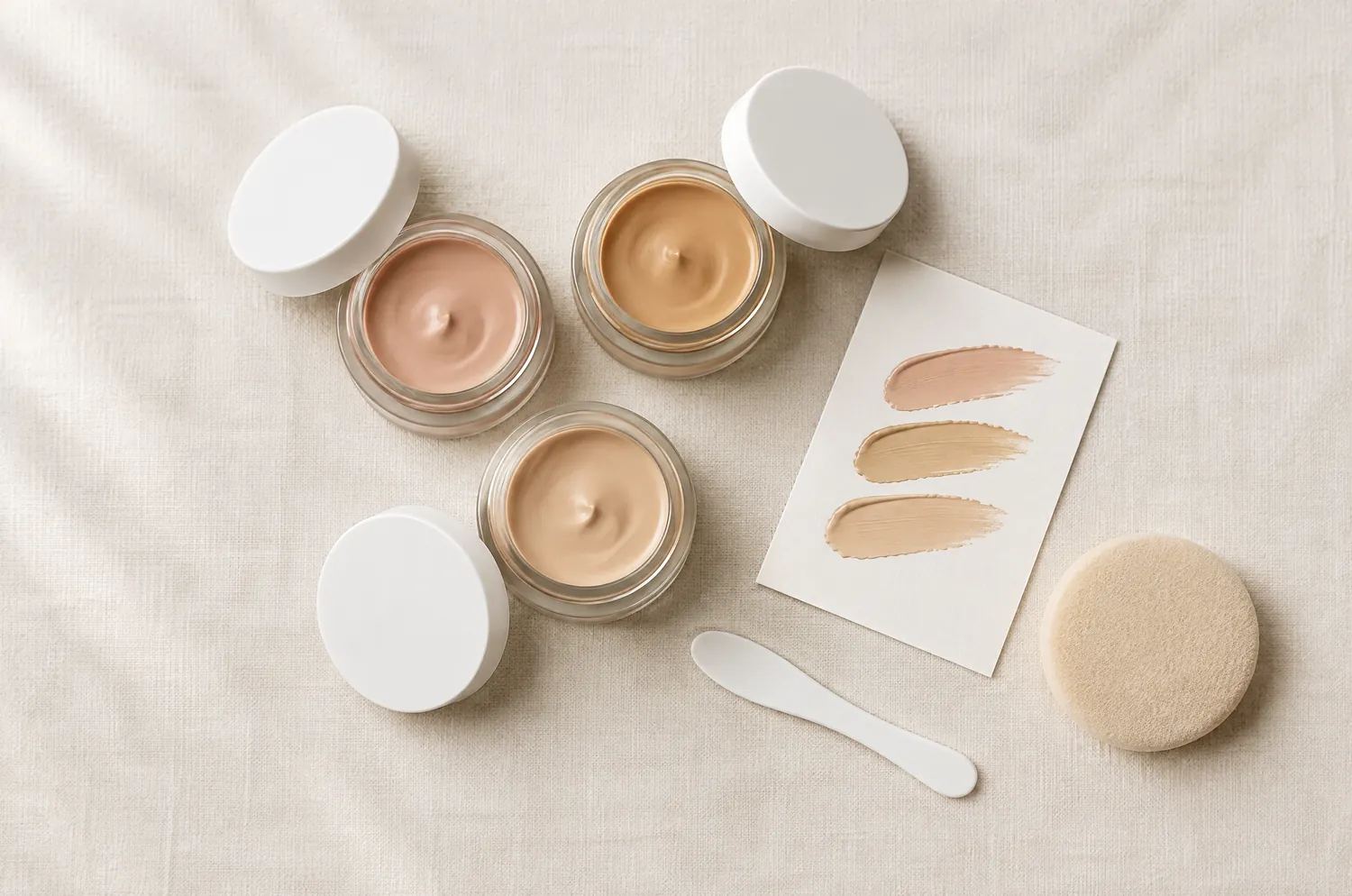
Pick the depth you think is yours, plus one shade rosier and one more golden, both at the same depth.
Swipe three short stripes from cheek to neck along the jaw.
Wait a few minutes. Some shades settle and change.
Step back from the mirror and look at the neck line.
The winner is the stripe you can’t find. No edge, no mask, no glow that stops at the chin.
My advice: skip your hand and wrist. That skin differs from your face, and it fools you.
Don’t go lighter “to brighten” either. A lighter shade doesn’t light up the face. It cuts it off from the neck.
If two stripes tie, take a sample home and wear it for a full day in different light.
If no stripe in a whole range disappears, the range is too short. Your skin isn’t the problem.
Does olive skin belong to one season?
No. Olive is an undertone. A season is a larger picture: temperature, depth and clarity, plus your contrast.
So one olive face can be soft and gentle, another deep and high in contrast. Same cast, different palettes. That’s why a season can’t pick your foundation for you, and why a foundation can’t tell you your season.
What it can do is confirm the direction. If a golden-leaning stripe disappears, your undertone is probably warm-leaning, and that’s one clue among several. You can compare all twelve sub-seasons side by side and see where your colors point.
Questions people ask
What undertone is olive skin?
Olive is its own undertone. It carries a muted greenish-gold cast, so it doesn’t fit neatly under warm or cool. Some olive skin leans warm, some leans cool, and some sits in the middle. Check it by daylight, without makeup, with your hair covered.
What foundation undertone is best for olive skin?
Start with a shade labeled neutral or slightly golden, then try a rosier and a more golden neighbor beside it. Whichever leaves no edge on your neck is the match, whatever the label says. Olive has no single lean, so let the neighbors show you yours.
How do I know if I have an olive undertone?
Look at your neck and the outline of your face in daylight. A soft green, gold or grayish cast that keeps coming back suggests olive. If your jewelry and fabric tests keep contradicting each other, that is a hint too. Repeat the check on another day, because tired skin can fool you.
Is olive skin warm or cool?
It can be either, or neither. That’s the point of the word. Some olive skin leans warm, some leans cool, some stays neutral. Compare a gold and a silver earring near your cheek in daylight. If one side keeps winning, you have a direction. If not, you may sit in the middle.
How do I test foundation on olive skin?
Lay three neighboring shades side by side along your jaw, in daylight, on a bare face. Give them a few minutes, then step back and pick the one you can’t see. Skip your hand. If two tie, wear a sample through a full day.
Hold the shade you wear now up to a window
Before you buy again, take the shade you wear now to a window. Pull your hair back and look at your jaw and neck. Is there a line? Note whether the skin looks gray or green next to it.
That note tells you which neighbor to add when you stripe your shades. My article on foundation for cool, warm and neutral undertones shows how to read a shade label once you know your direction.
Then try the free color analysis quiz. It takes about two minutes and gives you a likely season to set beside what you saw at the window.
Your skin isn’t the thing to adjust. The shade is.