People think: “The right foundation is the one that matches my skin.”
What you see on a face: a mask, with a sharp edge under the jaw.
The depth was right. The label said so. Something else was off, and almost nobody checks it.
Foundation for cool undertones, warm or neutral: how to read a shade, test it along your jawline in daylight, and what to do when you’re stuck between two.

By Lisa Routa
People think: “The right foundation is the one that matches my skin.”
What you see on a face: a mask, with a sharp edge under the jaw.
The depth was right. The label said so. Something else was off, and almost nobody checks it.
Because skin carries two things at once.
Depth is how light or deep it is. Undertone, the tone under the surface of your skin, is whether that depth leans pink, golden or somewhere in between.
You set the first and forget the second. Two people with the same depth can have opposite undertones, so one bottle fits one face and veils the other.
A wrong depth shows at once. A wrong undertone shows more quietly: a pink film over a golden base, a yellow cast over a rosy one, a gray or greenish look on some olive undertones.
You can’t guess undertone from how light or deep someone is. Fair skin can be warm. Deep skin can be cool. All three undertones exist at every depth.
Set the scene first. Stand at a window in daylight, with a clean face and your hair covered by a neutral cloth. Hair throws its color onto your face and muddies the read.
Then try two checks.
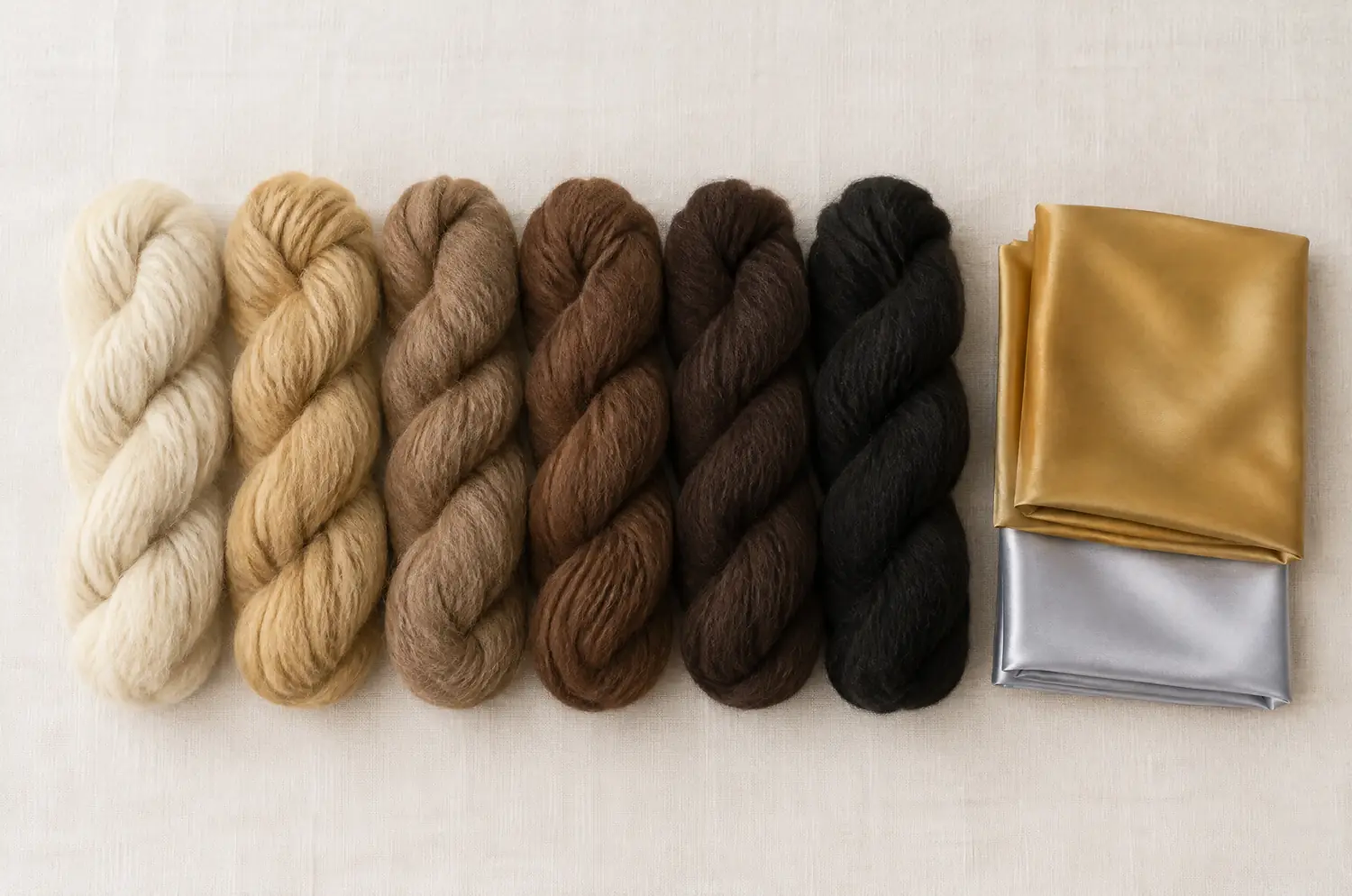
Hold a pure white and a cream under your chin. If the cream softens you and the white washes you out, you lean warm. If it’s the other way around, you lean cool.
Then hold a gold earring and a silver one against your cheek. Watch which one makes your skin look even, and which one turns it gray or yellow.
My advice: leave your wrist out of it. The veins you see there change with the light and with your depth, and the article on blue and green veins shows why. For the full set of home checks, see warm vs cool undertone.
If your clues contradict each other, you haven’t done anything wrong. You may be neutral, or olive, and olive skin has its own logic.
Here is a starting direction for each undertone, and what a miss can look like. The jaw test below confirms it.
| Undertone | Base color you see | Shade family to try | Sign you missed |
|---|---|---|---|
| Cool | Pink, rosy, a hint of blue | Rosy, pink-leaning | A yellow cast over the face |
| Warm | Golden, yellow, peach | Golden or peach | A pink veil on the skin |
| Neutral | No clear lean | Balanced, between pink and golden | Either lean showing up at the jaw |
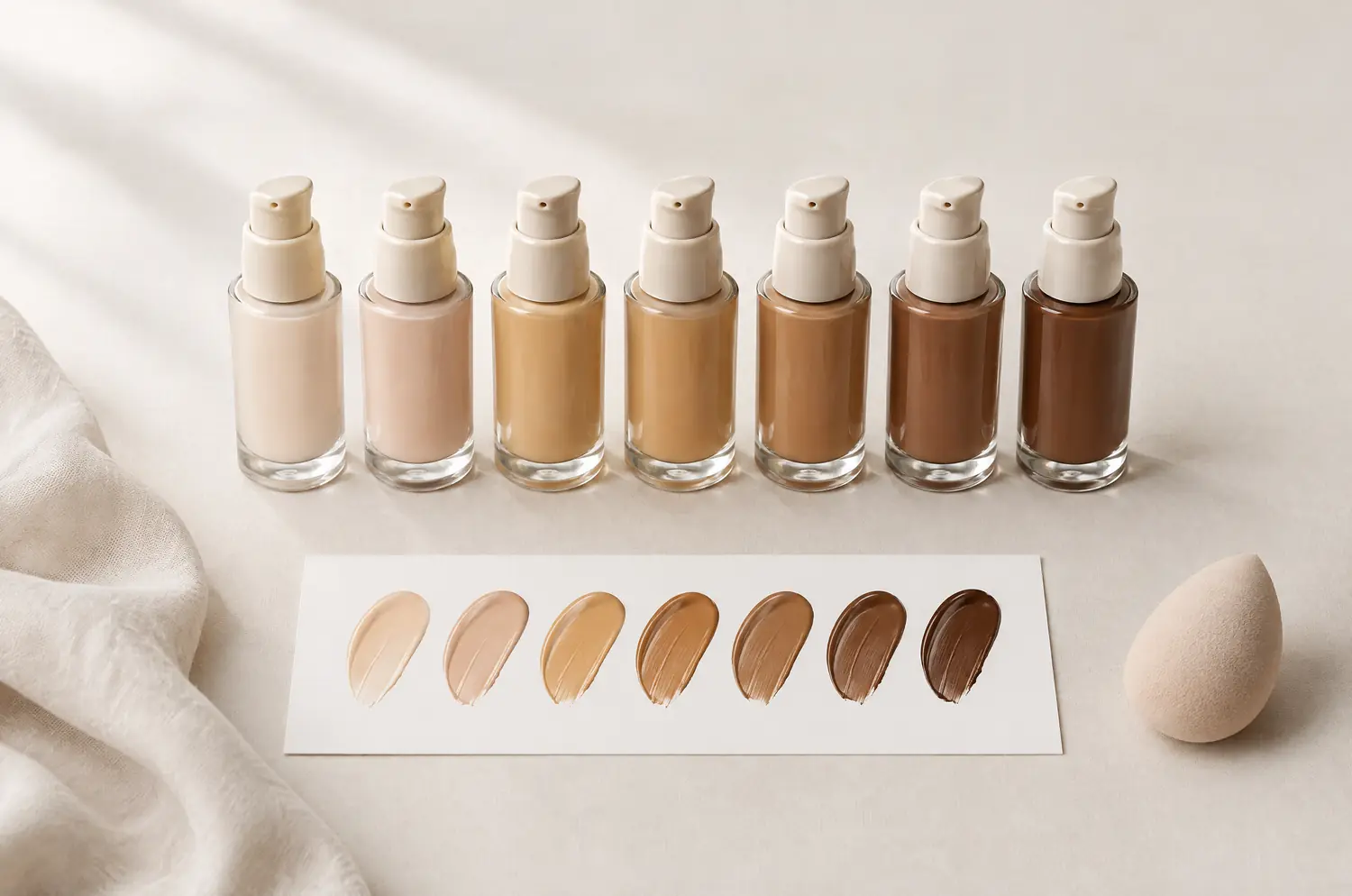
For a cool undertone, start with rosy, pink-leaning shades at your depth. A shade that looks right in the bottle can still turn yellow on a cool base, so test the rosier neighbor too. The one that fades into your neck is your direction.
For a warm undertone, golden or peach shades blend in. A very pink shade sits on top of the skin like a film.
Neutral is the tricky one. A neutral base rarely leans neither way. It usually leans a little, so try the shade next to a rosier neighbor and a more golden one.
Your season doesn’t choose your foundation either. A Warm Spring and a Deep Autumn both lean warm, yet one sits at medium to light depth and the other at dark.
Every range has its own system, and no two agree.
You’ll meet letters. Some ranges use C for cool, W for warm and N for neutral. You’ll meet numbers, which often point to depth. And you’ll meet words like rosy, golden, ivory, beige and sand.
There is no standard. An N in one range is not an N in another, and a beige can lean pink or gold.
In my view, a label is a map, not a decision. Use it to find your neighborhood.
Then pick the shade you think is yours, plus two neighbors of the same depth: one rosier, one more golden. Skip the back of your hand. That skin has a different tone and a different history from your face.
Store lighting also isn’t your daily light. That’s why the test below happens at a window or just outside the door.
The jaw is where your face meets your neck. An error shows there first.
If you’re stuck between two, look at what each one does at the end of the day. One will have a faint pink or yellow cast you didn’t see at noon. Keep the other.
Once your base is settled, lips and cheeks follow the same logic, and makeup for your undertone covers them.
A tan changes your depth. In summer you may need a deeper shade, in the same lean.
A tan mostly moves depth, so move up or down within the direction you found. If the lean seems to shift, retest at a window on bare skin. The article on whether your season changes covers what moves and what stays.
Winter does the opposite. Skin that sees less sun often looks lighter, so the shade that worked in August can sit too deep in February.
Flushed cheeks are a third case. Test on a calm day, not right after a run or a hot shower, or you’ll choose a shade for the flush instead of your face.
Start with rosy or pink-leaning shades at your depth. They tend to melt into a cool base, while yellow-leaning ones can turn it yellow. Then confirm along your jawline in daylight, since every range names its pink and golden shades differently. The stripe that vanishes at the edge of your face wins.
Sometimes. A neutral shade sits between pink and golden, so on a cool base it can read flat or slightly yellow, depending on the range. Try it beside a rosier neighbor of the same depth. If the rosier one disappears at your jaw, your base wants the cooler shade.
Neither. A shade lighter than your neck leaves a visible line, and a deeper one makes a mask in the other direction. Aim for the stripe that disappears along your jaw in daylight. If two tie, wear both for a day and keep the one that still looks like you at dusk.
Check your face at a window once the formula has set. If the whole face looks tinted, rosier or yellower than your neck, suspect the undertone. If you see a line at the jaw, suspect the depth. Change one thing at a time, then look again.
Not necessarily. Clues that contradict each other often point to a neutral or olive undertone, which sits between the two. Pick a balanced shade and test it against a rosier and a more golden neighbor, or ask for samples. Your jawline gets the last word.
Pick a bright morning. Cover your hair, wash your face, and draw three neighboring stripes from cheek to neck. Step back. Notice which one vanishes and which one leaves a pink or yellow edge.
If you’d like a direction before you shop, take the free color analysis quiz. It’s only a starting hint on which side of warm and cool you lean, and the jaw test still decides.
When one stripe vanishes at your jaw, you have your shade.
With all my heart and passion, Lisa
Keep reading
Seasons mentioned in this article
Take the free quiz for a first hint of your season, then explore the 12 seasons to see your palette.