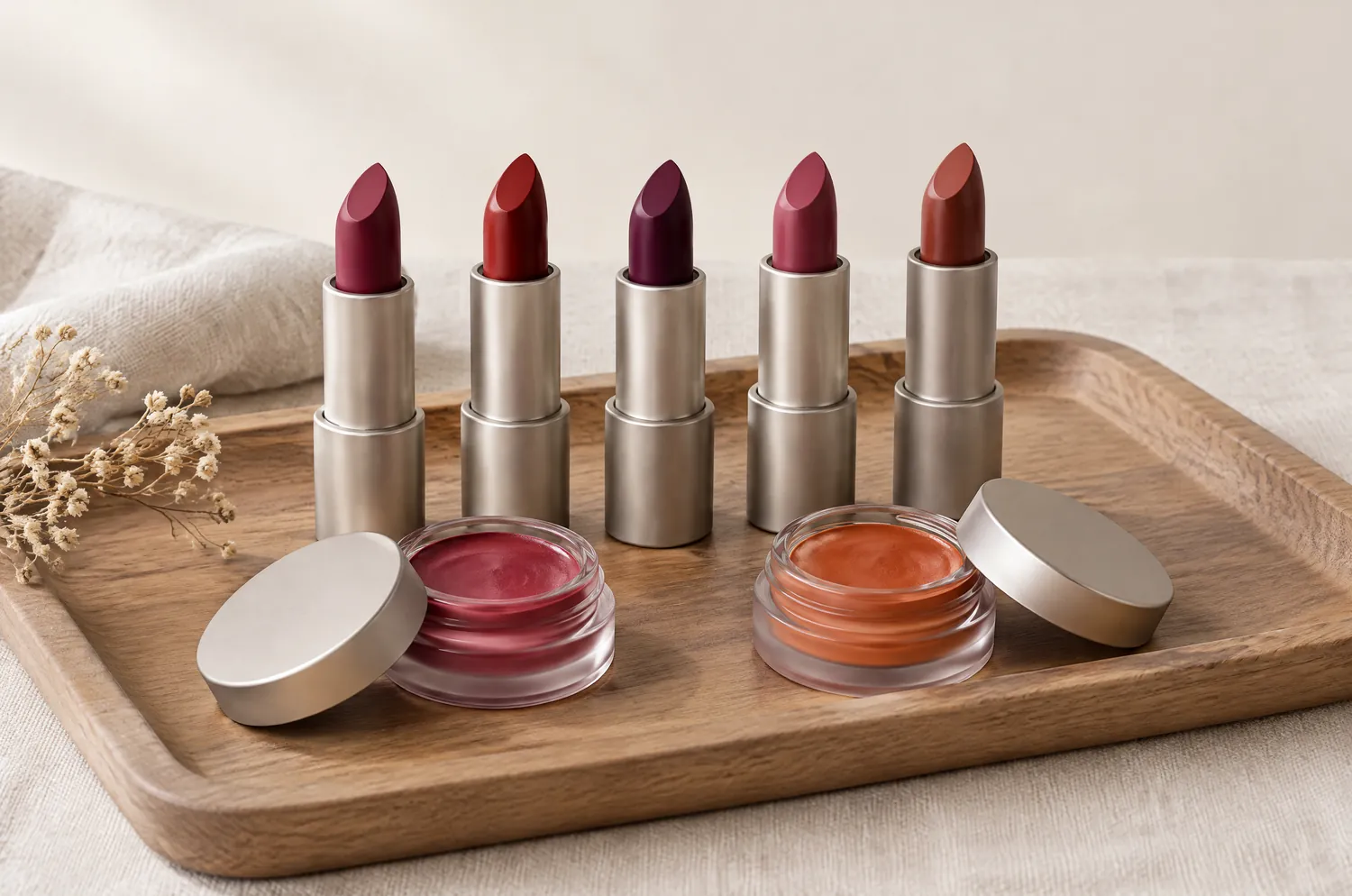
Lipstick for a Cool or Warm Undertone: Your Season Decides
Lipstick for a cool undertone or a warm one? Your color season picks the shade before your undertone does. Here are the lip colors of all 12 sub-seasons.
It gives you a direction, and that matters. But two people with a cool undertone can walk out of the same store with two different lipsticks, and both can be right.
Why? Because your lips sit right next to your eyes and your skin. A lipstick works like a collar or a scarf: it either brightens your face or pulls attention to your mouth. Temperature is only the first thing it has to get right.
Why doesn’t your undertone pick the shade for you?
Your undertone is the tone beneath your skin’s surface. It tells you which side of the color wheel to lean toward.
Your season looks at more than that. It weighs temperature, lightness and intensity together, and then your contrast, how strongly your hair, eyes and skin stand apart. A lip color has to answer to all of it.
Take two cool-leaning seasons. A Cool Summer wears raspberry and blue-toned pink. A Soft Summer wears rosewood and dusty rose. Same side of the wheel, different volume.
That’s why “I’m cool, so I need a blue-red” falls apart. It’s a fair starting point, and a poor finishing one. If you aren’t sure of your undertone yet, this guide to warm and cool tests shows where each test misleads.
Which lip shades does each sub-season wear?
Here are the lips of all twelve sub-seasons, grouped by temperature. Within a row, the shades change with lightness, intensity and contrast.
The “neutral to” rows lean a little. They don’t pick a side. Not sure which row is yours? The twelve sub-season pages each have a makeup section.
What changes inside a cool undertone?
Depth and intensity change. Temperature stays put.
A cool undertone with light coloring and low contrast looks good in fresh pink or light raspberry. Push that same person into a dark plum and the lip takes over the face.
A cool undertone with dark hair and high contrast is the opposite. A pale rosewood can disappear, while burgundy or cherry holds its own. A True Winter can also go as far as fuchsia.
My advice: once you know you lean cool, ask how loud your face is. Soft face, soft lip. Strong face, strong lip.
A Light Spring stays in peach, light coral and salmon pink. A Warm Spring can wear coral and poppy red, and orange-leaning reds are its reds. A Warm Autumn goes earthier, with terracotta and brick. A Deep Autumn deepens that to warm burgundy and warm plum.
Reds deserve a check. Hold an orange-leaning red and a blue-leaning one against your face, and watch what your skin does. Your sub-season’s lip shades tell you which to try first.
Don’t read this as “warm means orange.” Rosy peach and warm rosewood are warm too, and a Soft Autumn wears them.
What if neither side wins, or your skin is olive?
Then your sub-season carries more of the decision. I wouldn’t force a side.
The “neutral to” rows of the table sit in the middle, not on one side. Bright Spring, Soft Autumn and Deep Autumn tilt a little warm. Soft Summer, Deep Winter and Bright Winter tilt a little cool. A tilt isn’t a side.
Olive is a similar story. Olive skin can have a greenish cast that blurs the usual warm-or-cool signals, so a quick glance at a lipstick can mislead you. This page on olive skin explains how to read it. Olive skin appears in every season, so it points to no single lip color.
Fair and deep skin work the same way. Depth of skin tells you how much color the face can carry. The undertone and the sub-season tell you which color. You can see how that plays out in the guides on pale skin and dark skin.
How do you test a lipstick before you buy it?
Skip the back of your hand. It shows you the product, not what the product does to your face.
Sit by a window in daylight, with bare lips.
Pull your hair back, or cover it with a solid-color scarf.
Hold a red-orange fabric under your chin, then a blue-red one. See which one smooths your skin.
Put on one lipstick at a time. Blot it, and look at your whole face before you look at your mouth.
Repeat on another day if two shades tie.
When the lip is right, your skin evens out and your eyes look brighter. When it’s wrong, shadows settle under your lower lip, your skin turns yellow or gray, and people notice your mouth first.
A yellow bulb warms everything, so a store aisle can flatter the wrong shade. Take it to a window before you commit.
Questions people ask
What lipstick colors look best on a cool undertone?
Raspberry, cherry, blue-toned pink and rosewood are the usual starting points. Which one fits depends on your sub-season. A Cool Summer leans to soft cherry, a Deep Winter to burgundy and plum, a Bright Winter to fuchsia and clear red. Match the volume to your contrast.
What lipstick colors look best on a warm undertone?
Coral, peach, brick, terracotta and tomato red lead the list. A Light Spring keeps it to peach and salmon pink, a Warm Autumn goes to terracotta and burnt coral. Warm does not mean one orange shade, so hold two or three against your face.
What lipstick suits an olive undertone?
Your sub-season decides, and olive alone doesn’t. Olive can read warm, cool or neutral, so the same skin may wear brick in one case and rosewood in another. Test a warm shade and a cool shade by a window, and watch whether your skin looks fresh or grayish.
How do I know my undertone before I buy a lipstick?
Try several checks rather than one. Compare pure white with cream near your bare face. When the tests contradict each other, you may be neutral or olive. Then skip the label and compare two lipsticks on your lips.
Does my color season change my lipstick color?
Yes. Your undertone narrows the side, your season picks the shade. A Soft Autumn and a Deep Autumn both lean warm, yet rosy peach suits one and warm burgundy the other. Season adds lightness, intensity and contrast to the decision.
Can I wear red lipstick if I am a Summer or an Autumn?
Yes, in the red of your sub-season. A Cool Summer wears soft cherry, a Soft Summer muted raspberry, a Warm Autumn brick or tomato red. A Soft Autumn has no red listed, so rosy peach, apricot or soft caramel come first. Compare an orange-leaning and a blue-leaning red by a window.
Decide your side, then pick your shade
Your lips are the color closest to your face, so let your skin, not the tube, have the last word.
Don’t know your sub-season yet? The free color analysis quiz has ten questions and no sign-up. You get a likely season, a sub-season hint and the page where your lip shades are waiting.