Free: the color analysis quiz. Find your season in 2 minutes →Free quiz: your season in 2 minutes →

Lipstick Colors for Dark and Brown Skin: What Undertone Decides

Lipstick colors for dark skin start with undertone, not depth. I show which lip and blush families read well from nude to berry, and what looks chalky.

Lisa Routa, color analyst

By Lisa RoutaPublished · 8 min read

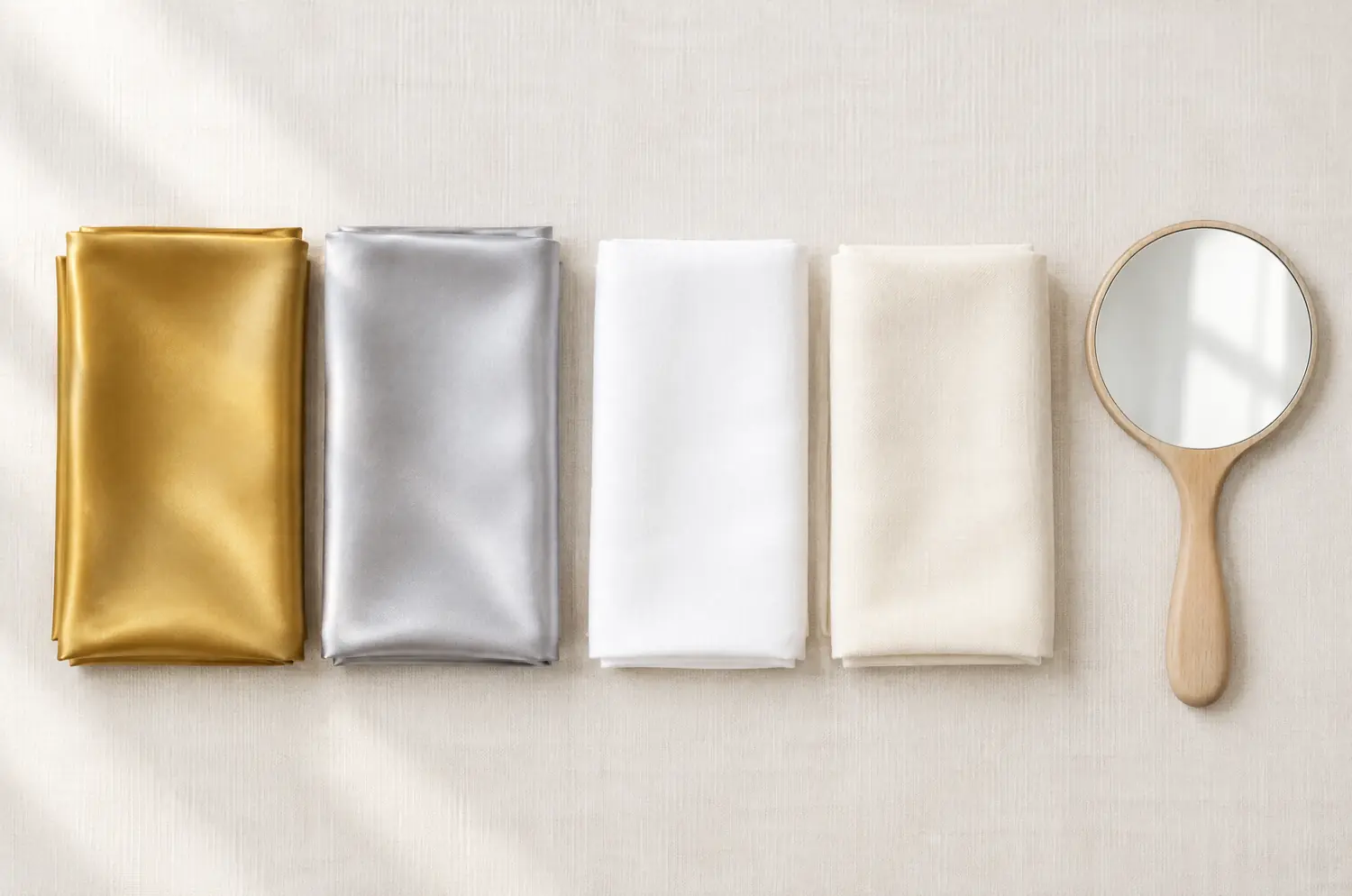
Folded gold, silver, pure white and off-white fabrics next to a wooden hand mirror, for testing your undertone at home
On this page8 sections
  1. Does deep skin choose your lipstick for you?
  2. Which lipstick families read well from nude to berry?
  3. Where does blush show on deeper skin?
  4. How much color should your lips and cheeks carry?
  5. What looks chalky or flat, and what can you try instead?
  6. How do you test two shades side by side?
  7. Frequently asked questions
  8. Which side will you test first, warm or cool?

Open the lipstick you reach for most. Swipe it onto bare lips, then go to the nearest window.

Look at your whole face, not just your mouth. Does your skin look even, or does the mouth sit apart, a little gray at the edges, a little too loud?

That’s the whole first test, and it takes ten seconds.

It matters because a lipstick sits close to your face. It can brighten your complexion, or it can make the mouth the only thing people see.

Does deep skin choose your lipstick for you?

You may have searched for lipstick colors for dark skin hoping for one tidy list. I understand why. But depth only tells you how light or dark your skin is. It doesn’t tell you which side of the color wheel your mouth belongs on.

That side comes from your undertone, the color that sits beneath your skin’s surface. Deep and brown skin can be warm, cool, neutral or olive. Two people with the same depth can need opposite reds.

Depth sets how rich a shade can be, and undertone sets which family it comes from.

Home tests are slippery here. On deeper skin the veins can be hard to make out, so the wrist test gives you little. My advice: skip the wrist and compare shades near your face. The guides to skin undertone and to warm versus cool undertones show what to look for.

And if you wonder which season deep skin belongs to, it belongs to none in particular. I explain why deep skin isn’t one season in its own article.

Which lipstick families read well from nude to berry?

Start with the words on the tube. Nude, red, berry and bright describe how strong a shade is. They don’t describe its temperature, so each one exists on both sides.

A nude isn’t one color. A warm nude leans toward soft caramel or rosy peach. A cool nude leans toward rosewood or dusty rose. Choose one close to your own lip color, then take it a step richer toward your side.

Red splits the same way. A warm red leans orange, like brick or tomato red. A cool red leans blue, like cherry or a blue-toned red.

Berries and plums carry a lot of pigment. Warm plum and warm burgundy lean brown. Raspberry and cool plum lean pink and blue.

At the vivid end sit coral, watermelon pink and fuchsia. They suit a face that can carry a loud mouth.

Here are the families side by side. They are starting points taken from the lip and cheek shades on the sub-season pages. They are not rules, and they don’t assign you a season.

Your undertone Lip families to try first Blush families to try first Compare first
Warm Terracotta, brick, burnt coral, coral Apricot, terracotta Brick against raspberry
Cool Raspberry, soft cherry, plum, blue-toned red Cool pink, raspberry pink Raspberry against brick
Neutral-warm Rosy peach, warm rosewood Peach, soft apricot Rosy peach against dusty rose
Neutral-cool Rosewood, dusty rose Tea rose Dusty rose against rosy peach
Olive Depends on the face Depends on the face One warm and one cool shade of equal richness

Neutral and olive don’t pick a side on paper. Let the mirror pick it. The warm row mixes lip shades from the Warm Spring, Warm Autumn and Deep Autumn pages. The two neutral rows borrow from Soft Autumn and Soft Summer, which run softer and lighter, so on deeper skin take those shades richer. The pages for each sub-season list lip and cheek shades in full once you want more choices.

Where does blush show on deeper skin?

Blush has to show on your skin to do anything. If a shade disappears, or settles with a gray cast, go one step richer in pigment.

On the warm side, look at apricot, terracotta and soft brick. On the cool side, look at raspberry pink and cool pink, applied lightly. On the vivid side, a bright pink or bright coral works in a very small amount.

Keep blush on the same side as your lips. It doesn’t have to be the same shade. A brick mouth with a raspberry cheek pulls your face in two directions.

Blend it on the apples of the cheeks and up toward the temples.

How much color should your lips and cheeks carry?

Undertone picks the side. Contrast sets the volume.

Contrast is how far your hair, eyes and skin sit from one another. It can be low, moderate or high. Depth doesn’t tell you your contrast, so don’t guess it from depth. You read it on your own face, and how to read your contrast walks you through it.

A strong gap supports a strong mouth: deep red, plum, burgundy, a vivid pink. A softer gap asks for a softer texture, such as satin or a sheer wash of the same color.

A low gap doesn’t ban a bold lip. It asks you to change the finish, not to give up the color.

In my view, a bold mouth on the right side beats a timid nude on the wrong one. And some days the loudest shade is the right call, for a big presentation or a night out. You can step up one notch without crossing to the other side.

Finish matters too. Matte gives a defined edge, satin softens it, and gloss adds light. A liner half a step richer than your lipstick, on the same side, frames the mouth. Test the lipstick with the foundation you wear and with a bare face, because your lips sit differently against each.


What looks chalky or flat, and what can you try instead?

  • A pale pink or icy nude lighter than your lips. It can read chalky. Try a nude with more depth, on your side.
  • A blush close to your skin color. It disappears. Try one step richer.
  • A mouth on the wrong side. Brick on a cool face can leave the skin dull and the lips out front. Try raspberry or cherry, then compare.
  • A shade chosen from a swatch on your hand. Your hand and your face react differently. Try it on your lips.
  • A shade judged under a yellow store bulb. It warms everything. Try it by daylight.

None of these says anything about your face. Each one is a shade working against it, and a different one will sit differently.

How do you test two shades side by side?

One lipstick shows you one mouth. Two shades show you a direction.

Choose two shades of similar richness, one warm and one cool. Swipe the first on your lips and look at your whole face. Then wipe it off and swipe the second.

Notice whether your face looks more even and your eyes brighter, or whether the mouth arrives before you do. Rest your eyes between tries, and repeat on another day.

For blush, put one shade on each cheek and compare. Then swap sides, so the result isn’t about one cheek.

When one side keeps coming out ahead, you have a direction. My advice: buy the second shade only after the first has passed the window test. For a full lip, cheek and eye plan, makeup for your undertone goes further.

Frequently asked questions

What lipstick color suits dark skin?

There isn’t one. Brick, terracotta and coral are good first tries on the warm side. Raspberry, cherry and plum are good first tries on the cool side.

Neutral faces can start with rosewood and rosy peach. Depth sets how rich the shade can go, so compare a warm and a cool one of similar strength.

Which lipstick color suits brown skin?

Brown skin covers every undertone, so no single color answers for it. Hold a warm shade like brick and a cool one like raspberry against your bare face. Whichever makes your skin look smoother and your eyes brighter is your side. Then choose a nude, red or berry from that family.

What colors look best on dark skin?

That depends on your undertone, how light or dark you are and how clear your colors are, not on your shade alone. No single palette covers deep skin. The article on the best colors for dark skin explains how to read it.

Does undertone matter on deeper skin?

Yes, a lot. Two people of the same depth can sit on opposite sides, one golden and one rosy, and each needs a different red. A shade from the wrong side can make the mouth look separate from the face. Compare two shades near your bare face rather than trusting a wrist.

Which blush shades show up on deep skin?

It depends on your side. Terracotta or soft brick often read on a warm face. Raspberry pink or cool pink read on a cool one, with a light hand. Sheer formulas can vanish on deeper skin, so reach for a more pigmented one and match your lipstick’s side.

How do I pick my lipstick shade?

Decide the side first, then the strength. Compare a warm and a cool shade by a window with a bare face. Once one side wins, choose nude, red, berry or bright based on how much contrast you carry. If two shades tie, test again another day.

Which side will you test first, warm or cool?

Pull out one warm lipstick and one cool lipstick of similar richness. That’s your first pair. Keep one idea: your face picks the side, not your depth.

If you’d like a direction before you reach for the makeup bag, the color analysis quiz is ten questions with no sign-up, and it leads you to a likely season page with lip and cheek shades to try. It can’t see your skin react, so keep the mirror test.

With all my heart and passion, Lisa

Free quizWhat’s your color season?10 questions, no sign-upTake the quiz

Go further

A closed cream booklet on linen, surrounded by fabric squares and paper chips in a pastel gradientPDF guides by sub-seasonOne guide for each of the 12 sub-seasons: palette, outfits, makeup and hair.Coming soon
A closed cream booklet on linen, surrounded by fabric squares and paper chips in a pastel gradient

Free

Get Lisa’s color advice by email

New articles from Lisa, and a note when the PDF guides open.

Keep reading

Read next

Seasons mentioned in this article

Ready to find your colors?

Take the free quiz for a first hint of your season, then explore the 12 seasons to see your palette.

Free quizThe 12 seasons